

“Is Manitowoc going to die?”
This was the question on the minds of Manitowoc residents when two of the city’s largest companies reduced their presence 25 years ago.
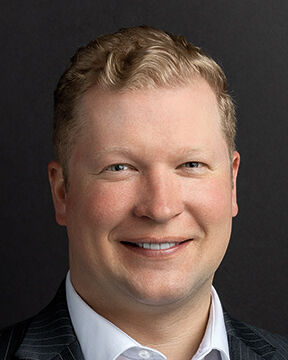
“[Economic development‑wise], Mirro and the Manitowoc Company ran the city for years, and around 2000 they both cut back and pulled back and everyone thought, ‘Is Manitowoc going to die?’ because that kept us alive for so long,” says Mayor Justin Nickels. “But we’re growing.”
Luckily, the retreating of these historic companies was not the death sentence locals feared. In fact, today development is occurring across the city.
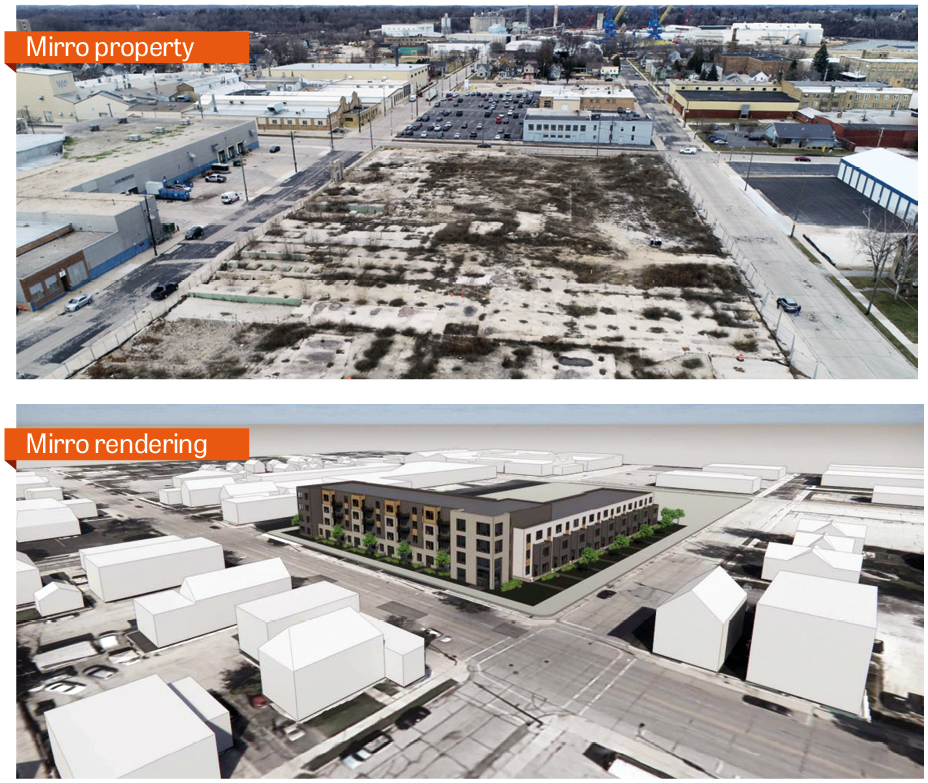
On the long‑idle Mirro property, environmental cleanup is in its final stages after the city secured a $2 million federal grant through the Bipartisan Infrastructure Law to help clear the site. The project, supported by state and federal housing tax credits, is slated to close by July 1, with workforce housing development to follow shortly thereafter.
Development also includes work on the former Mid‑Cities Mall site, in the River Point District downtown, along Reed Avenue where a hospital once stood and in a long‑planned southside subdivision finally seeing construction.
The former mall site, a 30‑acre parcel that sat largely vacant for years, has been sold to Tycor, which is planning more than 40 single‑family homes, more than 140 multifamily units and three commercial lots along Memorial Drive. Infrastructure work began last year, with vertical construction expected this spring.
But for Nickels, the clearest signal of economic momentum is residential construction.
“Housing is a direct reflection of what our population will be and direct correlation to growth, and we’re starting to see an uptick,” he says.
In 2025, the city recorded 50 new single‑family homes, a figure Nickels says is exponentially higher than the past several decades.
“Manitowoc [new home building] was pretty stagnant for a very long time,” Nickels says. “Ten years ago, five new homes were built and that was the norm.”
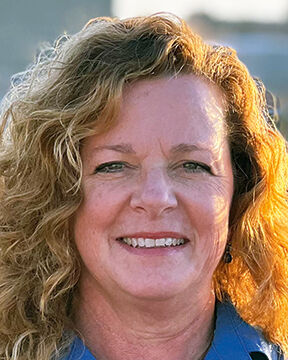
The housing surge is not confined to city limits. Jamie Zastrow, executive director with Progress Lakeshore, says rural communities are also exploring subdivisions and senior housing options, including projects in Mishicot and Cleveland. In Cleveland, the opening of ClearSky Rehabilitation Hospital last fall is seen as a catalyst for additional mixed‑use and health care‑adjacent development along the I‑43 corridor.
“We’re not a unique community in this conversation and we need all levels of housing,” says Zastrow, noting demand ranges from affordable units to market‑rate apartments to senior condos. “We need multifamily at all levels.”
Industrial strength and waterfront investment
Economic growth also is evident in the county’s industrial footprint.
Nickels says the city’s industrial park off I‑43 is effectively full. Several years ago, the city had the forethought to purchase an additional 90 acres adjacent to the interstate to ensure it would be ready for future prospects.
Zastrow says new infrastructure is going in this spring at the industrial park at the east corners of Hecker and Viebahn streets to support additional development.
Closer to the water, the county’s maritime heritage remains a distinctive asset. The Port of Manitowoc, a federally authorized working port on Lake Michigan, continues to set the community apart.
“One of those unique assets that set us apart from other communities is our active working port, federally sanctioned and shipping things and doing things on the water,” Zastrow says.
That asset recently received a boost when both City Centre LLC and Burger Boat Company were awarded grants through the state’s Harbor Assistance Program. For Burger, the $1.3 million grant marks its fourth award since 2006. That funding will be used to dredge along the existing dock wall and launch well, expanding capacity for new vessel launches as well as repair and refit work. Doing so makes business operations possible, says Nick Siler, president and CEO at Burger.
“To be able to provide steady employment and career development, we need steady work. Without navigable waterways outside, we can’t do business. So the HAP grant is vital to us and the adjacent businesses that need the Manitowoc River for vessel access,” Siler says.
Dredging needs are dictated by nature, as sediment levels fluctuate year to year. Work is expected to take approximately three weeks after June 15, in accordance with Wisconsin DNR regulations protecting spawning fish.
Two Rivers: a community conversation about what’s next
North along the lakeshore in Two Rivers, transformation is taking a more deliberative turn.
Jeff Sachse, community and economic development director for Two Rivers, launched a five‑phase public visioning process earlier in the year to determine the future of the 14‑acre former Hamilton industrial site overlooking the harbor.
Owned by Fisher Scientific, the successor to Hamilton, the property’s buildings were demolished in 2015. Ongoing environmental monitoring by the Wisconsin DNR, including soil testing for PFAS, was nearing completion at press time. Sachse, a Two Rivers native whose father worked at the Hamilton wood plant for 41 years, says the question of what comes next is deeply personal and significant to the community.

“It’s [really about] how the market sees this community compared to the assets and character that the residents want to preserve,” Sachse says.
Early feedback from listening sessions and a public survey suggests residents favor a mix of housing, retail and hospitality, along with preserved water access and recreational opportunities. The opportunity itself is rare, Sachse says.
“Fourteen acres of waterfront property doesn’t just appear by magic,” he says. “We have one opportunity to get this right as it could be a catalytic development for the community and potentially beyond that.”
Two Rivers has lost roughly 20% of its population over the past three decades, placing added pressure on infrastructure and the tax base. By early April, concept site plans will be distilled to three options for community voting, with a final recommendation targeted for city council approval by mid‑June.
The intent, Sachse says, is to create a clear community “calling card” that can attract the right development partners when the property is ready to come to market.
Editor’s note: The story was updated April 15, 2026 to correct the name of ClearSky Rehabilitation Hospital.