

One of the world’s largest cosmetics groups is looking for quick and agile solutions. New cosmetics are expected to be launched within days. “Due to a market that is strongly driven by influencers, we need quick response times,” according to the headquarters in France. The average delivery time for format parts is, however, actually eight to 12 weeks. Optima is supposed to manage that in just a few days. We are taking on the challenge.
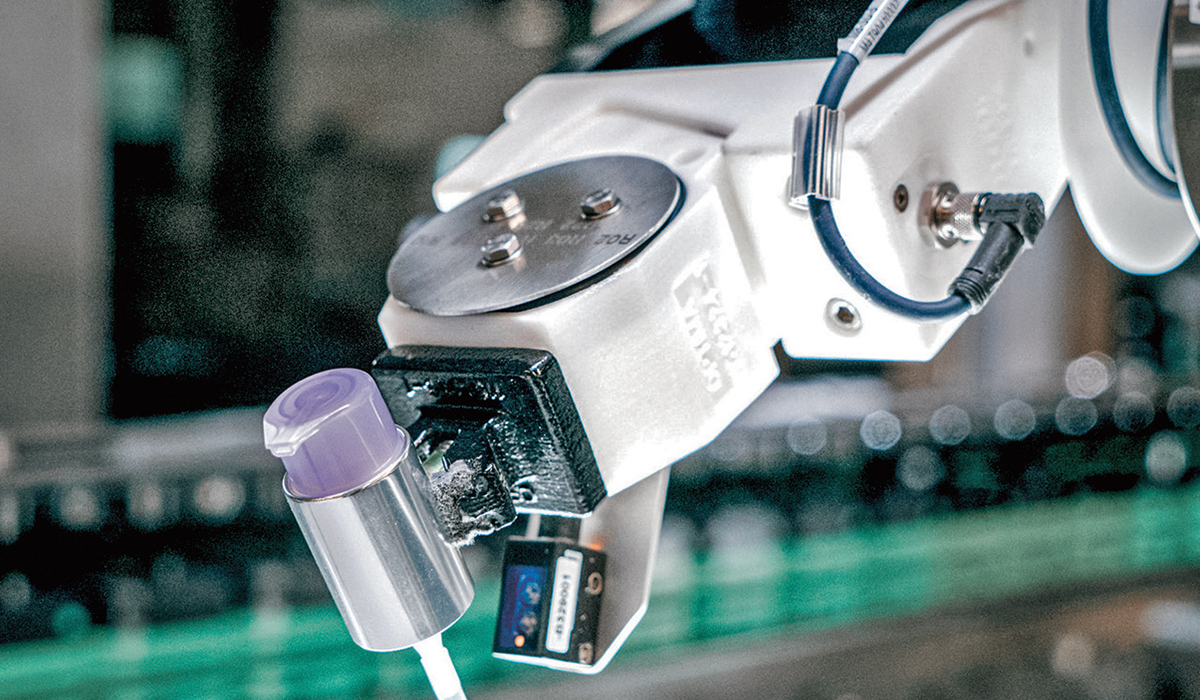
“In a joint pilot project with the customer, we were looking for a suitable new format,” says Michael Weber, director of service at Optima Consumer. In an innovative workshop, a fresh look has been given to the topic of formats. Conventional parts were split into a “carrier range” and a “flexible format range.” The customer could already order the carrier parts for its systems in large quantities. If that leads to new format requirements later, only the flexible format part will be adapted to the new container or constructed in CAD. The 3D printer produces the parts within a few hours, and then the entire format conversion kit is on its way to the customer.
Use of the latest 3D printing technologies
Optima uses the latest 3D printing technologies from the in-house Additive Innovation Center, a facility that uses and further perfects all the standard 3D printing technologies. It features a 3D printing lab and a training and design area. The customer can even print the parts on its own printers onsite. In a virtual meeting with the customer’s global management team, Optima presented the idea of a puzzle system with 3D printed format parts and fixed carrier parts. “The customer was impressed and gave the go-ahead for immediate project implementation,” Weber says. The order for the first format set came in right away after the presentation of the concept. A field test should now bring insight in terms of wear, resistance and accuracy under production conditions.
Tried and tested technology, new approach
The final result is a format set from base parts held in stock, into which the 3D printed puzzle segments (blue), which are object-dependent, are clipped and then bonded together. Another ultra-modern technology is the chemical bonding of the 3D printed parts. Optima also is developing this technology. “We are excited to see which application areas will emerge in the future,” Weber says. The success story of 3D printing in mechanical engineering has just begun.

Company: Optima Machinery Corp.
Innovations: 3D printing in mechanical engineering
Website: optima-packaging.com