

Unethical and toxic workplaces don’t just damage the business’s reputations — they also harm the people, says Samaritan Executive Director Rosangela Berbert.
“They create stress, they end up leading to burnout, they end up causing depression, anxiety and even moral injury, which is the damage going to one’s cautions or moral compass,” she says. That inherent connection between ethical workplaces and mental wellness is why her agency — (formerly) known as Samaritan Counseling Center of the Fox Valley — hosted the Ethics in Business Summit on Thursday.
Samaritan serves clients who are experiencing life challenges and mental health concerns, integrating faith and spirituality into its psychotherapy services.
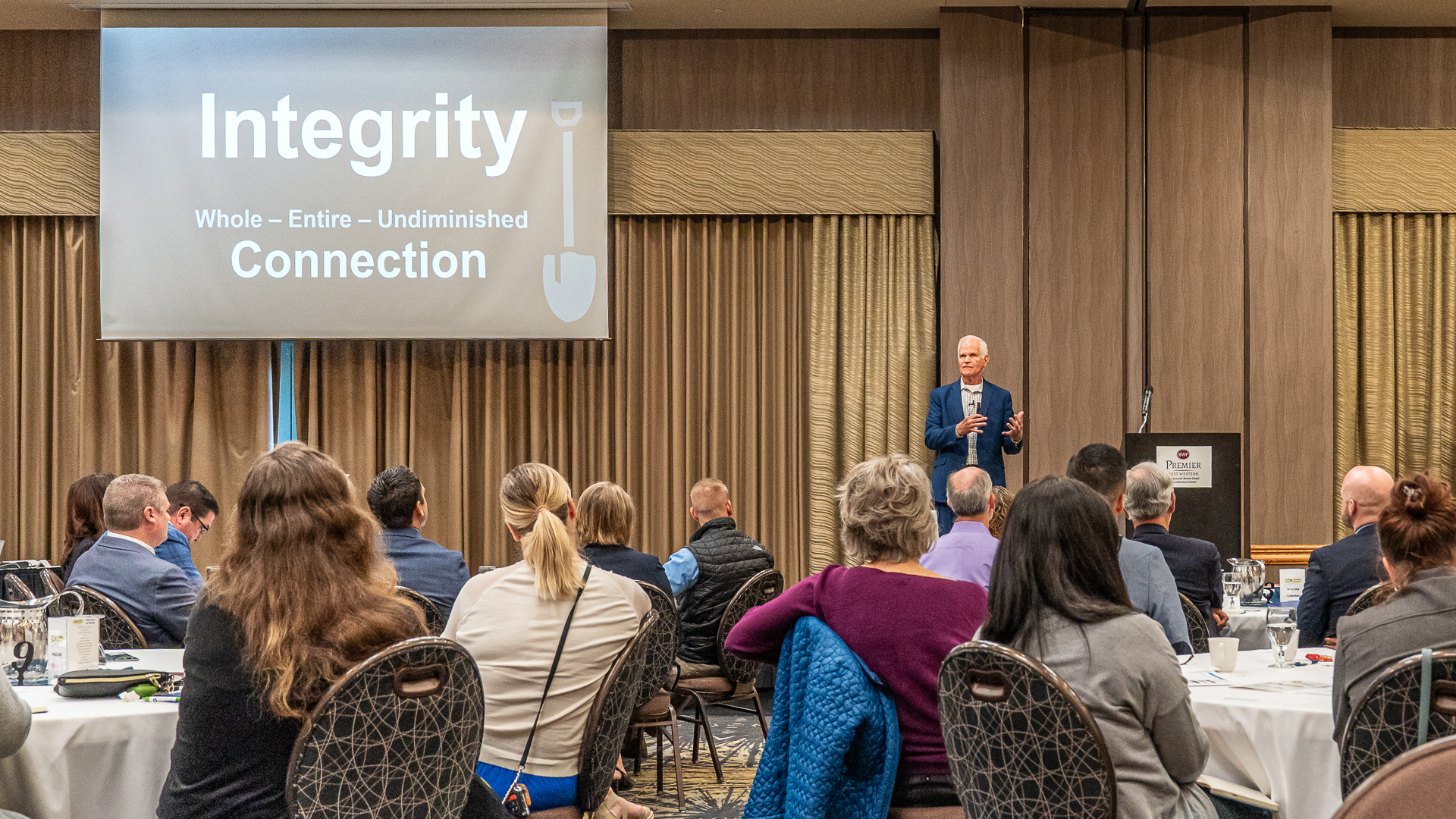
The 11th annual summit drew 164 attendees and featured a keynote address with John Blumberg, a former CPA and author of four books including “Return on Integrity: The Individual’s Journey to the One Essential Thing.”
“When someone witnesses or participates in acts that violate their own ethical values, it can lead to shame, disconnection, hopelessness, in cases, even to suicide,” Berbert says. “If nothing else, it creates disconnection and creates higher turnover, reduces productivity and all of that.”
Ethical workplaces, on the other hand, are built on integrity and create environments where people can thrive. “They nurture trust, both belonging and purpose. And that’s why Samaritan is involved in this conversation and hosting this conversation,” Berbert says.
The cost of mental health issues in the workplace comes up to $47.6 billion annually for employers, Berbert says.
“If that sounds kind of unrealistic, just imagine what happens when someone is struggling with the pressure of anxiety to the point that it interferes with their daily functioning?” Berbert says. Those workers may show up, but they won’t be at their best — that creates underproduction, increases errors and situations in which a person might be in their best state of mind to make crucial decisions and ethical decisions.
“And also if the mental health condition is in the family, in the household, the person coming to work will bring that concern with them,” Berbert says. “So that kind of cost right is what we’re talking about.”
Research shows that for every dollar invested in the mental health of employees, businesses get a $4 return. “Ethical practices in the workplaces are essential for the mental wellnesses, the mental well-being of individuals and the whole community,” Berbert says.
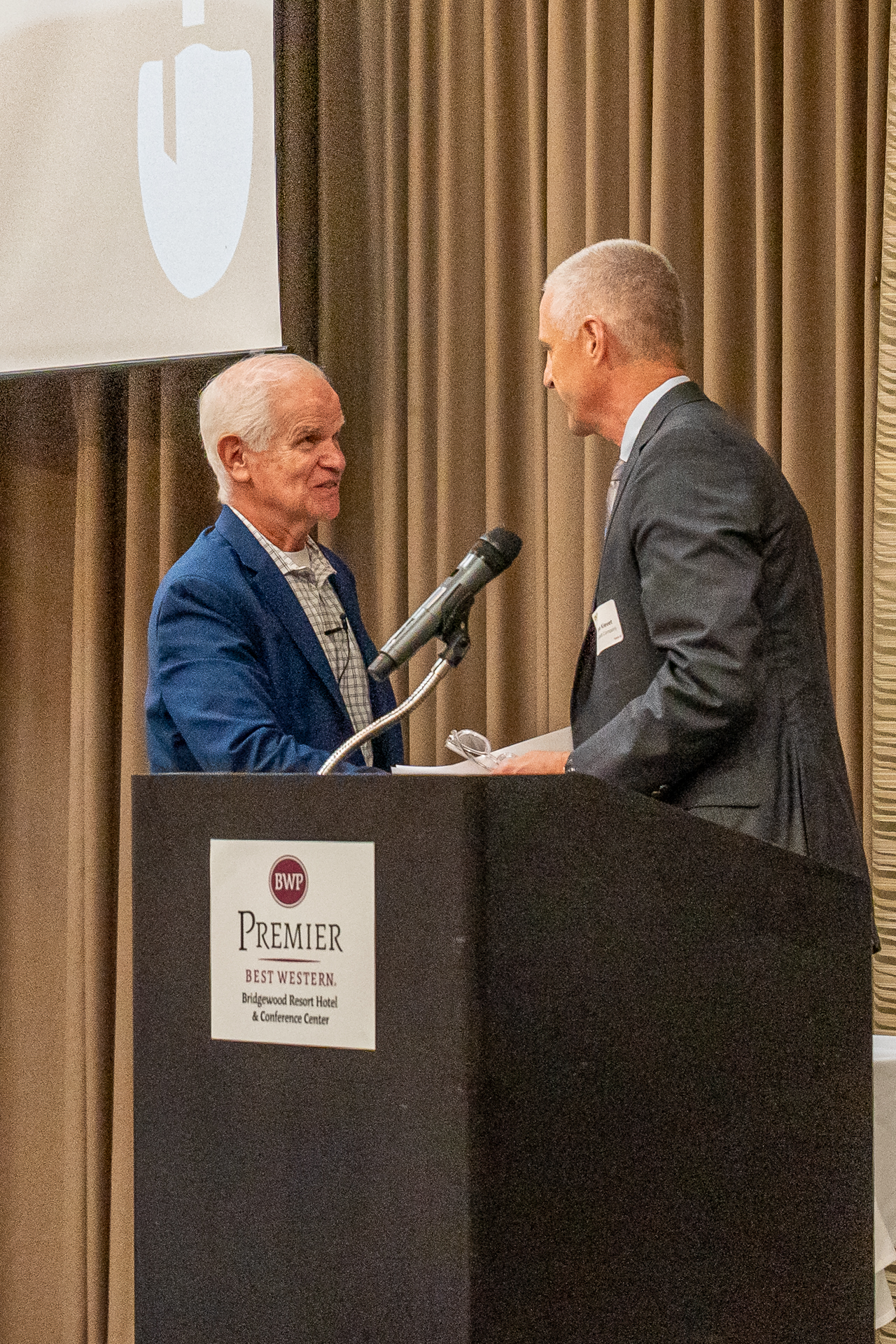
Dave Kievet, president and CEO of platinum-level sponsor Boldt, introduced Blumberg and his message, saying values and integrity are strategic advantages. Leaders who lead with integrity “build trust, they build inspired teams and they create cultures that perform at the highest levels in their industries,” Kievet says.
Blumberg says people don’t run away from their values suddenly. “We go drifting away, and one day we wake up in a place that we never meant to be, drifting in a direction we never would have chosen.”
While that drifting is a dilemma, it can also be a great gift because it leads us to examine our core values more deeply, he says.
Blumberg’s aim for the morning session was for participants to:
-
reimagine their idea of integrity and see greater potential for it
-
reconsider internal and external dilemmas that pressure the essence of integrity
-
reconfigure clarity surrounding our core values
“And the fourth — and maybe the most important of all — is to reignite your passion around that any of this actually matters in a world that it seems to say that maybe integrity just doesn’t matter anymore,” Blumberg says.
In this interactive event, Blumberg had participants write down and share potential dilemmas involving integrity, as well as write lists of core values, most of which he pointed out were actually behaviors (the actions we take), wants (our passions), or needs (family and connection).
“When your needs are grounded in your core, and the core is fueling your needs, your wants and behaviors, all of those other three categories actually become far more influential,” Blumberg says.
At the event, Samaritan also announced that it had received a momentum grant this week from the Advancing a Healthier Wisconsin endowment from the Medical College of Wisconsin. The grant will help the agency develop an adult version of the mental wellness screening it has used in schools since 2012 and adapt it to the workplace, says Berbert.
“Over the years we have prevented many, many deaths of young people, but the number of deaths by suicide, particularly among middle aged men, has increased significantly, and many of the industries represented here are industries where those numbers are higher,” she says.
The Centers for Disease Control and Prevention says that construction, mining, transportation and warehousing, aerospace, agricultural/food science and food/drink service industries showed elevated suicide rates for both men and women.
Once the program is ready, Samaritan would like to work with several businesses to pilot the program. “This is another way that you can invest in the mental illness of your individuals, your business and the community,” Berbert says.
The event was sponsored by local businesses including Boldt Co., U.S. Venture and media partner Insight Publications.