
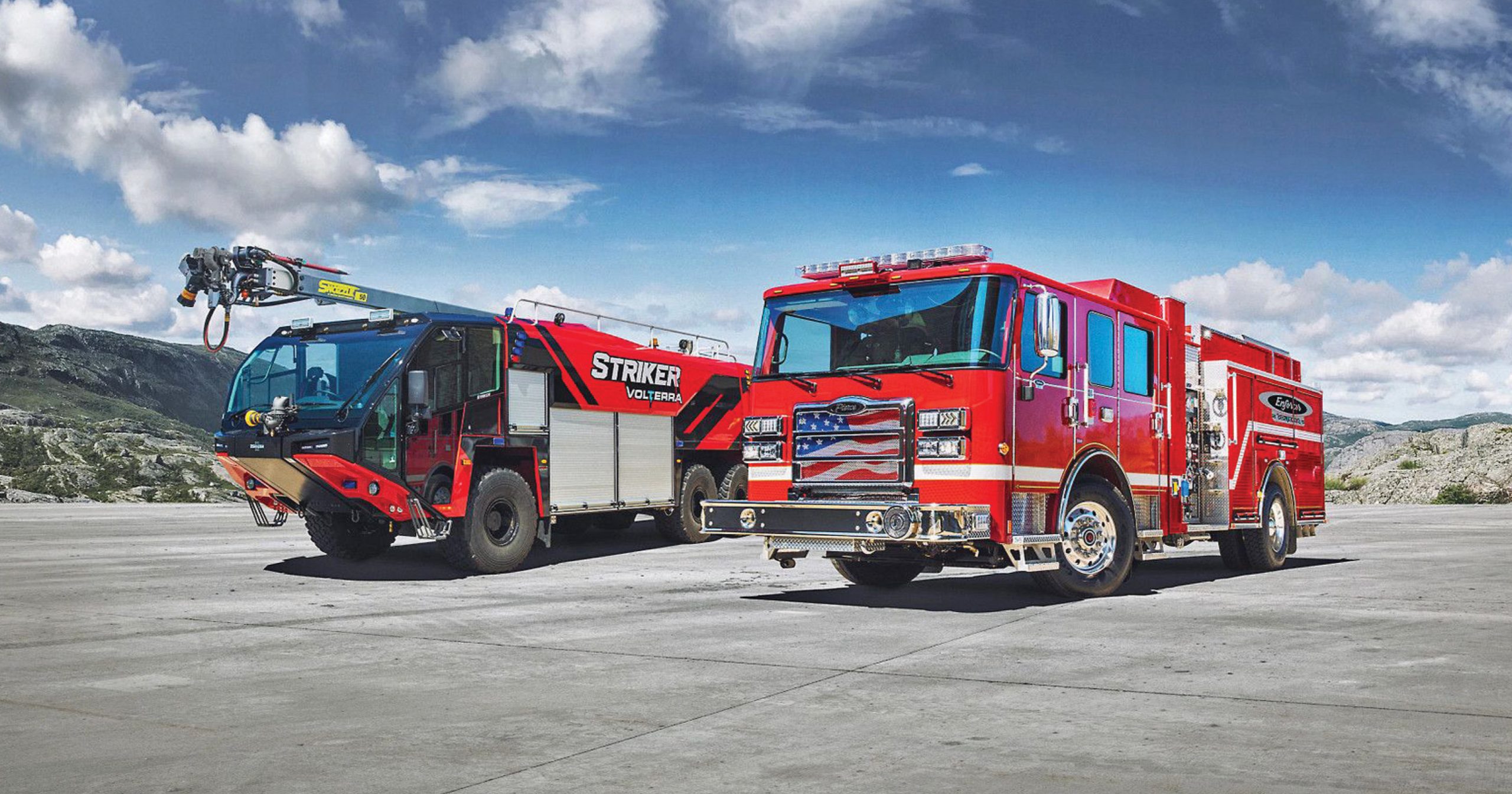

Oshkosh Corporation is an industrial technology company with a long history of innovation. We are pioneering innovations in our equipment across electrification, autonomy, active-safety, mobility, advanced analytics, and intelligent products — from autonomous, unmanned vehicles to the first electric, zero-emissions fire apparatus in service in North America. Two team members who have played key roles in the development of Oshkosh’s next generation of vehicles are Rachell Harsh, Chief Engineer – Advanced Products, Controls; and Catherine (Cathy) Linsmeier, Director of Engineering – Global Technology Software.

We have been a leader in the development and manufacture of electric and hybrid electric vehicles and equipment for 25 years, starting with the engineering and delivery of the first electric boom lift in 1994. Cathy and Rachell have contributed substantially to Oshkosh’s progress with electric vehicles, with 20 and 15 years of experience, respectively. Early in their careers, you often would find Rachell or Cathy with a multimeter in one hand and wire strippers or a laptop in the other, working on the electronic systems for advanced technology prototypes equipped with hybrid electric powertrains and semi-active suspension systems.
Today, Rachell leads the controls development team within the advanced products group focused on electric vehicles. Electrification at Oshkosh spans multiple business units, each with its own uniquely defined goals and targeted metrics. While Oshkosh Defense is utilizing electrification for silent watch capability and export power, Pierce and Oshkosh Airport Products are focused on firefighters’ health and safety coupled with increasing demands for zero-emission vehicles.
With her role in the advanced products controls group, Rachell has primary responsibility for designing the vehicle controls architecture, meaning the software integration of all the electric vehicle (EV) components such as the electrical powertrain, high-voltage battery, air compressor, hydraulic pump, etc. To do this successfully, controls engineers need to be well-versed and educated in software development as well as mechanical and electrical engineering. Rachell’s background in systems engineering and integration — in addition to her software, communication, and controls knowledge — allows her to provide great leadership to the controls team and to the programs she supports. She also takes it one step further by not only thinking about the current project but about future use cases as well. Rachell is always identifying what tweaks she can make to her system now that will make the controls easier to implement on future vehicles.
With the complex system architecture Rachell oversees, she works closely with Cathy and her software team to develop a fully integrated system meeting all customer requirements. As director of a team with more than 50 people, Cathy is responsible for a wide range of areas including software development, intelligent products, cybersecurity, and functional safety.
One technology in our Intelligent Products portfolio is telematics systems. Telematics are used to communicate bidirectionally and allow our customers to monitor their fleets using customer portals. Telematics also allow technicians to remotely diagnose vehicles and support over-the-air updates for our products. Just like electrification, intelligent products are another key technology focus area across every Oshkosh business unit. For example, Oshkosh Defense utilizes telematics for condition-based maintenance, concrete placement uses telematics for vehicle productivity and driver monitoring, and Pierce is unique in its focus on fire departments’ incident response needs, operational efficiency, and total cost of ownership. Cathy’s team writes the software applications and selects the telematics hardware used to connect these vehicles, highly customizing their solutions to meet unique needs and provide more value to our customers in their industries.
As vehicle architectures become more complex and connected through various software and electrical systems, no one wants a vehicle that has vulnerabilities. Cathy’s team focuses on cyber-hardening the hardware and software systems to ensure that no hackers can access our systems. Think about how your cellphone often requires software updates; these updates are typically to patch vulnerabilities to protect you from being hacked, and this is similar to the critical work Cathy’s team does to protect our vehicles.
Product functional safety also has become critically important to ensuring that our products create a safe operating environment for the users. Cathy’s team members have become experts in functional safety, providing safety oversight for the electronic and control systems across multiple product lines. Our products go through rigorous reviews to ensure they operate as intended and provide the safest operating conditions for the users.
Recent innovation projects are benefiting from the wide range of experience Rachell and Cathy have in electrical, mechanical, and controls engineering, as well as their leadership. For example, both are heavily involved in the integration of the various software and control systems into the Pierce Volterra™ platform of electric vehicles. The Pierce Volterra pumper is North America’s first electric fire truck in service in Madison, Wisconsin. Pierce and Oshkosh Airport Products, both companies in the Oshkosh portfolio, debuted the revolutionary Volterra™ platform of electric vehicles for municipal, airport, and fire & emergency markets. The electric vehicle platform delivers increased performance, functionality, and safety with zero emissions.
As part of its product development process, Oshkosh captures lessons learned. Some of the lessons learned from the Volterra electric vehicle project quickly led into real gains when applying the same methodology to the eJLTV, another project Rachell and Cathy contributed heavily to. The eJLTV, developed by Oshkosh Defense, is a hybrid electric Joint Light Tactical Vehicle offering for the U.S. Army and U.S. Marine Corps, that shares the same level of performance and protection as the base JLTV with the addition of silent drive, extended silent watch, enhanced fuel economy, and increased exportable power.
Looking toward the future, Cathy and Rachell see connected vehicles and electrification as opportunities to advance Oshkosh products. Driving innovation with intent, Cathy and Rachell’s teams tackle each new intelligent product or electrification initiative to meet the needs of everyday heroes who rely on our products to do difficult jobs.
Between intelligent products, autonomy and active safety, and electrification, vehicles are becoming more complex, requiring more electronics and more software. To meet this demand, Cathy believes Oshkosh will continue to make the user experience more intuitive and find value above and beyond the daily operation of the vehicle. Rachell sees a real need to practice a systems engineering approach. From product inception through production, well-rounded and versed engineers are needed to take on the requirements, implement the design, and verify/validate to provide a quality product.

Company: Oshkosh Corporation
Innovations: Electric and hybrid electric vehicles and equipment
Website: oshkoshcorp.com