

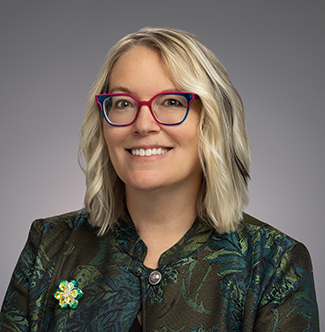
Let’s say you have a small kitchen appliance that won’t work, or a pair of pants with a rip in a place you really don’t want a rip. Instead of throwing that item away, Janelle Peotter has created a way to give those items a new life.
Peotter is founder and volunteer coordinator for the new Sturgeon Bay Repair Café, a monthly event where people can bring their broken items in and have them fixed for free by one of several volunteer experts. The repair café idea is part of a global movement launched in Amsterdam in 2009 to create an alternative to throwaway culture, and Sturgeon Bay is one of thousands of communities that have now embraced it.
Peotter, who is originally from Sturgeon Bay and lives there now part‑time, spent 30 years as a school social worker in Green Bay, where she “really learned a lot about community collaboration and working with people,” she says. When she retired 10 years ago, Peotter moved to the Hudson Valley community of New Paltz, New York, but she wasn’t one to let the grass grow under her feet, even in retirement.
Instead, she spent five years as the volunteer climate smart coordinator for the Climate Action Coalition, working with local legislators and advocating at the state level for environmental laws and finding solutions to problems like single‑use plastics.
“I have a passion for a lot of things,” says Peotter. “And I’m not one of those people that just sits around and complains about something. I look at it more like, ‘OK, what can I do to at least contribute to solving the problem?’ I don’t have much patience for people who just complain and don’t take action.”
Peotter grew up surrounded by fix‑it people: Her father was an aeronautical engineer; her brother is a mechanical engineer. She learned to sew in grade school from her grandmother, a seamstress who did alterations for Prange’s. “I sewed everything,” Peotter says, and means it — clothes, seat cushions, curtains and once, for a pilot who did research in Greenland, she constructed a gigantic bag with a zipper that was 60 feet long.
Finding ways to solve problems seems to be Peotter’s specialty. During her time as the climate smart coordinator, “I learned so much about solid waste and all the ways that we impact our environment and the parts that we have control over …What we put in the landfill is our responsibility,” she says.
Around the same time, Peotter visited a repair café in New Paltz for the first time when she brought in some steel garden tools and a wire table. “What really caught my attention was not just that I got my thing fixed — but the sense of community, and the collaboration between the person bringing something in and the repair person,” Peotter says. “We call them ‘coaches’ for a reason.”
Peotter brought the idea back to Sturgeon Bay, and “what I didn’t know is what kind of response I’d get for volunteers. I thought maybe it was going to be a really heavy lift.” It really wasn’t, though. She found plenty of volunteers, including a professional woodworker she happened to start chatting with at a hardware store. He was interested in helping, “so that gave me the energy to think, ‘yeah, I think this could work.’”
A letter to the editor brought out 20 people to a community meeting she organized, “and off it went.”
Sustain Door became the fiscal agent for the Repair Café, and Hope United Church of Christ offered to host. In July 2025, the repair café held a soft rollout for family and friends. In August, the Sturgeon Bay Repair Café began opening to the public every third Saturday.
When someone visits the Repair Café, they can bring in something “beloved but broken, and you are matched up with someone who can potentially fix that item,” Peotter says.
There are always people available at the café that can help with mending clothing, make basic repairs to wood items, and problem‑solve electrical items, and rotating volunteers who are good with other items. People have brought in all sorts of things, including once a sitar, a musical instrument from India. While the repair café didn’t have a musical repair expert, a bicycle repair volunteer was able to figure it out, Peotter says.
“We have a librarian who comes every other month and does book repairs, which is really nice,” Peotter says.
Interest in the café has been strong. “These are hard times for many people, and to be able to offer this service that is free and open to the public, it’s so good. It helps people. It’s heartbreaking when you have to either throw that thing away, go buy a new one, or you have it sitting in a closet going, ‘Gosh, I wish I could get this fixed.’”
On the other side, “I never want businesses to think that we’re trying to put them out of work,” Peotter says. A repair café item is something that probably couldn’t even be donated in its condition, whereas if you have a stack of 10 pairs of pants that need to be shortened, for example, that’s a job for a seamstress.
Many of the repair café volunteers are retirees who have valuable skills to share. Likewise, the repair café recently added a technology table where someone of a younger generation can walk older adults through troubleshooting or apps on their phone.
“When I walk into the room, it’s like there’s this buzz in the air — people are talking to each other, engaged,” Peotter says. “So that, to me, is equal in value to things getting fixed and not put in the landfill.”

Fix it instead
Throwaway culture
The U.S. Environmental Protection Agency says the U.S. created 292.4 million tons of municipal solid waste (MSW) in 2018, the most recent data available. That’s 4.9 pounds per person per day. Of that waste, about 69 million tons were recycled, and 25 million tons were composted.
If you need something fixed
You can let the Sturgeon Bay Repair Café know what kind of thing you have that needs fixing. “A lot of times I get Facebook messages for people asking, ‘Do you have a person there that can fix XYZ?’ And a lot of times I can just answer that question straight off,” Peotter says. People also can email sturgeonbayrepaircafe@gmail.com.
If you want to volunteer
The Sturgeon Bay Repair Café has about 20 volunteers, usually about a dozen attending each café event. Volunteers are always wanted, whether you’re an expert in fixing something or not. The repair café is looking for someone who is great with kids to lead a “take‑apart, put‑it‑together” children’s table, and the café seeks a young person to volunteer for the technology station to help people better use the tech that they own.