
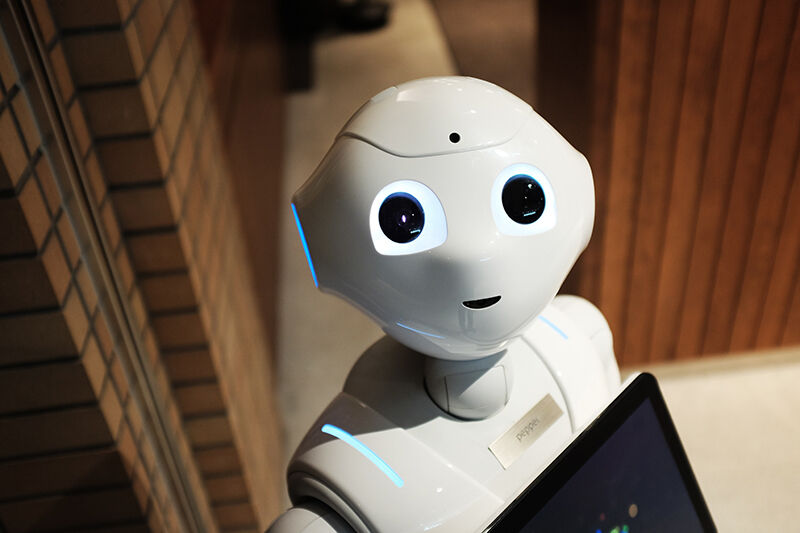

With all the buzz surrounding generative artificial intelligence taking our jobs, it’s hard not to feel a little threatened — especially as someone who has built a career on written communication and all its many manmade conventions.
The biggest newsmaker has undoubtedly been OpenAI’s chatbot ChatGPT, an artificial intelligence system that creates eerily human-sounding text based on user input. It has been making headlines and causing controversy since it launched to the public in November.
It wouldn’t be so controversial if the technology wasn’t so good. For example, ChatGPT submitted a job application to a communications consultancy firm that was deemed “more competent” than most human applicants.
Despite growing ethical and copyright concerns, during January’s World Economic Forum in Davos, Switzerland, top CEOs reported using ChatGPT as “an assistant” in writing everything from blogs and emails to job descriptions.
So what’s a content creator to do? There seem to be two camps: those who view AI as an imminent threat to their livelihoods and those who see it as a tool that can help them create more, faster.
I try to remind myself that when digital cameras hit the market, film photographers were aghast. Traditional artists weren’t too keen on digital graphic design tools. Technology has long been evolving the way we work and create. Maybe this is no different.
Auto industry pioneer Alexander Winton founded the Winton Motor Carriage company in 1896 and sold his first car the following year.
In a February 1930 article he penned for the “Saturday Evening Post,” Winton wrote: “The great obstacle to the development of the automobile was the lack of public interest. To advocate replacing the horse, which had served man through centuries, marked one as an imbecile … I began to be pointed out as ‘the fool who is fiddling with a buggy that will run without being hitched to a horse.’”
I guess in this case, humans are the horses. And while steeds are no longer our preferred mode of transportation, I’m hopeful for a future when humans and AI can coexist and co-create — because the heart and soul we humans bring to the table is hard to replace.