

Wisconsin is a burgeoning wine region, with state-grown-and-made wine becoming a serious contender against wine made in Italy, France, Napa Valley and a number of other heralded wine regions, local makers say.
Wisconsin’s wine production history is relatively short, as its first licensed winery — von Stiehl Winery — was established in 1967. Today, Wisconsin counts approximately 125 licensed wineries, according to September 2022 Wisconsin Department of Revenue licenses and data from the Wisconsin Winery Association and Wisconsin Apple Growers Association. Collectively, the industry has a $4.54 billion economic impact in Wisconsin, according to the 2022 National Economic Impact Study of the American Wine Industry.
New legislation
There’s immense opportunity to significantly increase that impact with the passage of a modernized version of Wisconsin State Legislature Chapter 125, for which most provisions will go into effect in May. It’s been an eight-year effort by Steve Johnson, co-owner and winemaker for Parallel 44 Vineyard & Winery and Door 44, and his peers with the Wisconsin Winery Association.
“That chapter deals with the production and sales of alcohol in the state, and the biggest benefit has been the change that now allows wineries to have multiple locations. This is critical, as many Wisconsin vineyards are in rural settings and you want to expose metropolitan areas to your product,” says Johnson, who serves as president of the Wisconsin Winery Association. He and his wife Maria Milano established Parallel 44 Winery & Vineyard in Kewaunee in 2007 and its Door County presence in 2013, building a new facility there in 2019.
The chapter updating also allows wineries that produce their own wine to self-distribute up to a certain gallon maximum (versus selling through a distributor at any site beyond their tasting room). With the ability to have multiple tasting rooms and locations, Johnson and Milano could imagine having a tasting room in the Third Ward in Milwaukee, for example, perhaps even alongside other Wisconsin-grown and produced wines.
“It would greatly increase exposure if we had a daily presence [in a market like that] rather than only having those customers swinging by our door [in Door County] once a year,” Johnson says. “They could have exposure to our wines without expecting them to drive 200 miles to try the wine at the winery.”
Further, the legislation allows wineries to also sell liquor and beer at their locations.
“It’s opening more opportunities for wineries to have more success,” Johnson says. “In terms of following a tourism business model, we want to be able to make as many customers happy as possible.”
The legislation also allows wineries to stay open later in the evening.
“We have events with 300 to 450 people, and the place is packed, but we had to kick them out at 9 p.m.,” says Jay Stoeger, director with the Wisconsin Winery Association and co-owner of Cold Country Wines & Vines. “Staying open later is also huge because we’re increasingly getting into being a wedding venue.”
Johnson says the Wisconsin Winery Association’s next steps are to push for more state support for the wine industry’s impact on tourism and to secure funding to market the industry as a key element in making it a great travel destination.
“Other up-and-coming states [like] Michigan and Oregon are doing this, and it’s a huge income-generator for the state,” he says. “The more we promote our unique offerings, the more the state will be able to bring in [in taxes]. The multiplier effect of a wine region in a state is becoming more and more important.”
A different grape
It wouldn’t be a smoke-and-mirrors campaign. This region’s American Viticultural Area (AVA), defined by geographic location, climate, soil and topography, is known as The Wisconsin Ledge AVA and for its unique properties that translate into the wine. The place in which a wine is made greatly affects how it tastes and its overall character. This is known as “terroir,” a French word that describes why wines made with grapes in one region or area taste different from another.
“We have something distinct here that makes our wine high quality and unique, something wine enthusiasts look for,” Johnson says.
Cold Country Wines & Vines is small to medium in size in terms of the cases of wine it produces; however, it has a larger vineyard than most wineries in Wisconsin with about 10,000 vines on 16 acres.
“That gives us the ability to control quality by controlling the quality of our grapes, and we can do that,” Stoeger says.
Although Stoeger’s grapes grow in the same region as others in the Wisconsin Ledge AVA, his winery is classified differently because of lake effect. A benefit of that is that he can grow borderline grapes more easily than can the rest of the state — and without the drastic cold spells that often wipe out those grapes’ primary and even secondary buds in spring.
“Being next to the lake, we stay a little colder in the spring so buds don’t break for another week or so and that keeps us past the danger point,” he says.
Stoeger recognizes that climate change in more well-known wine regions has affected the ability to grow grapes. Wisconsin’s grapes are hardy as the result of grape hybrids that can flourish in this part of the United States. He actually credits 2023 as the best growing year he’s had since establishing the business.
“Spring was mild, there was no frost and we had constant sun and not too much rain all summer,” he says. “Grapes don’t need a lot of water.”
Cold Country has had consistent growth since its inception, 15 to 20% per year until 2023. Sales dropped most of 2023 until late in the year, when they experienced a rebound in purchases that left sales down only 2%.
Ziegler Winery in Malone aims to attain at least 3% year-over-year growth, and Owner Randy Ziegler says the business has had no problem exceeding that goal.
“We are beating that as word is getting out and the circle of influence is getting wider all the time,” says Ziegler, who co-owns the winery with his brothers Joe Ziegler and Eugene “Shy” Zielger and Shy’s wife, Jenny Ziegler. “The quality of the product is driving that; it comes down to the fundamentals. Everything we do is around the final product.”
Showcasing Wisconsin
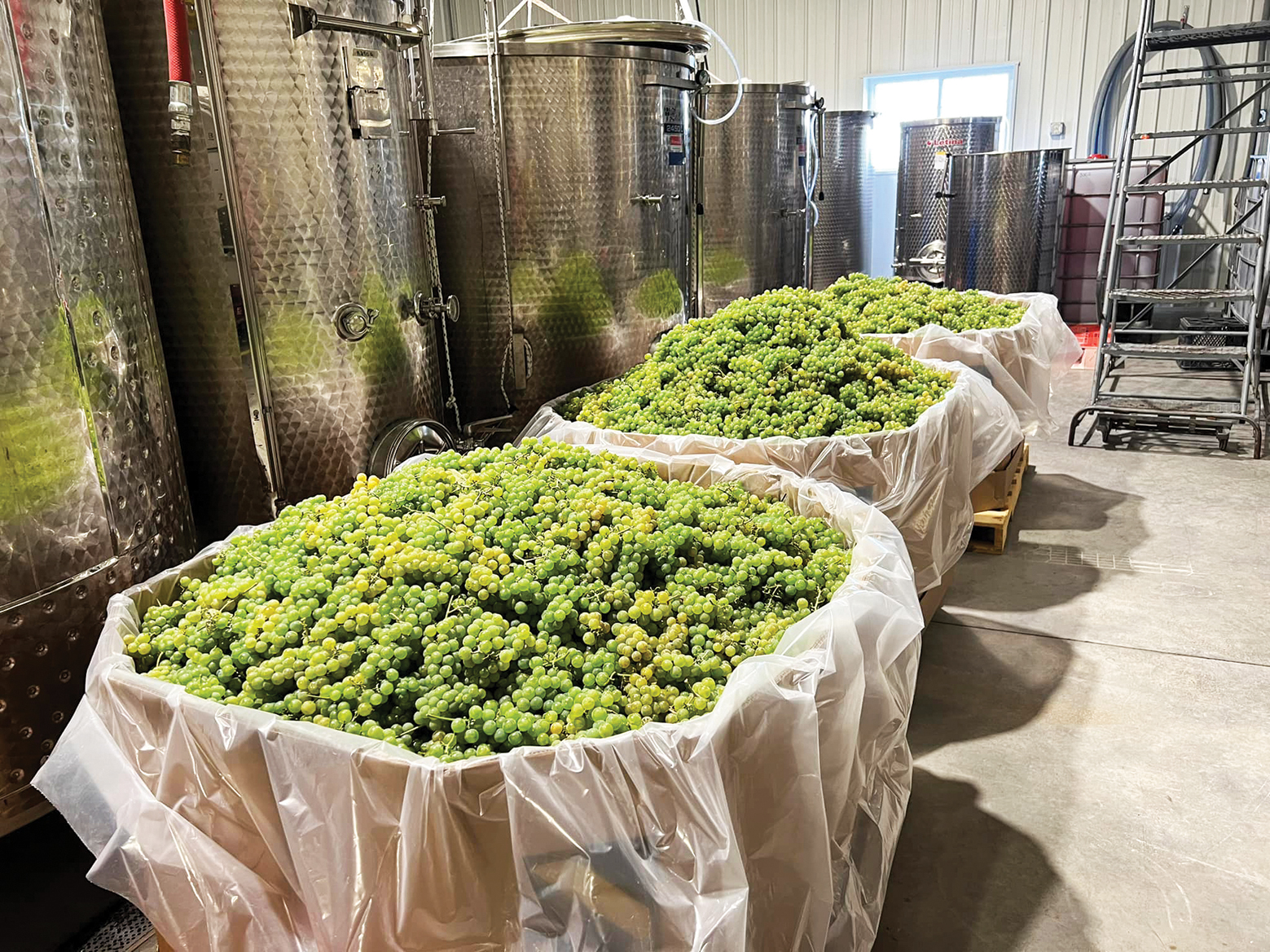
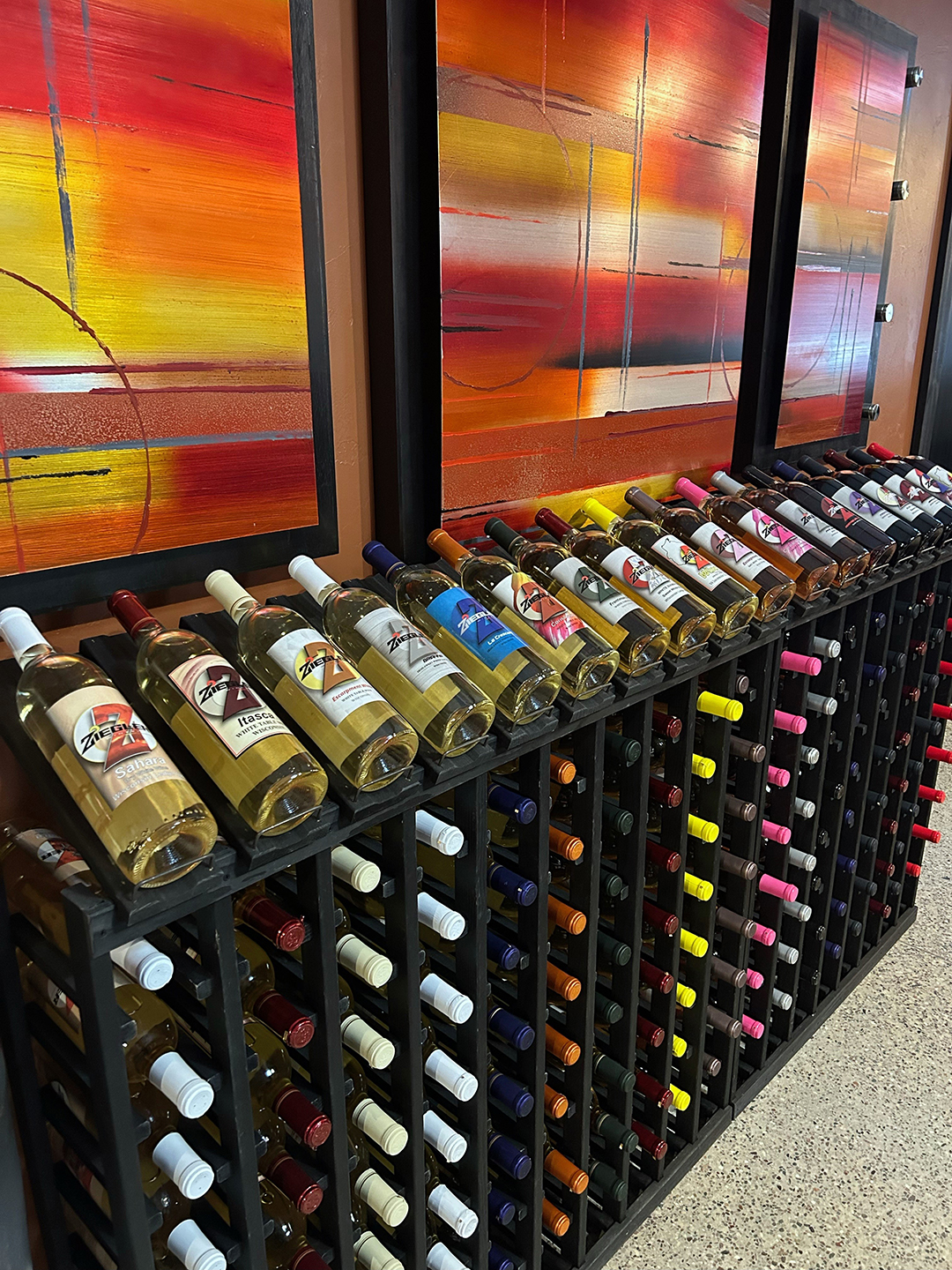
The Zieglers take great pride in showcasing the best of the farm-to-table wine they create on site from grapes grown on their 7,000 vines not far from Lake Winnebago.
“It’s important we give a representation of what Wisconsin can do with Wisconsin grapes,” Shy Ziegler says. “Our claim to fame is growing and making new world grapes for wine with the Northern Hardy hybrids. We are a 100% Wisconsin winery and don’t source anything from anywhere else.”
The wines produced can stand against wines produced in New Zealand, California and Europe, he adds.
“We have the harvest chemistry on this fruit now because of the beautiful work of hybrid creators and universities. That wasn’t the case 30 years ago, and the result is that we can create incredible wines,” Shy Zielger says.
Hybrid grapes are at the heart of Wisconsin’s success as a region for growing and making worldwide-contending wines, something that can be attributed to several people and sources. Among them is amateur grape breeder Elmer Swenson, known as grandfather of cold-climate grape growing, as well as hybrids created at the University of Minnesota, to which Swenson left all his research and discoveries.
And the hybrids create more than hardy grapes — they create delicious ones that appeal to even the most discriminating wine drinker.
“For example, our Itasca grape from the University of Minnesota makes a wine that’s almost identical to top-end Sauvignon Blancs from New Zealand,” Stoeger says. “People are amazed at how good it is, and ours even won a ‘best of show’ award with it.”
That wine is an excellent example of how the area is not only able to grow and produce ice wines, but the core wines sought by wine aficionados, whether that’s cabernet, pinot noir, merlot or a whole host of others.
“Wisconsin is growing a lot more grapes than we used to as a lot of the hybrids are made to be hardy,” Stoeger says.
“The new world grapes coming out of the University of Minnesota are game changers, allowing us to grow grapes similar to ones grown in California,” Shy Ziegler says.
“Forget California. These are gorgeous wines that can compete worldwide, and it comes down to their genetic diversity,” adds Randy Ziegler. “Many people don’t think it’s possible except in standard [wine] regions, but it is. When customers realize what we can do right here and try it, they’re very happy to consume and support Wisconsin wine.”
Johnson concurs.
“I really want to put us on the map for the next up-and-coming world wine region,” he says. “Sometimes, there’s a Midwest modesty but our wines compete with Sonoma or Napa. We just don’t have the acknowledgement of presence yet, but we shouldn’t sell ourselves short.”