
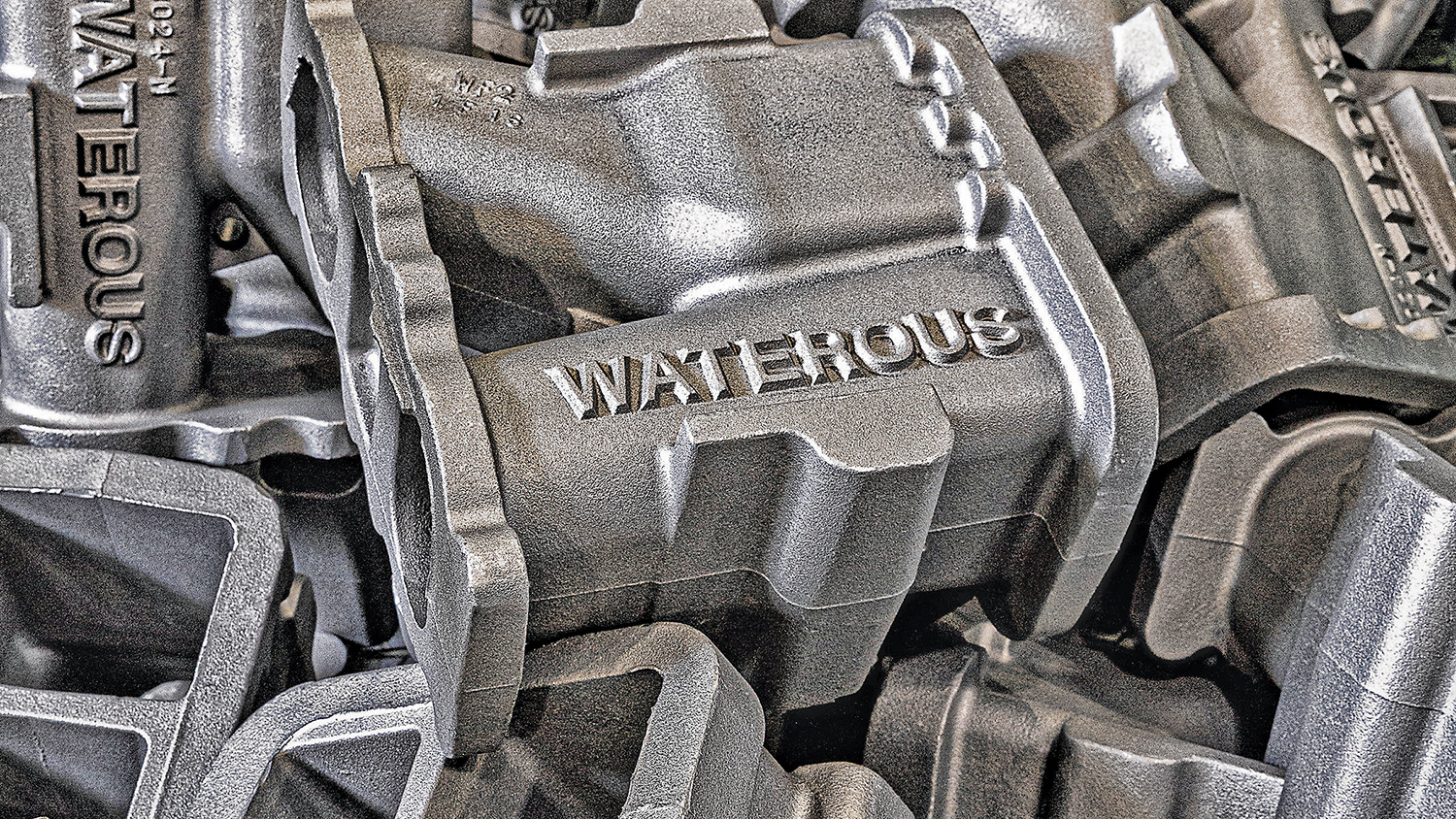

In an industry where lead time and precision can make or break a part launch, Waupaca Foundry is setting a new standard in innovation. As one of the few foundries in North America offering five fully in-house rapid prototyping solutions, Waupaca Foundry is redefining what’s possible in iron casting development.
At the core of this advancement is an in-house approach that merges traditional foundry craftsmanship with cutting-edge additive manufacturing. By keeping all prototyping processes under one roof, Waupaca Foundry eliminates delays, quality risks and communication breakdowns. The result is faster speed to market, earlier design validation and production-ready quality delivered with consistency and control.
All five prototyping methods leverage the same materials and processes used in full-scale production. The innovation lies not just in the technology, but in how Waupaca makes it accessible. Each prototyping method is tailored to different project goals, budgets and timelines, offering manufacturers a menu of options that scale with their needs.
Normal prototype pattern & core box
The normal prototype pattern and core box solution uses soft tolling materials with fewer cavities, which offer the flexibility to run multiple part numbers on the same pattern. This option is ideal for higher-volume prototype runs, delivering cost-effective prototypes with lead times ranging from eight to 14 weeks and quantities of 50 to over 1,000 pieces. Casting prototypes are produced using Waupaca’s standard production process for consistent part quality.
Normal prototype pattern & 3D-printed core
The Normal Prototype Pattern & 3D-Printed Core solution combines soft tooling patterns with few cavities with a 3D-printed core. This approach allows multiple part numbers to run on the same pattern. And it significantly reduces lead time to as little as four (and up to 10 weeks) while retaining the quality and repeatability of Waupaca’s standard production process. It’s particularly useful for casting prototype quantities between five and 500 pieces.
3D-printed mold holder
Waupaca utilizes proprietary 3D-printed mold holders to eliminate the need for a tooling investment. This prototype solution offers fast iteration and allows for production-quality iron casting pouring and processing. The lead times is just two to six weeks, and is ideal for quantities from five to over 100. The iron casting must fit in the usable area of the printed mold holder. The printed geometry for the exterior of the casting is contained within the printed sand mold. Printed cores can be added for internal geometry.
Full 3D-printed molds
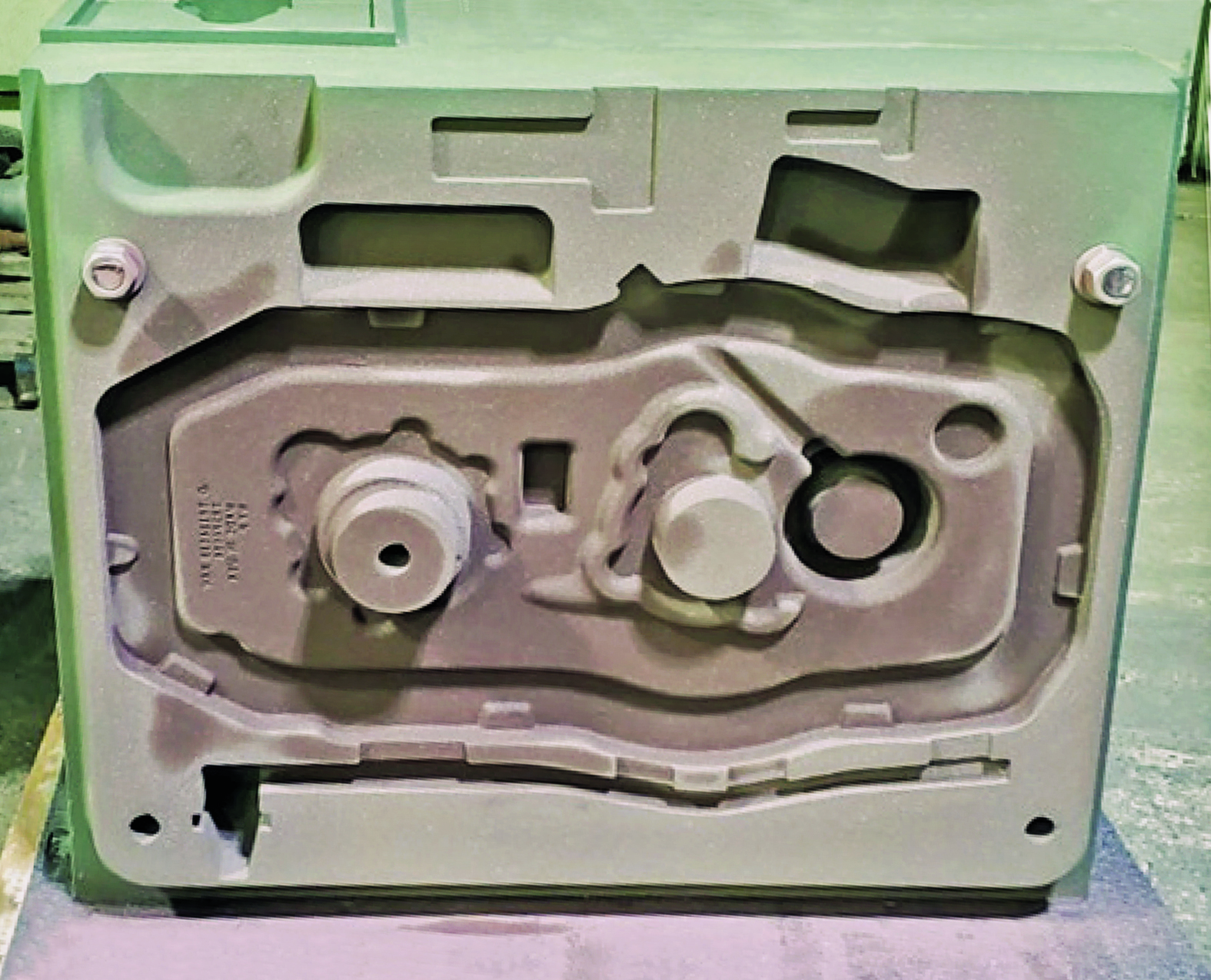
When speed and complexity converge, full 3D-printed molds offer unparalleled freedom. This method creates both the external mold and internal cores entirely through additive manufacturing, eliminating all tooling requirements. It supports low-volume runs — typically between one and 15 pieces — with a lead time of two to four weeks. This option is well-suited for intricate geometries and time-sensitive applications. Iron casting prototypes are poured using a standard production process, but require manual handling after pouring.
Small-scale 3D-printed molds
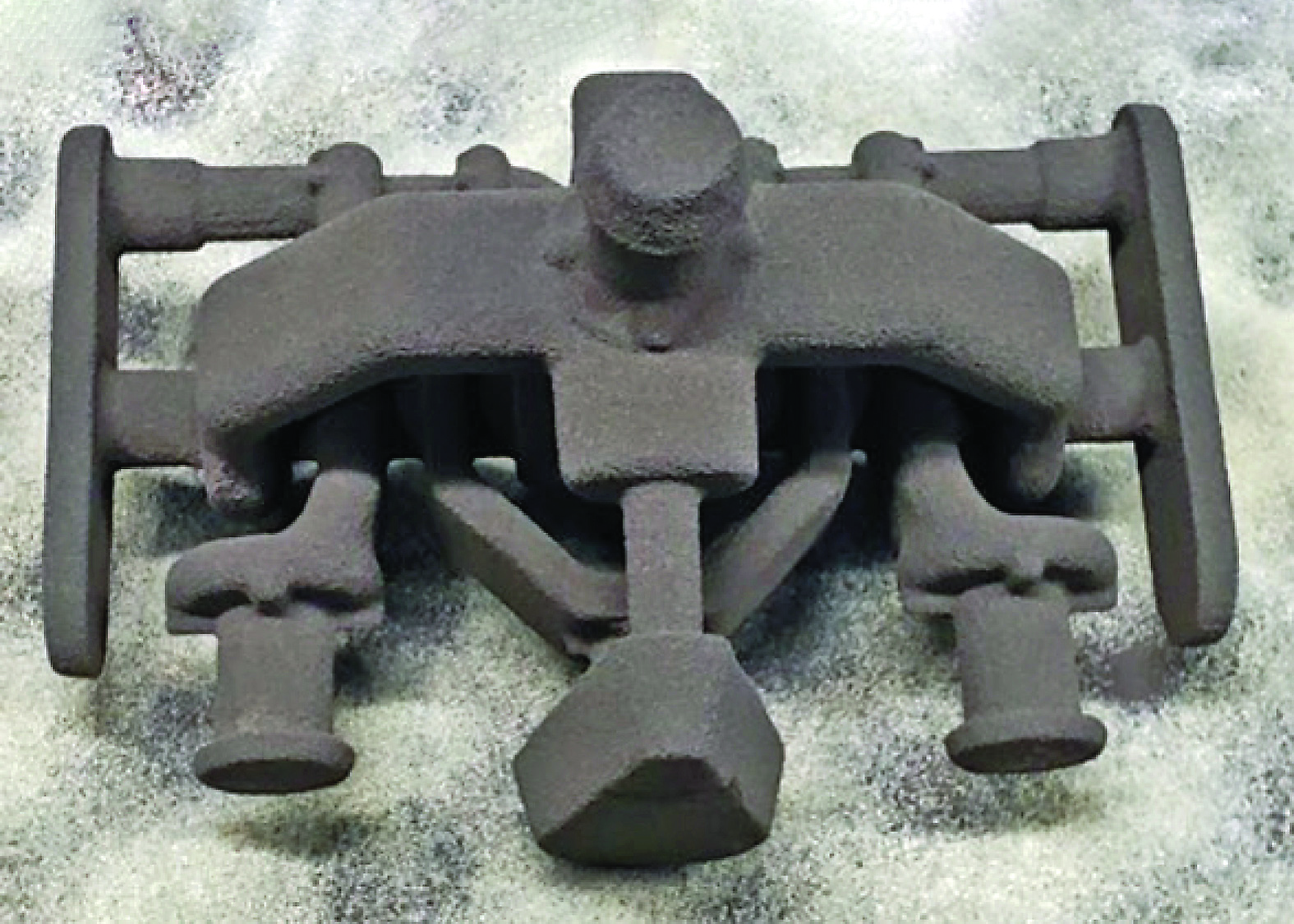
For early design validation, Waupaca’s small-scale 3D-printed mold prototype solution requires no tooling investment. These iron casting prototypes are hand-poured and manually processed after casting. This solution is an excellence to pursue before committing to other prototyping or production methods. The ideal prototype volume ranges from one to 10 pieces and turnaround in as little as a week.
Innovation that works
Waupaca Foundry’s commitment to in-house prototype solutions delivers speed, reduces design risk and accelerates informed decision-making. Engineering, tooling and production teams work side-by-side to ensure seamless execution and scalability. This not only enhances communication and quality control but allows manufacturers souring iron castings to move from concept to full production with confidence.
In a competitive manufacturing landscape, innovation isn’t just about using the latest technology — it’s about integrating it in ways that deliver real value. Waupaca Foundry’s rapid prototyping model is a clear example of that philosophy in action.
Company: Waupaca Foundry
Innovation: Rapid prototyping

