


Before she moved back to her home state in 2016 and became a champion for economic development in Wisconsin’s Northwoods, Brittany Beyer lived in New York City for 18 years. But her neighborhood in Brooklyn and her home in Rhinelander had something in common that would become an animating issue in Beyer’s career: They were both underserved when it came to broadband.

Beyer spent four years as executive director of Grow North, the regional economic development corporation serving eight Northwoods counties, and during that time was appointed the first-ever chair of the Wisconsin Governor’s Task Force on Broadband. Between her personal experiences in both highly urban and highly rural environments and the stories she heard on the ground leading Grow North, broadband access quickly grew into a personal passion.
“Some of the issues around broadband are so hidden,” Beyer says. “I would get emails from people who were 20 minutes outside of Madison or Milwaukee talking about their issues of broadband connection and how they didn’t feel they had support. The assumption is that everyone has access to broadband and all of the great possibilities that are connected to it, and the reality is very different. That’s a really big driving force for me.”
Last fall, Beyer decided to put all her effort into tackling the issue and became a consultant for Solarity, a child company of Kentucky-based Health Tech Solutions that specializes in project management for programs including broadband. She still lives and advocates in Wisconsin, but her work now takes her across the nation working to bridge what has come to be known as “the digital divide.”
The time to dive headfirst into the issue, she says, is now.
From crisis to action
The United States currently finds itself at a historic moment. The federal government is poised to spend what North Carolina-based consultant Doug Dawson estimates will total more than $150 billion on broadband infrastructure and access programs across the country over the next decade. Wisconsin’s share will be somewhere between $700 million and $1.1 billion.
Barb LaMue, president and CEO of New North, Inc., describes the unprecedented investment as a silver lining of the very dark COVID-19 cloud.
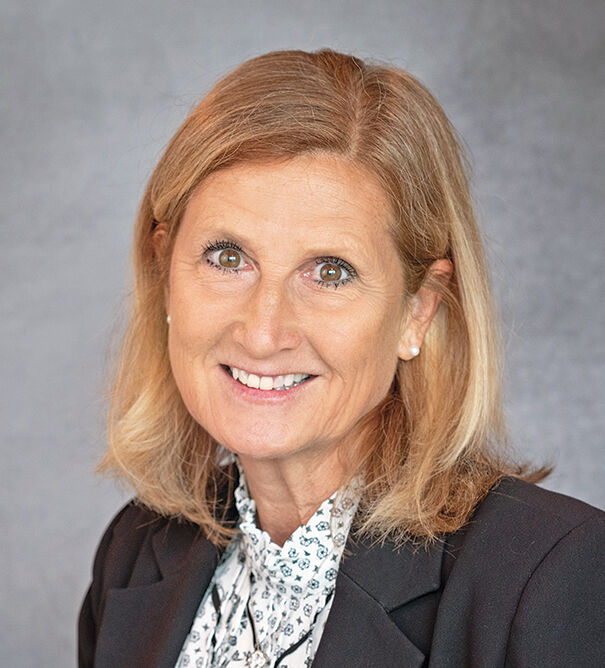
“It’s understanding not only do you have access and can you afford it, but is the access at a level that can sustain a family and their broadband needs,” says LaMue, whose organization has pivoted quickly toward leading the charge on studying and advocating for regional broadband access over the last three years, including detailed mapping and speed testing projects in all 18 counties, after the pandemic demonstrated broadband’s vital importance.
And while lack of broadband access has been leaving people behind since before 2020, Dawson says it’s important to recognize how the public health crisis heightened not only the problem but also the urgency of the nation’s response to it.
“Without [the pandemic], this never would have happened,” says Dawson, president of CCG Consulting. “It put everybody’s attention on it. Nationwide, kids went home and almost nowhere was ready for that. I’ve talked to school systems since then and almost all of them told me they lost about 9% of their students during that time, and they never came back. It was a disaster.”
The FCC’s $20.4 billion Rural Digital Opportunity Fund and the National Telecommunications and Information Administration’s $42.45 billion Broadband Equity, Access and Deployment (BEAD) program are among the largest pots of federal money currently at work. Dawson says he is hopeful that the funds will allow the vast majority of U.S. homes and businesses to gain high-speed internet access, but he notes that a large proportion of those funds will be spent on rural infrastructure — which only accounts for half of the issues fueling the digital divide.
Adoption and affordability
In Wisconsin, officials estimate that 650,000 residents lack the infrastructure for the 25 megabits per second download and 3 Mbps upload speeds that are currently the FCC’s baseline for high-speed access. But another 650,000 Wisconsinites lack broadband access for an entirely different reason: adoption and affordability issues.
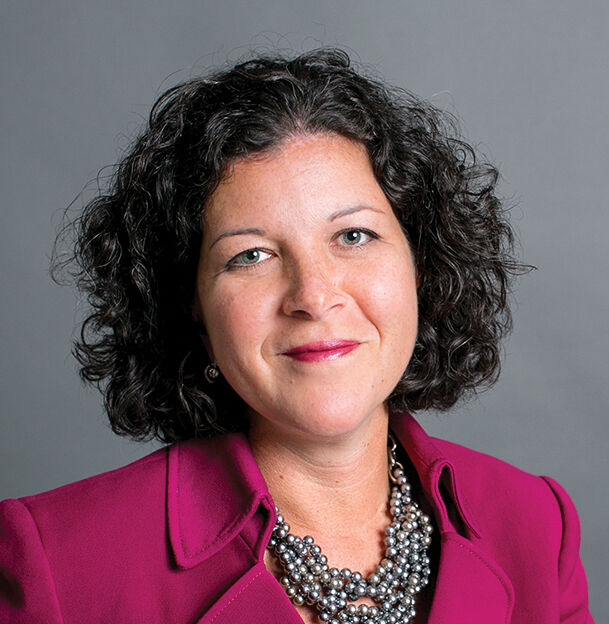
“We know that 35.5% of households in Milwaukee County are not using the internet at broadband speed despite the fact that nearly all of those households have physical access,” explains Rebecca Valcq, chair of the Public Service Commission of Wisconsin. “So we don’t have the luxury of saying, ‘OK, all the fiber has been put in the ground; you’re good.’ It’s not that simple.”
For example, Valcq says, 11% of Wisconsin households did not have a computer as of 2019. Technology like copper wire that was used in installations two decades ago may be outdated. And the deregulation of the U.S. telecommunications industry has meant that government has little ability to contain or regulate the consumer price of broadband access. The FCC’s $14 billion Affordable Connectivity Program (ACP) provides a substantial discount to Americans living below 200% of the federal poverty guidelines, Valcq says, and is something that not enough Wisconsinites have taken advantage of to date. Dawson says ACP has been quite helpful in increasing access on a national scale, but it is far from a foregone conclusion that Congress will re-up the program after its funding runs out next year.
Now the federal Digital Equity Act is paving the way for states to create programs that address access, adoption and affordability for citizens who fall into one or more eligible categories of vulnerable or marginalized populations — which Valcq says is about 79% of Wisconsinites. The state recently received $952,000 to create a five-year digital equity plan and opened up a round of workforce planning and digital equity outreach grants. The United Way of Wisconsin was the largest equity grant recipient, and LaMue says that organization will play a key role on affordability issues in the New North.
Beyer says sustainable broadband solutions will require investment at every level. Wisconsin was among the earliest states to create a dedicated broadband office, and Gov. Tony Evers has made the issue a priority. But last month, Wisconsin’s Joint Finance Committee voted to remove $750 million for broadband expansion from the state budget. Valcq called the decision not to invest at the state level for the first time in a decade “disheartening.”
“We have a lot of work coming ahead with the federal funding, so certainly we have enough to keep ourselves busy,” she says. “But my hope is that in future budgets it will be recognized that our state program is necessary to complement any federal funding we receive.”
‘Not all an infrastructure project’
The first mapping and testing phase of the New North, Inc. broadband study showed that one of the region’s more urban counties — Outagamie — has a 60% unserved or underserved population. County officials Kevin Englebert and Sadie DiNatale Burda say there is still more research to be done in Outagamie’s urban areas, but technology access, digital literacy and affordability are among the significant factors contributing to the underserved number. “It’s not all an infrastructure project,” Englebert says.
Because broadband is not considered a public utility, installing and maintaining it has been largely the domain of private companies. Jakob Iversen, associate dean of the UW Oshkosh College of Business, says lack of competition is the biggest issue affecting broadband access and affordability in urban areas.
“At any given place in the country most people have access to one provider, maybe two. That really drives a lot of the dynamics around this,” says Iversen, who notes that prices have recently decreased somewhat in the wake of competition from fixed wireless providers. “So it looks like there’s going to be more competition going forward, but it’s been this sort of weird, quasi regulated, free market but not free market situation that has been a problem for urban areas in the U.S.”
Valcq says she believes strongly that broadband should become a regulated utility. A 2021 survey by Consumer Reports found that roughly 75% of Americans share this view. While some municipalities like Chattanooga, Tennessee, have built their own fiber networks, Wisconsin remains one of 16 states that prohibits the creation of municipal broadband utilities.
Valcq, whose background is as an energy lawyer, sees rural electrification as an apt historical comparison.
“I am a full supporter of using that rural electrification model, but the big difference is that internet service providers aren’t regulated the way [other] utilities are,” Valcq says. “I’m a big believer in the role of the regulator in ensuring fair, safe, reliable, equitable access. When it comes to getting fiber to the residents in our state who may have a mile-long driveway, telling them it’s going to cost upwards of $100,000 … seems inequitable to me.”
Digital literacy, cybersecurity and access to equipment are other aspects of digital equity that can be taken for granted, Beyer says.
“We’re making a lot of assumptions,” she cautions, “that people know how to manage and interact with their devices, that high school and college students have all these basic skills … A lot of education and alignment and network-building have to happen on the equity side.”
Internet for all
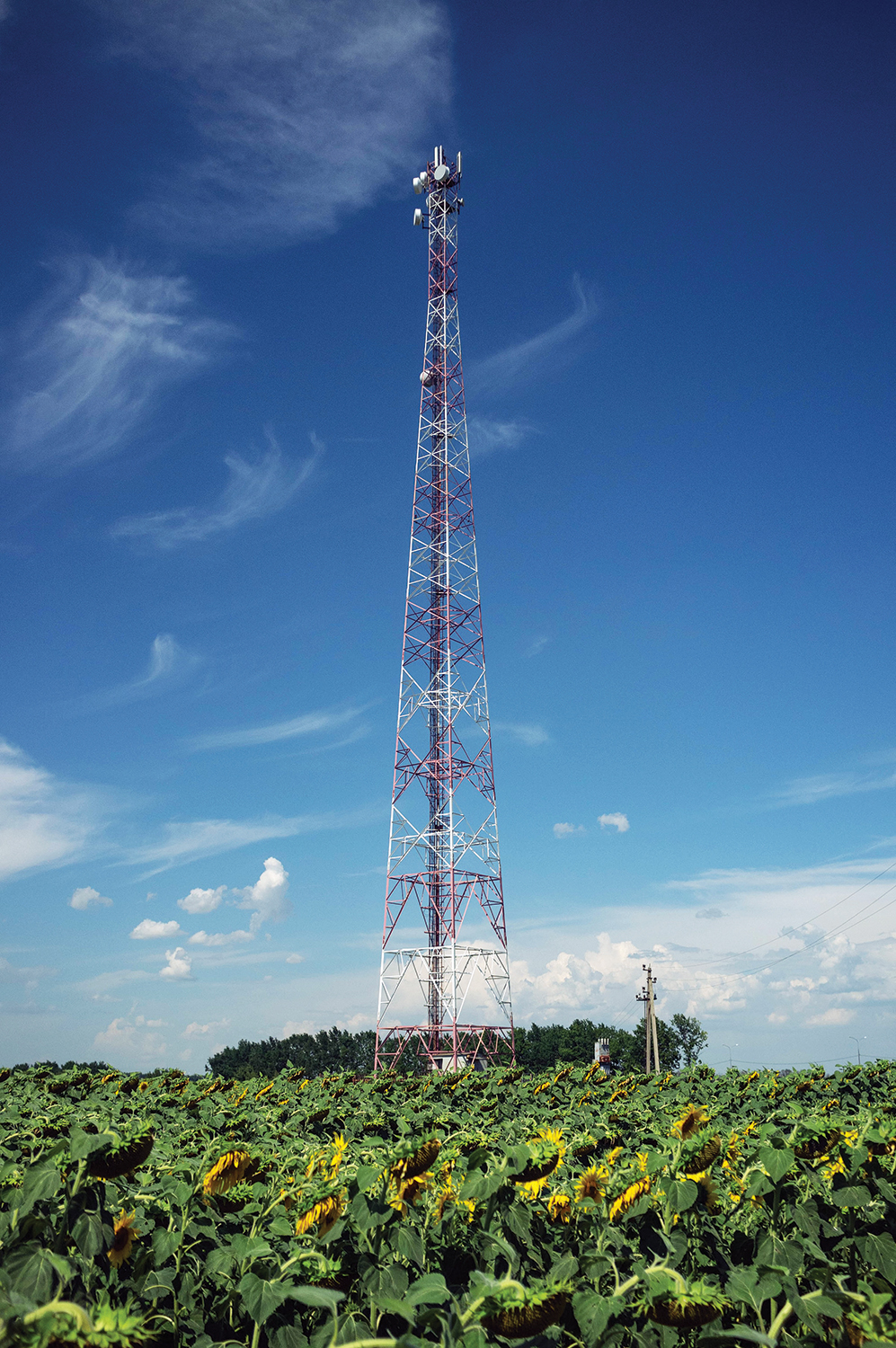
As information and processes are increasingly digitized, the digital divide widens. Beyer recalls a town representative approaching her while with Grow North about the new town clerk’s plan to move business processes online, even though the town hall wasn’t wired. There’s also the example of the health clinic that doesn’t have the connectivity to quickly transfer large medical files in an emergency situation — making broadband an issue of literal life and death.
“Not every state agency knows the definition of a community anchor institution, but that is going to be a really important piece of building up this infrastructure,” Beyer says.
Englebert says connecting government systems and libraries is a focus in Outagamie County, and he is hopeful about the opportunity to make broadband exponentially more ubiquitous in an age when it has moved from a luxury to a necessity.
“If you look at it from an economic development standpoint, most jobs require some internet connection. It’s school. It’s family. It’s information, participating in our democracy,” he says. “And if you have areas that are not connected, those are less competitive places for people to want to live or invest, start a business, go to school … and that has all kinds of spillover effects for property values, tax collections, economic wellbeing and poverty. I think it’s a basic need, and we should treat it like that.”
LaMue agrees. “You turn on the faucet and expect water to come flowing out of it,” she says. “You flip the light switch, you expect your lights to come on. And you expect … broadband access.”
LaMue can’t put a number on the amount of time her organization devotes to broadband access and digital equity these days, but “it’s significant,” she says. New North has shifted resources within the organization to meet the challenge; Englebert says Outagamie County has done the same. For both organizations, it’s a matter of striking while the iron is hot to complete a generational project.
“It’s the work of many hands,” LaMue says, “but we really look at this as a once-in-a-lifetime opportunity where we have never seen this amount of funding coming from the federal government. So it’s an opportunity we need to make a priority.”