

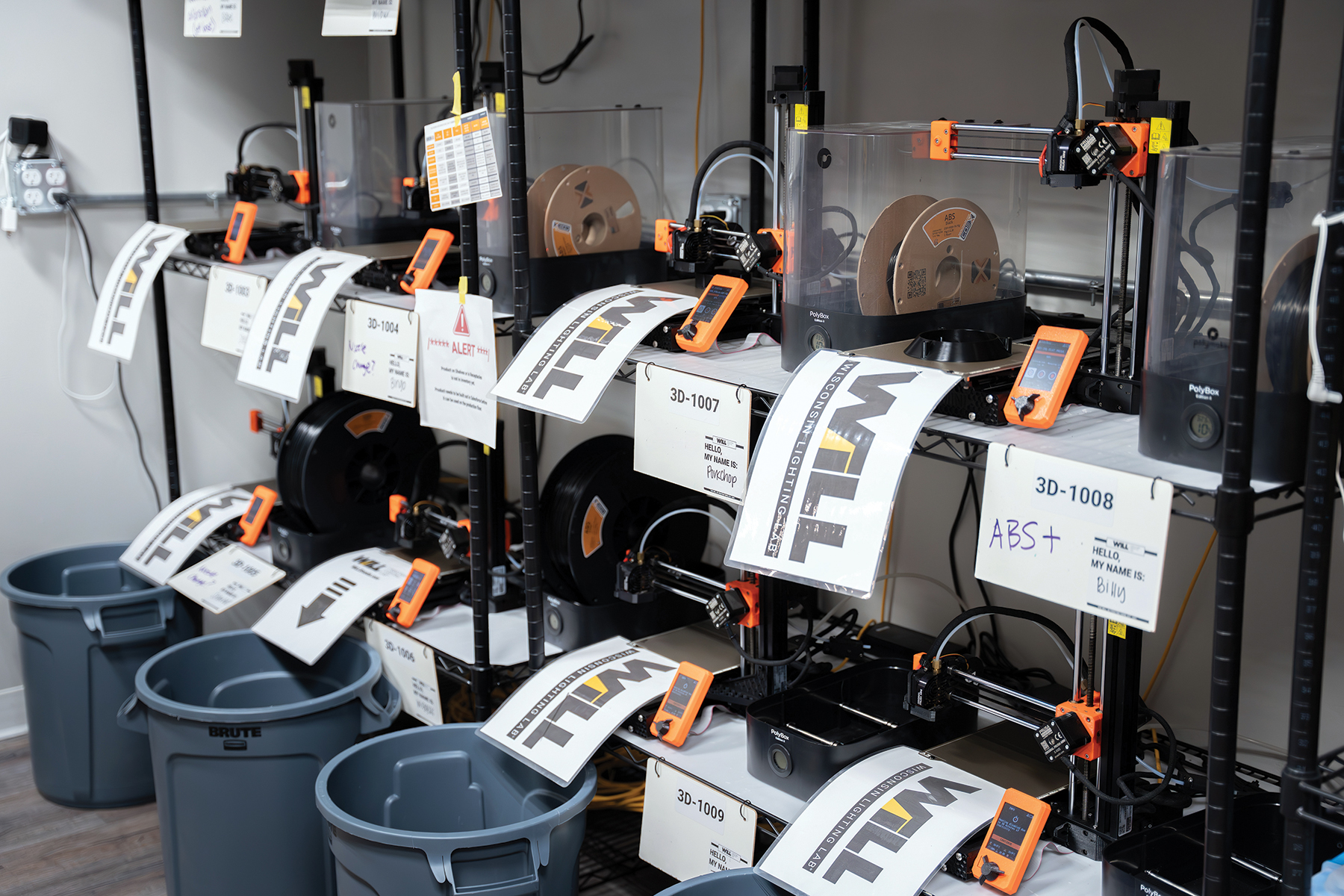
About a dozen animals at Wisconsin Lighting Lab’s 3D printer farm are well fed and producing a bountiful harvest.
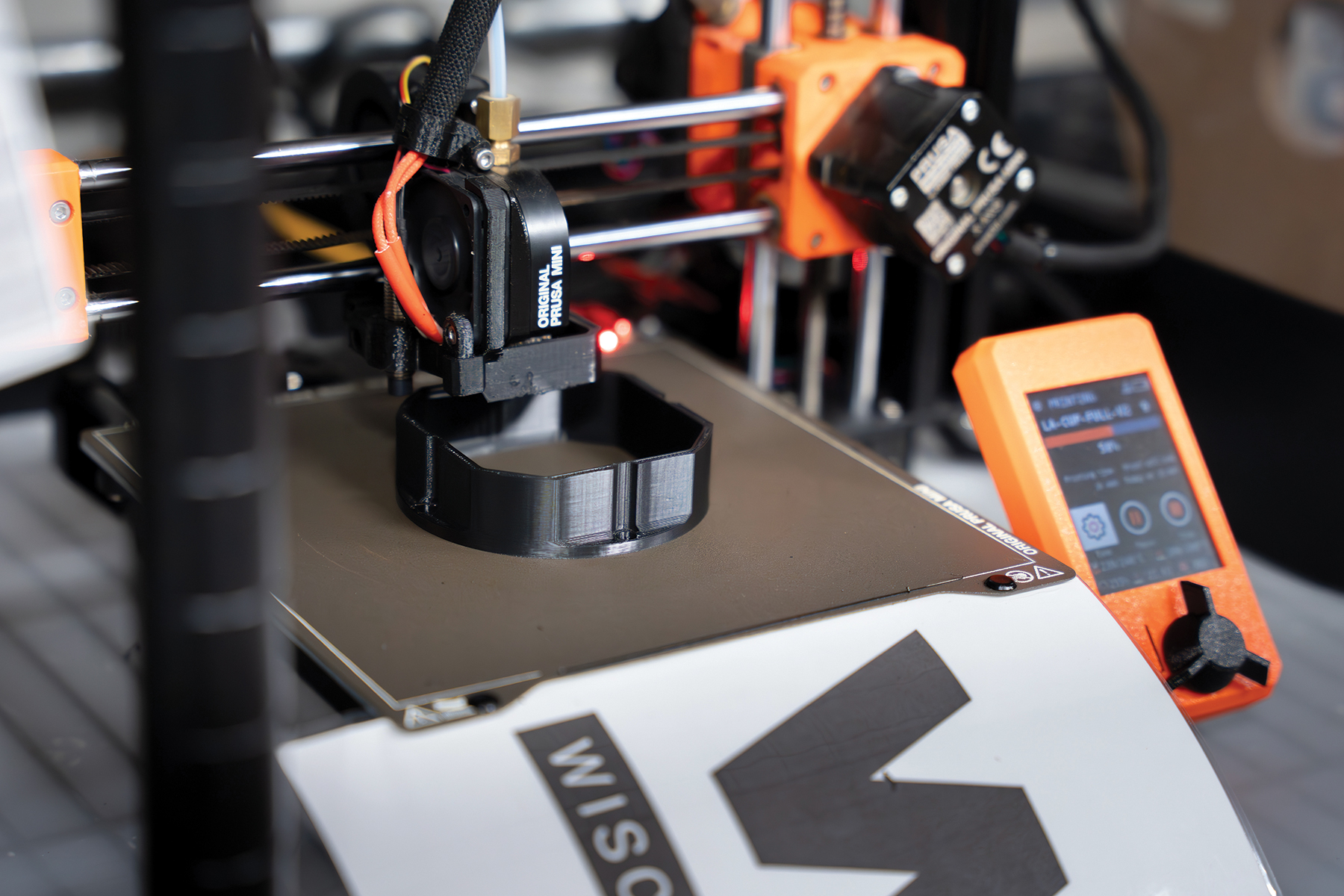
The employees at WiLL, which develops and produces light poles, LED lighting systems, wireless lighting controls and electric vehicle charging pedestals, have named the 3D printers at their Fond du Lac headquarters in honor of beloved dairy cows from their childhoods. If the WiLL team wants to prototype a new part, engineers can simply send the job to Billy or Porkchop.
“We got into [3D printing] just trying to think outside the box and kind of pushing against what the general standard was for parts that we were looking to make,” WiLL Co-founder and Vice President Tyler Oestreich says. Today, the company utilizes additive manufacturing for prototyping, production parts and internal process engineering. Oestreich estimates the printers are humming along at the farm at least 50% of the time.
The biggest pickup, he says, has been the speed of learning.
“We’ve had scenarios where we’ve been able to take a concept from a customer, design it, print a part to test functioning, hold it, see if we like the aesthetic, all within an afternoon,” Oestreich says. “Creativity and speed and ease of learning about your designs, it’s probably unlocked the most for us on that front.”
WiLL’s printers have lasted more than five years, Oestreich adds, so the costs involved in supporting the farm are minimal: “It’s been a really positive experience so far, a nice tool to have in the arsenal,” he says.
Spooling up
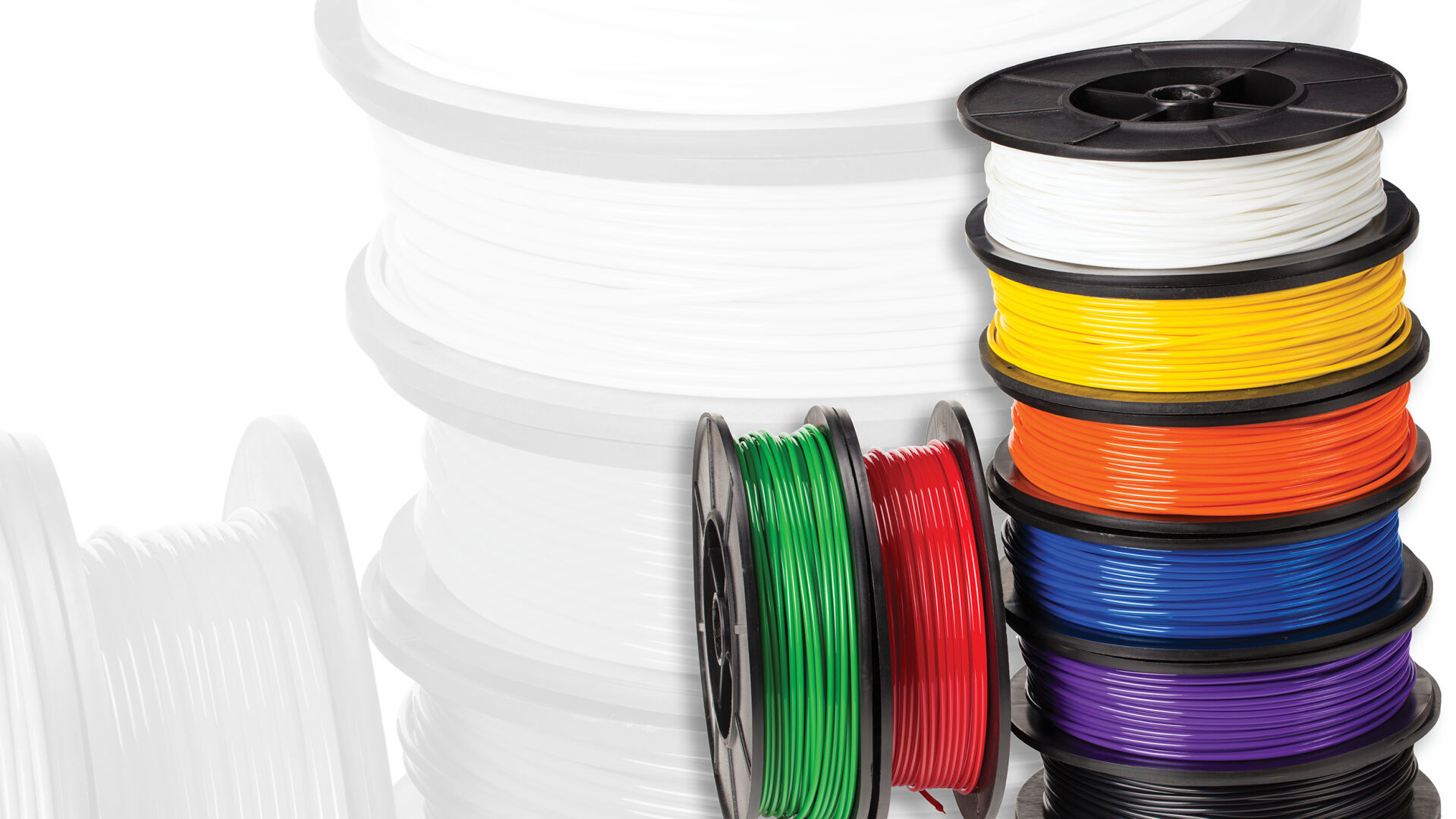
One reason Oestreich says WiLL has felt supported in its additive manufacturing journey is the accessibility of materials and technical support right in its own backyard. WiLL sources its filament from Green Bay’s Coex 3D, one of a small number of domestic filament manufacturers that sells to the open market.
Todd Louthain, owner and director of sales at Coex 3D, purchased the operation from his former employer, Pulaski-based The Village Companies, in 2022. Coex’s filament, which isn’t available to purchase on Amazon where most filament purchases are made, is made in Wisconsin from 100% virgin resin and offers a satisfaction guarantee.
“The harsh reality, and the sad reality, is there’s zero regulation in the 3D filament industry,” Louthain explains. “There’s no governing body that’s overseeing it.”
So while buying a spool of Chinese-made filament on Amazon may cost a few dollars less than working with Coex 3D, Louthain says, there’s no guarantee of product quality or consistency, making the purchase risky. “When these manufacturers are from overseas, [the product] might not even be coming out of the same factory even if it has the same brand name,” Louthain says.
It’s those concerns about material quality or the stigma of 3D printing as the domain of hobbyists that can sometimes hold back adoption in the manufacturing industry, Louthain says. While there are no downstream effects of a desk trinket breaking, the opposite is true when it comes to a factory tool.
Louthain says not all manufacturers are thinking about the benefits of additive, and some are even biased against it. Today, a person’s first introduction to 3D printing may very well come from a child in their life who uses the technology at home or at school to make action figures, puzzles, toys and trinkets.
A cultural shift
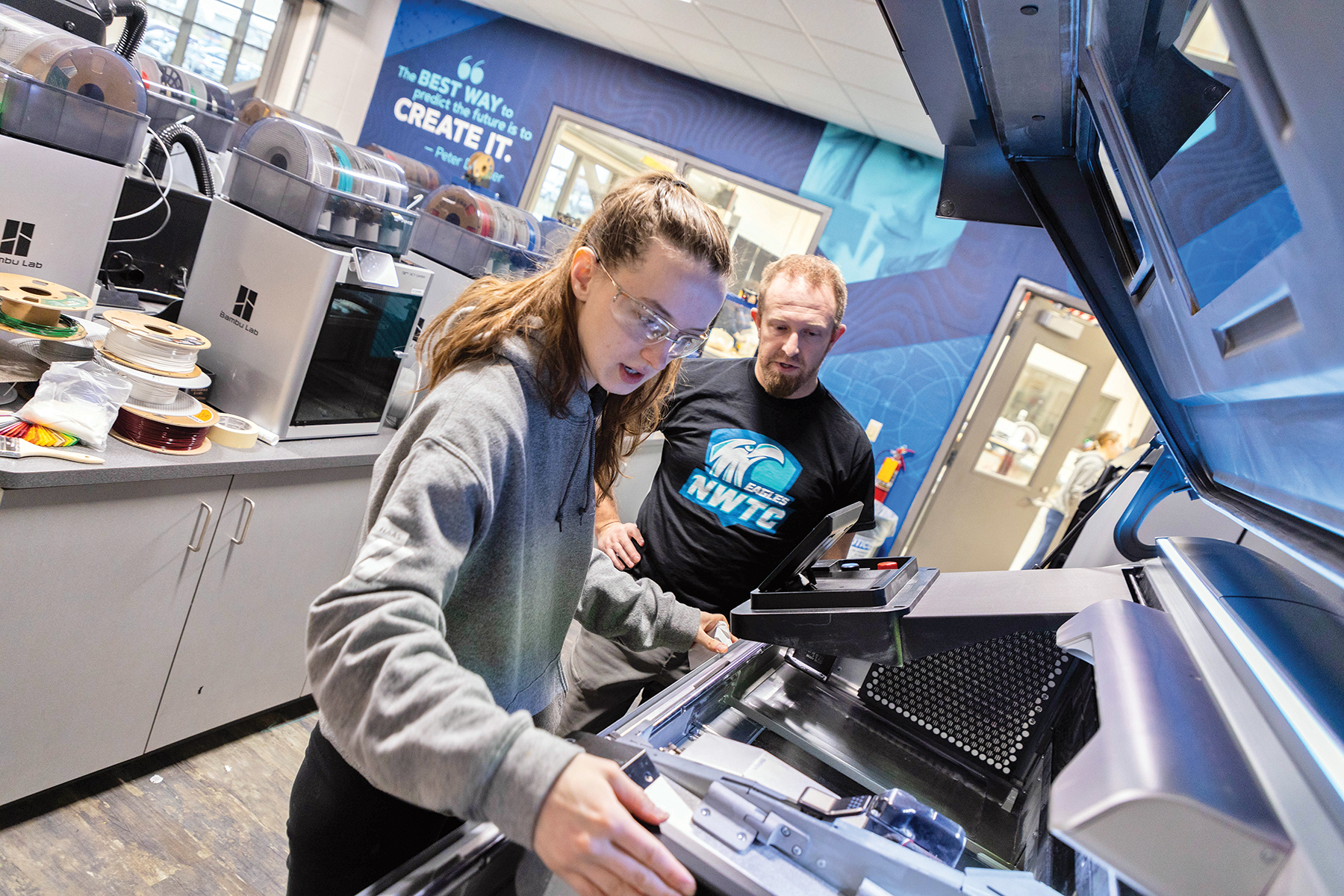
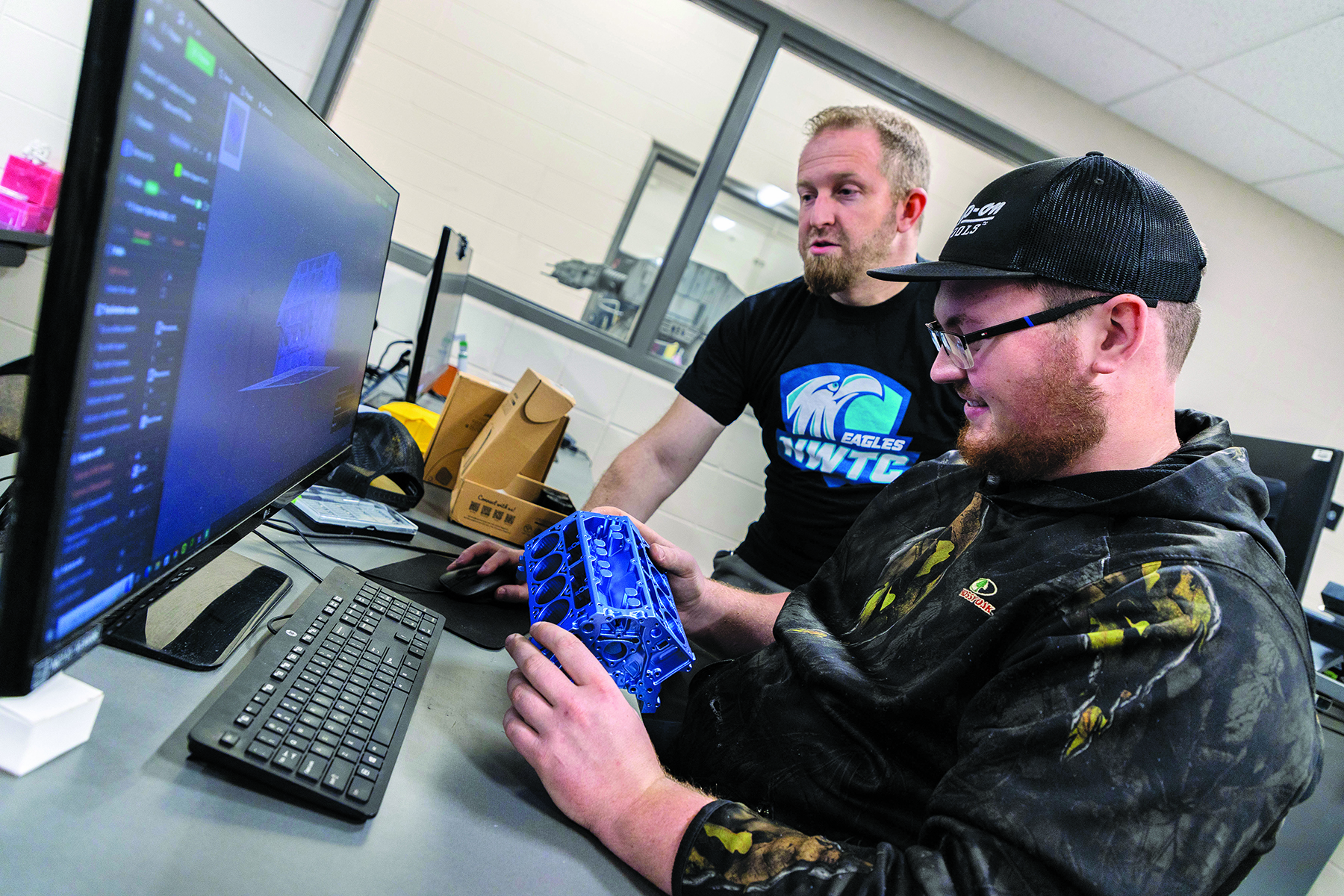
At Northeast Wisconsin Technical College, the convergence of 3D printing as child’s play and 3D printing as an industry solution can be seen firsthand every day. NWTC Design Instructor Jonathan Ries says many of the students who started out making trinkets and desk art are quick to embrace the technology’s industrial function.
“A lot of students have filament extruders already,” Ries says. “In the last five years we have gone from additive manufacturing being kind of this odd, niche technology that no one really knows how to use [to being in] everyone’s classroom, in your basement workshop. We’re going to have a complete shift of engineers and designers growing up with this technology, and from there it’s as common as draft paper and pencil.”
Ries and Jill Thiede, NWTC’s associate dean of trades and engineering technologies, say 3D printing is integrated throughout the college’s manufacturing curriculum as part of teaching the process decision matrix, including in a new mechanical design class on manufacturing methods.
“Is this something where it would make sense to do 3D printing? Is this something where I should do a casting? Is this something where it should be a CNC part, and helping them consider durability, cost, precision … and speed,” Thiede explains.
Ries describes additive manufacturing as being “on the cusp of being accepted as a manufacturing process.” By teaching the next generation of manufacturers the benefits and limitations of the technology, he and Thiede say they hope to see industry players adopt 3D printing as part of their arsenal of manufacturing tools, perhaps pushed forward by the students NWTC is teaching today.
“It’s one of those things where it has to be a cultural shift, and there also has to be a shift when it comes to the engineers and designers understanding where to apply 3D printing,” Ries says. “Where does it make the most sense?”
Getting started
Making sense of 3D printing starts with an open mind and asking questions about how the technology could benefit one’s business, Louthain says, adding that his job at Coex 3D is much easier when manufacturers come to him: “Once they’ve contacted us, they’re curious about it to some degree.”
It can help to start small. A young engineer working for a local manufacturer recently reached out to him because their 3D printers were collecting dust, Louthain says.
“He said, ‘I know there’s value for this, but they won’t let me touch the 3D printers,’” Louthain recalls. “So he came to us with a project that was literally just tool organization, and the higher-ups were like, ‘Oh my god; how did you do this?’”
Factory safety and organization can be good entry points to adoption, Louthain explains.
“Look around your facility and see what you are spending money on: Custom made parts? Material storage needs, like hooks and hangers you have around your building? Maybe it’s safer for you to color-code things,” Louthain says. Purchasing spools of filament can create tools for pennies on the dollar compared to purchasing organizational systems from places like Grainger or Harbor Freight, he says.
While internal and organizational uses are a great place to start, experts largely agree that prototyping is currently the best and most common use of additive manufacturing in business environments.
“One prototype is worth a thousand meetings,” Thiede says.
And prototyping doesn’t require the same technological investment as production, Ries points out. Most businesses can spend less than $1,000 on a machine that is more than capable of serving all of its prototyping needs.
“The high-end machines are still going to be kind of cost prohibitive for small businesses and individuals,” he says. “But realistically, when you get into prototyping, good enough is good enough. If I can get away with a $600 filament extruder that performs just as well as the $6,000 extruder, we’re likely going to make the investment.”
The future is now
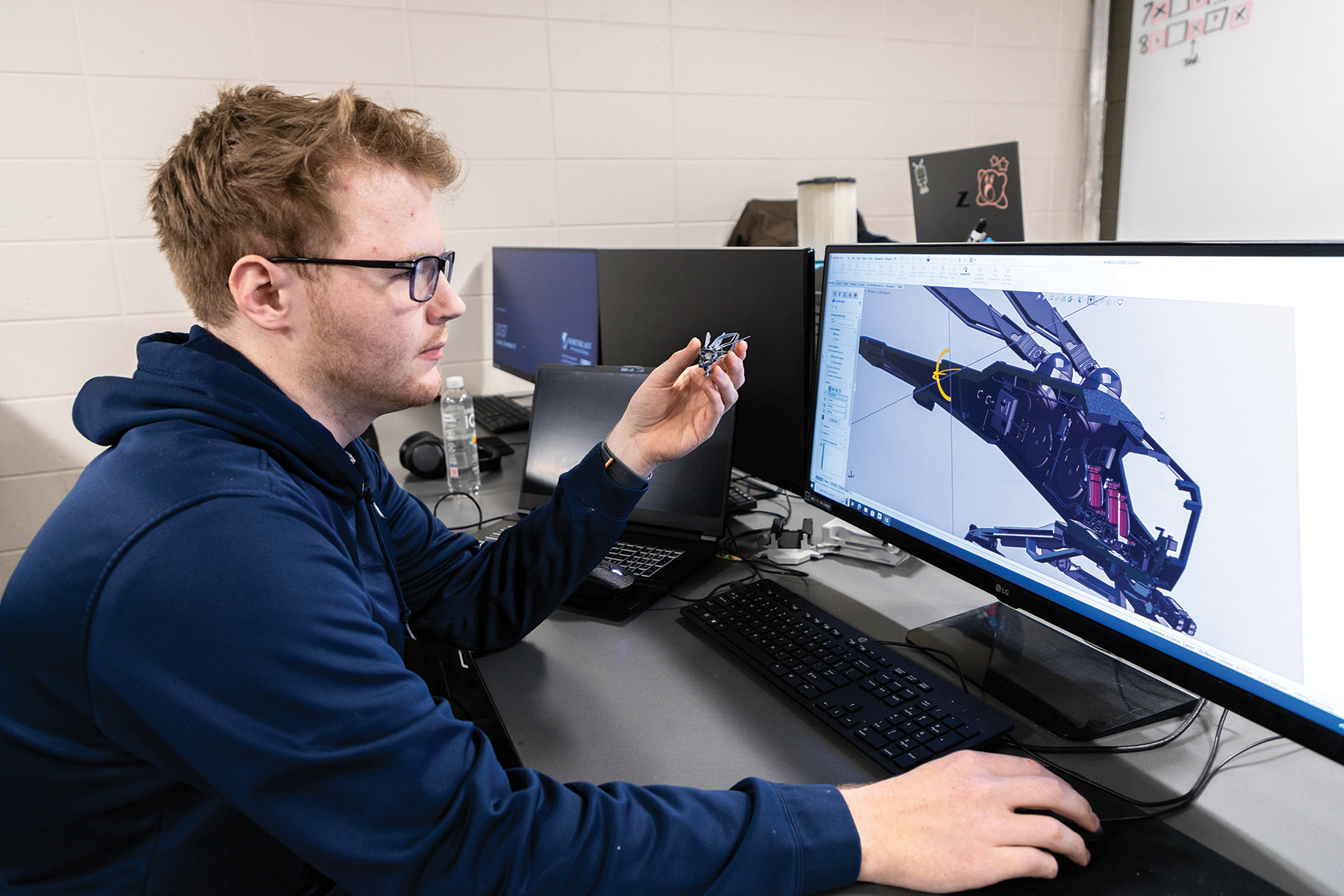
At Nicolet Plastics in Mountain, Chief Commercial Officer Brian Torres says his company has been willing to make more significant investments to stay on the cutting edge of additive manufacturing. Nicolet, a custom injection molding manufacturer, purchased a pricey Carbon brand 3D printer in 2017. Not to be confused with carbon 3D printers, the extruders manufactured by the Silicon Valley-based company Carbon leverage a proprietary printing method called Continuous Liquid Interface Production, or CLIP, that is faster and smoother than conventional 3D printers.
“We can make very, very strong components; we can make very soft-touch material components,” Torres says. “It allows us to get what engineers designed into their hands, typically within two to three days.”
And while prototyping is also Nicolet Plastics’ top use of additive manufacturing, the company has found success utilizing the technology for low-volume production. For customers that have low production volumes, Torres says, printing the parts can save the time and expense of a custom tool order, which can cost up to $30,000 and take multiple months.
With the investment in the Carbon printer having paid for itself over time, Torres says, the company took another major step forward in November 2023 when it purchased a metal 3D printer from Mantle 3D. Nicolet Plastics was the second company in the world to purchase the technology, Torres says, ultimately investing more than half a million dollars in the printer that markets itself as an alternative to tooling. Toolmaking services are becoming increasingly difficult to find, Torres says, and geopolitical issues such as threatened tariffs by the incoming U.S. presidential administration raise questions about future access to metals.
One person who is watching Nicolet Plastics’ strategy closely is Thiede, who says metal is the “Holy Grail” for additive manufacturing.
“When we bring that in, that’s going to have a huge impact on our machine shops,” she says. “I don’t think it replaces large-batch quantities, but it’s going to have opportunities for a lot of different onesie, twosie parts and … repairs.”
Torres says not to discount marketing as one of the major benefits Nicolet Plastics has seen from being an early adopter of additive technologies.
“An investment like this is a big leap,” Torres says. “It’s very hard to say with definitive answers that the market is going to adapt it, that you’re going to have the utilization to fully fund it, that the results are going to be there. For us, it’s multifaceted and … the early signs show that it is adding value. It is opening doors and serving our customers with some needs [because] they have not had a supplier capable of delivering these solutions in the past.”

