
Health care disparities existed for minorities and marginalized groups long before the appearance of COVID-19, but the pandemic has laid bare the starkness of the situation.
COVID-19 has disproportionately harmed minority groups, leading to higher hospitalization and death rates among certain populations. When compared to white Americans, American Indian and Alaskan natives have experienced death rates at a ratio of 2.2:1, while the figures for Black Americans and Hispanic and Latino Americans are 1.9:1 and 2.1:1, respectively, according to the Centers for Disease Control and Prevention.
The dire outcomes, in part, have spurred health care organizations, nonprofits and community groups to take steps to address equity disparities within health care. The work is needed. The Health of Wisconsin Report Card, published by the University of Wisconsin Population Health Institute in 2016 (its most recent report card), shows the state of Wisconsin has an overall health disparities grade of D.
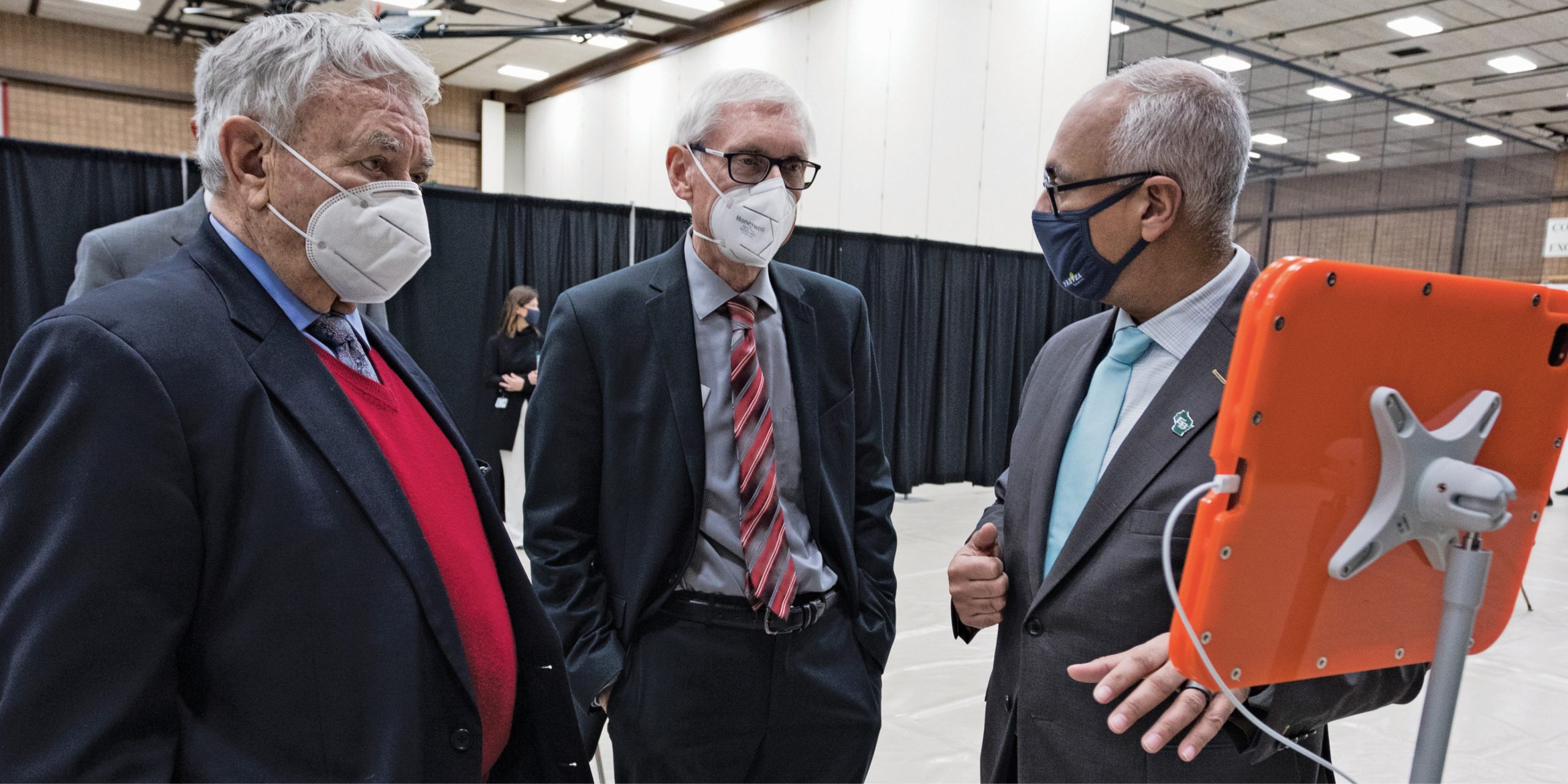
In October, Prevea Health led the Health Disparities Prevention Summit to educate individuals and stakeholders about the issue. The organization received a $100,000 grant from the Department of Health Services as part of an effort to promote vaccination and to examine the negative outcomes people of color have suffered during the pandemic.
“It all centers on health equity. You have equity and then you have to look at systemic racism. People don’t really want to talk about that, but you have to look at (the fact that) there are different outcomes for people who look different, and that difference really is race,” says Renita Robinson, vice president of diversity and inclusion for Prevea.
The goal of the summit was to educate people and give them a better understanding of the historic context for why minorities and marginalized groups might distrust the health care system. Feedback after the event showed attendees gained a better understanding of health equity and disparities after the summit, she says.
The summit was just one part of Prevea’s strategy to address health care equity. The organization has made inequities education a formal part of its medical residency program, and starting in January, it will become part of its “Prevea University” program for onboarding employees.
Prevea has begun studying issues that disproportionately affect minorities, including infant mortality, breast cancer among Latinos and colonoscopies among African American men. It will then examine its data and marry efforts with other departments. Over a period of time, it will assess whether education efforts have an impact on patient experience and quality of care.
“It’s going to be difficult, but the longer time you’re at it, the more you will be able to see the impact that you had,” Robinson says.
SSM Health, which includes St. Agnes Hospital in Fond du Lac and Ripon Community Hospital, also focuses some of its equity efforts on education. All the organizations’ caregivers complete an “Invisible Influencers” online course, which examines unconscious bias and how it creates disparities as well as affects decision-making, care delivery and recruitment.
SSM Health St. Agnes Hospital President Kathryn Vergos says when it comes to the organization’s providers, communication is key in establishing relationships with patients from other cultural backgrounds.
“Asking questions and gaining a better understanding of these differences can create a greater sense of trust and rapport. Most people of different cultures will happily educate a health care provider who is willing to listen and understand their cultural differences. Having a complete picture of the whole patient — including their family, their day-to-day life and their culture — helps in this discovery process,” she says.
Community efforts
The Multicultural Coalition, Inc. began its efforts with the goal of finding better ways to reach marginalized populations with COVID-19 information, testing, basic needs and resources. It’s now filed articles of incorporation with the mission of “acknowledging racial biases and proactively reaching diverse populations with meaningful communication and actionable services to remove barriers, elevate all voices and foster community engagement.”
While MCI’s efforts thus far have focused heavily on vaccinating minority and marginalized populations, its goals go beyond that. MCI member Pam Her, principal consultant at 4Chi Business Solutions LLC and founder of Northeast Wisconsin Hmong Professionals, says the organization’s work aims to “create a bridge of trust within communities.”
For the vaccination effort, that has meant meeting minority communities where they are. The organization holds vaccination “events,” rather than calling them clinics. Events might include food trucks and provide other basic needs items such as coats, books and toys for kids or hygiene products. It’s about looking at people’s needs holistically and honoring their dignity.
Patricia Sarvela, development director for the Partnership Community Health Center and MCI member, says the organization’s efforts make a difference one person at a time. She relates the story of a child who wanted the vaccine but whose parent was reticent to let the child receive it.
The team worked to allay the parent’s fears and concerns, and both child and parent ended up receiving the shot.
“It was support, not coercion. It was understanding the depth of cultural belief,” Sarvela says.
The events also reconnect people to the routine care from which many fell away during the pandemic. When people show up to an event, MCI volunteers can help with issues such as accessing affordable insurance through the health care marketplace. And that can lead to wide-reaching gains.
“This is a catalyst for change and economic development, particularly for our low-income and vulnerable populations as a way to move people forward,” Sarvela says, adding that when people are healthy, vaccinated and have established care, it helps prepare them for work.
Meeting LGBTQ needs
Individuals in the LGBTQ community also experience health disparities, and many have suffered indignities and mistreatment in encounters with health care systems.
Kathy Flores, anti-violence program director for Diverse and Resilient, says it can be difficult for individuals just to find a doctor, dentist or therapist who’s LGBTQ-friendly. The organization, which started in Milwaukee and has an office in Appleton, is devoted to creating health equity and improving the safety and well-being of LGBTQ people and communities in Wisconsin.
Flores says its offices field a lot of calls from people seeking recommendations for care providers. Clients report experiences with therapists, nurses and physicians asking invasive questions and refusing to use their names and pronouns. All this can lead LGBTQ people to avoid seeking care and can lead to long-term negative outcomes.
“It’s so frustrating because we then get the backlash of people who fall out of care because they don’t trust the system,” she says.
Transgender individuals can face additional issues. For example, only a handful of doctors in the region will prescribe hormones, so patients may have to travel great distances and incur high costs to find doctors who will do so.
In addition, some people in the Fox Valley drive to Chicago to get trans health care for hormones because health insurance companies don’t cover non-gender-conforming people and therefore the blood work required, Flores says, adding that people receiving hormones need blood tests to monitor their endocrine systems and overall health.
“I think health insurance agencies need to get better about covering that type of need,” she says, adding that employers can help through asking and advocating for the coverage.
Providers can also help foster better relationships, Flores says. For example, they can refer to patients by their preferred pronouns and ask which genders a person has sex with instead of assuming the person is heterosexual.
“Be non-judgmental of people’s lives,” she says. “Your response can be life or death for somebody.”