


Photographs by Shane Van Boxtel, Image Studios
An open-door policy has long been a hallmark of the leadership at Tri City Glass & Door.
“We don’t just say we treat our people like family. We do,” says Larry Bender, whose parents founded the company in 1960. “We live that every day, and I think that’s something that sets us apart from a lot of other places.”
More than 60 years of family ownership at Tri City recently came to an emotional end as Larry retired from his post as company president — making him the last Bender family member to serve in the role.
In 2024, however, the door remains open as former CFO Ryan Hartman takes over company leadership.
“It seemed like the right opportunity,” Hartman says. “I know what the family wants out of the business, and a lot of my values and [Larry’s] values and the family’s values aligned. The more people are proud to work here, the more this place is going to succeed.”
People proud
Tri City Glass & Door established an employee stock ownership program, or ESOP, in 2016, but 2024 marks its first year as a 100% employee-owned company. In that spirit, Hartman says, employee pride is now more important than ever.
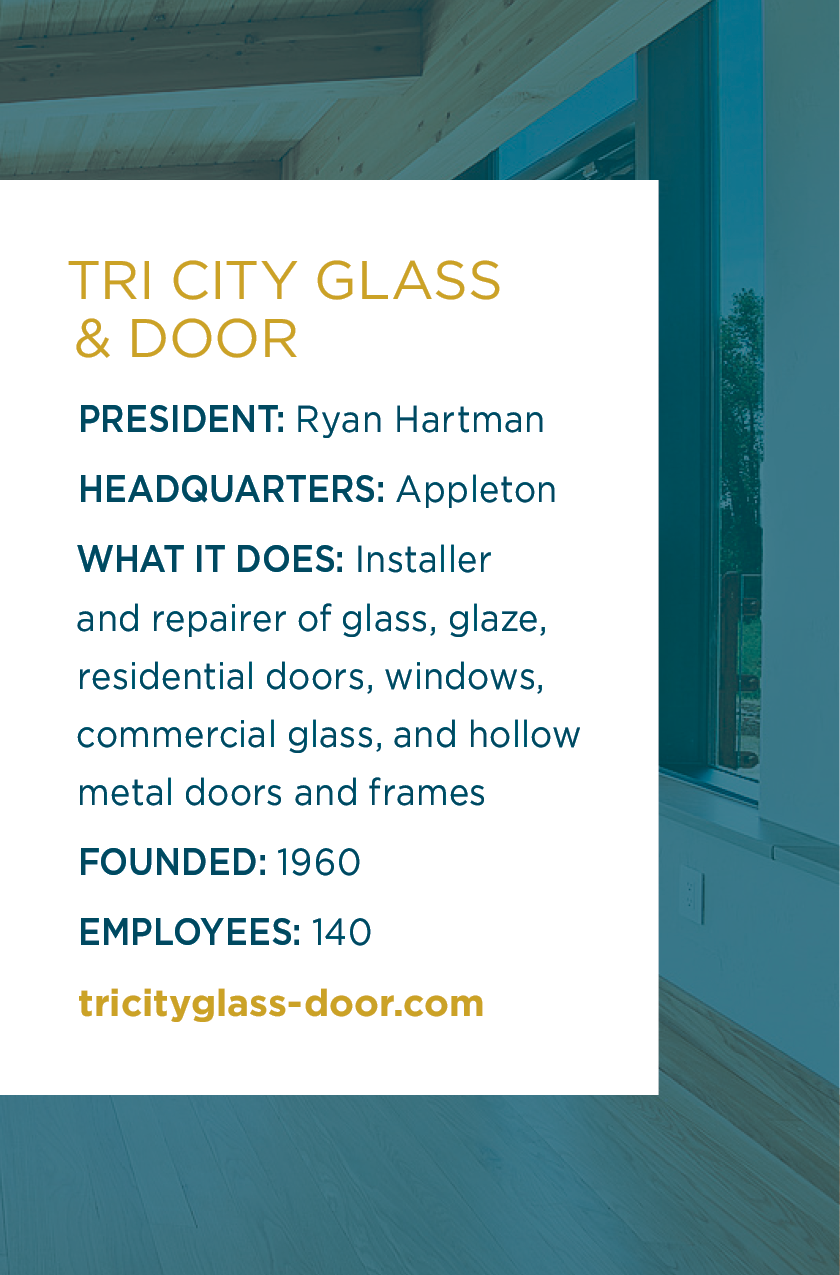
Defining the core values that have made Tri City a successful, low-turnover organization for 63 years was important to Hartman as he prepared to become president. Those values, which are now displayed prominently on glossy signs throughout Tri City’s facilities, boil down to customer and family focuses, Hartman says.
“That’s the one thing: If you ask anybody here, it feels like a family,” he says. “Everybody cares for one another; everybody’s out to help one another.”
Tom Danz, a paper industry veteran and longtime Bender family friend, has sat on the board of directors for Tri City Glass & Door for two decades and is currently its chair. Soon after joining the board Danz was asked to lead the succession planning effort that ultimately created Tri City’s ESOP. Of all the options on the table, he says, employee ownership rose to the top early in the research process, primarily because of that family culture that has long transcended blood.
“If you sell [the company], you never know what’s going to happen to it,” Danz says. “[The ESOP] allows the employees to take on their own entrepreneurial spirit and run the company.”
“For me personally, it would have been much easier to just contact an M&A firm, but that doesn’t secure anyone’s future here,” Larry Bender says. “They all helped us get to where we are, and we want to make sure we recognize that and take care of them.”
Hartman says the ESOP presents new communication challenges for the business. But he brings years of reporting experience to his new role, which will translate to an ability to keep employee owners informed and engaged. Explaining the benefits and intricacies of the ESOP structure is also challenging, he adds, but there’s nothing but upside.
“It’s something we need to sell more when we recruit, because it’s a risk-free, rewarding program,” Hartman says. “It’s basically a risk-free retirement that you’re getting.”
Danz says that the ESOP also means another level of personal investment for Tri City’s employees.
“Now we’re in a place where we have to make sure Tri City understands that this is in their hands. It’s no longer coming into work, putting in your week and seeing the paycheck,” he says. “Whether you’re an installer of windows or a department director, everything you do affects the bottom line, so getting that across is what we’ve been working on for the last five years — and it’s really setting in to the employees now. There’s no more family around to run this business.”
Six decades of family tradition
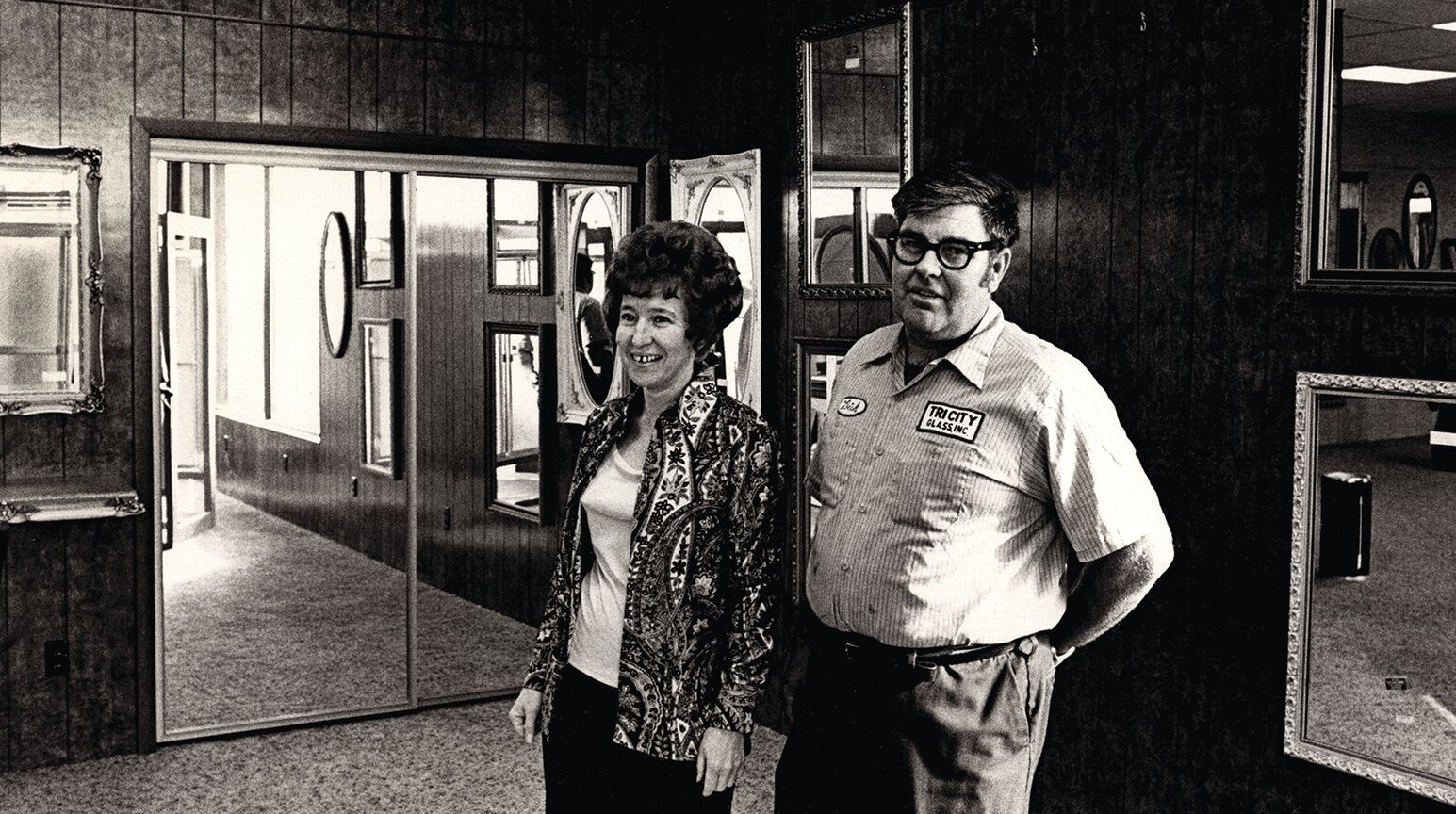
Richard Bender had been working for Valley Glass in 1960 when he decided to strike out on his own in the auto glass business, naming Tri City for Appleton, Neenah and Menasha and working out of the family’s Appleton home with seven children underfoot. Tri City was the first vendor in the Fox Valley to offer mobile auto glass service, so while Richard was out repairing windshields his wife, Shirley, answered the phone and managed Tri City’s billing and scheduling.
“In the summers, when we were old enough, we could help sweep up and fix windows and things. Sometimes I would ride along with my dad,” Larry Bender recalls of growing up not just around, but in, the family business. “It was a little bit of a different family life.”
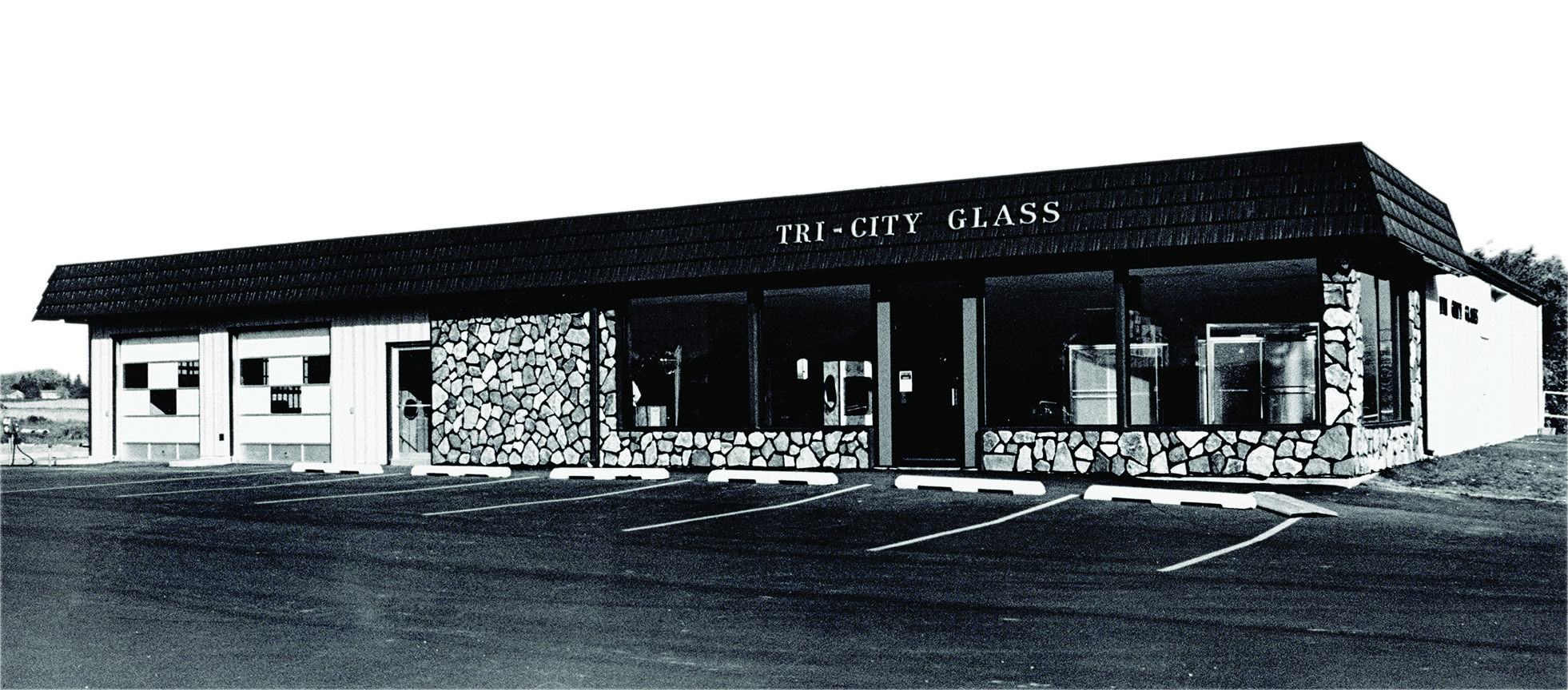
On Aug. 1, 1976, Tri City opened a standalone headquarters on Northland Avenue in Appleton. In fact, Larry says, his mother requested the last four digits of the company’s phone number be “8176” in honor of the occasion. The request was granted and the special phone number endured for several decades, meaning Larry would never forget that exact date that meant so much to his parents.
The new standalone location also provided the opportunity to expand services, so Tri City added residential glass, commercial glazing and glass products upon opening its first storefront.
The company continued to grow throughout the 1980s and 1990s, with Tri City entering the Green Bay market in 1986 and the door market in 1991 upon acquisition of Valley Door Sales. The company would go on to expand its Green Bay operations significantly in 2009 when it acquired Old Castle Glass.
Amid growth and acquisitions, the Bender family grew to recognize the importance of branding and consolidating services. Today Tri City Glass & Door has two large, full-service glass and door facilities: one on Roemer Road in Appleton, and the other on East Mason Street in Green Bay. From those two locations, the company serves residential and commercial clients throughout Northeast Wisconsin and even beyond.
Richard and Shirley retired in 1992, passing the leadership torch to the next generation as Larry, his brother Chuck and his sisters Donna and JoAnn each took an ownership stake in the company. Chuck served as president until he retired in 2011, and Larry held the top position from 2011-2023. It was in 2016 that Larry as president was contemplating the future and saw the writing on the wall: There wasn’t a family succession option for Tri City’s ownership.
“I don’t know that there was ever really a plan to follow in my mother or dad’s footsteps, but that’s just what happened,” Larry says of the second generation’s involvement in the family business. But as is true for many generational family businesses, there just wasn’t that same pull on the third generation. If the family wanted to keep the Tri City legacy alive, it needed another strategy — ultimately, employee ownership.
“[The Benders] put their blood, sweat and tears into it for all these years, and their parents did the same. So the big thing on Larry’s mind was the legacy they were leaving, and wanting to take care of the employees,” Danz says.
And while Larry had extreme confidence in his employees, one of those employees had to take his place as president in order for the transition to succeed. Hartman had been directing the company’s finances for less than two years when he was offered the chance to become Tri City’s first non-Bender president.
“Finding and building the leadership team to support that and continue on was the biggest challenge,” Larry says. “We saw the qualities that Ryan brought to the table, and very quickly we realized ‘he’s the guy.’”
Growth mindset
Hartman says becoming president of Tri City wasn’t on his radar when he accepted the director of finance position, but the presidency ultimately found him. After a general manager retired, the employees started coming to Hartman with their questions and needs.
“My whole thing was, this has to be right for Tri City,” Hartman says. “You don’t want to be picked just because [you’re] here, right? This has to be the right fit.”
Larry Bender says Hartman was absolutely the right fit.
“His qualities were, you know, take care of the customer and our people, honor commitments — all this stuff we talk about,” he explains. “Ryan lives that every single day, with an open-door policy. People very quickly became comfortable coming in and talking with him through whatever issue it was, business related or personal or whatever.”
“If you ask anyone around here, they have no problem walking into Larry’s office and having a conversation. That can’t change,” Hartman says. “It’s continuing that family atmosphere, because that’s what got this place where it is.”
In addition to being a strong cultural fit, Hartman brings a great deal of business savvy to the role. He worked in public accounting for five years before pursuing a career in private industry, including a prior stint as a controller in the window and door industry. He says he has always enjoyed roles in which he could use his skills and background to bring financials to life and communicate strategy to his team. He has ambitious plans to grow Tri City.
“The message and the mentality around here is we’re looking to grow, looking to bring value back to the employee owners — that when we go through that valuation, have our shareholder meeting every year, there’s growth to that share price,” Hartman says, adding that the company did $30 million in business last year and probably could have done $4-5 million more were it not for Northeast Wisconsin’s labor shortage.
“No machine is going to put in a piece of glass or screw in a piece of storefront or curtain wall,” Hartman says, adding that the position of installer — “our bread and butter” — is the most difficult for Tri City to hire. He says a youth apprenticeship program is among the strategies Tri City would like to pursue to fill the talent pipeline. He also says in-house programs to diversify and more quickly train and upskill the workforce are already underway. (“Every single person here is going to know how to cut glass,” Hartman says.)
Along with the implementation of a new ERP system, talent attraction will be key to Tri City’s seven-year strategic plan, Hartman says, which calls for the company to double in size. Another key to that planned growth? Acquisitions.
‘Sticking to the knitting’
A windshield isn’t just a windshield any more. Therefore, auto glass — which also represents the company’s roots — is an area in which Tri City has experienced recent growth.
Vehicle windshields today often incorporate sophisticated electronics and driver assisted systems, so repairing and replacing them is no longer just about glass, Larry Bender says. “That’s an area that’s growing, because some of the smaller shops aren’t set up to do that kind of thing,” he says. “With vehicle advancements, we have a really solid product line and the equipment [needed] to recalibrate once the windshield is replaced.”
As technology leaves more auto glass shops behind, Tri City is poised to take on the business of more customers who don’t want to work with the big box auto glass vendors. “We can do it quicker, better and more efficiently,” Hartman says.
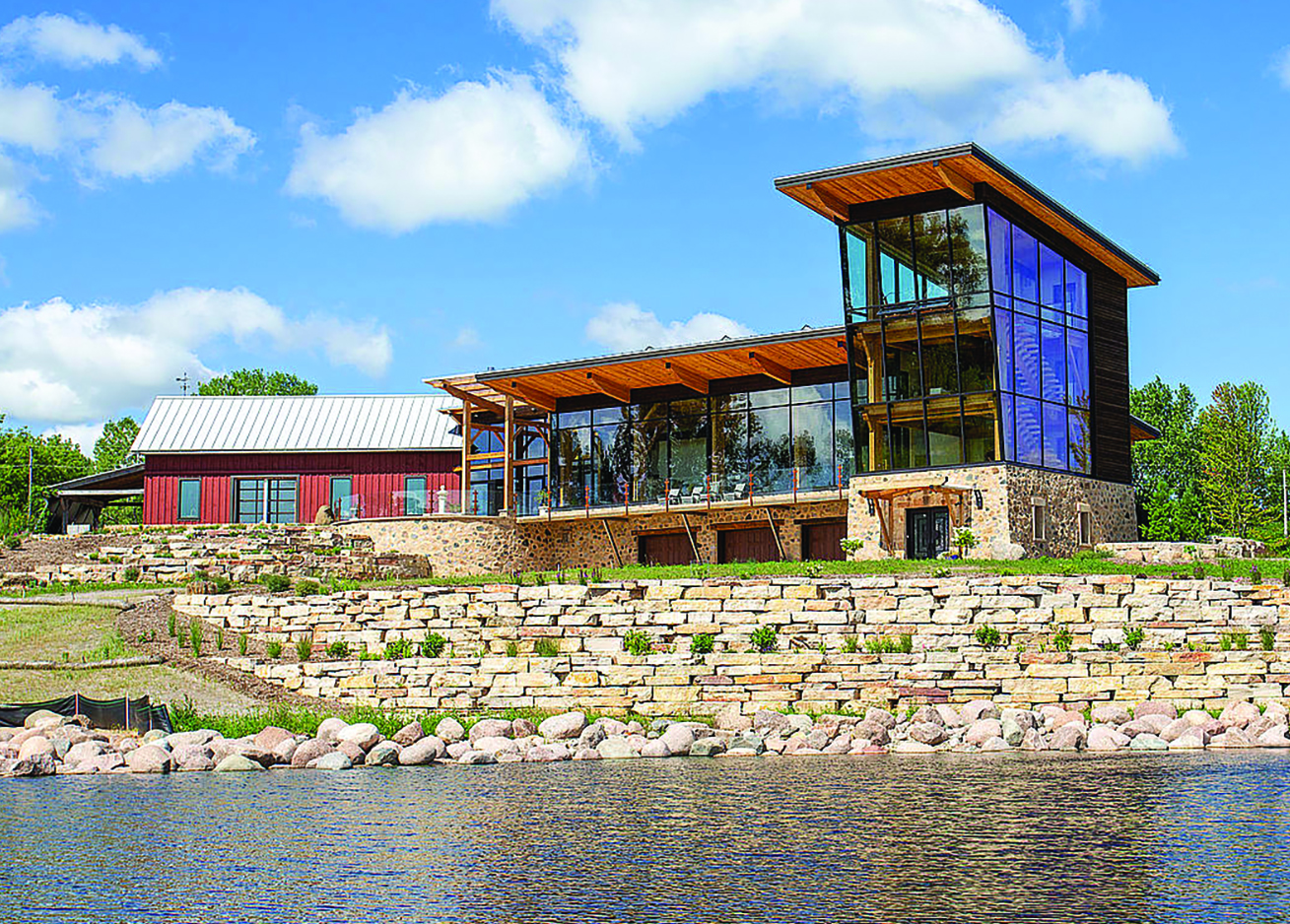
Hartman says commercial windows and doors currently account for about 65% of Tri City’s business — mostly because of project scale, with residential projects and auto glass making up the remaining 20 and 15%, respectively. So while there is a lot of low-hanging fruit in the auto glass world, Tri City’s growth strategy will take into account all three areas of the business.
“The commercial department has the most upside right now, just because of the amount of work that’s out there and the relationships that we’ve built,” Hartman says. “There’s a lot of things we can do for people that they currently don’t realize; we have a lot of services, and we could bundle them together to create a one-stop shop for them versus having to get three or four separate quotes.”
Danz agrees: There’s a lot Tri City does well, and growing the business is achievable on many fronts because of its solid foundation.
“For the most part, we need to stick to the knitting and do what we are good at,” he says. “Over the last two years now, [Tri City] has been doing really well at that. It’s an exciting time; I think the ESOP really opens us up as the employees see what they’re doing to make a difference. The sky’s the limit.”