

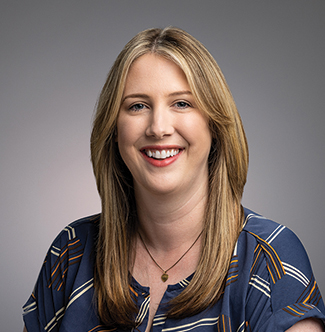
Photograph By Shane Van Boxtel/Image Studios
Timber Smith is a bit of a Renaissance man, with a career history that spans everything from hanging curtains to higher ed admissions.
In his role as the city of Appleton’s diversity, equity and inclusion coordinator, Smith is using his podcasting experience to bring community resources to the forefront through the Appleton Engaged Podcast, which explores the diverse people, organizations and resources that make up the community.
Insight caught up with Smith to learn more about the weekly podcast that received a Wisconsin Policy Forum 2023 Salute to Local Government Award for its efforts to advance racial equity.
Insight: What brought you to your position as diversity, equity and inclusion coordinator with the city of Appleton?
Smith: I went to UW Oshkosh and graduated with a sociology degree, and worked at UWO for about 10 years. I started as an admissions counselor. My primary focus was the recruitment and retention of African American students. During COVID, I had time to look at things. Before working for UW Oshkosh, I worked for the Appleton School District and Fox Valley Technical College. My primary focus always was students of color, either in recruitment or retention. After George Floyd, there was so much talk about these DEI positions. I just felt like my background lent itself to it. I also had been a senior equity coordinator for UW Oshkosh, which means I was part of a lot of search and screen committees to make sure that as we hired people throughout the university at all levels, whether frontline people or even professors, our process was equitable. The last thing I did when I left the university was veteran services. It was an amazing job, but I was needed somewhere else.
So what are your current focus areas?
The best way to put it is my focus area is the community and trying to find ways to help make it the most welcoming community where you can feel like you belong no matter who you are. And that sounds really broad and lofty because it is. It’s helping to shape a culture for the city that’s already in place. I can’t do that by myself, but what I can do is I can go and lend my expertise and my knowledge and the things I’ve learned along the way to other spaces that are doing it, whether it’s the private sector or nonprofits or school initiatives. Often these spaces are full of people who are well-intentioned, amazing people. They want to do amazing things, but often in those spaces where those conversations are happening, voices are left out. It’s not intentional, but it’s the way it was. Now that they’re aware, often they don’t know how to ask to get those voices in the space or those voices don’t want to be part of that space because they’re saying, “How in the world do I fit in there? Why is my voice important now?” There’s an understanding of who Northeast Wisconsin has been. Now there needs to be an understanding of who Northeast Wisconsin is going to become.
How did the Appleton Engaged Podcast start?
I was doing my personal podcast, THE KOSH, which is focused on people — having really good conversations, getting to know your neighbors. We lead into a topic of the week, which is literally whatever the guest wants it to be, but along the way we’re asking all these questions to get to know who they are. I knew I wanted to do a podcast for the city, so that’s what I took to the mayor and he said O.K. We had just brought on a new communications executive and she was all energetic about it and that got me geeked about it.
How does the podcast support your DEI work?
There’s four basic pillars of things you need if you’re going to create a belonging and inclusive community. First, you need trust. You need the residents to trust in the local government, but they also need to trust the residents. The next one is engagement. You need things that people can engage in where they’re comfortable, ways that they can feel like they belong. Engagement is what causes belonging. The other thing is resources. You need resources that are good things that people can engage in. The final piece is representation — you truly feel like you belong somewhere when you see others like you. Whatever those identities are, if you can find representation and you feel there are others like you, then that adds to it all. Where the podcast comes into play is I feel like this was our way of taking some of the strong suits of Appleton and creating this audio hub where you can learn about these amazing resources we have in this region, which I’m hoping will cause people to engage in them. These resources hopefully help facilitate engagement with the community and that builds trust. The representation part of the podcast comes in with all of the guests we have. It’s a swath of all sorts of backgrounds. It’s a very diverse group of people that we have on the podcast. That’s showing representation, that there’s these people in our community who are doing these amazing things.
Why did you choose this medium of podcasting to reach the community?
I think it resonates on both sides. It’s an audio podcast, and I think it’s nice when there’s not a camera in that space. I think people get really comfortable then. The other thing is the way we approach it. It’s just a conversation. There’s no interview where we’re trying to get to a “gotcha” moment or we’re trying to produce an answer. The great thing about podcasts is, you can listen to them when you choose and how you choose. You can listen when you’re washing dishes or walking your dog. You can listen at 1 a.m. or 1 p.m. There’s a noninvasive convenience factor, and an immediate gratification factor that is a great answer for a lot of people. Our format is so simple. We post one 30-minute episode a week. We don’t do a lot of editing and we just hope that it plays authentic.
What advice would you give to business leaders working to shift their company cultures and create more inclusivity?
My first step would be to sit down to sort things out with myself and understand the “why.” Not the “why” that people tell me, but my personal “why” — why is this a good thing for our company? Why is this a good thing for my employees? Why is this a good thing for our customers? Why is this a good thing for our bottom line? Then start to build on that. Don’t do the consultant thing where you bring it to the entire company, but do it for yourself first because whatever you’re planning on leading or changing, it’s got to be top-down. It’s got to start at the very top, because that’s when others are going to believe it and then others are going to understand that’s who we are now. It’s a culture thing, and culture always starts at the top.