
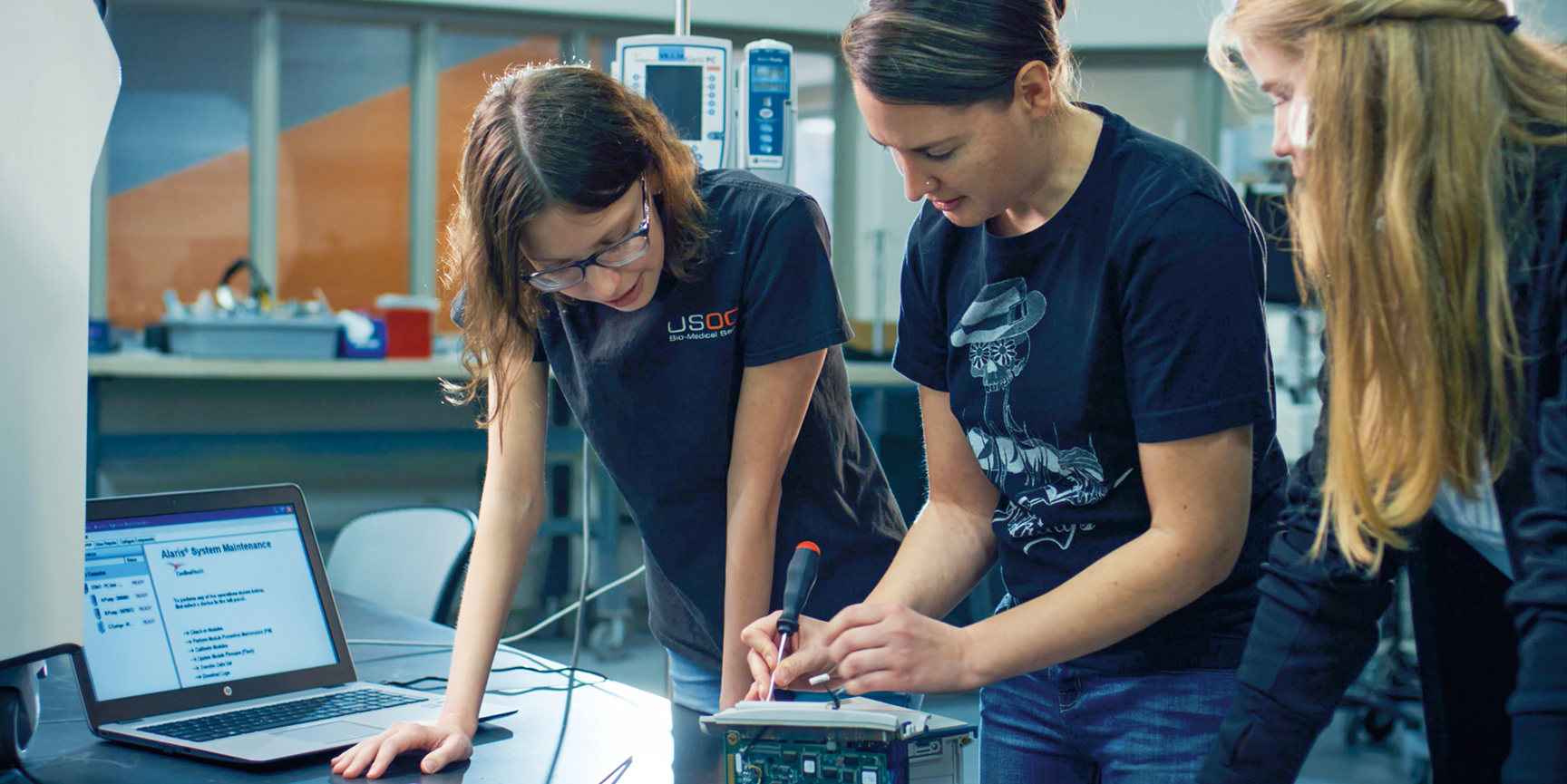

As the impact of technology on the health care system increases, the population of professionals tasked with troubleshooting and maintaining lifesaving medical equipment is aging toward retirement — opening opportunities in a critical field few even know about at a time when the average hospital bed is connected at any given time to about 15 pieces of medical equipment.
Don Cormier, biomedical instrumentation instructor at Northeast Wisconsin Technical College and a 38‑year certified biomedical equipment technician with Bellin Health (now Emplify), says significant proportions of workers in his field today are in their 50s and 60s. The U.S. Bureau of Labor Statistics says employment of medical equipment technicians is projected to grow 13% from 2024 to 2034, with about 7,300 job openings projected annually. Many of those openings will be due to retirements.
“You’ve got two things going at the same time. First, the workforce is aging. So they’re starting to retire,” Cormier says. “Second thing is the population is getting older, so there’s starting to be more of a demand on health care organizations.”
While many students are drawn to and aware of the need for workers in health care, engineering or information technology, few are aware of the job opportunities in biomedical equipment technology — a profession that blends all three. It’s also a profession that essentially didn’t exist before President Gerald Ford signed the Medical Device Amendments of 1976, which expanded the Federal Food, Drug and Cosmetic Act of 1938. The amendments were the result of activism by Ralph Nader’s organization Public Citizen, which sounded the alarm in 1970 on the devastating electrocution of 1,200 people in U.S. hospitals that year. In the 1980s, Public Citizen went on to advocate for training and certification of biomedical equipment technicians.
In Wisconsin, two schools currently offer associate’s degrees in the field: Milwaukee Area Technical College and NWTC. Multiple four‑year institutions, including the University of Wisconsin Oshkosh in Northeast Wisconsin, offer bachelor’s degree programs in biomedical engineering.
But starting this fall, Fox Valley Technical College will join the list of two‑year Wisconsin schools offering biomedical electronics education. Electrical and Electronic Engineering Technology Department Chair Behzad Bahraminejad, who holds a Ph.D. in biomedical engineering, says he has advocated for the addition of the specialty since he joined FVTC’s faculty three years ago.
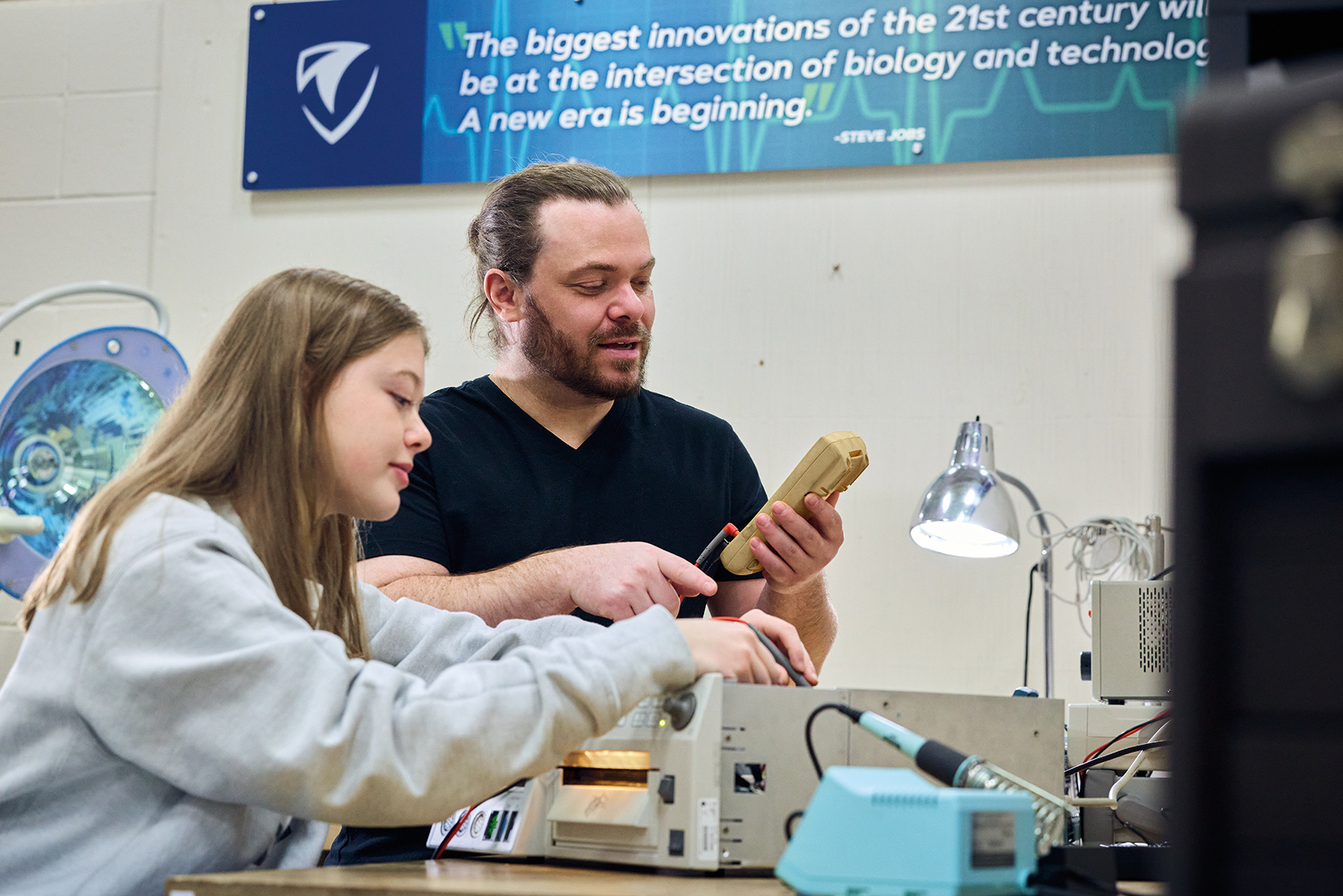
“More than 10 years ago the college used to have a kind of certificate, but it was just for a short time because they didn’t have enough instructors to power the program,” Bahraminejad says. “Once I joined the college, because of my background, I recommended it start.”
FVTC’s associate degree in biomedical electronics was approved by the Wisconsin Technical College System Board earlier this year with the hope of attracting more Wisconsinites to the lucrative profession starting this fall. NWTC has continuously offered its two‑year degree program since 2016.
Jessica Paul, who today serves as team facilitator for biomedical electronics at Emplify Health, admits she “stumbled into” the profession.
“I always liked health care, but working at the bedside just didn’t feel like what I wanted to do,” Paul says. “I went to NWTC … they had an electronics program but with a biomed … and it sounded really interesting, so I kind of went for it, and I’ve never looked back.”
Paul, who studied under Cormier at NWTC, says she is proud today of the important role her profession plays in the nation’s largest industry.
“We really are critical to the health care field,” she says. “As a patient, when you come in, you’re always hooked up to some kind of device, so it’s super important that that equipment is working, that it’s safe, that it meets the compliance standards and that it’s available and ready for you on your appointment.”
Biomedical technologists work with everything from electrocardiogram (EKG) machines to MRIs to bedside IV pumps. And as connected systems become more prevalent, biomed techs will work even more closely with IT departments on issues like cybersecurity and AI. The job, Cormier says, in many ways requires a “jack of all trades,” with multidisciplinary knowledge that includes medical procedures and physiology; electronics and robotics; computer science; and communication skills.
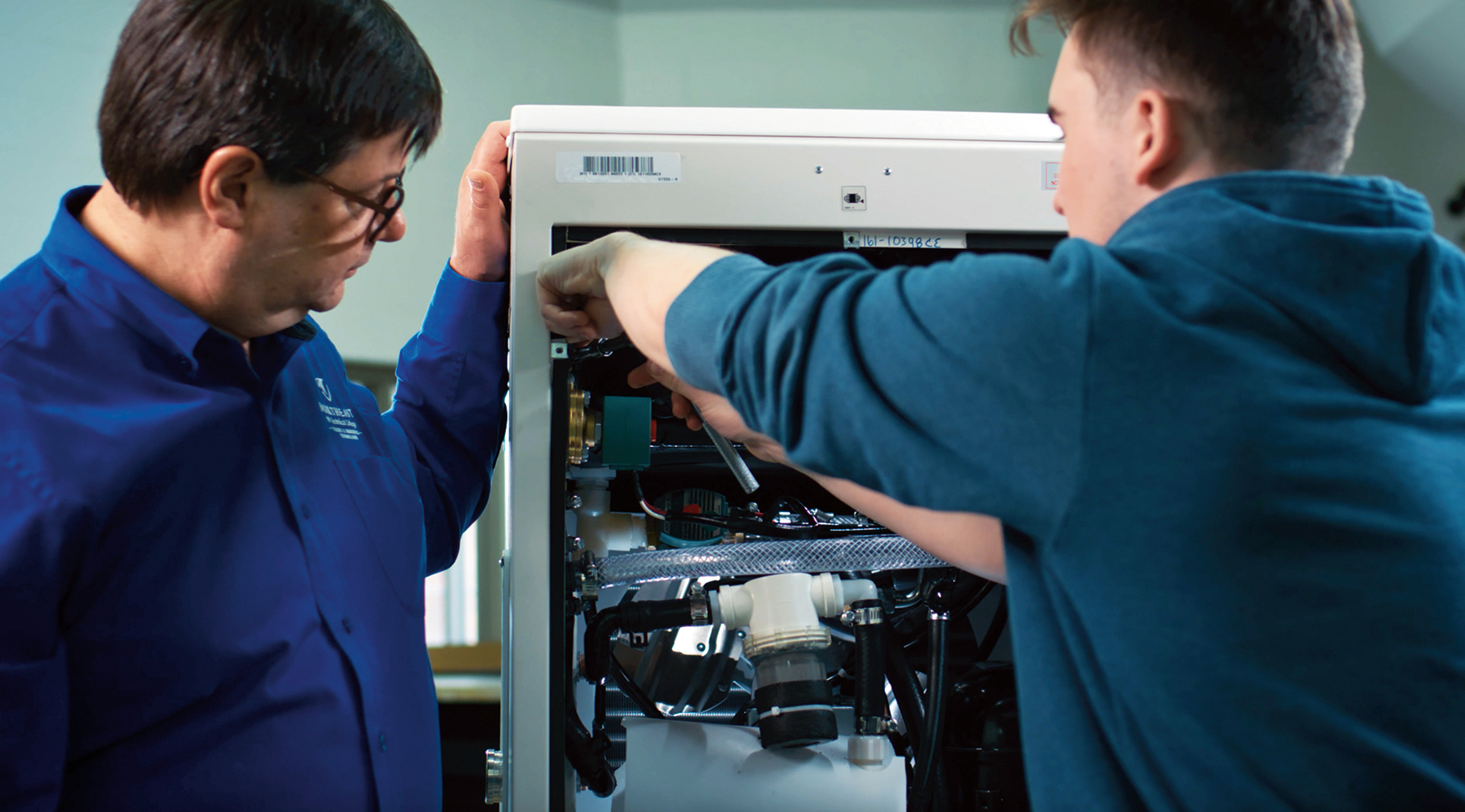
“We teach automation, hydraulics and pneumatics,” Cormier says. “I have a high‑level class here that we teach called medical networking.”
The profession also requires constant continuing education and training, as new technologies are developed and technologists help evaluate and onboard new equipment purchases for health care systems. This means being great at familiarizing yourself with manuals, Paul says, but also attending in‑person trainings and conferences.
Carley Buisman manages Emplify’s Integrated Center for Education, which operates a simulation lab and certifies staff in life support, including life supporting technology. She agrees that ongoing education and a broad swath of skills are critical for success as a biomed technician.
“They have to know how to fix the equipment, what the equipment does, and then also from the IT standpoint ensure that it’s safe and compliant before it gets rolled out,” she says. “They have a huge skill set, and they’re continuously learning.”
A love of learning is its own reward, but also on the table is a broad range of well‑paying career options for those who enter the field, say Cormier and Bahraminejad, who both acknowledge the discipline needs more and better marketing. Visiting high schools, colleges and career fairs to build awareness of the profession are critical pillars of his work as a departmental representative, Cormier says. And not only are open biomedical technology jobs plentiful in health care systems, graduates can also work for original equipment manufacturers and third‑party companies that market medical devices, Bahraminejad adds.
After company officials visited the college, Cormier says one recent NWTC graduate secured a job with Canon Imaging working on a technology that is poised to revolutionize mammography: “She might become one of the experts in the country in a short amount of time. Pretty exciting stuff.”
And while female graduates like this example, and like Paul, have thrived in the profession, Cormier says there’s absolutely a critical shortage of women in the field.
“I cannot stress that enough,” he says. “We need women techs. Women go into health care, and I think as a condition they think about nursing. They never think of where technology is, and I’m not trying to pigeonhole women into women’s health roles, but women’s health is exploding right now as far as technology goes.”
Paul agrees. She says she is actually the only woman in her department, and gender diversity is important — especially with the high demand for support of imaging services used in women’s health care.
“There are some scenarios that I’ve been in where they’ve had a patient who, due to cultural reasons, can’t be undressed to any level in front of a man,” Paul says, which currently means she is the only employee in her department who can enter some spaces.
And while not every situation is urgent, technicians must be on call at all times and often must respond urgently. It’s a demanding, sometimes high‑stress job, Cormier says.
“We are kind of like the fire department,” he says. “Like Pavlov’s dog … the phone rings and we all would jump because most of the time, if they called us directly, it meant there was a patient on the table or in need of the device getting fixed immediately.”
As technology becomes more and more integral to every profession, Buisman says she is grateful to those who are willing to serve in the biomedical profession.
“Health care,” she says, “would not be here without them.”

