

Between two manufacturing facilities that produce some of the best‑known snow removal and lawn care equipment in the world lies a quiet stretch of wildflower‑covered land that since 2015 has produced a special item of its own.
The 240‑acre property is home to the AriensCo Apiary and the busy resident bees which create up to 600 pounds of sweet wildflower honey each year. That harvest is one result of an overall corporate conservation project developed more than a decade ago as a way to restore the land and reclaim the native local biodiversity.
In turn, sales of honey help fund ongoing conservation efforts on the land.
The effort had early roots in a running trail added in 2008 by third‑generation owner Mike Ariens, who ran marathons into his 70s, says Victoria Marquardt, director of executive business administration, who was enlisted to lead the program with former employee Ann Stilp.
In 2014, fourth‑generation owner Dan Ariens, recognizing the land needed some attention, added a 12‑acre wildflower prairie, Marquardt says. The next step was starting beehives to introduce pollinators. Marquardt turned to the AriensCo workforce for volunteers to help out.
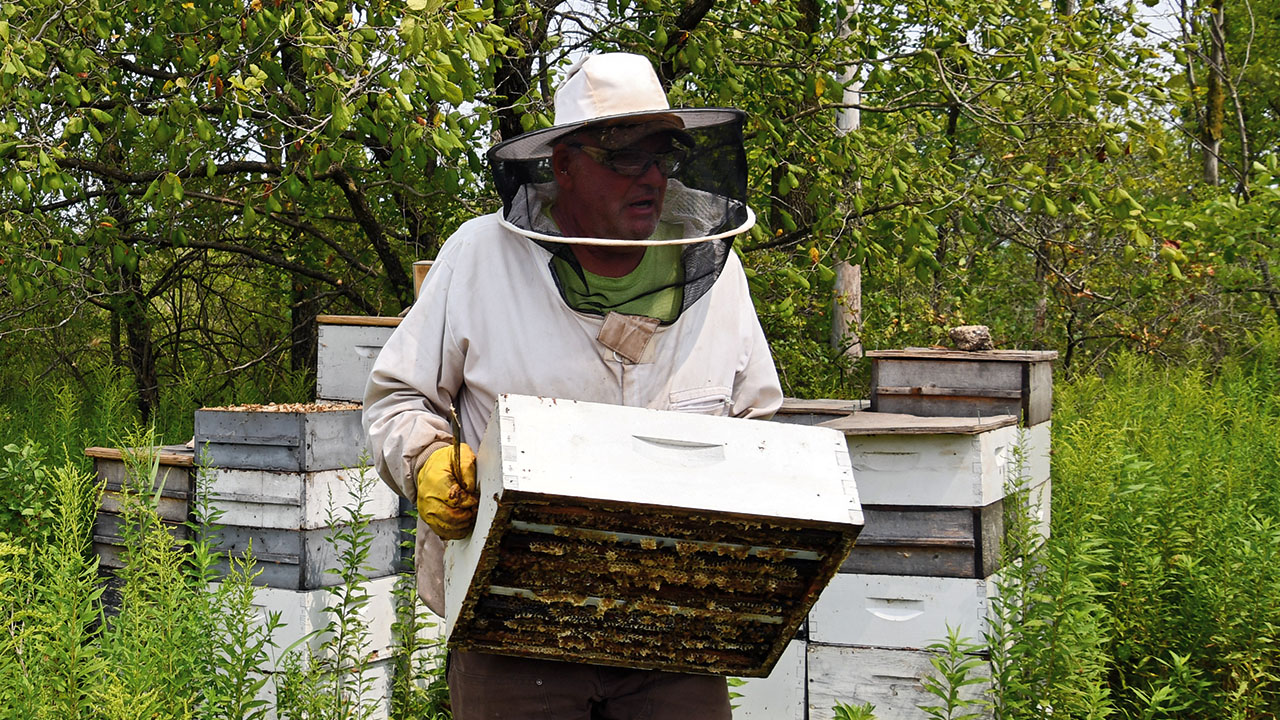
She found Craig Scharbarth, who was an AriensCo journeyworker‑industrial electrician who kept beehives since he was a kid. That was in 2015. Scharbarth is now part of AriensCo’s Sunset program and continues to manage the bees and some of the conservation work on the property.
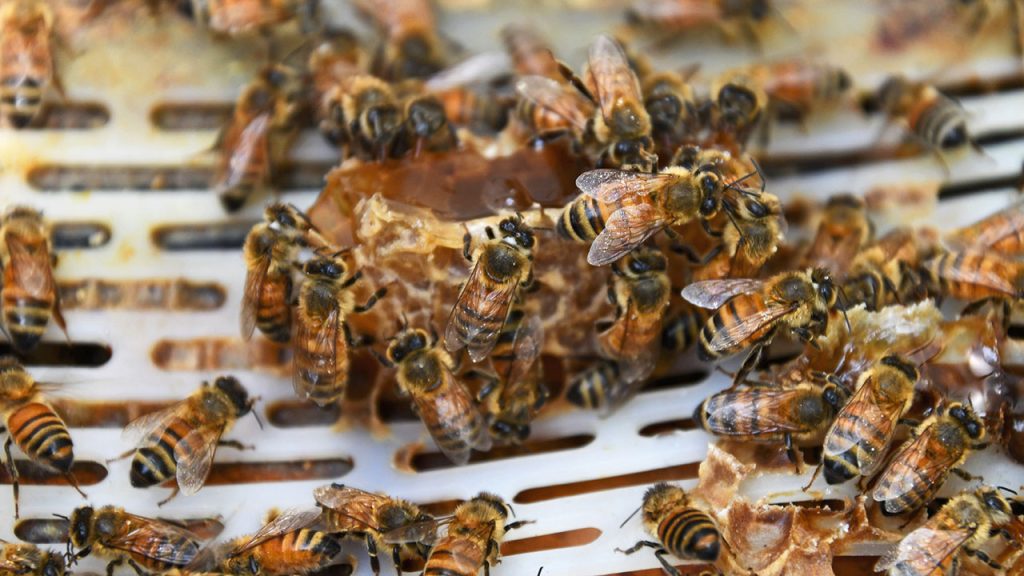
Each year, the apiary starts the year with four hives made up of thousands of buckfast and Carniolan honeybees, each with its own queen, and often those are split by the end of summer into eight hives. The hives are checked weekly by Scharbarth, but Marquardt also has suited up to help pull the honey out, using a smoker to help lull the bees. “You’ve got to take that honey out fast because they get really mad,” she says.
Besides the possibility of getting stung, keeping honeybees is notoriously challenging because of so many environmental and physical issues that can affect them, including Wisconsin cold and parasitic mite infestations. Sometimes the apiary needs to be repopulated with new frames full of bees. “There are various different things that can go wrong. But for the most part, we have been very successful,” Marquardt says.
The honey is pulled in the summer and stored until the fall, when the frames are spun to get the honey out and bottled. “We create some fun labels every year, and the employees love the honey,” Marquardt says.
All the processing is completed at Scharbarth’s home in Potter, where he has honey extraction equipment set up in his basement, Marquardt says. The AriensCo Apiary recently had its 11th honey harvest.
AriensCo sells the honey in the retail store in its corporate museum and in the company mail room. This year, the Ariens Apiary has a 9‑ounce jar for $10.
The proceeds support efforts like restoration of the property’s oak savanna, marshland and upland forest habitats. Last month AriensCo announced Japan‑based Yanmar Holdings Co. Ltd. will become the company’s majority partner. The Ariens family will retain a significant stake and continue leading operations and strategy from its Brillion headquarters.
AriensCo’s efforts have resulted in past wildlife habitat certification and a 24‑page report issued earlier this year on the efforts thus far. That includes planting more than 130 acres of flowering plants and grasses to help support more than 200 animal species on the property. The property now supports monarchs, bumblebees, tree swallows, kestrels, wood ducks, purple martins and bluebirds, among other species.
“We have planted trees every year. We planted 300 white pine seedlings this year,” says Marquardt.
In addition to restoring the biodiversity of the land, the property offers a nice public trail system, Marquardt says: “It’s used extensively by the Brillion community and our employees.”

