

Photographs by Shane Van Boxtel, Image Studios
There’s no denying Wisconsin’s beer culture — or its $8 billion impact as a statewide industry. But the artistry of beer is about more than just the brew.
There’s the art of the pour.
And nestled in the tiny town of Random Lake is a key player not just in Wisconsin’s, but the world’s, beer scene: America’s largest manufacturer of beer tap handles.
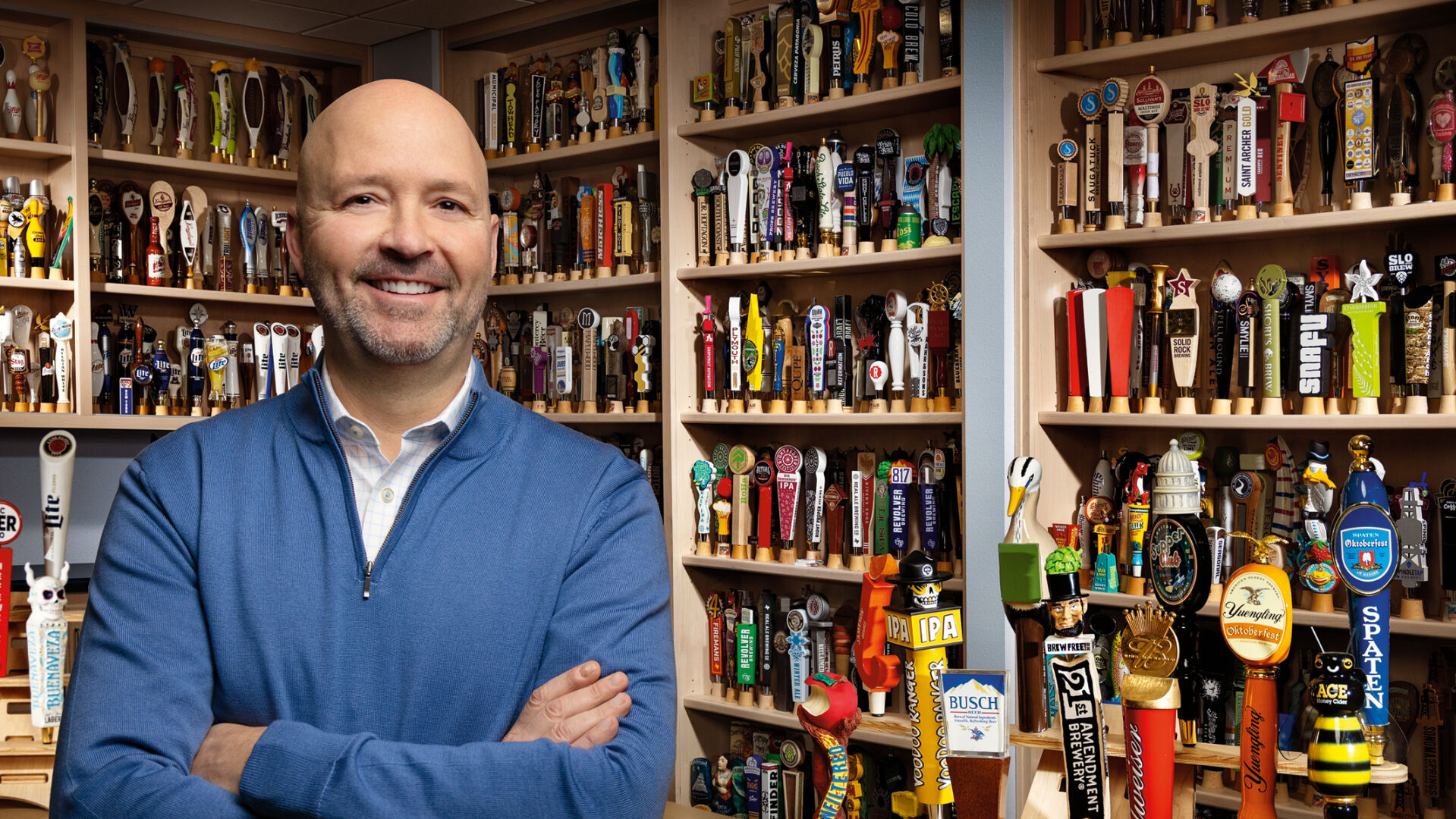
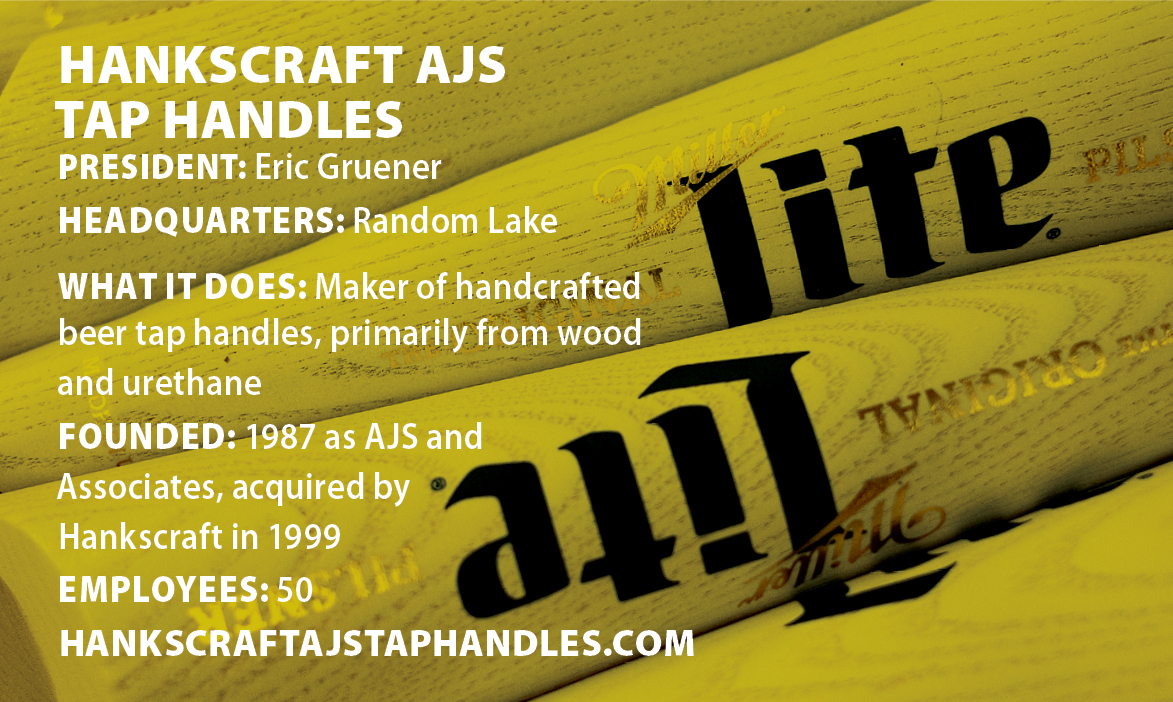
Whatever you think goes into making a beer tap handle, you’re probably wrong. Eric Gruener, president of Hankscraft AJS Tap Handles, wants the world to appreciate the craftsmanship he gets to see up close every day but that few others even know about.
“It’s a cross between manufacturing and art,” he says. “And we take it seriously. We don’t just say, ‘Oh, it’s a handle; it’s just a piece of wood.’ It’s an extension of somebody’s business. They put everything on the line. This is their life’s work. This is their life’s passion. They’re building this brewery; they’re building their brand. They’ve entrusted us to build something for them. So we want people to understand that we take being part of their business very seriously.”
Andrew Fabry, the founder, president and CEO of Badger State Brewing Company in Green Bay, knew he wanted to work with Hankscraft AJS when he decided to redesign his tap handles in 2018. Partnering with a fellow Wisconsin company was a reflection of Badger State’s company values, but regardless the expertise and service Fabry received was world class.
“It’s great to have a vendor like this in our backyard. They really do have a good team of people over there, and any time you see businesses consistently reinvesting in themselves to grow, that aligns with our brand values,” Fabry says.
A tale of two companies
Fabry first knew the tap handle manufacturer as AJS, but its current name reflects the convergence of two well-established Wisconsin companies.
“AJS” stands for Andy J. Sanfelippo, who spun off the beer tap handle company AJS and Associates from the Plymouth manufacturing business where he worked 37 years ago, when the number of American breweries was at its lowest since Prohibition. Clients like Anheuser-Busch and Miller Brewing Co. kept a steady stream of business flowing to AJS and Associates for years, with very little market competition, and Random Lake quickly became the capital of tap handle making.
The roots of Hankscraft can be traced back to Madison in 1920, when Marshall Hanks invented an electric egg cooker. Over the years the company relocated its headquarters to Reedsburg, became a division of Gerber Products Company — eventually breaking away from the baby and health products maker in 1996, and methodically grew a broad catalog of OEM products for use in consumer goods, pet care, HVAC and home appliances, as well as motors — including simple motors for point of purchase (POP) displays and advertising.
Recognizing product line synergies, Hankscraft made AJS and Associates part of its family of companies in 1999. AJS and Associates officially changed its public-facing name to Hankscraft AJS Tap Handles in 2018 to better align the two brands and reflect the consolidation of some manufacturing operations.
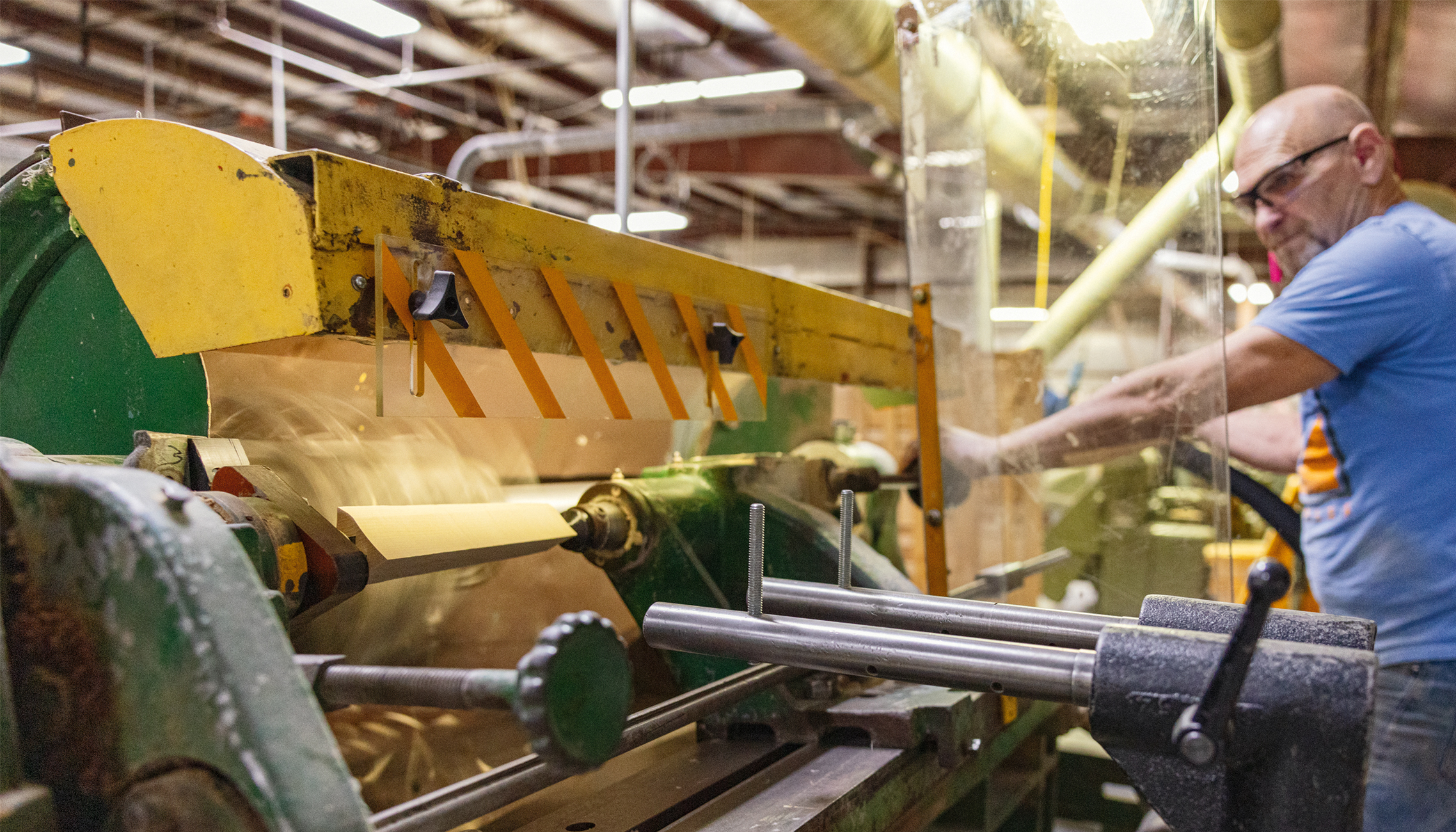
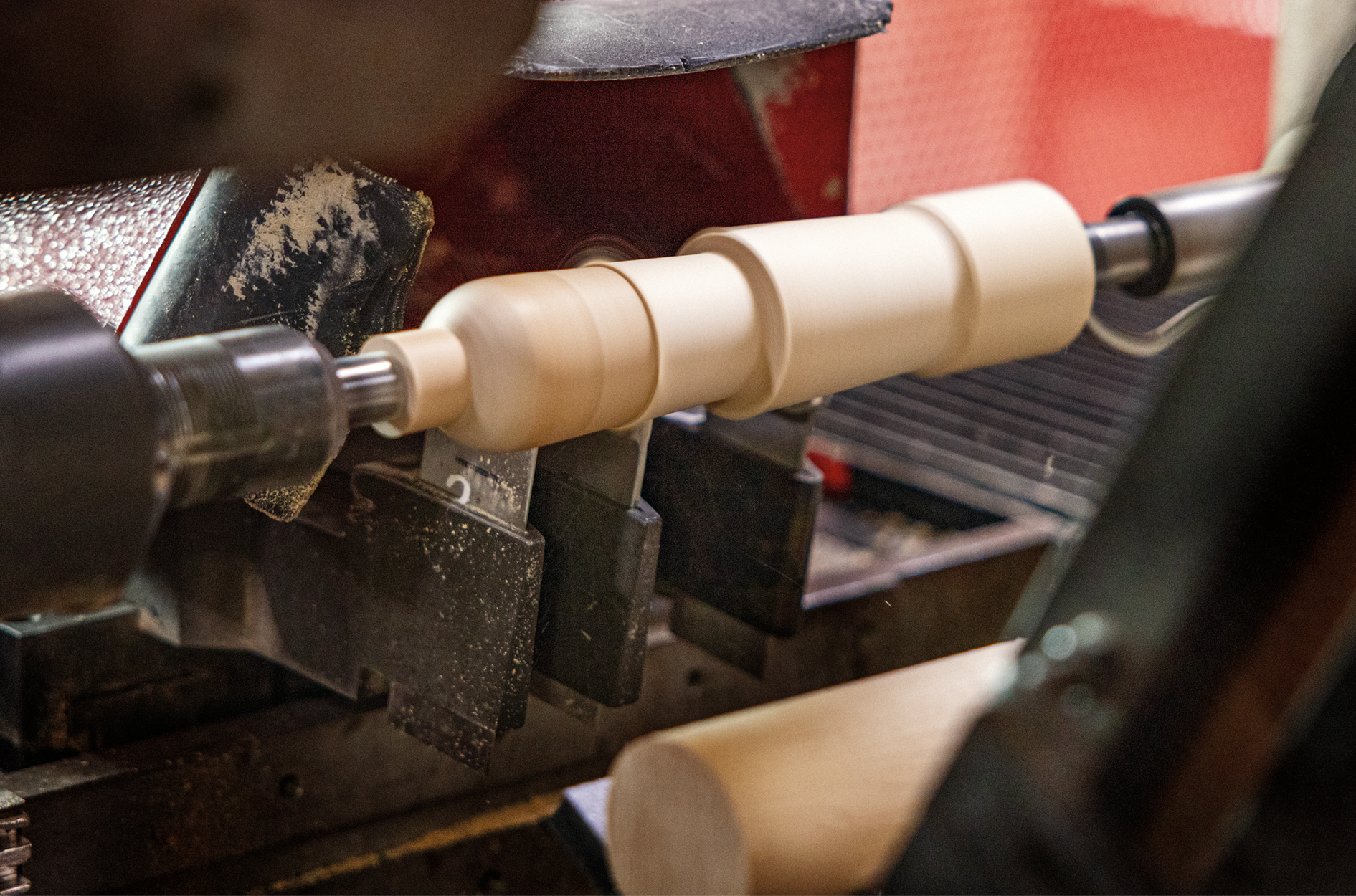
Today manufacturing of the small motors for Hankscraft’s POP products has been consolidated into the Random Lake facility, but the 43,000-square-foot roadside plant in south central Sheboygan County remains primarily dedicated to housing stacks of Wisconsin ash and Vermont maple, an impressive collection of more than 60 custom-made wood lathe blades that are constantly rotated to create new shapes, and a 200-degree paint curing room — all used for AJS’s original and flagship product, the humble tap handle.
Hard to handle
Art Director Cole Krueger hadn’t given much thought to how beer tap handles were designed before stumbling on a Craigslist ad for the job he has now held for more than a decade. Now, he’s probably the world’s foremost expert: Ten to 12 inches in height and less than a pound in weight is ideal. The tap handle can’t be more than three inches wide, or it will crowd the line and bartenders will turn it sideways or, worse, chuck it in a bin. The design should give the consumer an idea of what the beer will taste like, whether that means adorning it with a carved wooden hop blossom or citrus slice or leaning into a trusted brand’s iconography. Use anything but wood or urethane and it will probably fall apart.
Henry Schwartz, founder of Milwaukee-based MobCraft Beer, says he learned that last lesson the hard way. He started out in 2013 by 3D printing plastic handles for the startup beer brand in his UW-Whitewater dormitory — “the worst idea ever,” he says.
“Then we were like, ‘OK, could we buy a bunch of axe handles or vintage spoons from Goodwill and laser engrave them?’” Schwartz remembers. “Those all broke right off the bat. We finally decided we needed a professional.”
So MobCraft met Hankscraft, and the rest is craft history. Schwartz says he appreciates the peace of mind that comes with purchasing professionally made-in-Wisconsin tap handles, a process Gruener says can involve up to 20 meticulous steps.
Approximately 500,000 tap handles are created every year by the Hankscraft AJS production team that is overseen by Operations Director Keith Hiller, who has worked for the company for 30 years. Most are made of wood, with urethane a distant second, followed by acrylic and metal. Handles are decorated using paint, UV printing, laser engraving and decals. Hiller points specifically to the investments in the laser engraver and UV printer as game changers for Hankscraft AJS’s production process.
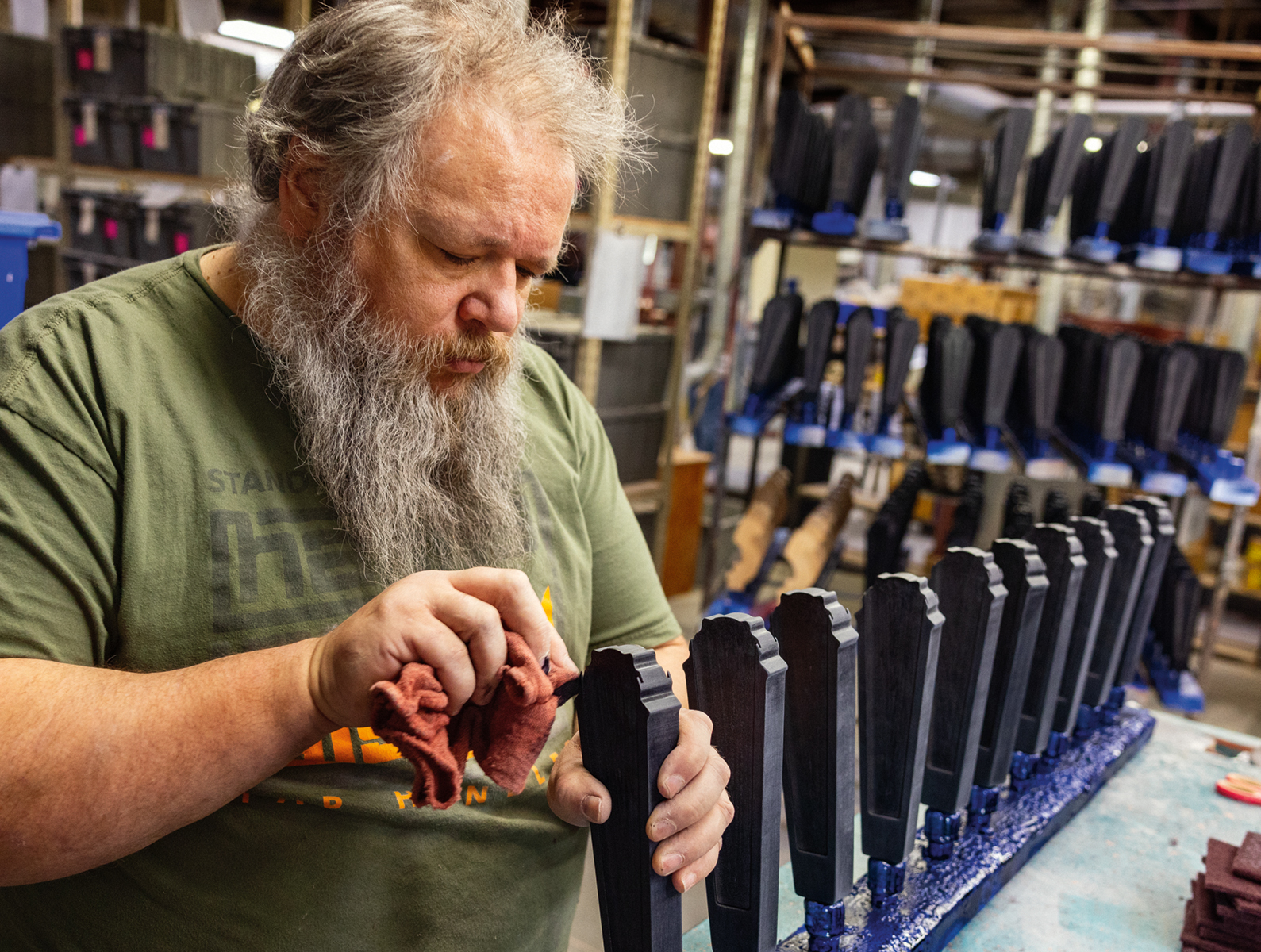
But for all the technological advancements the company has implemented, the creation of a tap handle is still very much a hand process. “The sanding by hand is the same as when I started,” Hiller says. “You can’t really have a machine do it.”
During his career, Hiller says he’s seen the company grow through two major facility expansions. Another major change has been Hankscraft AJS’s pivot to custom design. When he started in the 1990s, Hiller estimates 75% of the handles produced were made from stock parts. Today, he says that number is around 15%. Customization is king, and Hankscraft AJS works with each customer to bring their brand to life through miniature works of art.
Sarah Kavalauskas, a senior manager with Molson Coors U.S. and Canada, says Hankscraft AJS has been delivering innovation to her company’s brands for more than two decades. Last year, Hankscraft AJS was instrumental in developing a Coors Light tap handle with a removable top that could be customized for sports teams and holidays. Hankscraft AJS came back with a cost-effective solution using a powerful magnet.
“No matter what it is, we try to find a way,” Hiller says.
Manufacturing meets art
An exact replica of a beermaker’s foot, an intricate bust of Abraham Lincoln, and a fishing pole are among the tap handle designs Hankscraft AJS has found a way to produce for its clients. It often starts with a napkin sketch, if that. Krueger says at least half of the company’s clients come in without a specific design idea, and that’s where the fun begins for his team.
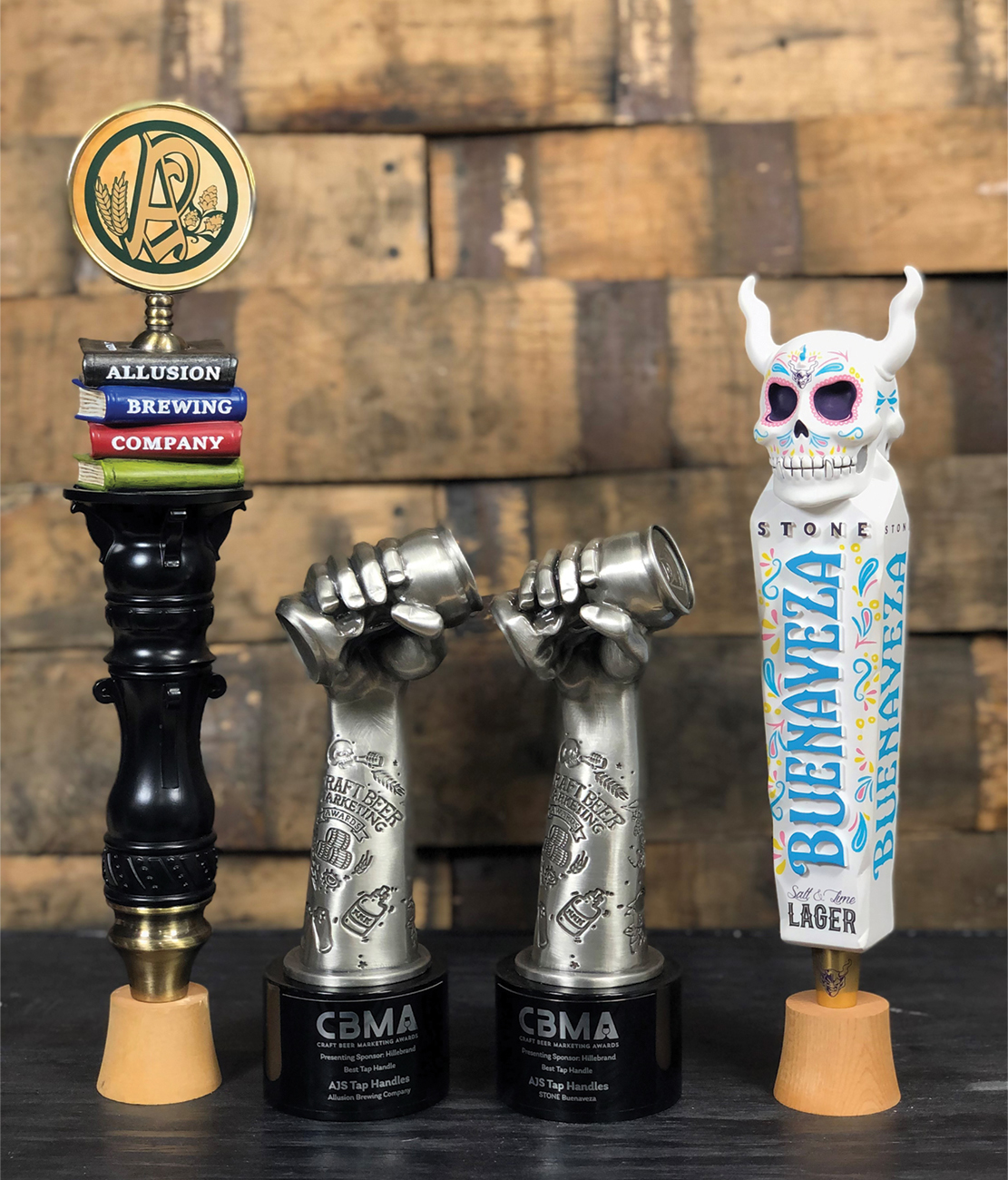
One such open-minded client was California-based Stone Brewing, which turned to Hankscraft AJS to design its Stone Buenaveza Salt & Lime Lager tap handle. Krueger was able to transform the horned skull logo on the brand’s one-dimensional packaging into a three-dimensional figure that certainly disrupts the eye scanning a tap line. The handle also caught eyes at the 2023 Craft Brewers Conference, where it took home a “Platinum Crushie” award for craft beer marketing, as did an old-world-style handle Hankscraft AJS crafted for Pennsylvania-based Allusion Brewing Company that features a stack of hardbound books.
Krueger has spotted his work on an episode of “It’s Always Sunny in Philadelphia” and in a Michelob Ultra ad during this year’s Super Bowl, and everyone at Hankscraft AJS enjoys the occasional visit to see their products in the wild. Krueger, who previously worked designing print materials for Kohl’s and once envisioned his career in video game design, says it’s hard to top the variety and creativity he finds at work these days, using high-tech tools to design something that really hasn’t changed in 300 years. And as opposed to Kohl’s, where he felt sometimes like “just a cog in the wheel,” the size and operations at Hankscraft AJS allow him to see his work from start to finish.
“It’s something different every day — always a fun, new design problem to work through,” Krueger says. “And I can go out onto the floor and see how my design is being made. I really get to own all my projects, which is fun.”
Does tap handle design matter? Absolutely, says Gruener. Research shows that 46% of customers who go out to a bar or restaurant drink beer. Of those, four out of five choose draught beer. Of those, 71% are open to having their minds changed about their order.
“That’s where the handle comes into play,” Gruener says. “If a customer comes in and is looking for options, or they’re looking for information on a beer, if the tap handle is a source of that information you have a much better chance of being able to tell your story through that tap handle and get somebody to try your beer for the first time.”
Attracting attention
Gruener says the company trademarked the tagline “stand out at the tap” because that’s the very specific objective of its customers, who have multiplied in number as Hankscraft AJS enjoyed a front-row seat to one of the biggest industry booms in history: the rise of craft brewing. The tap line, Gruener says, is crowded these days.
“In 2014, there were about 3,500 breweries. In 2016, there were 5,000, by 2018 there’s over 7,000 and today there’s about 9,500,” he says.
The breweries themselves have also grown. Hiller says he has seen the growth of California brewer Lagunitas firsthand. He remembers when the company placed orders for 100 handles at a time; today they’re ordering 10,000 a year. “We see [brands] grow, which makes us feel good,” Hiller says.
The craft beer market is currently contracting somewhat — it had to, Gruener acknowledges, but it’s also undoubtedly here to stay. Since the craft beer boom transformed Hankscraft AJS’s business and exploded its customer base, Gruener says he’s focused on being not just an industry vendor but an industry partner championing the creativity of the brewers he serves. “Our handle sells the first beer,” one Hankscraft AJS marketing campaign declares, “then you sell the rest.”
Even for established brands like Coors, standing out is important. “It’s a powerful form of marketing,” Kavalauskas says. “That alone makes a huge first impression and acts like a mini billboard for our brands, and of course we want to be represented in the best way possible.”
Krueger says he’s seen a philosophical shift at Hankscraft AJS since Gruener took over as president. This was a little over five years ago, when Gruener was recruited away from the restaurant supply giant Sysco, where he had spent 24 years in sales and senior leadership roles. Hankscraft AJS is now emphasizing marketing, the unique role it plays in elevating the beer industry, and responding to increased market competition, Krueger says.
“When I started, we really didn’t have anyone to compete with, to be honest,” he explains. “As we have more competition, the marketing is more important — you know, making sure our website and SEO is in order. We do have the benefit of being very well known in the industry, but it’s making sure new breweries that are just starting out are finding us. Eric has been instrumental in bringing us into the future.”
Some of Hankscraft AJS’s new thinking was spurred by the pandemic, when the company was shut down and forced to lay off workers. Under Gruener’s leadership, the firm reopened to make PPE, and then as bars and restaurants started reopening Hankscraft AJS created products that would help the hospitality industry take the party outside, including outdoor racks and displays — many of which incorporated hand sanitizer dispensers — and branded products like cornhole games that continue to be popular today to support brewers’ marketing strategies.
Post-COVID, the company has rebounded and then some, Gruener says. Hankscraft AJS had a record year in 2023, and he is excited about the next chapter.
“We’re becoming a bigger part of the industry versus just a manufacturer,” he says.
Tapped in
Gruener says Hankscraft AJS’s increased integration with the larger beer industry has come in the form of membership in professional organizations and brewers’ guilds, as well as just efforts to network and stay current on industry trends. Fads like seltzers and canned cocktails don’t worry him. Beer dates back to the 5th millennium BCE, and there’s never been a reason to think it will fall out of fashion.
Hiller describes Gruener as a very forward-looking, collaborative leader, consistently investing record profits back into the business to improve efficiency, technology, customer service and sustainability. The pieces, Gruener says, are in place for Hankscraft AJS to maintain its place as a leader in the niche industry.
“We’re trying to create a different relationship with our customers — different than just selling you a tap handle once. We want to be part of their business,” Gruener says. “Focus on making great beer and growing your business; let us handle this small piece. And I promise you it’s going to be awesome.”