

Once or twice a year, the 65 or so people who work at Basler Turbo Conversions take a short ride from their building to stand along a flight line at Wittman Regional Airport in Oshkosh.
They watch as an aircraft taxis — an aircraft they spent 50,000 hours reconstructing — and then becomes airborne for the first time since it rolled into their hangar, marking a successful year-long effort.
“The first test flights are always a big deal here,” says President Joseph Varkoly. “It’s really rewarding to see the first flight.”
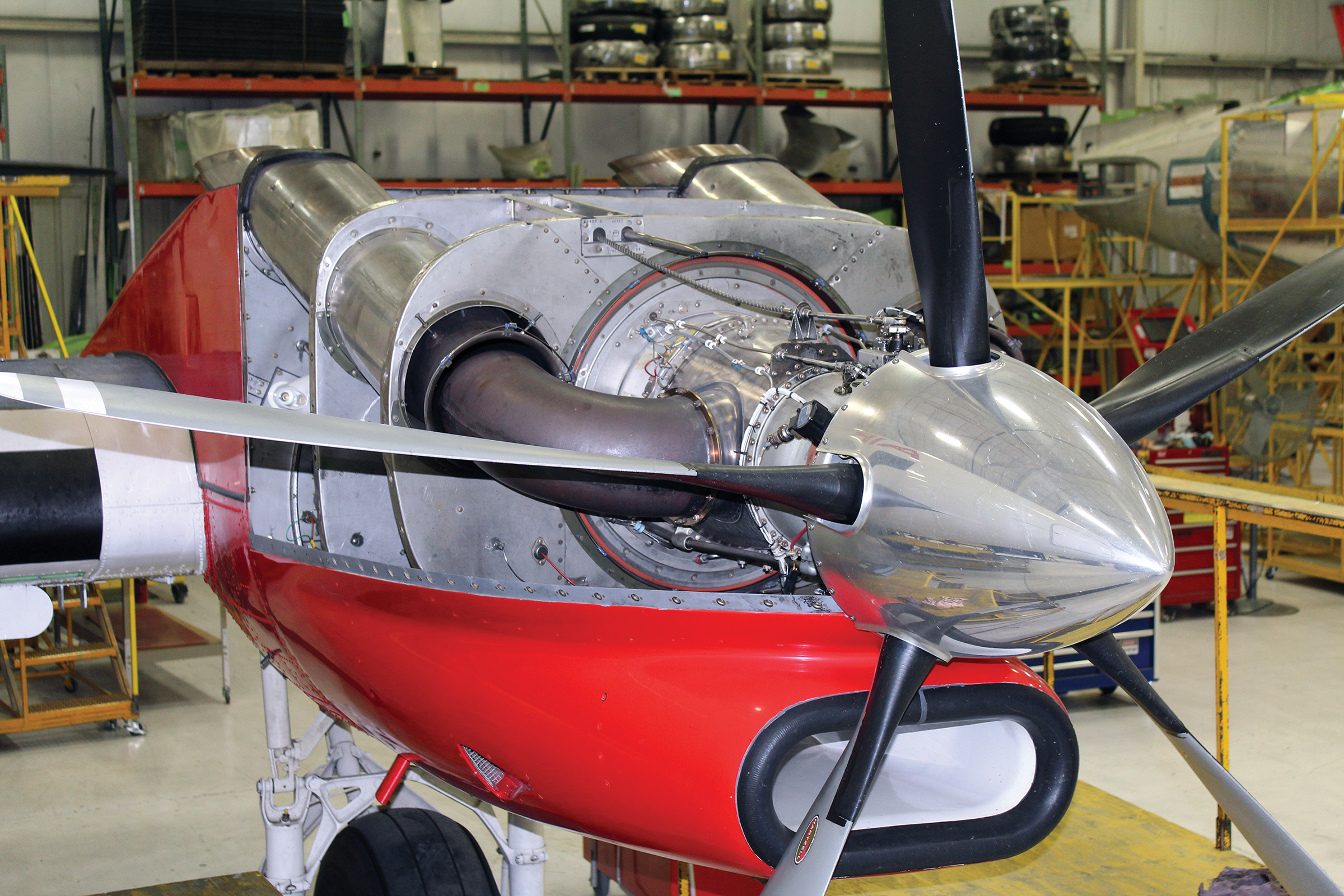
Basler Turbo does one thing: It converts the DC-3/C-47 to a BT-67 aircraft uniquely suited to a variety of worldwide uses that require an aircraft that can fly low, slow and for long periods while carrying a variety of equipment. It also can take off and land in shorter distances and on less developed runways.
“We’re kind of a hot rod shop,” Varkoly says.
Basler Turbo Conversions, located on the south end of Wittman Regional Airport in Oshkosh, was founded by Wisconsin aviation legend Warren Basler. He had a fondness for the reliable DC-3 and its military version, C-47.
It was the first aircraft to be profitably flown for commercial passenger flights, and more than 10,000 C-47s were produced by Douglas Aircraft Co. for United States military use in World War II. But the aircraft used heavy and inefficient piston engines, so Basler created a company to rebuild the DC-3 with turbo engines and other upgrades initially for hauling cargo.
The company then got permission from the Federal Aviation Administration to convert the planes into the BT-67 and in 1990 opened a 75,000-square-foot facility it still occupies.
Varkoly says that while the work is technically a conversion, Basler replaces about 90% of the entire aircraft during the process. The goal is to build an airplane that has zero accumulated fatigue, upgraded turbo engines, new avionics, a roomier interior and longer flight times.
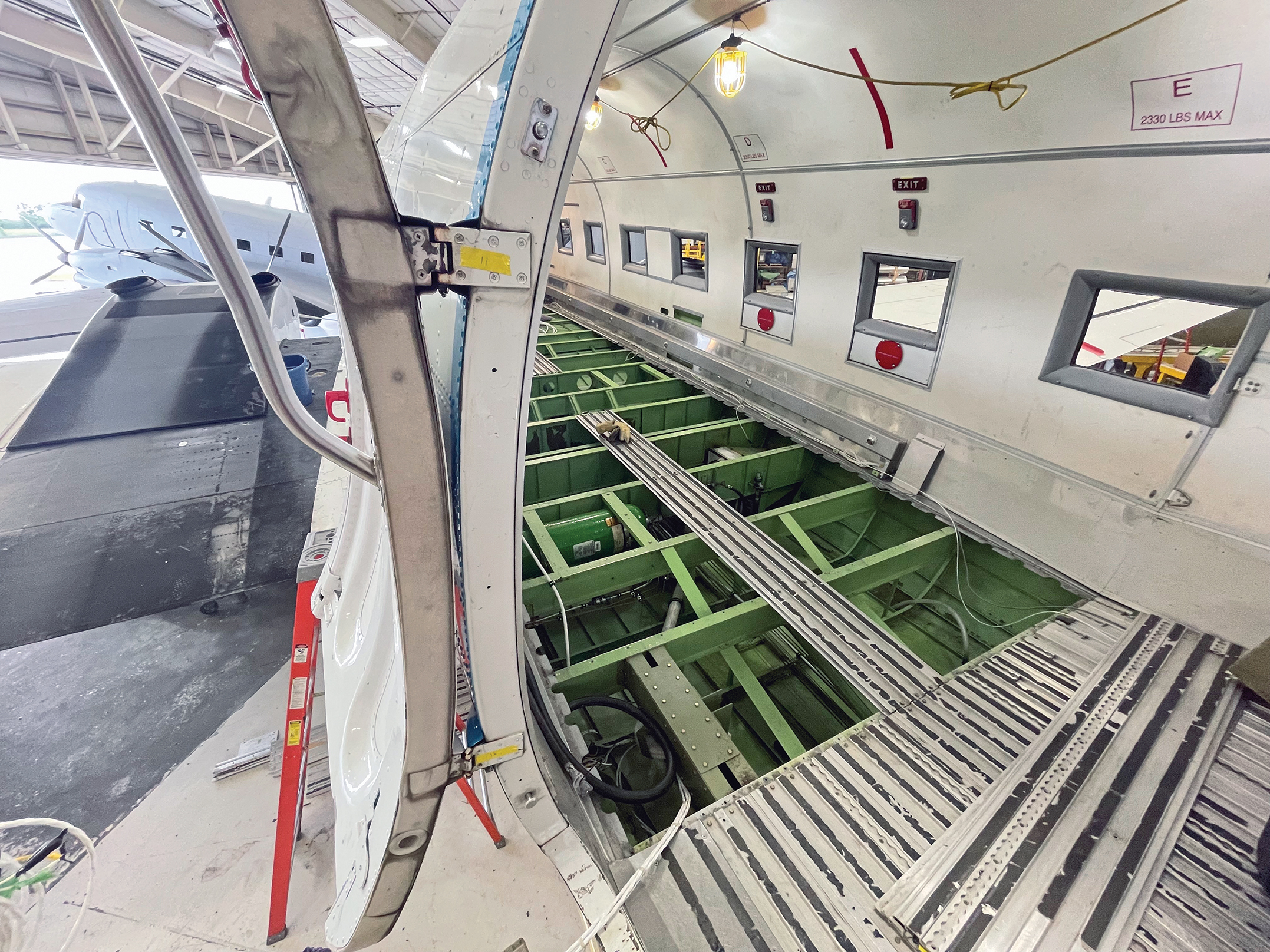
When a conversion starts, the airplane is stripped and the fuselage is cut between the cockpit and wings to add 40 inches in length. Stretching the plane not only adds space, but it is also required to readjust the balance due to differences in weight from the piston engines and much lighter turbo engines.
There is room to add fuel tanks and increase flight time to as much as 13 hours. The non-pressurized plane has the capability of housing equipment for surveillance, geographical surveys, cargo handling, personnel movement and more. Varkoly says sometimes the equipment options can be as costly as the conversion alone.
The result is an airplane used on every continent for things like scientific research in the Antarctic, drug interdiction efforts, disaster response, firefighting and more.
Varkoly says the company is vertically integrated and has to make thousands of parts itself to convert and maintain the aircraft. It takes a skilled workforce that can handle everything from the machining and installing the equipment to piloting and ensuring FAA compliance.
“It’s a unique skill set here. Labor is our big challenge,” Varkoly says. The company sometimes employs interns from nearby Fox Valley Technical College.
Supply chain challenges also can slow a process that already limits the company to making one or two conversions per year. Varkoly says the company estimates there are enough C-47s available for conversion to sustain the work for at least another 35 years. The company also maintains the BT-67 and is the sole supplier of parts.
Basler is privately owned and part of the Attone Group. Warren Basler sold the business in 1996. Varkoly praises the ownership and says he is thrilled to be part of the company.
“Of all the jobs I’ve had, this is certainly the most unique and it’s the most fun,” Varkoly says. “What we do is pretty damn cool.”