
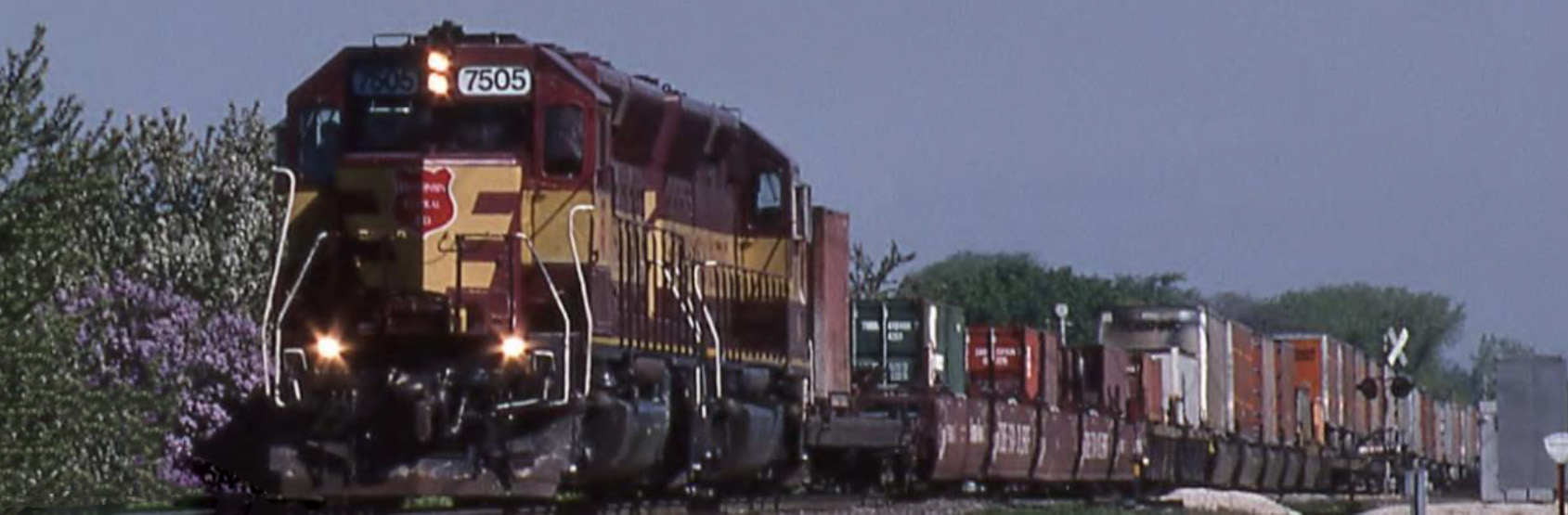

Since Canadian National closed its freight terminals in Green Bay and Neenah, about three-quarters of New North manufacturers have relied heavily on drayage to and from Chicago to meet inbound and outbound shipping needs — costing time and money.
One small exception in the region is Oshkosh Corporation, which in 2018 drove the establishment of a Watco terminal in Oshkosh. Two existing intermodal freight facilities in Wisconsin are similarly anchored by major companies: one in Chippewa Falls, driven by the business of Menards, and one in Arcadia anchored by Ashley Furniture.
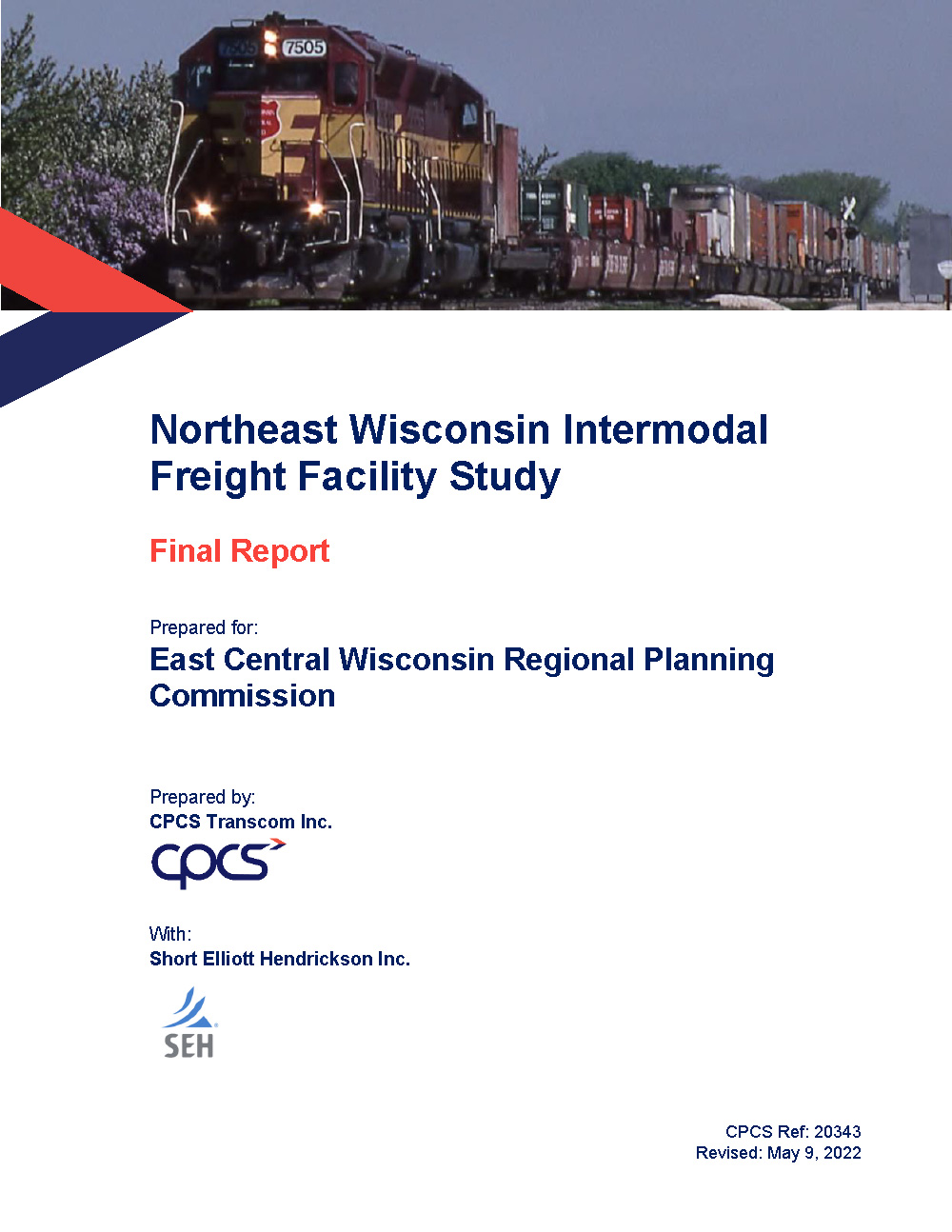
Today, making a business case for bringing more intermodal freight service back to the New North is the central objective of an ongoing effort led by the East Central Wisconsin Regional Planning Commission (ECWRPC). The commission received a grant from the Wisconsin Department of Transportation to conduct the Northeast Wisconsin Intermodal Freight Facility Study, the results of which were published in May.
ECWRPC Executive Director Melissa Kraemer-Badtke says the study was encouraging, but many more steps — and hurdles — lay ahead if a facility is to come to fruition.
“If we are going to move forward with something, we want it to be successful,” she says, adding that ECWRPC is currently budgeting and identifying funding opportunities for a second phase that involves “trying to lay out some of those specifics of what the facility would look like, where would it be located, those types of things. And who might be interested from the business side of it as well.”
Barb LaMue, executive director of New North, Inc., which is partnering with ECWRPC in this work, says many businesses have reached out since the May summit to express interest and join the coalition for phase 2. She says businesses were also forthcoming in the initial study’s stakeholder interviews about outbound material flows, but data on inbound flows was more closely guarded out of concern over competitive advantage, resulting in a perceived load imbalance.
“In order to make an intermodal freight facility successful, we need a good balance of inbound flows and outbound flows,” LaMue says. “There may be more inbound flows, but we just don’t have the data to support that at this point. While there appears to be a business case, we have more work to do to substantiate that.”
Another challenge is existing traffic volume, track agreements and other location and infrastructure logistics. LaMue says that, when the study was announced, New North communities were clamoring to become the future facility’s home.
“But it’s not one of those things where ‘if you build it, they will come,’” she says. “With the existing infrastructure and construction costs, you’re obviously going to need rail lines already in place or very close to the proximity we’re looking at because this would be multimodal, looking at ports within the region, taking containers to and from ships, and then there’s the last mile done through contract carriers.”
But despite the challenges ahead, Kraemer-Badtke and LaMue agree that there’s reason for optimism about the New North region’s potential to support intermodal freight service.
“It’s a larger project than I think we anticipated when we first started, but there’s definitely some opportunity,” Kraemer-Badtke says, noting that it would be impossible to even speculate about timelines for potential development yet.
LaMue says WisDOT shares their optimism and believes that the resources dedicated to phase 1 were worthwhile: “It was [encouraging] enough that we didn’t just want to say, ‘OK, we did this report, we spent a year with all of this analysis and now we’re gonna call it a day.’”
On the web:
Download a copy of the 2022 Northeast Wisconsin Intermodal Freight Study online at thenewnorth.com/intermodal