
![Sustain_GettyImages-2151404260 [Converted]](https://assets.insightonbusiness.com/wp-content/uploads/2026/04/dcec70a3034891154722d38ce78470df-scaled.jpg "dcec70a3034891154722d38ce78470df")

More businesses are seeking certification as B Corporations, or B Corps, to demonstrate their commitment to high standards of social and environmental performance, transparency and accountability.
There is growing interest in B Corp certification thanks to greater consumer, worker and stakeholder demand for responsible business practices. It’s a movement that started in 2006 as a way to transform the global economy with a “triple bottom line” focus on people, planet and profit.
“As of today, there’s almost 10,000 certified B Corps in the world. It just shows how this movement is really growing and taking off,” says Lisa Geason‑Bauer, Wisconsin’s only trained B Consultant and president of Evolution Marketing, which became a certified B Corp in 2018.
The first 82 businesses to become B Corps were certified in 2007, and Appleton-based New Leaf Paper was one of them.
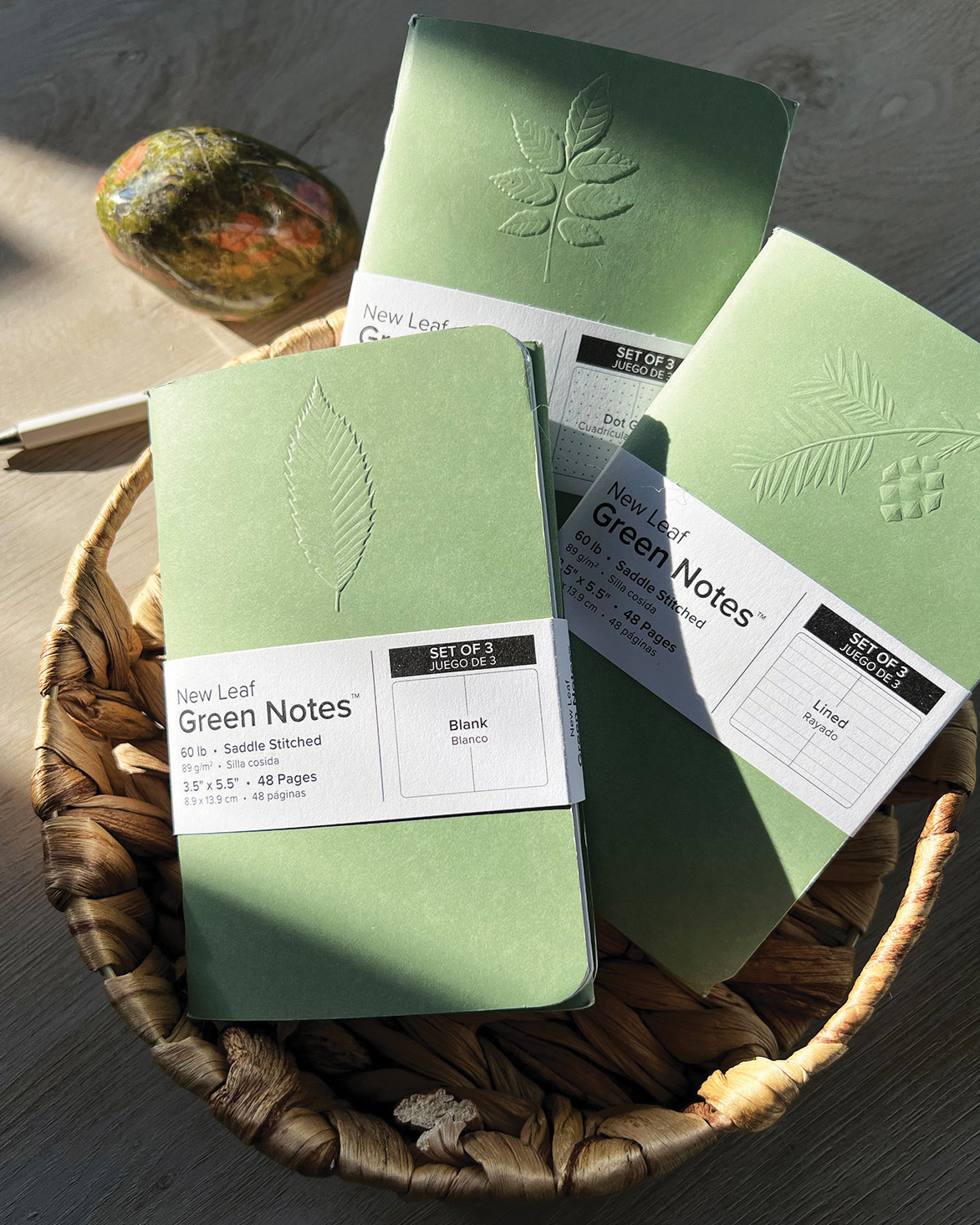
“For us, it’s really at the core of who we are,” says Sabrina Schwietzer, vice president of retail marketing and sales for New Leaf Paper, which specializes in high post-consumer recycled fiber content products. “We go through rigorous effort to keep the certification active. We’re a public benefit corporation where, yes, we’re trying to make profit, but we’re trying to do something positive with that profit.”
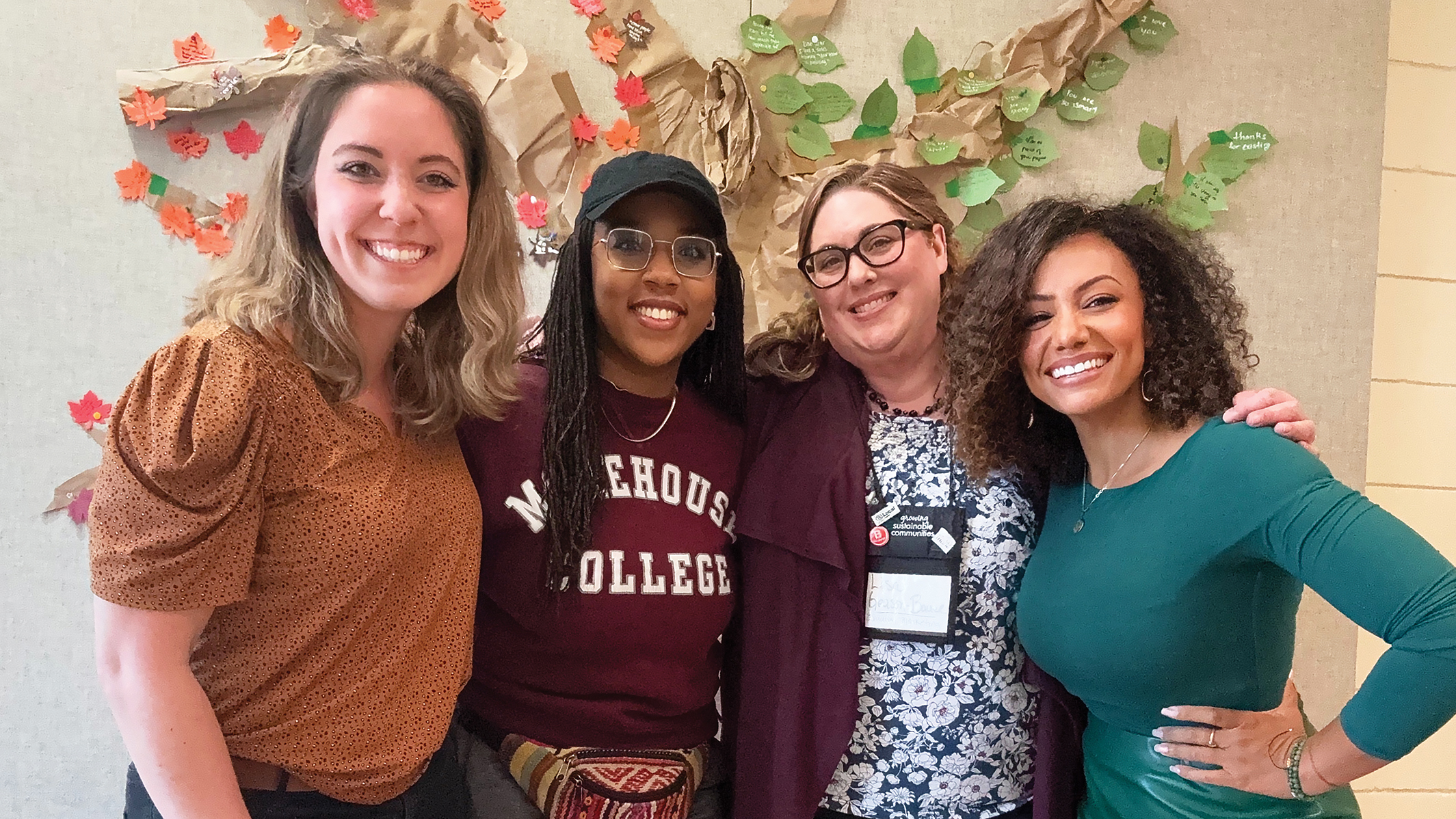
What is a B Corp?
Geason-Bauer, who has been assisting businesses through the B Corp certification and re-certification processes since 2016, describes the B Corp assessment as an audit of a business’ entire social and environmental performance. It’s a process overseen by B Lab, the global nonprofit organization that developed the B Impact Assessment. (Becoming a certified B Corp, or benefit corporation, is different from the “benefit corporation” legal status, although companies can do both.)
While there are hundreds of third‑party certifications that examine and verify a business’ specific products, processes and physical buildings, B Corp certification is the only one that takes a holistic look at every facet of a business, from its supply chain to employee benefits.
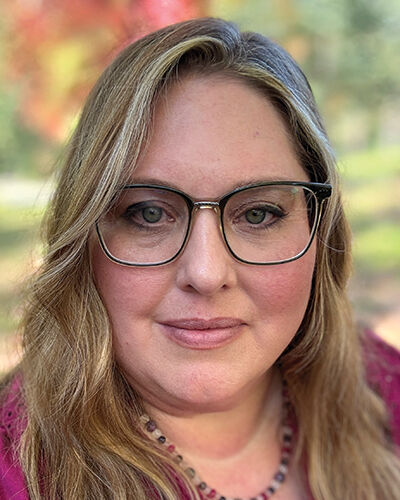
“When you have that B Corp certification, you’ve literally been audited by a third party to prove that you’re actually doing the things you say you’re doing,” Geason-Bauer says. “It’s clearly stating to the world that you are taking actions that are both socially and environmentally responsible.”
Today, B Corps employ almost 1 million people in 102 countries across 161 industries. Bombas, Patagonia, Etsy and Ben & Jerry’s are all certified B Corps. According to B Lab’s 2023 Annual Report, companies achieving B Corp certification increased 30% globally over the previous year.
“I’ve seen a huge uptick in folks wanting to become B Corps because of the lack of transparency in the business world,” Geason-Bauer says. “In 2018 when my company became a B Corp, we were the seventh in Wisconsin. We’ve got 26 in Wisconsin in 2025.”
Rigorous, yet rewarding
B Corp certification is not for every business. It is time-consuming, resource‑intensive and may require cultural or operational shifts.
“When you become a B Corp, you’re baking this into your organizational DNA. It’s not like a checkbox or a one‑off. This is a commitment to how you’re going to be operating your business,” Geason-Bauer says. “It’s a very arduous process to become a B Corp — it’s even more arduous for manufacturers for the simple fact that they have such complex supply chains.”
It takes most businesses about a year of planning to be B Corp certification ready, and another year to work through the process with B Lab, Geason‑Bauer says, though the timeline varies depending on a company’s size and operational complexity. There are one‑time submission fees to become certified, and annual fees that range from $2,000 to $50,000, depending on the company’s gross annual revenue.
While the process may be rigorous, the rewards have proven worth the effort for New Leaf Paper. Even through a 2018 ownership change, New Leaf Paper’s B Corp certification has been paramount to its mission and success, Schwietzer says.
B Corps report lower job attrition rates, higher employee satisfaction, higher employee ownership and are twice as likely to pay employees a living wage.
Schwietzer herself is an example of how B Corp certification can be a talent attraction tool. She joined New Leaf in March 2022, in part because of the business’ certified B Corp status.
“The idea of not working at a B Corp is something that’s really hard for me to even fathom anymore,” she says. “The culture becomes part of who you are. It’s vastly different from a traditional corporate environment, in a good way.”
Schwietzer says B Corp certification helps gain consumer and stakeholder trust by combating misinformation and “greenwashing” — misleading marketing practices that position a product or company as more environmentally‑friendly than it is.
“There’s some skepticism from the market on what’s true and what isn’t, and how to figure out what’s authentic and what isn’t,” Schwietzer says. “Our B Corp certification absolutely helps that authenticity level. It’s proof that you are who you say you are.”
Certified B Corps are required to publish public impact reports. According to a report by JUST Capital, a nonprofit research organization, 80% of Americans say they would support a company that discloses its social and environmental impact.
“When we look back 20, 30, 40 years ago, we didn’t have as many [third-party] certifications. I would argue we have so many today because the way we do business has changed and consumers want transparency,” Geason-Bauer says. “Certifications have popped up to answer that demand for transparency.”
New certification standards
Last month, B Lab unveiled a new set of global certification standards. The updated criteria focuses on seven core areas: climate action, human rights, purpose and stakeholder governance, fair work, environmental stewardship and circularity, justice, equity, diversity and inclusion, and government affairs and collective action.
The new standards, B Lab’s seventh edition, replace the old points-based system, requiring businesses to take action and meet requirements in each of the seven categories.
Re-certification is required every three years.
“One of the things that’s really important when you think about B Corp certification is that it’s a continuous improvement process,” says Geason‑Bauer, whose business completed its second re-certification in April. “So much has changed in the world, and we now have more compliance requirements. The standards keep improving over time.”
Previously certified companies have until 2028 to transition to the new requirements. Businesses applying for first-time certification after Jan. 1, 2026 will be held to the new standards.
“If you’ve been thinking about it, now is a really good time to circle back around to it,” says Geason-Bauer, who believes B Corp certification can aid manufacturers in futureproofing their operations.
“The bottom line in all of it is building resiliency into your organization,” she says. “If you’re operating in a sustainable manner, you’re able to reduce your risk. You are able to make decisions for your business that will help you stay in business. Because in my mind, sustainability equals innovation.”
Getting started
Many companies begin the B Corp certification journey only to stall once they realize it requires changes to their bylaws or other significant steps they’re not fully prepared to take.
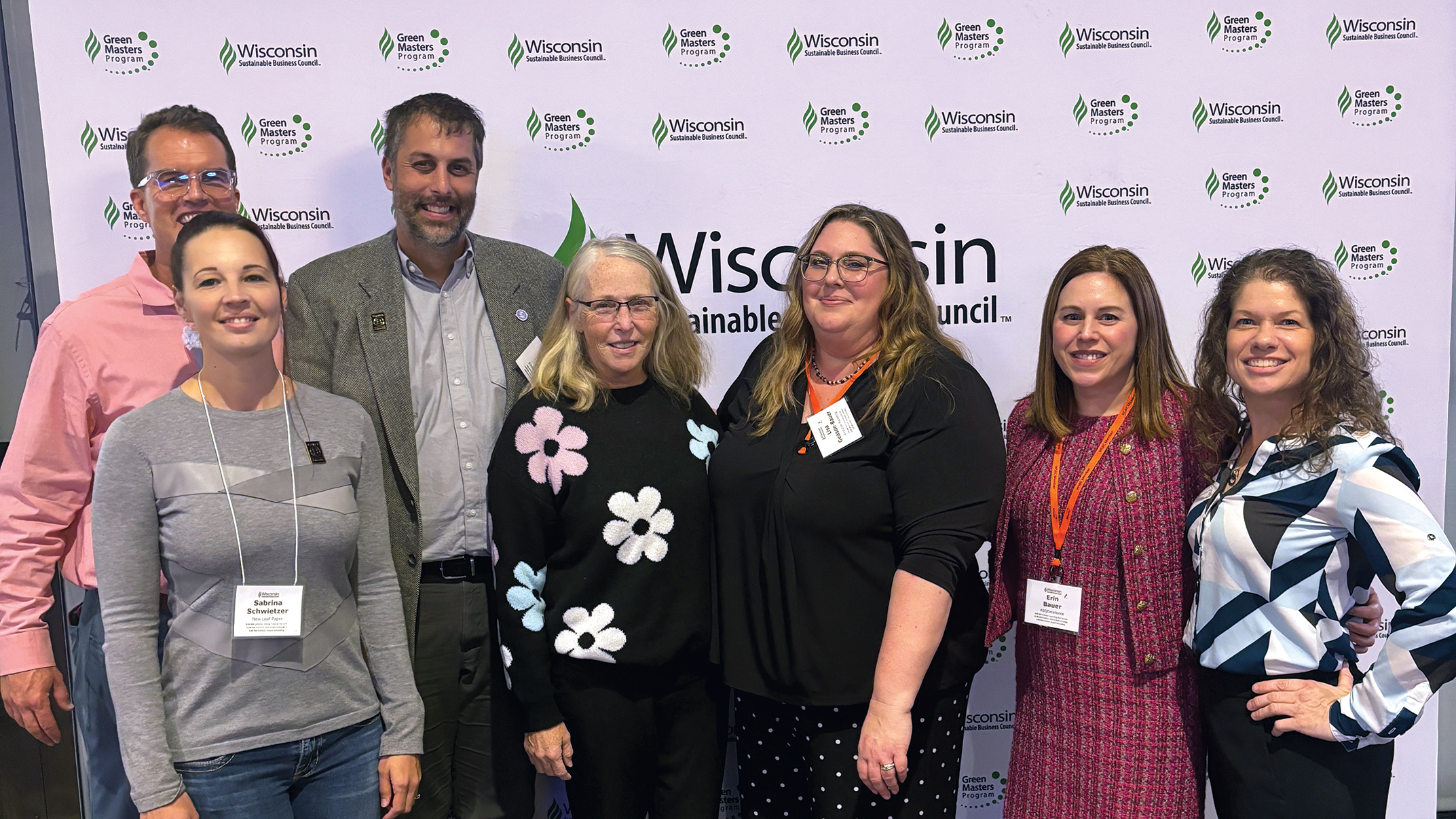
For Wisconsin manufacturers, a great entryway is the Green Masters Program through the Sustainable Business Council, formerly known as the Wisconsin Sustainable Business Council.
“It’s an excellent on-ramp into sustainability. I often recommend manufacturers start there before applying for B Corp certification,” Geason-Bauer says.
Another valuable resource is B Local Wisconsin, a community of certified B Corps offering support and educational tools to help grow the movement across the state.
Schwietzer also recommends that manufacturers talk directly with those who have gone through B Corp certification to better understand both the challenges and the long-term benefits.
Being a B Corp, Schwietzer says, means understanding that the community in which you operate is considered a shareholder and requires investment. In 2023 alone, New Leaf donated more than $24,000 and 244 volunteer hours to nonprofits — chosen by employees — focused on environmental sustainability and community enrichment.
“We absolutely quantify the difference that we’re making in our communities,” Schwietzer says. “We can see that investment, and it’s massive.”
Online resources
B Impact Assessment tool bcorporation.net
B Corp 101 webinar greenmkting.com/free‑sustainability‑courses/b-corp-101
B Local Wisconsin blocalwisconsin.org