
There’s at least a few in every office: The ones who see work as a competition. Then there are the chatty ones, the ones with all the ideas, the ones who’d prefer to see the numbers, and the ones who’d rather work at home.
How to navigate a team of different personalities and find what best motivates each person is a challenge that has existed as long as workplaces have. Throw in attraction and retention challenges, hybrid work environments and new expectations about well‑being at work, and the task grows even more challenging.
Leaders are embracing a new aspect of managing people — through their energy. Experts say that “energy literacy” is helping leaders tap into the best power their people have to offer, more so than managing time.
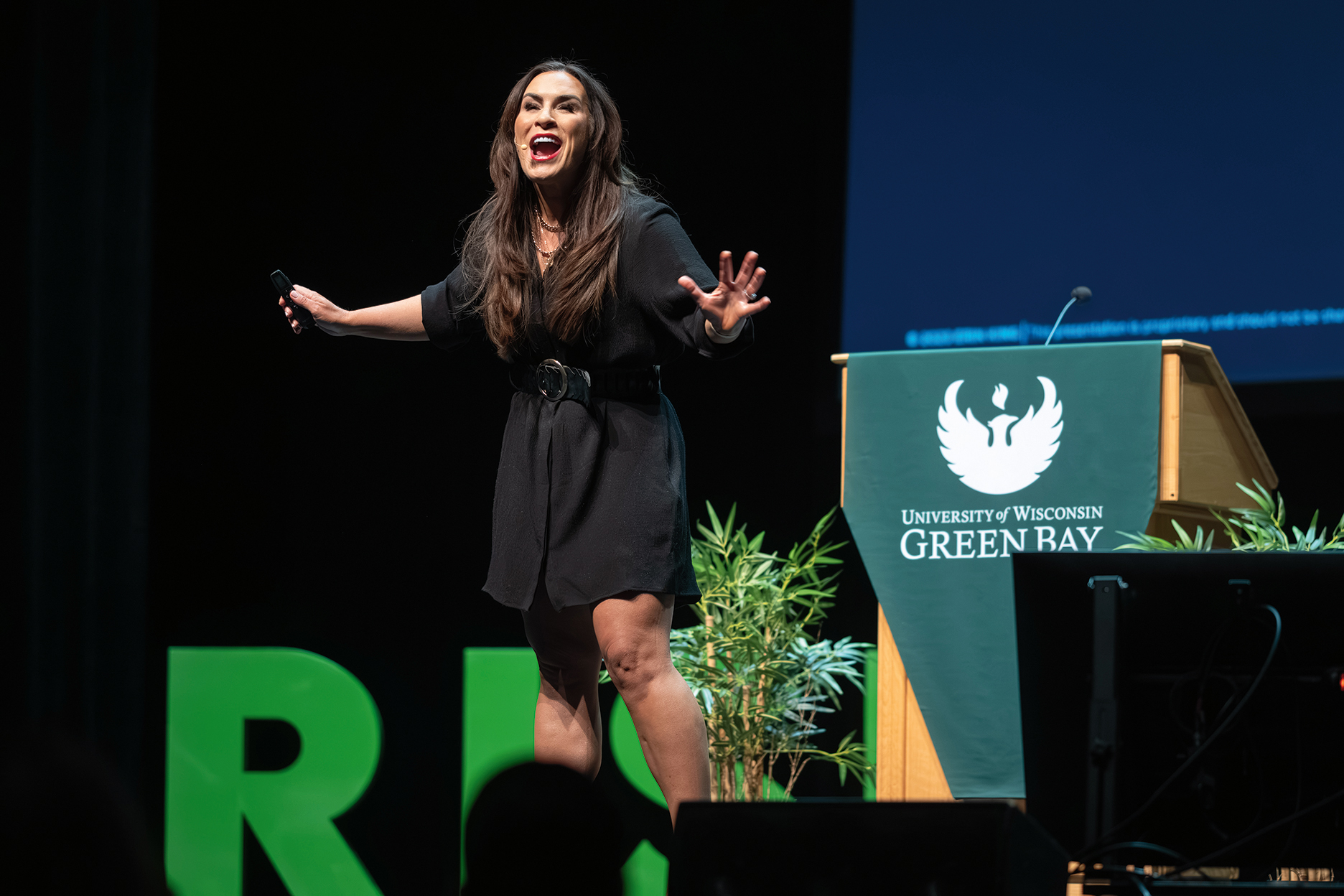
In February, the Schreiber Institute for Women’s Leadership at UW‑Green Bay hosted “Celebrate 2026: Ignite Your Energy,” which brought in national energy management expert and best‑selling author Erin King. King’s research centers on how personal energy — not the number of hours worked — drives performance and workplace culture.
“The world will always bet more on your energy than your expertise every single time,” King said, speaking to attendees at the event, which was held at The Weidner.
King offered examples including music producer Rick Rubin, who doesn’t read music yet has produced Grammy‑winning performers; Sarah Blakely, who was not a fashion designer but hit billion‑dollar success with Spanx; and Oprah Winfrey, who asked to be “demoted” to daytime television after continual frustration as a nighttime news anchor.
“Your energy is your ultimate edge — not just any energy, the energy that only you can bring,” King said.
King’s online energy test categorizes takers into one of five energy types — kinetic, generative, responsive, rigorous and synergistic. Team members at the Schreiber Institute who took the test showed about 90% had the synergistic energy style, which is primarily characterized by connecting with people, says Pa Lee Moua, executive director.
Because of such uniform results, the team initially wondered if the survey was flawed, Moua says. “Like, this can’t be right, because people are not getting any other results.” But the institute’s advisory board had similar results. King explained why: It’s because synergistic energy types are attracted to the field of education and the type of work they’re doing.
Laurie Butz, president and CEO of Capital Credit Union, which sponsored King’s appearance, has been an energy management advocate since embarking on her own professional development journey about nine years ago.
“I say pretty often, ‘You get what you give.’ And that’s the same thing with energy,” Butz says.
Butz also thought that King’s presentation resonated with leaders, particularly at a time when so many things are competing to drain people’s energy. “The reality is, everyone has the same amount of time, but not everybody has the same amount of energy. … So it’s really about energy management, not time management.”
Butz says Capital Credit Union’s employee engagement score was about 60% in 2020, the year before she arrived at the company. That score increased to 75% in 2022, and in December 2025, the company’s engagement score was 89% among Capital’s 500 employees, with 96% participation.
“I think the key takeaway is contagious energy, positive energy,” Butz says. “People want to live and work in a space of positivity. They want to feel cared about. They want to feel heard. They want to be a part of something bigger.”
Even though most Schreiber Institute leadership team members have synergistic energy styles, Moua says there’s a learning opportunity in knowing not every colleague had the same result. “We do have to be a little bit more mindful that they may thrive in other areas and other aspects of their skill set versus the majority of us,” she says.
Moua says generational differences in leadership can be bridged through a better understanding of energy styles.
“If I’m a team leader and I’m more creative, I need to be able to understand where I can support and empower and uplift some of my colleagues, because their learning capacity is going to be different than mine,” she says. “But collaboratively, we can also align our strengths and weaknesses to be able to better support each other as well.”