

Photographs by Shane Van Boxtel, Image Studios
Styling by Shalene Enz
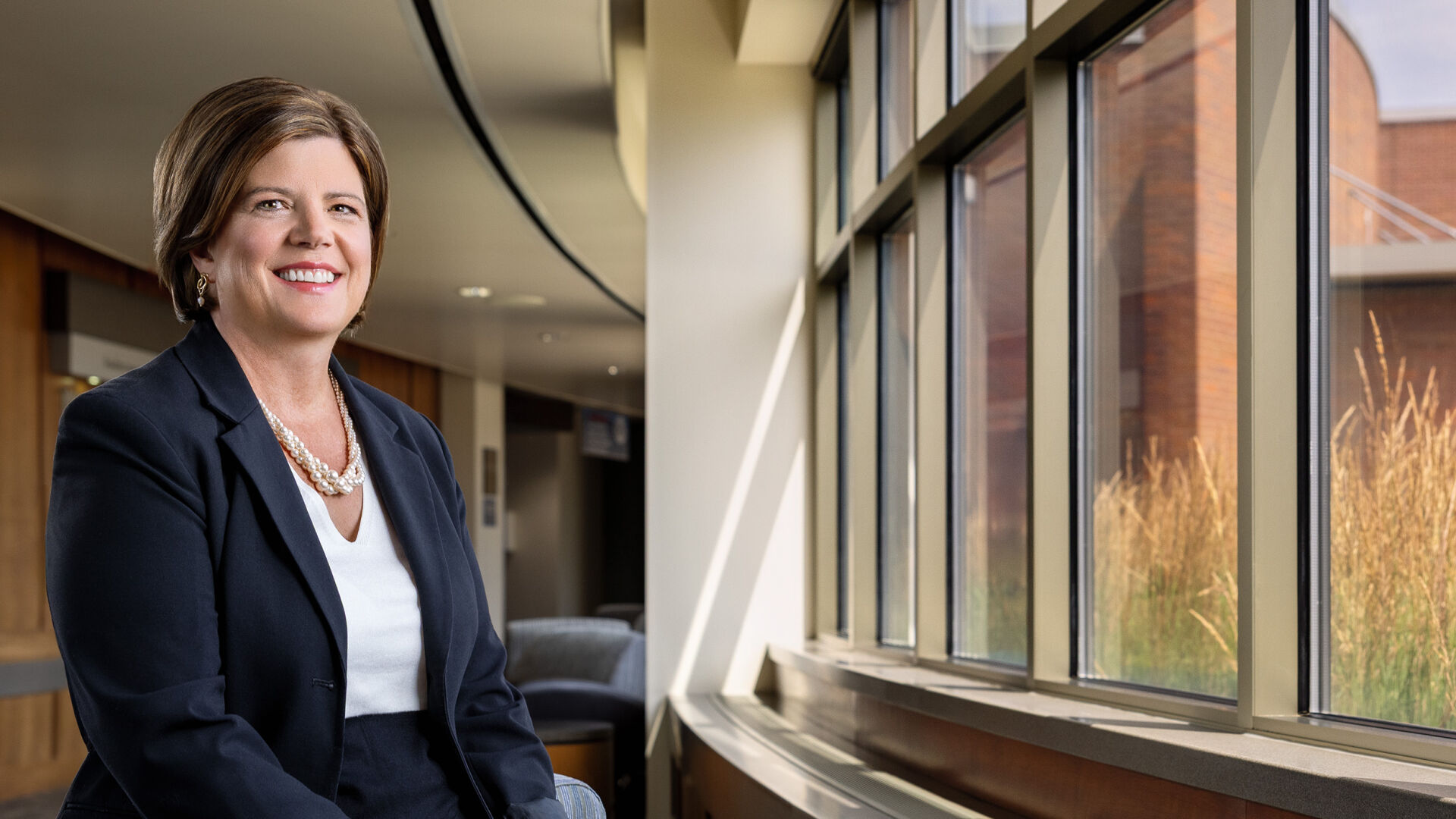
With more than 20 years in higher education, Dr. Kristen Raney has seen students from all walks of life start, and return, to college. And while their individual circumstances are all unique, the overarching goal is often the same — to gain an education that will increase their earning potential, advance their careers and fulfill their passions.
The president of Northeast Wisconsin Technical College lights up as she describes these students. Raney recalls one woman with several young children in tow coming onto campus to fill out financial aid paperwork. The herculean effort it took this woman to make it in that day was not lost on Raney, a mother to three adult children herself.
“Our students’ whole lives come with them into our building. They are making a commitment to add school to already full lives,” she says. “They don’t come to us just to get the degree. They’re here because they trust us to provide an exceptional education that is going to get them into a career and get them a better life. And we want to deliver on that.”
As the college’s eighth — and first female — president, Raney is championing a bold new “college 3.0” model that redefines and re-commits to NWTC’s focus on long-term student success that extends beyond their time at NWTC.
College 3.0 is the newest evolution of NWTC’s goals, which have long centered on increasing college access and completion. While these remain essential, Raney says, college 3.0 builds on both by guaranteeing that the investments students make to earn their credentials will lead to family-sustaining jobs or successful transfers to four-year universities.
“We have to approach this work with the end in mind. We have to know what it is we’re trying to get our students to, and then design our partnerships, our academic pathways and our support services so that they deliver on what we started with in mind,” Raney says. “It’s our job to make adjustments in how we approach our work so that we’re advising students and getting them there the whole way.”
Future focused
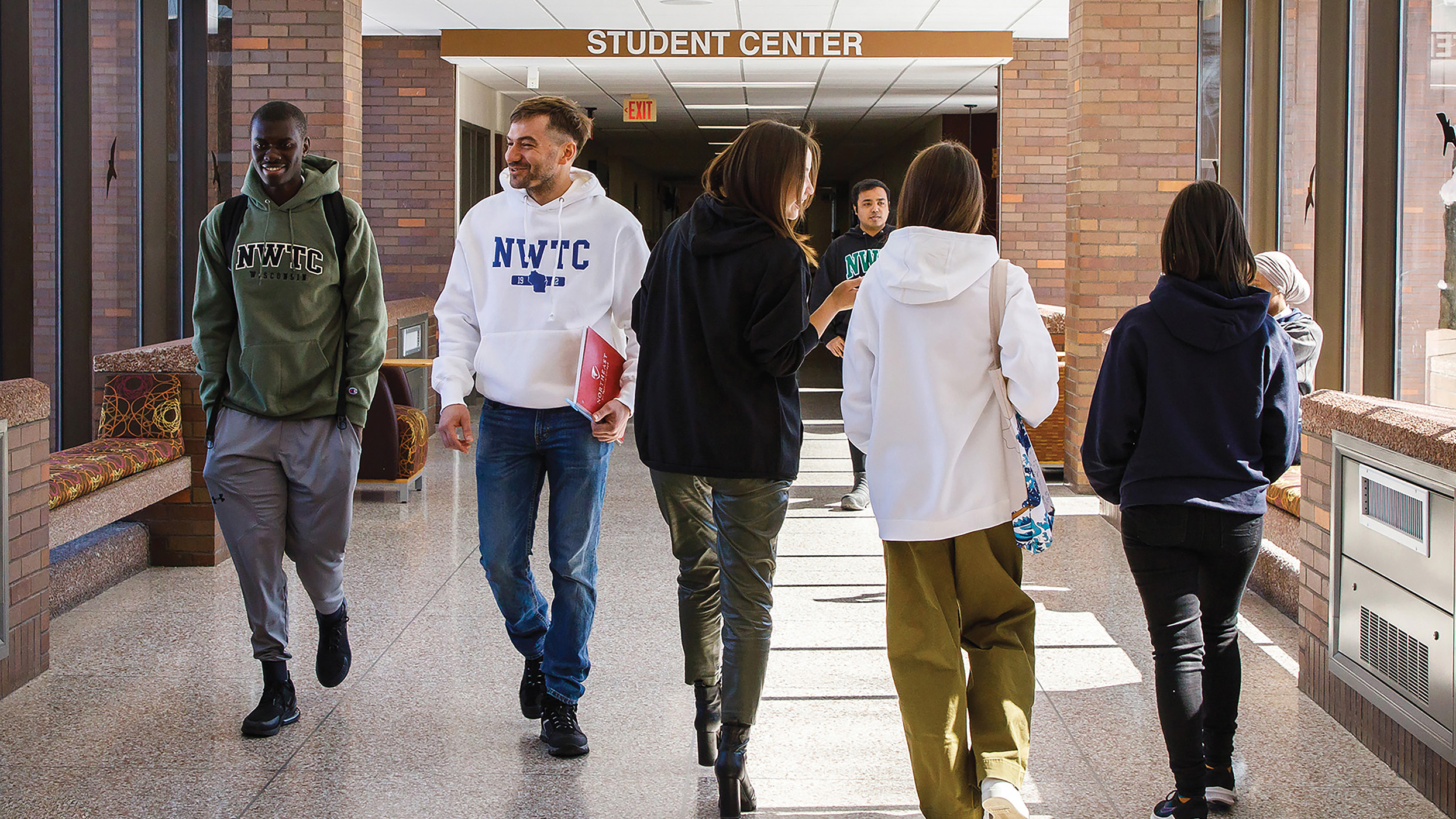
Prior to beginning her tenure as NWTC president July 1, 2023, Raney served as vice chancellor of academic affairs at Eastern Iowa Community College and, before that, vice president of academic affairs at Saint Paul College in Minnesota.
On Aug. 16, Raney began her third academic year as president of NWTC, one of 16 colleges that make up the Wisconsin Technical College System (WTCS) whose mission is to deliver a strong talent pipeline for each of its districts. This means programs align with the needs of local employers within the district, which makes it more likely that students establish careers in the region post-graduation.
In fact, 62% of NWTC’s 2024 grads work in its Northeast district comprising all of Door, Florence, Kewaunee, Marinette and Oconto counties, and parts of Brown, Shawano, Outagamie and Manitowoc counties.
“There’s a clarity about that focus in the Wisconsin Tech College System that I did not experience in the same way in the other two states that I worked,” Raney says. “And I think that there’s a strength to that. That really helps us stand apart.”
NWTC is embarking on its college 3.0 transformation at a critical moment in higher education. Bucking concerning trends in enrollment decline, this spring national undergraduate enrollment across institutional sectors was up, according to the National Student Clearinghouse Research Center. Public two-year institutions like NWTC saw the largest enrollment growth — 5.4% over the previous spring.
At NWTC, that momentum is fueled by a track record of innovation in boosting student success. For example, the college was an early adopter of an accelerated eight-week course model, and since 2021, nearly 90% of courses have shifted from the traditional 16-week semester to this split-semester approach. The 8-week format makes it easier for students to stay on track and complete courses.
Since launching 8-week courses in 2018, NWTC has seen full-time student retention climb 19 percentage points. Today, 77% of full-time students continue their studies — well above the 2023 national community college average of 63%. Data also shows the change has resulted in higher grade averages and more on-time graduates.
Now, Raney says the 3.0 model is a framework for the entire college — from the president to the board to the faculty and the staff — to “level up” its efforts in closing gaps in access, completion and post-graduation success.
“It has implications for us with how we approach K-12, how we approach our transfer partners, how we rethink our internal process to really help set up our students for post-graduation success,” she says.
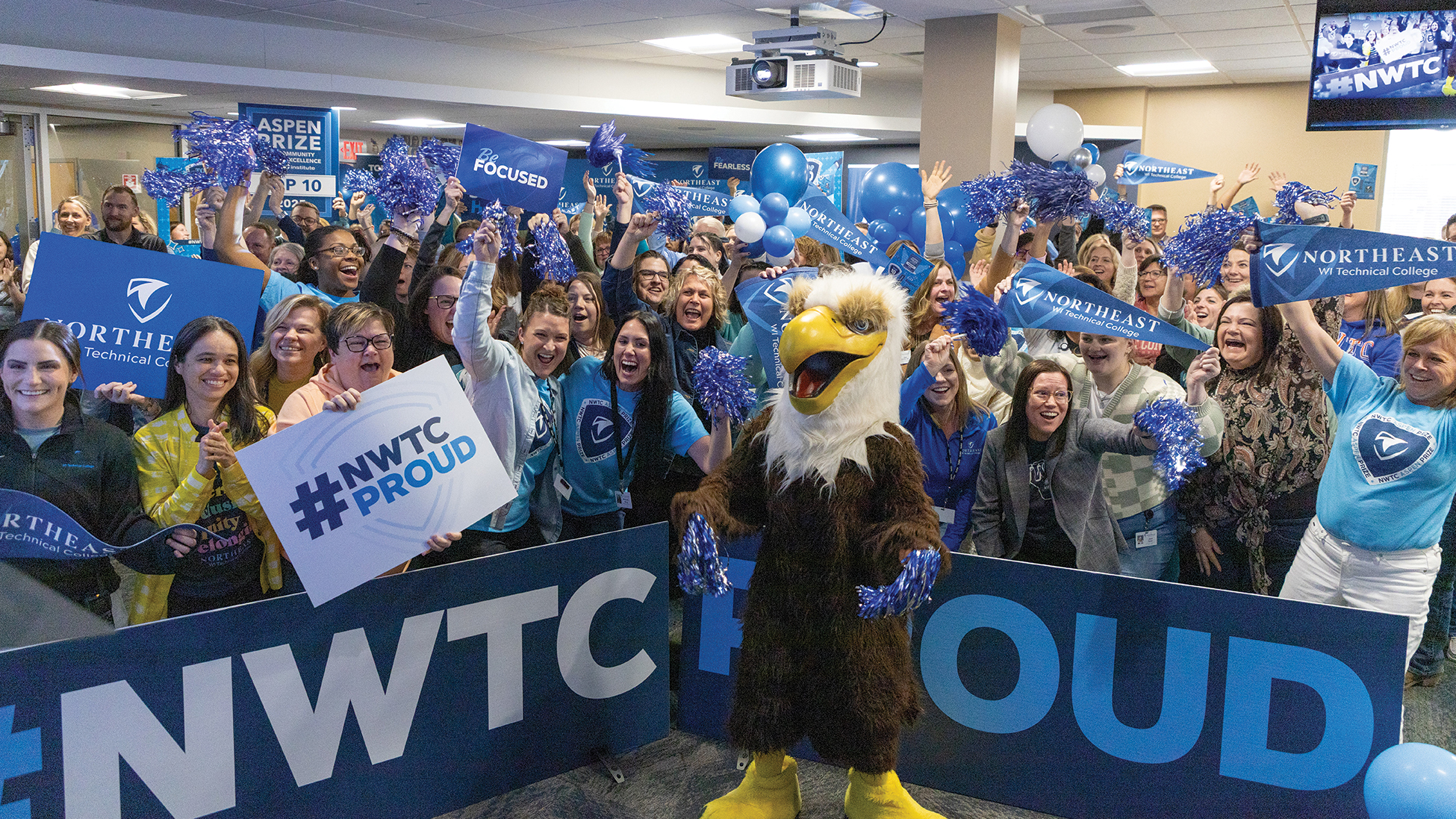
The model is derived from the “college 3.0” framework by the Aspen Institute, which recently named NWTC a top 10 finalist for its $1 million 2025 Aspen Prize for Community College Excellence. The coveted award recognizes excellence in student outcomes.
It’s a standard NWTC has been quietly exceeding, and now the results speak for themselves. The college’s latest Graduate Outcome Report shows 92% of graduates land jobs within six months, more than three-quarters in their chosen field. Associate degree earners are starting their careers with a median salary of $52,250, and five years later, they’re out-earning all new hires in the region by an average of $11,000, according to the Aspen Prize report.
Raney says those higher earnings not only impact the financial trajectory of individual graduates, but also strengthen the economic vitality of the communities where they live and work.
“That changes their lives, that changes the future of their family’s lives, and then our communities are stronger,” Raney says. “We recognize that we don’t just do this great thing for the students; it’s a bigger ripple effect than that.”
NWTC 3.0
And while NWTC is earning accolades for its students’ post-graduation success, college leaders acknowledge that there is still work to be done.
Jennifer Flatt, vice president of student affairs, has been in higher ed for 25 years — NWTC for the last six — and over that time has seen positive change in the support students receive, which directly impacts their academic achievement.
“In higher education in general, we were making assumptions sometimes about what student needs were,” Flatt says. “We’d have conversations, but we wouldn’t necessarily ask a lot of questions.”
Today, all NWTC student affairs staff receive extensive training in having “careful and intentional conversations” with students to avoid assumptions about barriers and needs. It’s a coaching model that Flatt says will only deepen with college 3.0., which requires more frequent conversations between college staff and students about career paths and post-graduation goals.
Flatt says an important element to student success has been proactive outreach, where students identify concerns before classes start. This is done through a welcome survey, which Flatt says has been diligently refined through research and data. This helps identify barriers before students even enter a classroom.
“What we know about student success is that we have to proactively work with students to help them overcome barriers, because so much can interrupt and derail even the best of intentions,” Flatt says.
Some of the most common barriers are financial concerns, transportation challenges (especially for students in rural communities), and a lack of awareness about local career opportunities and resources. Resource navigators direct students to internal and external resources that address those barriers and set them up for success.
Flatt says Raney’s focused leadership has kept the college anchored in its college 3.0 vision, even when higher education is awash in “bright, shiny objects” from vendors and new models. That steady, intentional focus, she adds, has laid the groundwork for a shared understanding across the institution — a foundation that’s proving invaluable.
“The fact that she has been able to consistently message that and allow us to linger in it, making sure everybody at the college understands that and we can embed it in everything we do has just been really, really powerful,” Flatt says. “And at this moment in time, that’s exactly what we needed.”
Connecting the dots
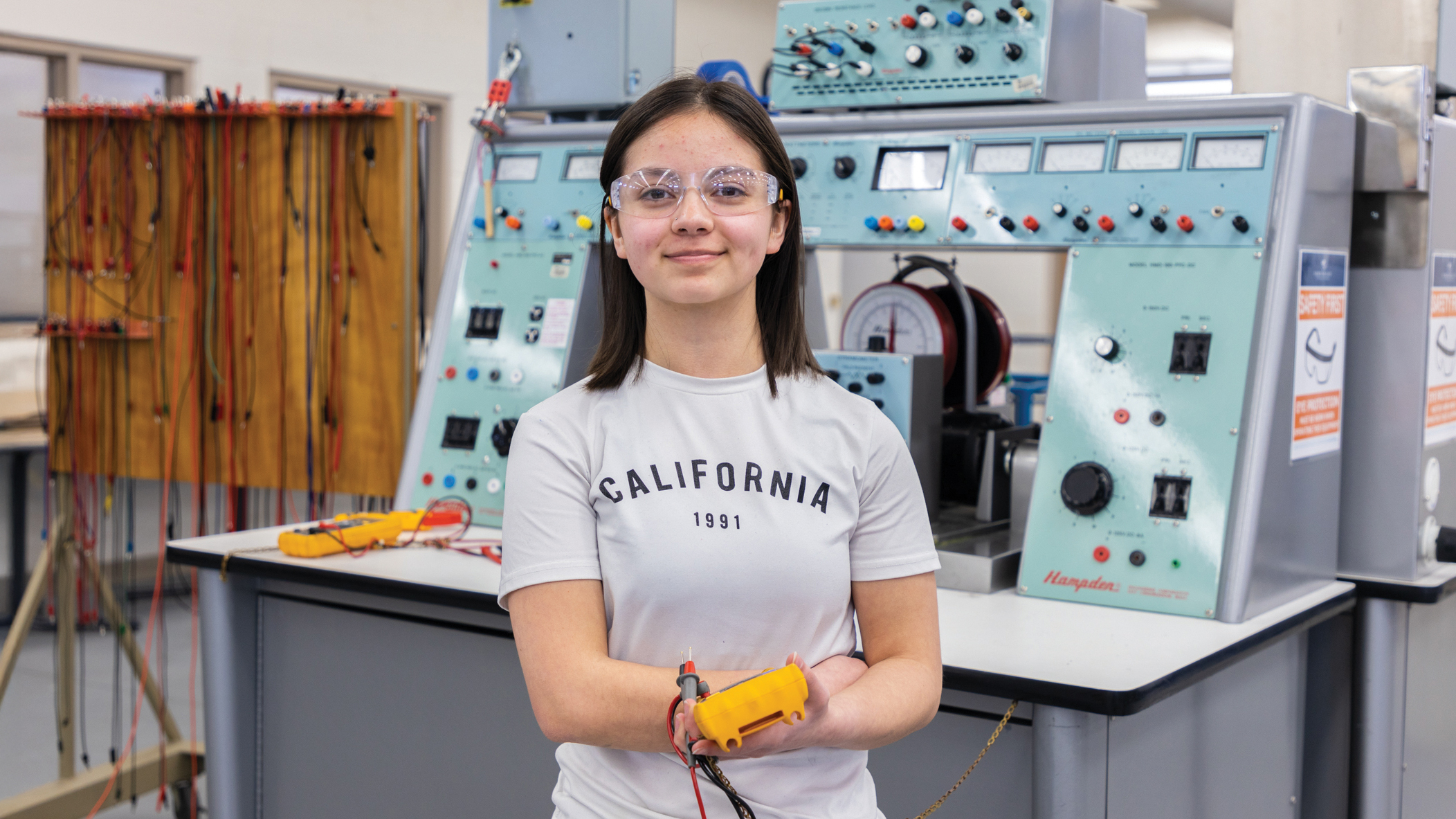
A major step in NWTC’s college 3.0 vision came July 1, when the school reorganized its academic affairs and workforce development divisions into six newly established colleges: advanced manufacturing & skilled trades; allied health; business, communication & social sciences; nursing; public safety; and STEM (science, technology, engineering & math).
NWTC’s Vice President of Academic Affairs and Workforce Development Dr. Kathryn Rogalski oversees all the college’s academic departments. She says the goal of the restructure, which was over a year in the making, was about making it easier for students to “start, stay and succeed,” which aligns with the college 3.0 model.
“We want students to see their direction from the start and what that looks like, so that was part of the inspiration to restructure the division,” she says.
The restructure is designed to deliver career-focused education that aligns with the needs of students and local employers. Take STEM, for example — one of the college’s most common transfer areas to four-year universities. In the past, programs like engineering technology sat within trades and engineering, while supporting coursework was scattered across different academic areas, leaving students to piece together how it all fit.
The new College of STEM brings these programs under one roof, offering defined course plans, coordinated faculty guidance and a seamless path to transfer opportunities — one of the college’s key strategies to student success.
NWTC maintains transfer pathways with universities across the Upper Midwest, ensuring graduates can apply their coursework toward a bachelor’s degree. In addition, many colleges nationwide accept individual NWTC courses for credit. About 18% of graduates continue their education within a year of graduating.
“We have to work closer with our partners to understand what happens with our graduates when they leave us, because we’re not done when they leave,” Rogalski says. “We need to make sure that what we’re doing while they’re here is setting them up for a bright future, which really leans into those vibrant communities that we want to see.”
Raney says while NWTC has long tracked student access, completion rates and employer feedback, the college is expanding its lens to follow graduates farther beyond graduation. The goal is to understand how their degree shapes their careers and earning potential over time. It’s a shift in thinking that is becoming increasingly common in higher education.
“A lot of colleges are shifting their focus to the post-grad because that’s how we deliver on the mission of this college,” she says, “by thinking long term about the value we’re offering our students.”
Better together
Partnering with local employers to meet the region’s workforce needs has been part of NWTC’s foundation from the start, and today it continues to be a key component of its strategic plan.
One of its most innovative partnerships began in 2015, when NWTC partnered with ThedaCare to open a training space for NWTC students located at the ThedaCare Medical Center — Shawano.
The facility was created to help address the critical shortage of health care workers, particularly in rural areas such as Shawano. The shortage has worsened post-COVID and, according to the U.S. Health Resources and Services Administration, within the next five to 12 years the industry will be short 207,980 registered nurses.
“It’s just astronomical,” says Kellie Diedrick, who until recently served as ThedaCare’s vice president of critical access hospitals, including Shawano. “We already feel some of that crunch, particularly in those rural communities. We’re always competing with those urban partners.”
The training facility was Wisconsin’s first educational space inside a working hospital, and has both classroom and laboratory teaching equipment. This includes virtual reality-based clinical simulators and a replica of a ThedaCare patient room. Students receive hands-on clinical experience from NWTC instructors while also getting a behind-the-scenes look at a future health care career.
“It really filled those employee gaps for us, because they get to see the beautiful facility at the ThedaCare Medical Center — Shawano campus,” Diedrick says. “They come to it daily, they get acclimated to it, they get to see our employees, our nurses, and they get to see the kind of people that could be their future co-workers someday.”
Diedrick says ThedaCare has hired quite a few of the program’s graduates, and the hospital’s medical-surgical unit has been fully staffed overall as a result of the collaboration.
“It has truly created a pipeline for us,” says Diedrick, who was named senior vice president of the ThedaCare South Region in June. “It’s paid off in spades in Shawano.”
NWTC partners with business and industry in a variety of ways to ensure its programs are meeting the real-time needs of employers. For example, every academic program has an advisory committee made up of local employers who help shape the college’s classes and programs so students graduate with the skills they need to be successful in the workplace.
“We have to listen to our employers and we have to know what’s happening in their fields, what equipment is changing, what technology is changing, what skills they need for their employees,” Raney says. “We can’t deliver a pipeline if we’re not in sync with what’s happening. If there is a sudden change, we’re at the forefront of that change.”
As a partner, Diedrick says NWTC digs deep to understand the challenges facing her industry and approaches educating students as whole people.
“They do more than just educate kids to be professionals someday. They care about making people good, productive members of society,” she says. “I really see them as a partner in training the future workforce.”
These kinds of meaningful partnerships are not guaranteed, Raney says. As she settles into her role as president, Raney has been impressed by the strong collaborative spirit in Northeast Wisconsin.
“People want our communities to thrive. They see the value of education, they see the value of partnerships,” she says. “And, gosh, that’s a really good place to start for a new president.”