
By Cheryl Hentz
In an era of supply chain woes, businesses in Northeast Wisconsin are turning to a sustainable solution that delivers benefits on many levels: electronics recycling, or e-cycling.
While we’re accustomed to sorting out paper, plastic, cardboard, bottles and cans, we also know our unwanted and unusable electronics are things we shouldn’t just throw in the trash. But what do we do with them?
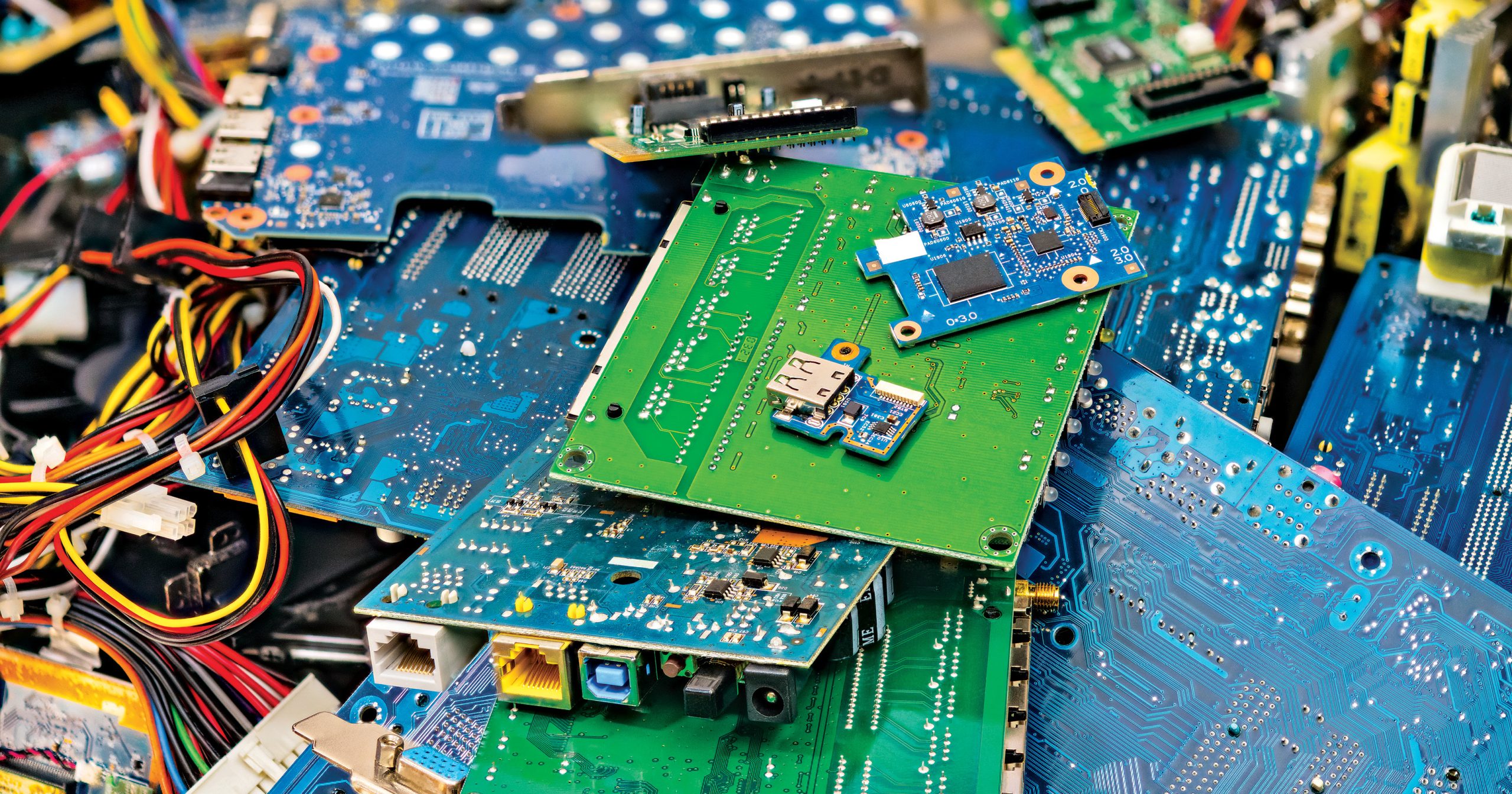
E-cycling is the safe, legal disposal of items such as computers, printers, fax machines, copiers, cellphones, stereos, microwaves and TVs. If it plugs into a wall or is part of something that uses electricity, it needs to be properly e-cycled. Even items like fluorescent light bulbs, batteries, toasters and blenders should be e-cycled. Experts say proper disposal can prevent the release of dangerous, potentially toxic substances and reduce harm and injury for employees of municipal public works departments and landfills.
Today’s electronics contain toxins such as mercury, lead, cadmium, arsenic, antimony and chromium. If the levels are high enough and the items aren’t disposed of properly, these and other toxins can get into our water systems, eventually contaminating our food chain through crops, livestock and fish. The effects of that contamination can cause damage to people’s nervous and circulatory systems, their brains, and even their reproductive systems, causing infertility in some.
Specifically, one fluorescent light tube can pollute up to 16,000 liters of water, a single nickel-cadmium battery can pollute 50,000 liters of water, and one TV set can pollute as much as 80,000 liters of water.
According to the Environmental Protection Agency, the e-cycling of 1 million laptops saves energy equivalent to electricity used by more than 3,500 homes a year. And, for every 1 million cellphones e-cycled, 35,000 pounds of copper, 772 pounds of silver, 75 pounds of gold and 33 pounds of palladium can be recovered.
In Wisconsin, programs have been created to facilitate safe e-cycling for homes, schools and businesses. The E-Cycle Wisconsin program — aimed at homes and schools — collected about 350 million pounds of electronics between January 2010 and July 2021. “In the last couple years, we averaged about 22 or 23 million pounds of electronics collected per year,” says Sarah Murray, who coordinates E-Cycle Wisconsin in her role with the Wisconsin DNR.
E-Cycle Wisconsin takes a “product stewardship approach” to electronics recycling. Manufacturers of products covered by Wisconsin’s electronics recycling law must pay for electronics to be recycled. That makes it easier for individuals and schools to recycle old or obsolete electronics.
Handle with care
“Because of cybersecurity concerns, people don’t always know what to do with some of their old [technology items] that may have data on them,” says Chad Hayes, chief technology officer and director of e-recycling at Sadoff E-Recycling and Data Destruction. “Places like Sadoff can help ease their concerns because we would take care of [wiping data clean] for them. It’s a service we charge for, but they can get a certificate of destruction.”
Hayes says the certificate provides peace of mind that private information is not going to fall into the wrong hands and be used in a nefarious way such as identity theft.
“It’s also important that businesses understand what types of waste they’re generating and whether it’s hazardous, so they don’t violate hazardous waste regulations,” Murray says. “It’s not only important that businesses use a responsible recycler when getting rid of electronics, but it’s a business owner’s responsibility to evaluate their waste and understand the ways different types of waste may need to be managed.”
Businesses that regularly replace electronics like computers, monitors, keyboards, copiers and printers may benefit from working with an electronics recycler because, in some cases, those devices can be refurbished. Or some of a device’s components can be used elsewhere in the supply chain.
“Many of the materials from electronics are marketed as commodities, similar to how bales of cans and bottles and paper are marketed from a facility that recycles your traditional ‘curbside’ recyclables. Some materials from electronics, such as steel and aluminum, make their way into lots of new products the same way scrap metal does,” Murray says, adding that electronics also contain trace amounts of precious metals like gold, silver and platinum that are recovered through specialized smelters.
In general, Murray says, when a manufacturer uses recycled material in a new product instead of virgin material, it reduces the overall environmental impact of the product because recycling requires less consumption of energy and water and creates fewer greenhouse gas emissions than manufacturing and mining.
Reduce, reuse, recycle
It can be confusing to determine where certain recycled items can go. Just because something is recyclable doesn’t necessarily mean it can automatically go into a recycling bin. Certain items must get processed in particular places, and not every recycling dealer is set up to accept all types of recyclables.
The state maintains a list of sites that are registered with the E-Cycle Wisconsin program, indicating what can be accepted where on a county-by-county basis.
And, says Lora Boeger, president and CEO of Resource Solutions | RecycleThatStuff.com Appleton and Madison, recycling should always be the last resort when it comes to ensuring sustainability.
“It’s up to every person to decide for themselves what they’re buying and whether they really need it,” she says. “Reuse is the second option. People should determine if there’s a future potential use for their electronic items. E-cycling is the last line of defense to keep things from ending up in the landfill that shouldn’t go into the landfill.”