
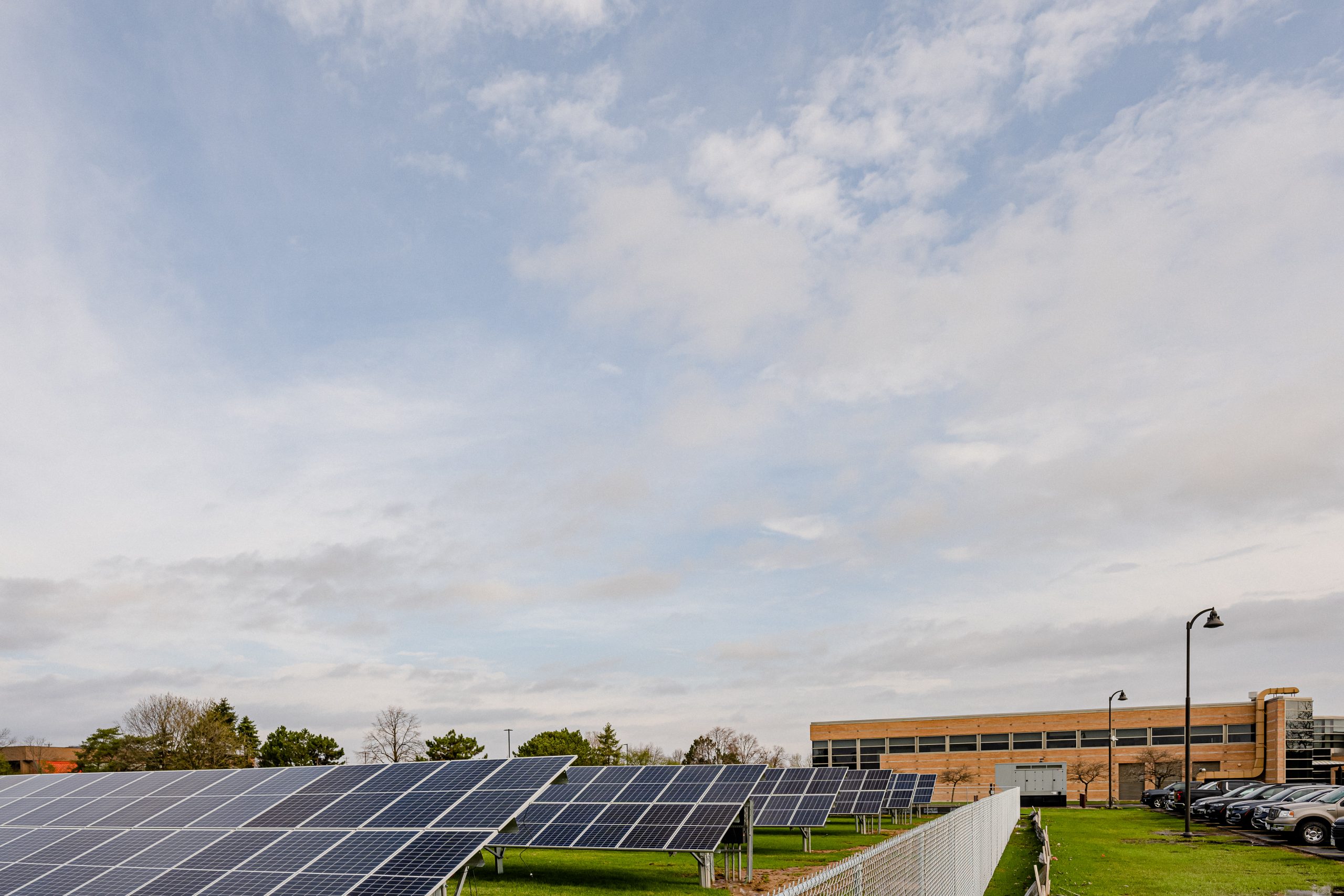

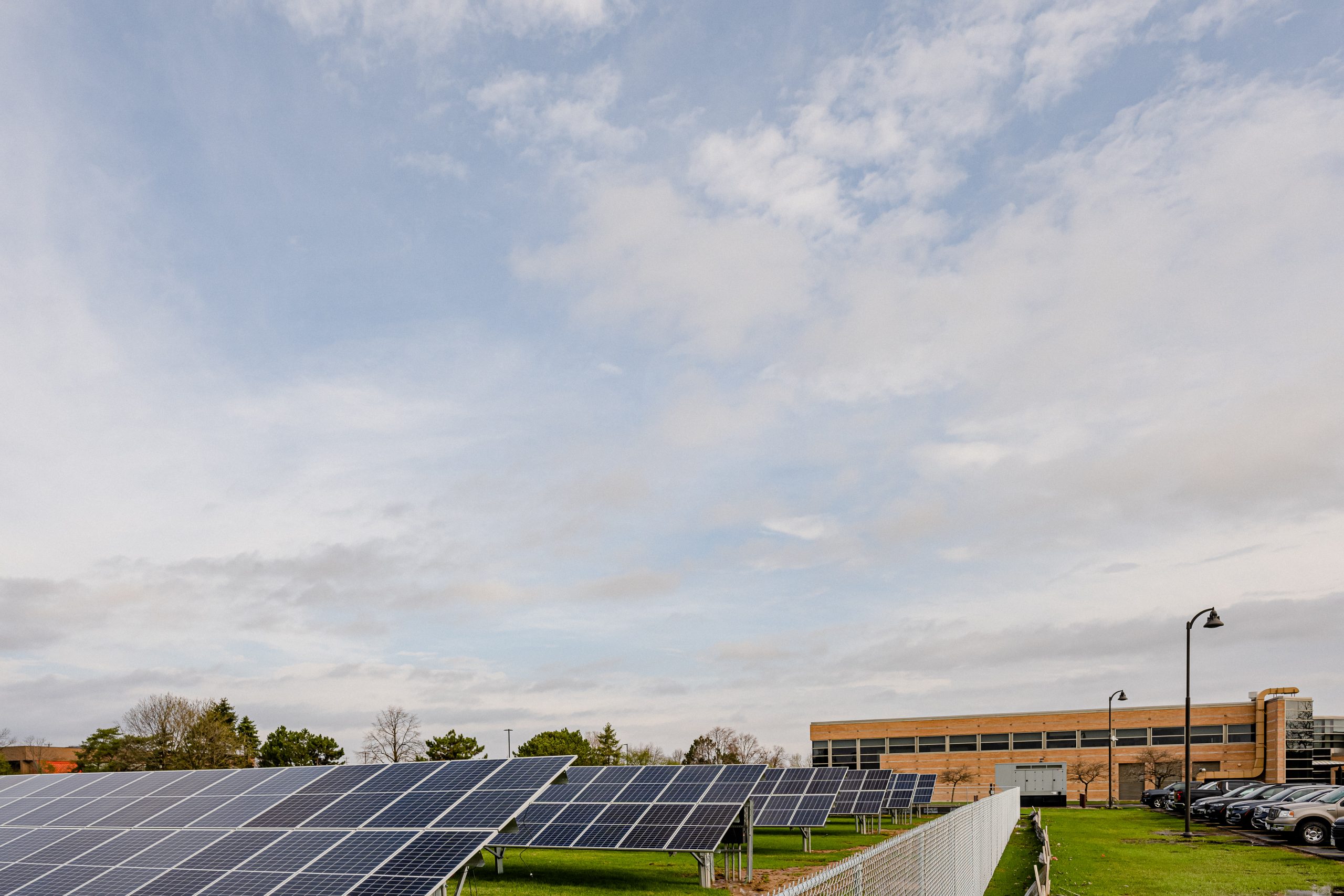

Boldt Companies installed a ground-mounted solar array behind its corporate office at 2121 E. Capitol Drive, Appleton that features 929 solar voltaic modules.
It is the second solar array erected on Boldt properties, the first located is on property owned by the company just east of the Chaska Golf Course in the town of Greenville.
The renewable energy project was built by SunVest Solar and The Boldt Company for We Energies. The project is part of We Energies’ Solar Now program in which We Energies partners with large business, nonprofit, and government customers to host solar array installations in their service territory.
The company leases the space for the panels on roofs and unused land. The two solar arrays on Boldt property are hooked directly into the power distribution lines that feed energy to the local area. Energy generated by the solar arrays is tracked and will be displayed in the Boldt corporate office lobby for employees and customers to see.
According to Mark Osten, Boldt vice president of business and project development for the energy sector, the combined capacity of the Chaska and corporate office solar arrays was designed to offset the energy used by Boldt facilities in Appleton, Stevens Point, Green Bay, and Waukesha.
“Boldt has been building and maintaining wind, solar, biomass, and hydroelectric energy generation projects for over 20 years, which shows our commitment to renewable energy,” Osten said. “We are proud to offset the energy our buildings use with clean, renewable solar power.”
Solar Now is a program approved by the Public Service Commission of Wisconsin. Working with industry partners, environmental groups and state leaders, We Energies and its parent company WEC Energy Group are working to reduce carbon emissions from electricity generation 60% by the end of 2025 and 80% by the end of 2030, compared to 2005 levels. They are also planning for a net-zero electric generation fleet by 2050.