


Chief Oshkosh, who led the Menominee Indian Tribe of Wisconsin from 1827 until his death in 1858, established a sustainable forestry credo: “Start with the rising sun and work toward the setting sun, but take only the mature trees, the sick trees and the trees that have fallen. When you reach the end of the reservation, turn and cut from the setting sun to the rising sun and the trees will last forever.”
That foundation has guided Menominee Tribal Enterprises from its origins in the 1850s to today. While sustainability has become a focus for companies across industries, the Menominee Indian Tribe has been following that principle for generations. The efforts show.
“Right now, we have more volume of wood in our forests than we did 100 years ago … even though we’ve cut the forest, the volume, over four times since then,” says Jonathan Wilber, president of MTE. “We do not just manage our forest for the trees. We manage the forest for the animals, the streams, the species of plants that are out there. This forest has to be managed for the long haul.”
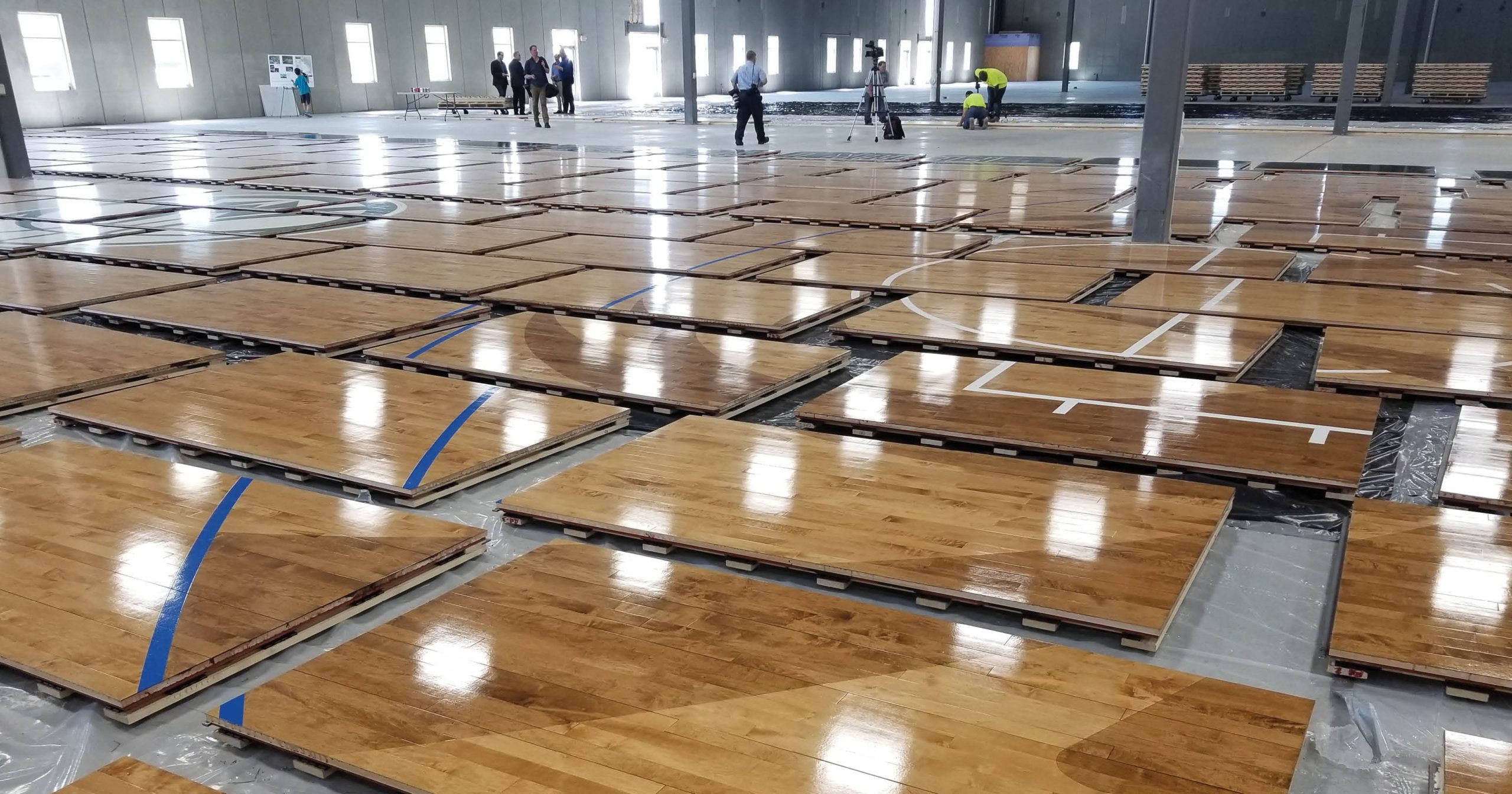
It’s a compelling story and one that Wilber, who stepped into the role of president in September, plans to share more widely. Throughout the decades, the company has gained renown for both its sustainable forestry practices and its wood that has gone into NBA and NCAA basketball courts. Among many venues, the Fiserv Forum and Oshkosh Arena are home to MTE-sourced maple wood courts.
“It’s been fun for us as the Bucks went on to win the championship that they were playing on a wood floor blessed by our elders and our cultural folks here at Menominee. We took credit for the win because it was a blessed floor that they played on,” Wilber says.
Amidst those successes, though, MTE has struggled throughout the past several years. The challenges culminated during the pandemic. Like many businesses and entities, MTE and the tribe experienced moments of panic as COVID-19 spread and the government began lockdowns. During the Safer at Home order, MTE and its sawmill operations in Neopit shut down for 157 days at a cost of $5.7 million.
Throughout that period, the tribe dedicated itself to communication efforts, controlling the spread of the virus and meeting tribe members’ needs. Today, Menominee County boasts the state’s second-highest vaccination rate, with 78% of residents fully vaccinated — including 86% of those 5 and older and 95% of those 65 and older.
“We’ve tried to be as responsive to the scientifically backed information as we can be. We have people that have really diverse backgrounds weighing in on it,” says Vaughn Bowles, public information officer and director of epidemiology for the Menominee Tribe.
At the same time, MTE, a supplier of wood to customers across many industries, wasn’t prepared for the financial loss it suffered. Some measures helped — including Paycheck Protection Program monies and tribal funds to cover the cost of personal protective equipment for workers — but the company still had to institute long layoff periods.
Though Wilber says the financial setback laid bare the pricing challenges MTE faces, he’s using the adversity as a galvanizing force, energizing the company to explore diversification opportunities and new business strategies.
“The last two years were bad financially, but they were good because they gave me as the new president the opportunity to say, ‘Where can we do things differently?’” he says.
History of exploitation
The Menominee Tribe’s ancestral land in Northeast Wisconsin and Michigan’s Upper Peninsula originally encompassed more than 10 million acres. By 1854, following multiple treaties and land cessions, the tribe was confined to the 235,000 acres of reservation land it still inhabits today. That year, operations began in Keshena Falls at a small sawmill that manufactured wood products primarily to meet the needs of the reservation. In 1908, the tribe constructed the sawmill that still stands today in Neopit.
In 1890, the federal government began exercising discretion over the tribe’s forestry activities. It started with a congressional act that called for sustained-yield management of federally controlled lands aimed at limiting the depletion of forest resources. The act allowed the cutting of standing green timber and established an annual allowable cut of 20 million board feet for the tribe.
The Indian Reorganization Act of 1934 set forth secretarial trust responsibility over the Menominee Forest, meaning the secretary of the interior made rules and regulations for the operation and management of Indian forestry units. Throughout the years as the federal government managed the tribe’s forestry activities, it failed to adhere to sustained-yield management practices.
“They were managing our forests for us, and they allowed more timber to be cut than should have been,” Wilber says. He adds that one year, instead of adhering to the 20 million board feet limit, the government allowed for the cutting of 88 million board feet.
In the early 1950s, the Menominee Tribe filed suit against the government for violating the sustained-yield management act. It prevailed, but at a tremendous cost.
The tribe’s lumber operations existed for the benefit of the tribe. Before 1954, the forest and sawmill provided funding for everything tribal members needed, including hospitals, government and social service programs.
“It provided all of that, and it was still profitable, and that set us up to be ripe for the picking at termination time,” Wilber says.
The tribe’s acceptance of the $8 million settlement — each tribal member received $1,500 — was tied to an agreement that the tribe’s federal status would be terminated. At a general council of the tribe, the vote was 169 to 5 in favor of the principle of termination. Many of the Menonimee chose to be absent from the meeting as a way of expressing their opposition to termination. It was a small group of tribal members who voted for the settlement, and Wilber says they did so not fully appreciating the impact termination would have.
Termination became effective in 1961, and the tribe ceased to exist legally. Tribe members became regular citizens, and at that time Wisconsin’s 72nd county, Menominee, was created, encompassing the boundaries of the reservation.
All the tribe’s assets, including the sawmill and forests, were transferred to a state-organized corporation called Menominee Enterprises Inc. A board of directors was selected, and First Wisconsin Bank & Trust of Milwaukee controlled and voted on the shares of minor tribe members and those who weren’t capable of managing their own affairs.
Prior to termination, the tribe didn’t need to pay property taxes, so after Menominee County was established there was no way to fund it. In the late 1960s, the county needed to raise tax revenue, and Menominee Enterprises Inc. developed a resort-type lake and began selling tribal land, primarily around the Legend Lake area.
When tribe members realized their land was being sold, a group of them, including Wilber’s grandmother, organized to overturn termination and formed the group DRUMS — Determination of Rights and Unity for Menominee Stockholders. They prevailed, and the Restoration Act was passed by Congress and signed by President Richard Nixon in 1973.
As part of the act, Congress required the tribe to organize a government and create a constitution. The tribe’s top concerns included ensuring land wouldn’t be sold and that the government couldn’t agree to something like termination again, so it separated the management of the forest and the sawmill from the sole control of tribal government and established MTE.
“Our ability to operate comes from the Restoration Act that required a management plan and our tribal constitution, and so our board of directors is elected by the tribal members, just like the legislature is elected by the tribal members,” Wilber says.
Fixed on the future
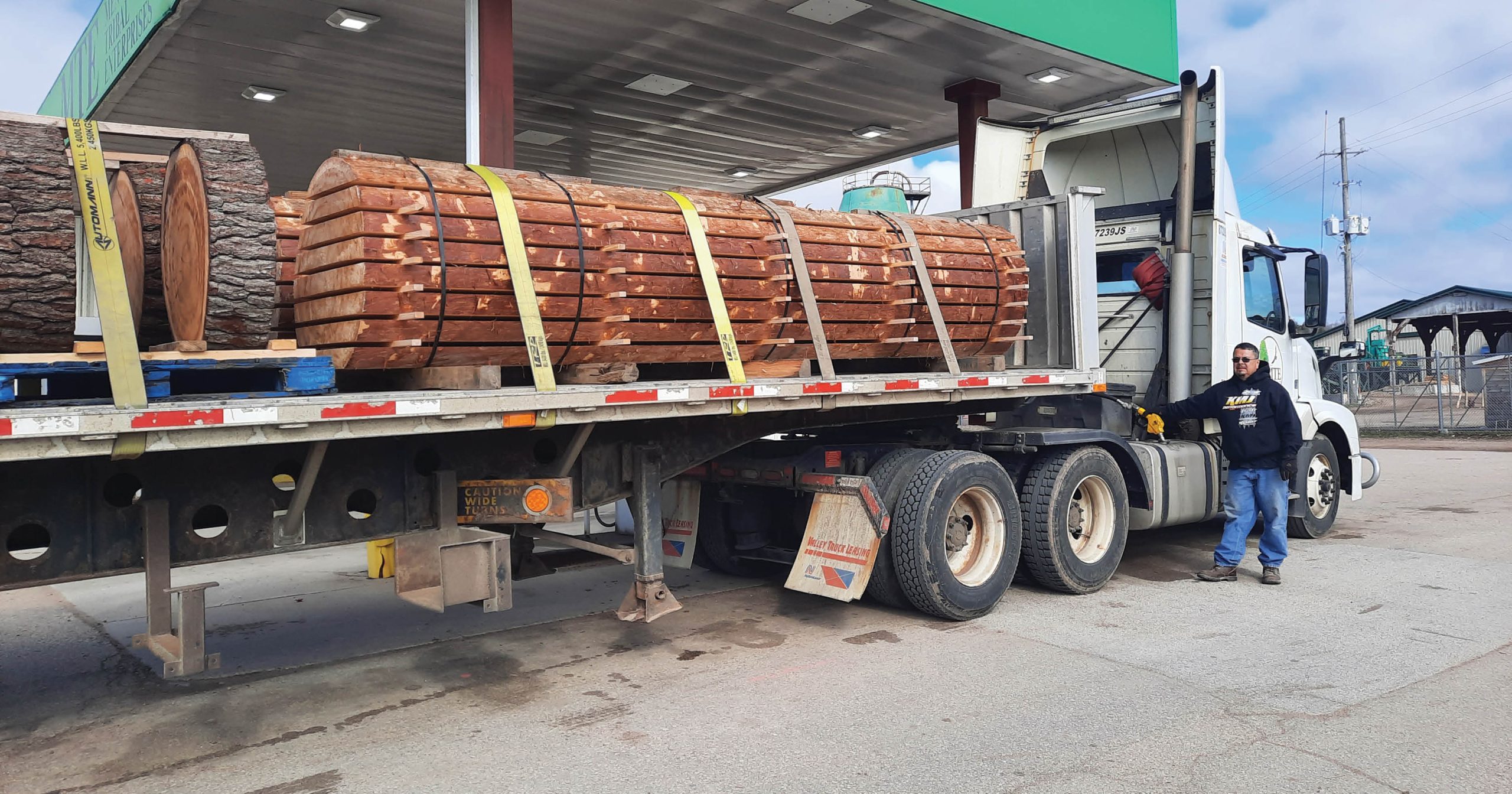
Nearly 170 years after the Menominee Tribe’s first sawmill opened, MTE remains dedicated to retaining the forest’s healthiest trees and only harvesting the dead, dying and downed. While that practice is a point of pride, it also creates pricing challenges and means that the company works with some lower-grade lumber that other mills wouldn’t even cut. MTE wouldn’t ever get market price for that lumber, but the price it charged for it in the past was still too low, Wilber says.
Since he began his role, Wilber has taken steps to drive up the price of MTE’s lumber and has seen success with improving both the company’s bottom line and team morale. “For the folks in our mill to know the work they put out is paying the company more, that increases their pride of what we’re doing,” he says.
Wilber brings a proven track record of success to his role. He was the eighth of 10 children and spent his early years in the small community of Center Valley in Outagamie County. His family later moved to the Menominee Indian Reservation in Keshena, and Wilber’s mother became the first president of MTE after the tribe was restored in 1973.
Wilber attended Marquette University in Milwaukee and received a Bachelor of Science degree in management from Cardinal Stritch University in Milwaukee. After college, he came back to the reservation and worked in various roles, including bus and logging truck driver, systems administrator for the tribe’s treatment center, finance manager for the tribal college and human resources director for the tribe.
In 2000, Wilber, along with his wife and daughter, moved to Maryland to launch a business doing training for the federal government. Master Key Consulting started with winning a small subcontract, and Wilber continued to build the business off that.
Eventually, the business won more government contracts, including a $6 million prime contract to work for the Administration of Native Americans. The company increased the award to about $13 million by the end of the three-year contract. At its high point, Master Key employed 170 people and brought in about $50 million in revenue.
Wilber purchased a home on the Menominee Tribe reservation in 2008 and spent summers there with his family. In 2012, the family was preparing to return to Maryland but decided to stay in Wisconsin when a family member became ill. Wilber worked on his business from home before taking on a role with the tribe.
“People here assumed you didn’t work when you worked at home, so I got recruited to be the tribal administrator,” he says. “I have a saying … that when your tribe asks, you have to say yes.”

Now that he’s given up the tribal administrator position and taken up the role as president of MTE, Wilber has turned his efforts toward addressing the many challenges the company faces. That has included tackling pricing issues, overhauling pay and benefits packages for employees, finding new markets for wood pulp, and creating capital improvement and diversification plans.
Over the next several years, Wilber is looking to invest about $30 million in plant upgrades and modernization efforts. Additions such as an optimizing edger and 80-bin stacker would create efficiencies, improve working conditions and streamline operations to allow MTE to deploy workers more effectively.
MTE is pursuing grants to help fund the project, but that alone won’t be enough, Wilber says. It will need to increase profitability and get cash in the bank so that lenders can see the company has the financial capacity to repay loans.
The 2020 closing of the Verso paper mill in Wisconsin Rapids hurt MTE because it was one of the biggest purchasers of the sawmill’s pulpwood. MTE has begun working with the University of Wisconsin-Stevens Point and the Wisconsin Paper Council to identify new uses for pulp. The latter is working on several projects, and marketing pulp as a renewable resource is among them.
MTE also plans to start a maple syrup operation. With the volume of trees in the Menominee Forest, the venture could produce between 1.5 million and 2 million pounds of maple syrup each year, which could net up to $4.5 million in revenue at wholesale. MTE is planning for the infrastructure and could begin tapping for syrup in 2023.
Christopher Caldwell, who became president of the College of the Menominee Nation last June, says the college plans to continue to partner with MTE, including exploring the possibility of creating a training center for new and incumbent workers within a building that now houses MTE’s corporate offices. He’s optimistic about what he sees afoot at MTE.
“MTE as an entity … has always been a cornerstone for our community as we’ve gone through that transition from the colonial era to the American imperialist era to present day,” he says. “With Jonathan’s leadership, this is signaling a new era where we will get back to where we were as a tribe in terms of being known for our forest management practices.”
As Wilber institutes plans to get MTE on firmer financial footing, he’s also focused on igniting a sense of pride among workers and tribe members. He’s personally invested in coffee mugs and hats that flood the company and read “I Believe in MTE.” This past Christmas, MTE donated the Christmas trees for the state Capitol and governor’s mansion. Seeing Gov. Tony Evers sport one of MTE’s hats at the lighting ceremony was a point of pride, Wilber says, his voice catching.
“Our sawmill and our forest are tribal traditions. We can’t let them fail,” he says. “I’ve not failed at a lot in life, and I can’t fail here.”
Advancing through education
Menominee Tribal Enterprises President Jonathan Wilber had long wanted to earn a Master of Business Administration degree. When he was finally ready in 2015, he chose St. Norbert College and became a part of the inaugural class for the school’s MBA program. Wilber completed the program alongside his nephew, Justin Lepscier, who now works as a financial analyst for FAS Investment Group, which provides investment management and strategic wealth planning services to Indian tribes.
Wilber says he gained valuable connections through the experience, and it’s led him to become an advocate for educational attainment among tribal members. “Having that network of people that you can bounce ideas off has been very helpful,” he says.
Brenda Busch, associate director of graduate recruitment for SNC’s Schneider School of Business & Economics, says Wilber and Lepscier shared valuable perspectives with their peers in the program. “Having their involvement in our MBA program just really elevated the classroom experience for others,” she says.
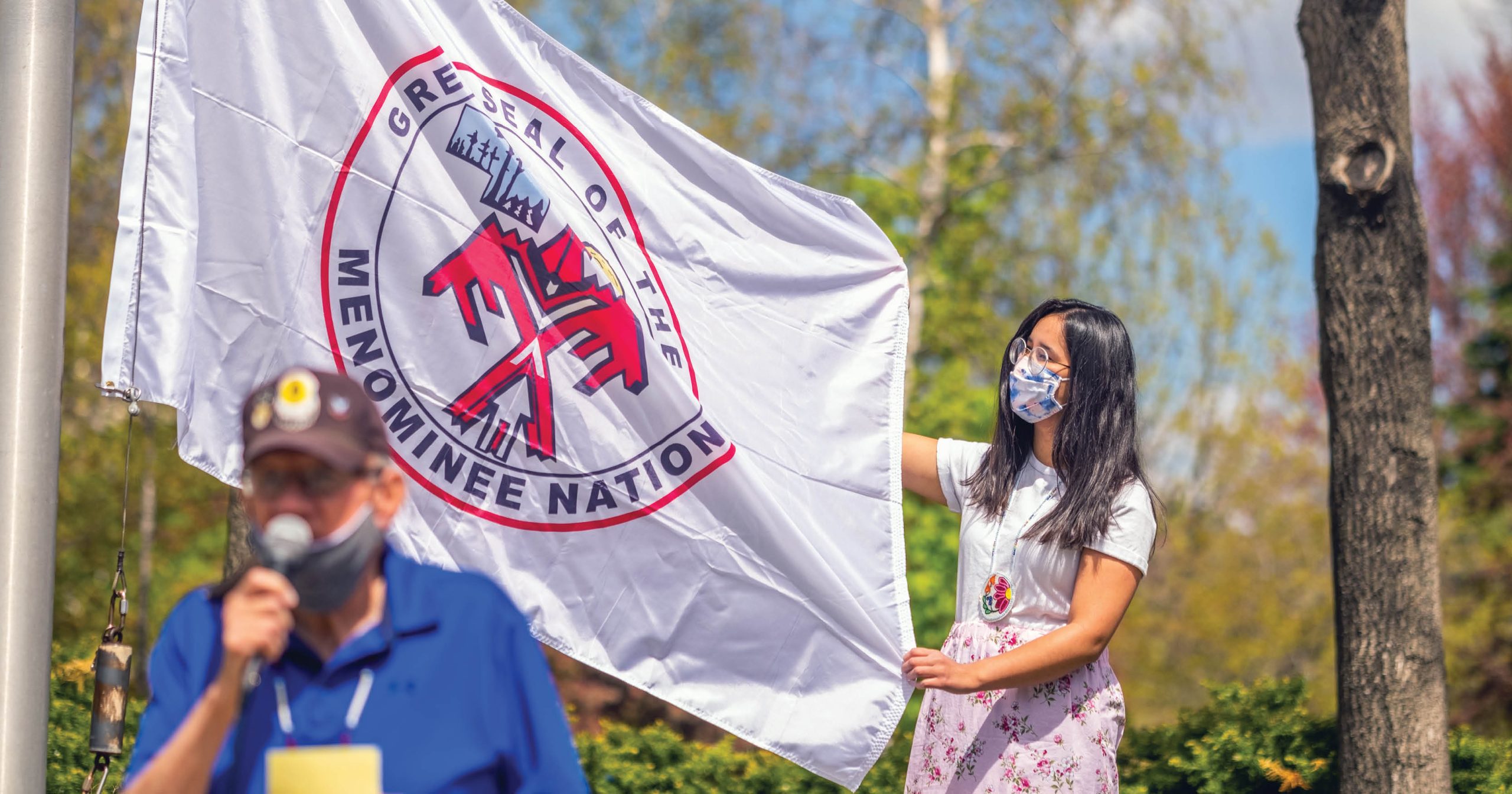
SNC, which sits on Menominee tribal land, adopted a land acknowledgement statement recognizing the land as the ancestral home of the Menominee Tribe. The school also flies a Menominee flag on campus. SNC undergraduate student and Menominee Tribe member Ruthie Tucker spearheaded efforts to display the flag.
“This required a lot of effort and permission, and the [flag raising] ceremony turned out to be beautiful,” she says. “Another project that I’m proud of is that every spring semester, we [donate to] the Eagles Nest, a homeless shelter on the Menominee Reservation for those in need of temporary shelter or families and victims of domestic violence.”
Lepscier, now a father, says it’s important to preserve the Menominee culture. His 4-year-old son is part of an immersion program where he’s learning the Menominee language, and Lepscier and his wife are learning it alongside him. “The Menominee language has struggled. There’s only a handful of speakers,” he says.
The College of the Menominee Nation is also dedicated to cultural preservation. As an institution of the Menominee Tribe chartered under the tribe’s constitution and bylaws, it is tasked with educating the Menominee people, as well as anyone else who wants to learn at the school. Its most popular programs are teacher education and business.
Christopher Caldwell, the college’s newly named president, says he plans to further establish relationships with employers on the Menominee Indian Reservation, including MTE.
“Overall, as a chartered entity of the Menominee Nation, we’ve been given a task to educate, and in our charter it says to educate through the Menominee way of teaching, which is learning by doing. To us, that’s a mandate to offer courses that are practical and hands-on and place-based,” he says.
Menominee Tribal Enterprises
Established: Origins date back to the first sawmill in Keshena in 1854
Location: Neopit
President: Jonathan Wilber
Employees: 165
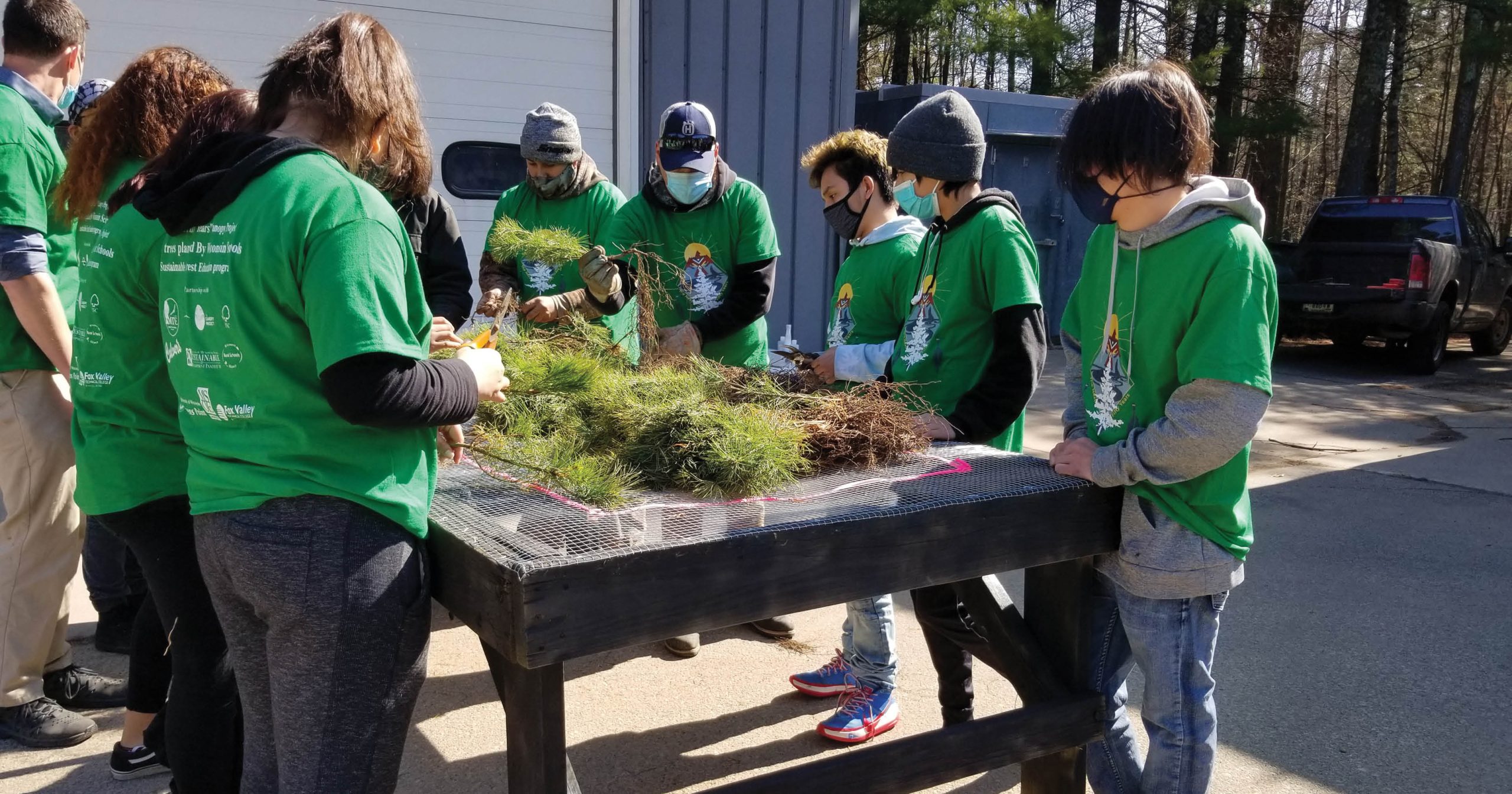
What it does: It follows sustainable practices to produce and manufacture forest products. Its purpose is to provide jobs on the Menominee Indian Reservation and revenue to the Menominee Tribal Legislature to fund the services of the tribal government.
mtewood.com