

photographs by Shane Van Boxtel, Image Studios
Stand up straight. Look them in the eye. And if you reject a product, do not waver — when it comes to grading cheese, there are no second chances.
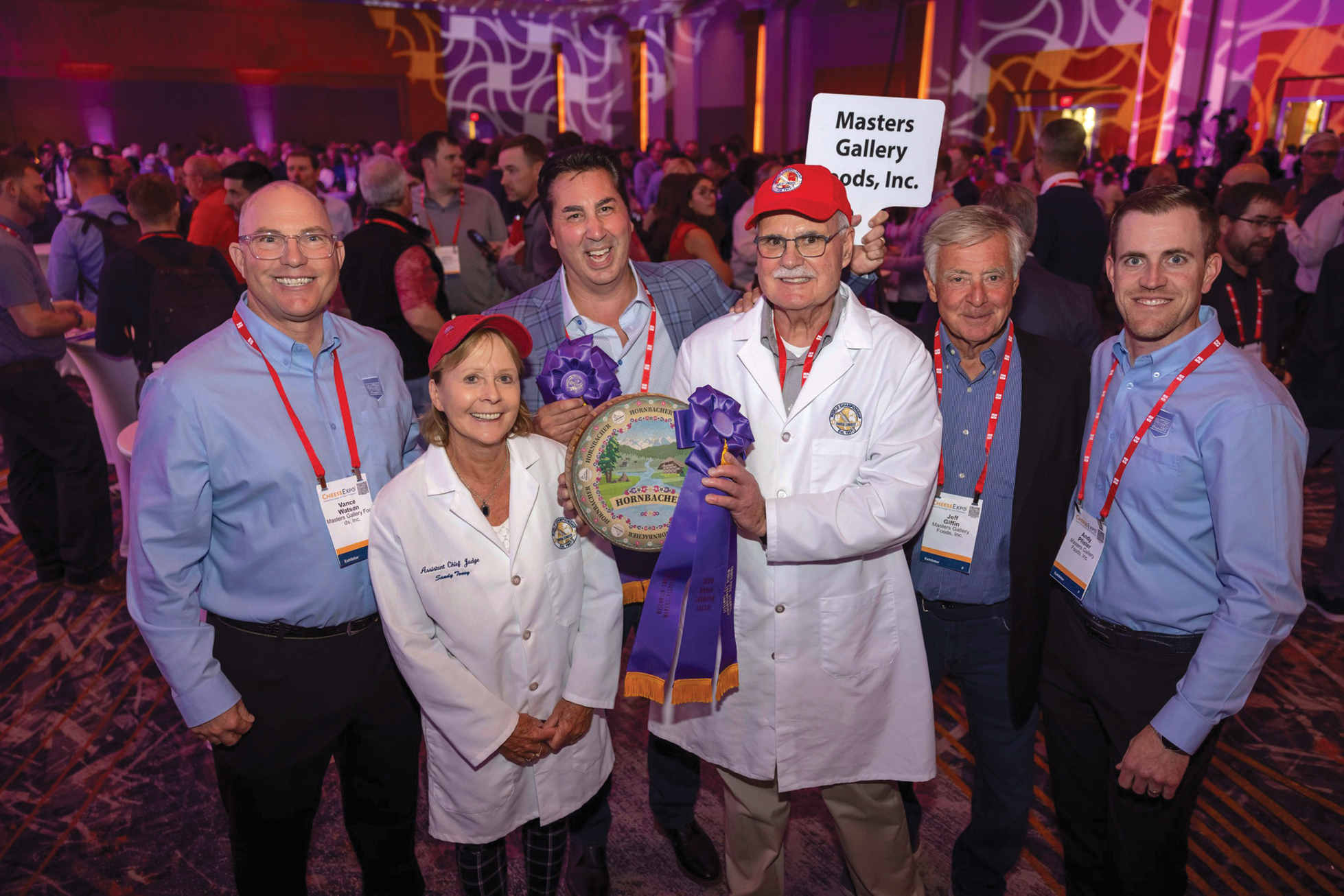
Sandy Toney learned quickly that grading cheese requires as much swagger as it does technical skill. Graders evaluate cheese on flavor, texture and appearance, but they also must confidently deliver the decision whether to accept or reject a product.
“Learning how to stand in front of these cheesemakers and reject a product was very difficult,” says Toney, licensed cheese grader and vice president of special projects for Masters Gallery Foods. “The first time I rejected something, I went in the car and sobbed for half an hour; I was a mess. I was so nervous.”
Toney had been a stay-at-home mother who moonlighted as a waitress two nights a week when she was plucked from her restaurant job by Leonard “Butch” Gentine Jr., founder of Masters Gallery Foods in Plymouth.
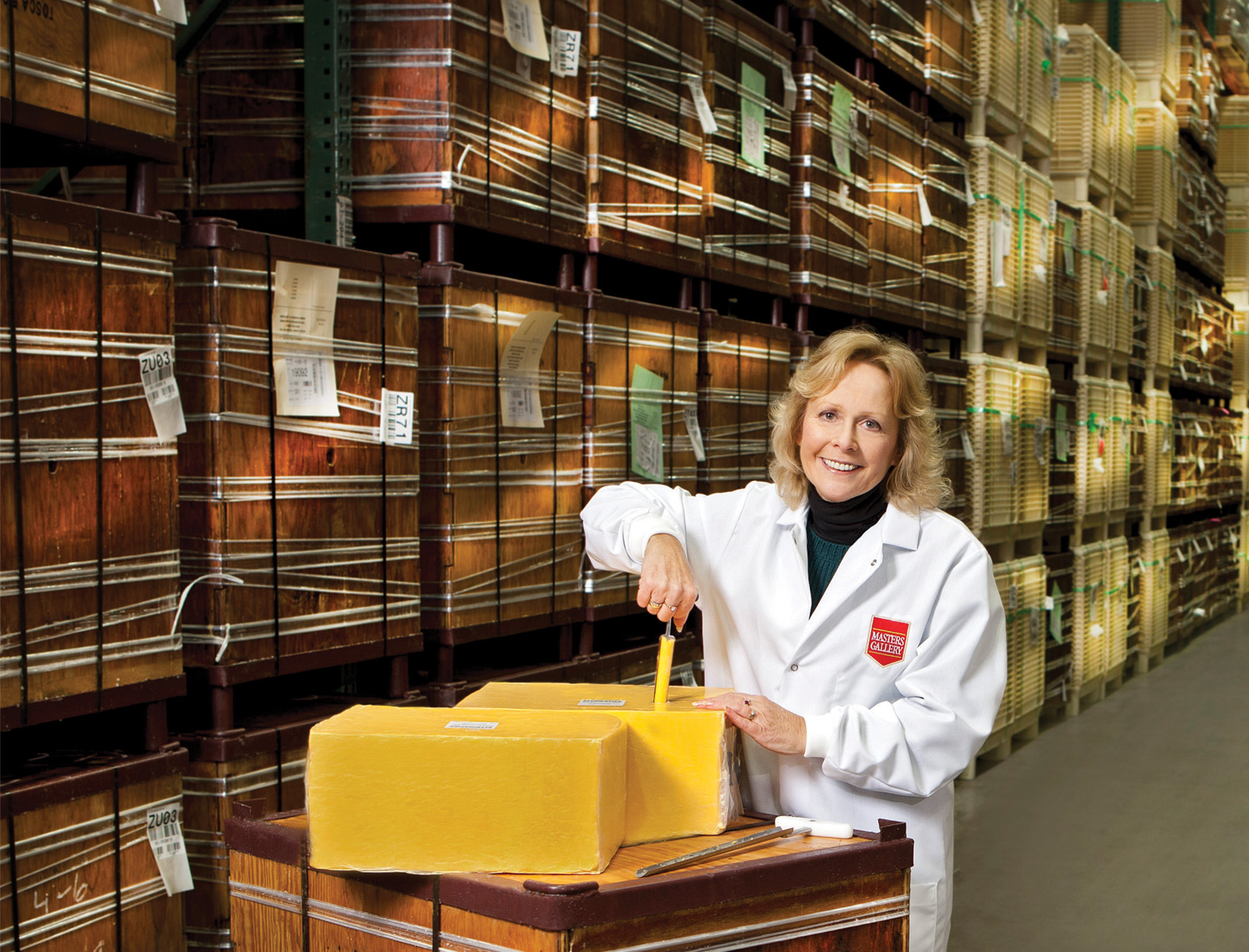
This was in 1989 when few women worked in the industry, let alone were responsible for maintaining the quality standards and protocols of a burgeoning cheese supplier like Masters.
But Butch Gentine saw something in Toney. Maybe it was the care with which she served her customers. Or her attention to detail. Or her aptitude for picking up new skills quickly.
Whatever it was, he was right. Over her 35-year career with the company, Toney played an instrumental role in establishing and leading Masters’ grading department. She has also served as an elite “Red Hat,” an expert technical judge for the Wisconsin Cheese Makers Association’s U.S. Championship Cheese Contest and the World Championship Cheese Contest — the first female to ever hold the position.
Today the grading department includes 20 licensed cheese graders who score every load of product Masters receives across three shifts in both its plants and external warehouses.
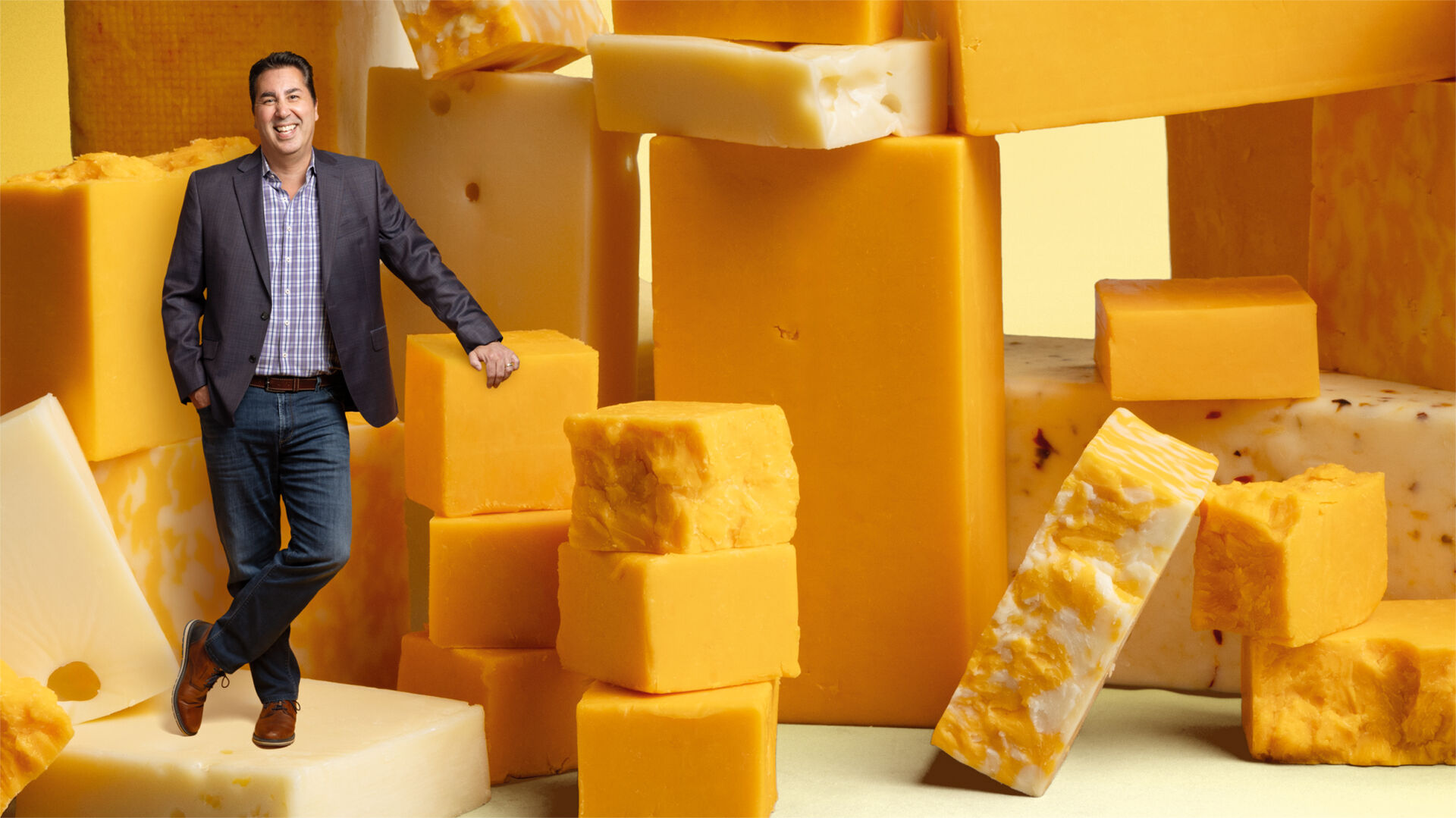
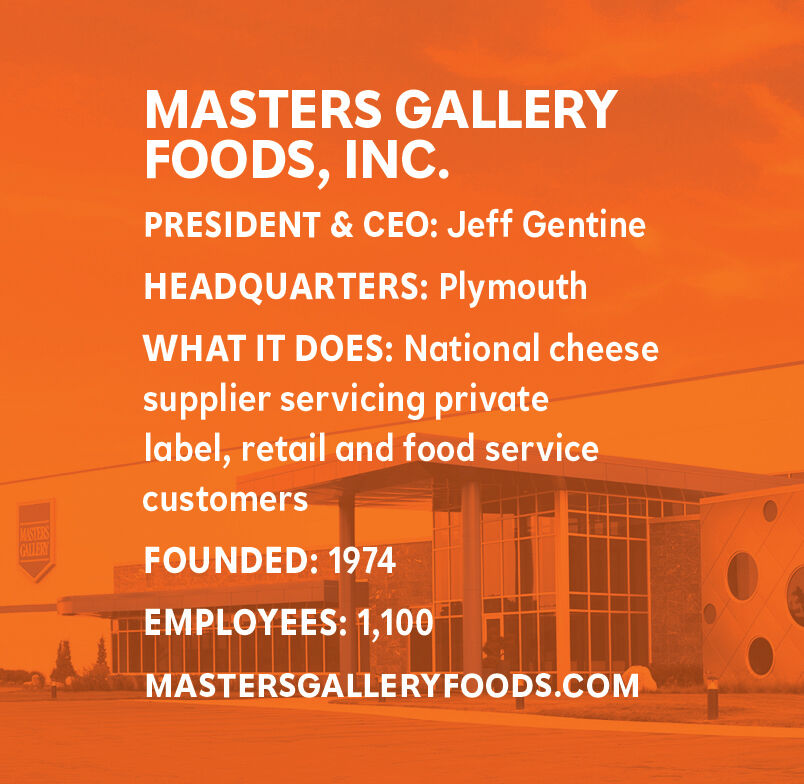
Jeff Gentine is the second-generation president and CEO of Masters Gallery Foods who co-owns the business with his two sisters, Tracey Dorsey and Trina Stephens. He says these two cornerstones — the right people and the right cheese — have been the foundation of Masters Gallery’s success.
“Quality is something every company says they have, but there aren’t many like Masters that exude quality, with the bonafides to back it up,” he says. “We aren’t cheesemakers, yet we have a Wisconsin Master Cheesemaker on staff to work with our suppliers — like a tenured professor with a Ph.D. in cheese. Along with all our cheese graders, lab personnel and on-floor QA techs, that’s a major investment in cheese quality, but it’s who we are.”
Gentine dynasty
With four major industry players — Masters Gallery Foods, Sargento Foods, Sartori and Great Lakes Cheese — calling the Plymouth area home, an estimated 15% of the cheese consumed in the U.S. moves through the Sheboygan County community.
Because of this, Plymouth has been referred to as the “Cheese Capital of the World” since the 1920s, and if Plymouth is the “Cheese Capital of the World,” the Gentine family is the monarchy. The family has ties to some of the area’s largest cheese producers and processors.
Take, for instance, Sargento Foods, the company founded by Jeff’s grandfather Leonard Gentine Sr. in 1953. The oldest of Leonard’s five children, Butch Gentine, cut his teeth in the family business, starting in sales when Sargento was a small regional cheese processor.
Butch branched out on his own, starting Masters Gallery Foods in 1974 as a small brokerage firm in the business of purchasing, aging and distributing large blocks of bulk cheese to industrial customers. Back then it went by the name Worldwide Sales, Inc.
“I’m sure my grandfather would have preferred that my father stayed on to help grow the Sargento brand, but he respected the fact that he wanted to start his own business,” says Jeff, who today describes Sargento and Masters as “friendly competitors” in the dairy case.
In order to grow the company, Butch knew he needed to be more than a cheese broker. In the 1980s, the company leveraged its industrial client relationships to move into the private label business for retail customers.
“In the ’70s and ’80s, only the biggest players had their own store brand. It was very limited,” Jeff says. “My dad felt like smaller retailers should be able to support their own brand if the packaging is good and the quality is as good or better than the leading brands. And that’s what he did.”
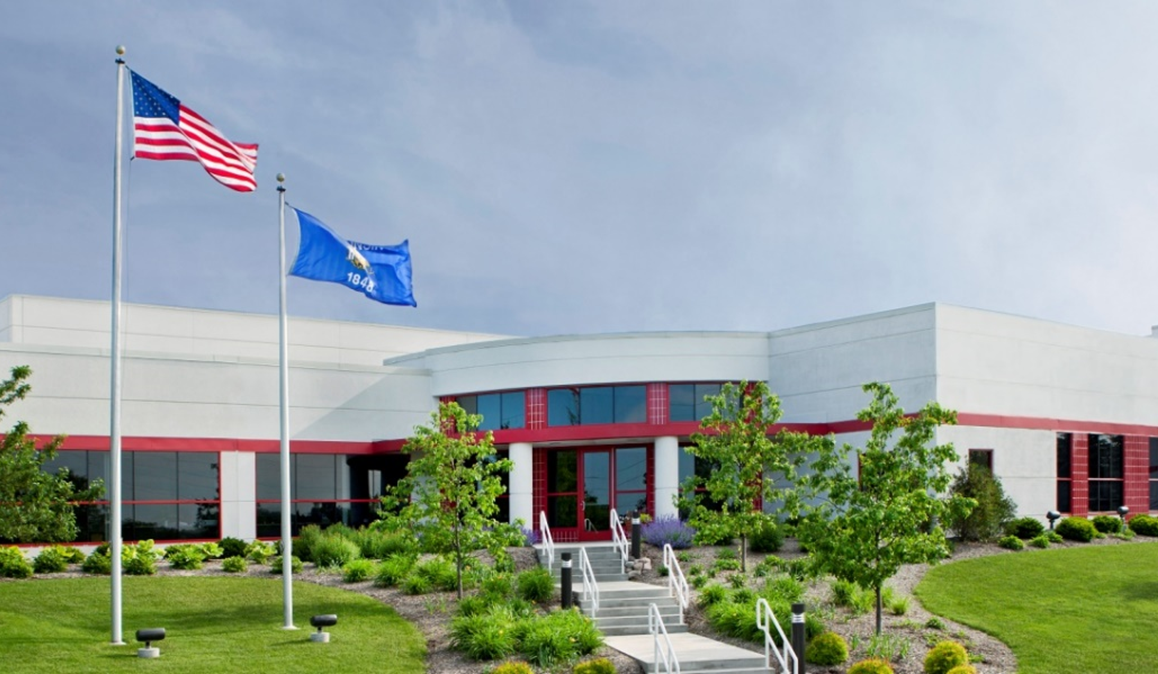
The business changed its name to Masters Gallery Foods in 1988, a move to better reflect its diversifying portfolio and commitment to sourcing premier quality cheeses. After several years of having its private label shreds and chunks co-manufactured, in 1989 Masters built a 45,000-square-foot production and distribution facility in Plymouth, where the first reclosable packaging for private label shredded cheese was manufactured.
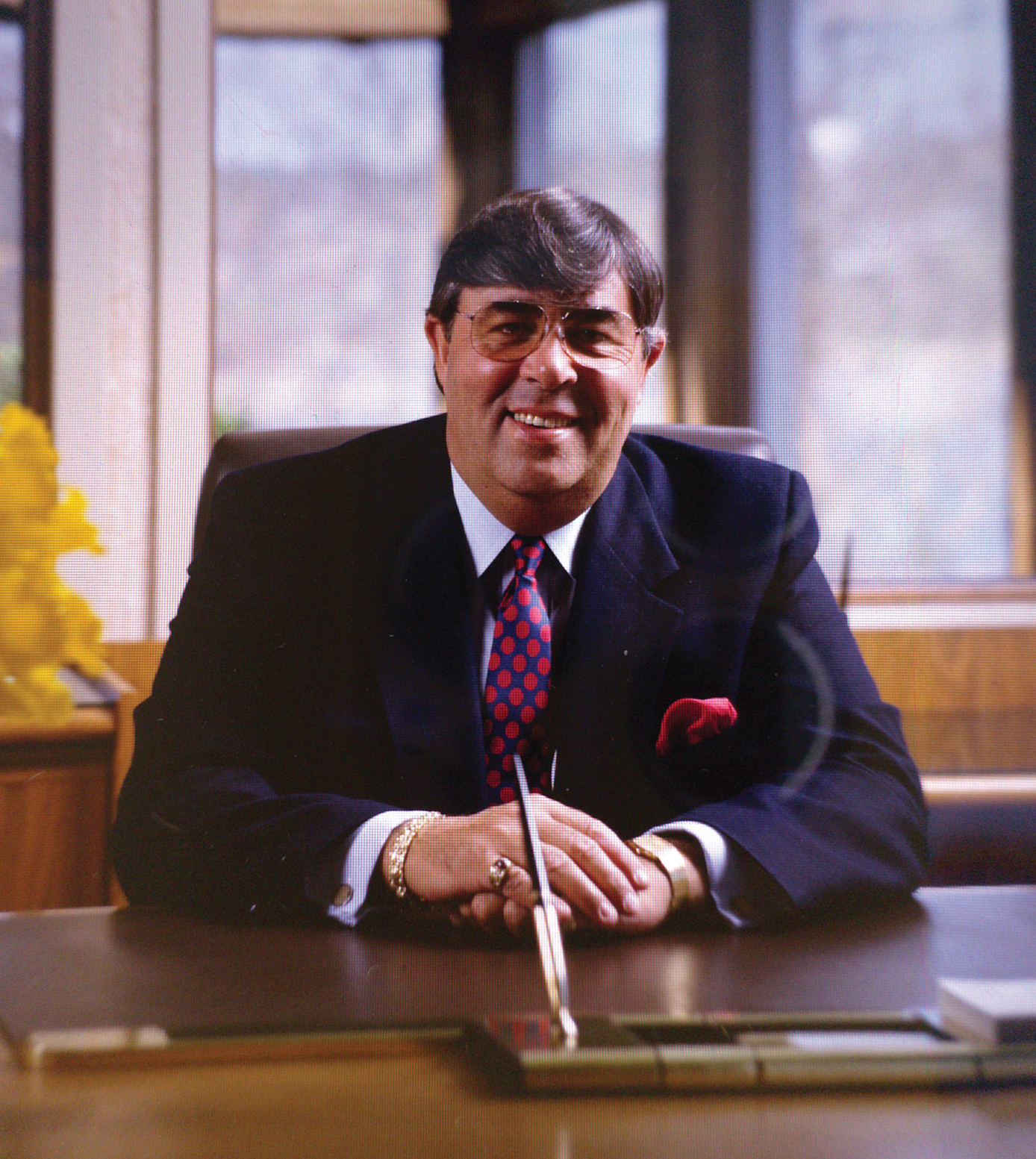
But just two years after Masters’ plant opened, Butch suffered a heart attack and died unexpectedly at age 48.
The decade that followed was a period of recalibration for the company, which had suddenly lost its founder and visionary.
“We were able to carry on through the ’90s, but it was tough,” says Jeff, who joined Masters in 1996 as a regional sales manager. “When my dad passed, there were a lot of estate taxes to pay, which made it difficult for us to do other things. Getting through the ’90s was very much a slog — keep your head down, keep grinding, keep doing what you need to do to keep the lights on. Fortunately, my dad had a strong team around him, but I still felt an obligation and a desire to come back to the family business and help in whatever way I could.”
Despite the turmoil, Masters remained committed to maintaining its reputation for quality. It may not have seemed possible at the time, but brighter days would soon be on the horizon.
Golden age
By the late ’90s, Jeff says Masters “could see daylight coming,” and the company was finally able to set its sights on growth. The company added its first food service lines at that time, installing new large-format shred equipment that allowed for sales to restaurants and distributors.
Masters also added a third shift to maximize its line equipment and generate more volume. “It really was the key to us figuring out how to drive volume through that facility and to quit stagnating,” Jeff says.
The Plymouth plant underwent an expansion in 2000, doubling its size, but by 2009 the company had outgrown the facility once again. A second expansion grew the plant to 170,000 square feet.
This growth was the actualization of Butch’s early vision.
“We had a lot of forward momentum, and a lot of that growth opportunity came about due to the rise of private label throughout the 2000s,” Jeff says. “The things that my dad realized — that smaller retailers can support their own brands, that consumers could feel confident buying high quality private label at an affordable price — that was true.”
According to a 2022 Bizrate Insights survey, nearly 80% of U.S. adults reported either purchasing or being willing to purchase private label goods. Today private label brands account for one in five consumer goods products in the United States. Over the past five years, private brands have grown steadily in market share, from more than 17% in 2019 to nearly 19% by 2023.
“Over time, retailers expanded their programs to include more offerings, like natural slices and snack sticks, and store brands began to take center stage in the dairy case while the national and regional brands have been pushed more to the periphery,” Jeff says. “That extra space given to private label fueled a lot of our growth.”
After serving as the company’s executive vice president for 10 years, Jeff took over as president and CEO in 2017. It was around this time the company had a decision to make: undergo a fifth expansion of its Plymouth facility, now sitting at more than 300,000 square feet, or build new to better streamline production.
The decision was made to build a new 175,000-square-foot cheese packaging and distribution facility in Oostburg, about 20 minutes from the Plymouth facility.
“We took everything that we learned in those expansions in Plymouth and we put it into the design of this facility,” Jeff says. “The production room length and overall space is something we couldn’t have accomplished with another expansion in Plymouth. Building that plant was the key to our next surge in growth.”
High-capacity lines for shredded and sliced cheese products were added, and Masters’ total employee count eventually reached 1,000.
In 2022, Masters Gallery Foods received $1.5 million in performance-based state tax credits from the Wisconsin Economic Development Corp. (WEDC) to support a $60 million expansion of its Oostburg facility that doubled the size of its production area as well as added storage and warehouse space — Masters has one of the largest privately held inventories of aged cheddar in the country.
“Cheese is big business in Wisconsin historically and … I believe, in the future as well,” said WEDC Secretary and CEO Missy Hughes during a visit to the Cheese Counter and Dairy Heritage Center in Plymouth. “Cheese companies, such as Masters Gallery Foods, support our family dairy farms and help feed our world. More than that, though, Wisconsin companies and workers continue to move the dairy industry forward with innovations, research and training that make our state a leader in the food and beverage industry — drawing companies and investors from around the world.”
“The cheese talks”
In 1921, Wisconsin became the first state to grade its cheese for quality. It remains the only state to require licensure for cheese graders.
Toney says Masters is unique not only for employing a staff of 20 licensed cheese graders, but in that its grading department provides a detailed report to every cheesemaker sending product. Every vat of cheese received by Masters is given a rating on a 5-point scale in categories such as texture and flavor.
“The cheese talks for itself. It has nothing to do with my feelings,” Toney says. “You smell it and you feel it and you feel the texture of it. And then you put it in your mouth. It tells me what I need to score it.”
Sharing this information with the cheesemakers not only created an atmosphere of trust between producer and processor, but it worked to improve overall quality in the dairy industry.
“It really started a wild thing in the industry because plants would be calling me and saying, ‘I love this’ because they take these reports to their production meetings,” Toney says. “That really was a huge thing in the industry to help our vendors improve.”
Masters also began inviting cheesemakers in for grading sessions so they could see how their product aged, a process in which they typically weren’t included.
“They could really get a feel for how [their product] was aging out and how long it held up so that we as a cut-and-wrap facility could still run the product,” Toney says. “No one else in the industry does that.”
Research and development is core to the quality standards at Masters, which works with many food service clients to develop custom flavor profiles and unique proprietary cheese blends based on their specific needs — be it flavor, stretch or melt performance.
John Umhoefer, executive director of the Wisconsin Cheese Makers Association, of which Gentine serves on the board, says Masters Gallery’s service ethos translates to strong support for the overall dairy industry.
“Masters Gallery Foods works hand in hand with cheesemakers to create just the right products for the market, and develop unique flavors and styles for new product introductions,” Umhoefer says. “It’s a patient partnership that has made cheese manufacturers successful while Masters Gallery Foods grows in its success.”
Forward focused
Over its 50 years in business, Masters Gallery Foods has grown to service many national grocery chains, wholesalers, restaurants and distributors with a full line of cheese and cheese-related products. By the end of 2025, Jeff says Masters will be marketing close to 1 billion pounds of cheese and be around $2 billion in sales. The company is at $1.6 billion in sales today.
Much of this growth is due to the company being the exclusive off-take partner for Panhandle Products, a new cheese plant in Texas, which will soon be producing approximately 250 million pounds of American style cheeses annually.
Tammy Flora, senior vice president of human resources and corporate communications, has seen firsthand the growth of Masters Gallery over her 28-year career with the company. When she first started with the company in 1996, it had 120 employees. Today Masters employs more than 1,100 people.
In addition to employee benefits such as a continuing education program and free access to a company-funded health care facility, Flora is proud of the company’s commitment to developing leaders from within.
“We have a great reputation for growing people from inside the company,” Flora says. “About 45% of our office professional roles, including managers, executives, all the way up to Jeff, started at the company in an entry-level role, many of which are from the plant.”
Developing their team — and community — is a priority for Jeff, says Flora, who points to Masters’ support of Sheboygan County Economic Development Corporation’s innovative public-private Forward Fund as evidence of this.
Masters contributed $2 million (in addition to Johnsonville, Kohler Co., Sargento Foods and Sheboygan County) to the $10 million community development fund that works to address short- and long-term workforce development barriers, including the lack of affordable housing within Sheboygan County.
“In order to have a good, strong employee base and be a reputable employer in the area, you can’t just offer good benefits,” Flora says. “It’s really a full-circle approach to taking care of employees and the communities that we’re in.”
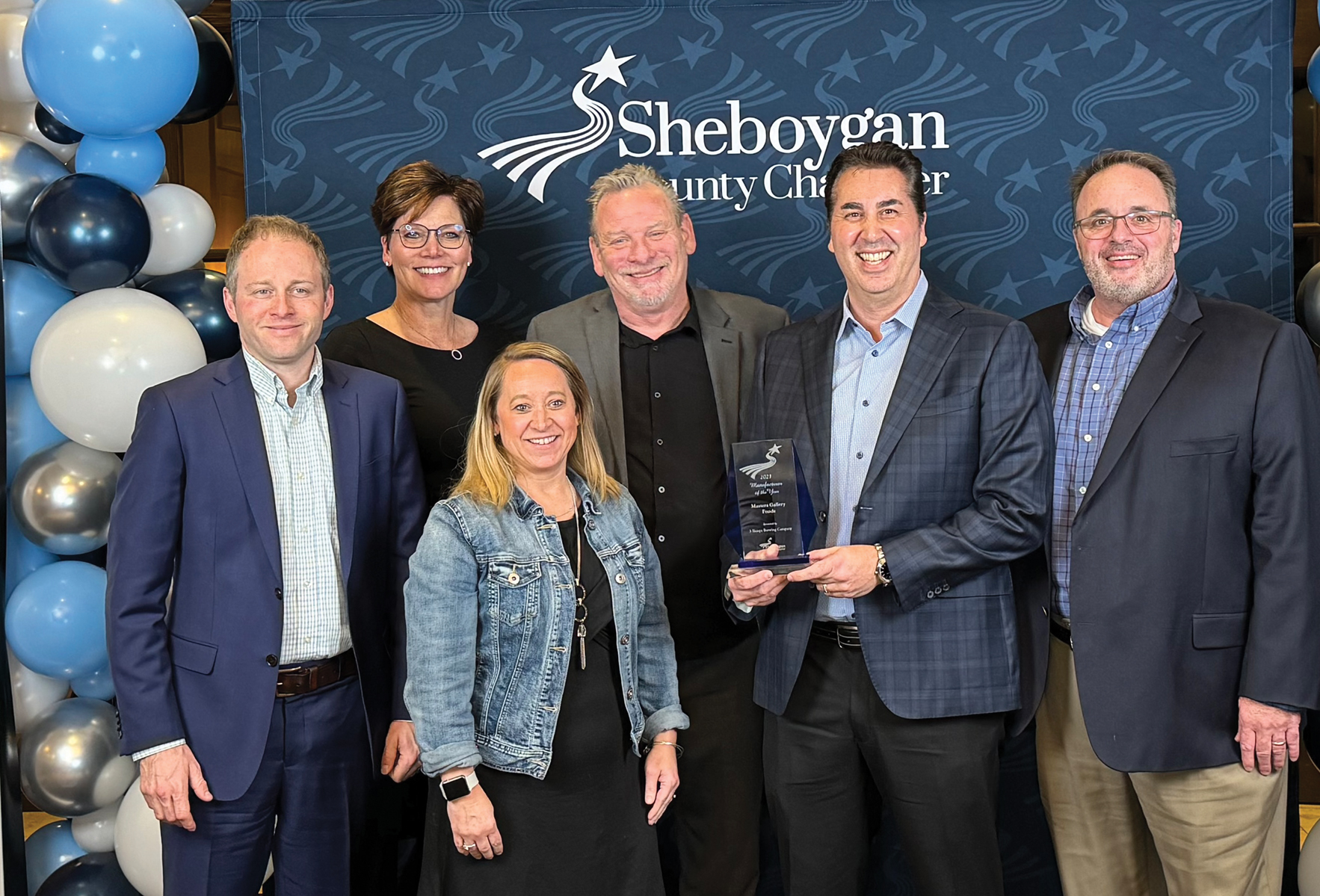
Masters was named Sheboygan County’s 2024 Manufacturer of the Year in recognition of the company’s impact on the local community, but its reach extends far beyond the county’s borders, permeating the entire cheese industry.
Tim Kieny, vice president of strategic marketing at TC Transcontinental Packaging, has been working with Masters for 20 years as its flexible packaging partner.
When the market for retail cheese began shifting from large national brands toward private label, Masters Gallery was on the forefront of that evolution, Kieny says. Because of this, TC Transcontinental quickly adapted to serve the unique packaging needs of private label customers.
Masters’ leadership in the private label cheese market helped TC Transcontinental Packaging expand its capabilities, making the company a leader in its own right, Kieny says.
“Each player has its own role to play, and Masters Gallery Foods is an integral part of the overall ecosystem,” he says. “Masters Gallery uniquely touches so many parts of the industry and can really be looked at as a connector, from bulk cheese supply and storage to supplying both food service and a wide variety of retail customers and markets.”
Continued growth, driven by increased volume, is on the horizon, Jeff says. He envisions a third plant in Masters’ future, likely within three to five years, and also plans to pursue export strategies beyond the U.S. market — ideas he thinks would have surprised Butch.
“My dad was an entrepreneur, but I don’t know that he would have envisioned where we are today. I do know if he hadn’t taken the huge risk of leaving Sargento to start his own business, none of us would be here,” Jeff says. “You don’t get to 50 years by accident, and I’m extremely proud of the entire Masters family, past and present, who helped us reach this milestone. The future looks good for us. We’re ready for the next 50 years.”