
Recent reports indicate construction is on the upswing in Wisconsin, and many Northeast Wisconsin construction firms confirm there is momentum in the market. For many, it’s only the beginning of a greater anticipated growth trajectory.
Data released by the Wisconsin Department of Workforce Development in March showed the construction industry added 1,900 workers in the first month of the year, bringing the state a record-high number of trade jobs. In addition, employment across the sector is anticipated to grow at a rapid rate through 2025, with construction ranking second on the list of sectors at more than 5% anticipated industry employment growth.

The reason behind the growth is multifaceted. Jason Mathwig is the industry alliance director at New North, Inc. and supports the NEW Construction Alliance. He is hearing that growth is occurring not so much in the residential market (multi-family home units withstanding) but in commercial construction, including industrial.
“Wisconsin has that strong manufacturing foundation, and a lot of contractors are benefiting from that [industry’s] spending,” Mathwig says. “If you drive up I-41 through the Valley and Green Bay, there are several industrial complexes with work underway.”
Brad Diener, regional manager of Lunda Construction, points to COVID recovery going better than anyone anticipated, with rates not rising as sharply as anticipated toward the end of the pandemic.
“That’s stabilized the commercial market, and in conjunction with infrastructure spending has created both growth and need as with more boomers leaving [the industry],” he says. “It’s creating both challenges and opportunities.”
The stabilization of interest rates has prompted more companies to proceed with projects, says Jamie Blom, director of business development at Immel Construction.
“We’re definitely seeing a lot more year-round construction now than when I started in the industry 15 years ago,” he says. “People want to hit their revenue targets and want their businesses operational because they have fulfillment needs or sales projects. So there’s growth because people are ready to move ahead with their projects.”
Infrastructure impact
Mathwig also points to the influx of funding from public infrastructure projects such as those generated by the Bipartisan Infrastructure Law (BIL) — a “once in a generation” federal investment through 2026 in infrastructure including roads, bridges and mass transit, water infrastructure, resilience and broadband. Mathwig says this plays a big part in generating large projects that trickle down to the state and then local levels.

“It’s that long-term, sustainable funding from the federal government that’s triggered a lot of work going back to 2022 and 2023 when [the industry] started to see that steady increase of work to be done … and to piggyback off that, we’ve had three state budgets in a row that increased transportation revenues as well,” says Brandon Strand, director of government affairs at Walbec Group.
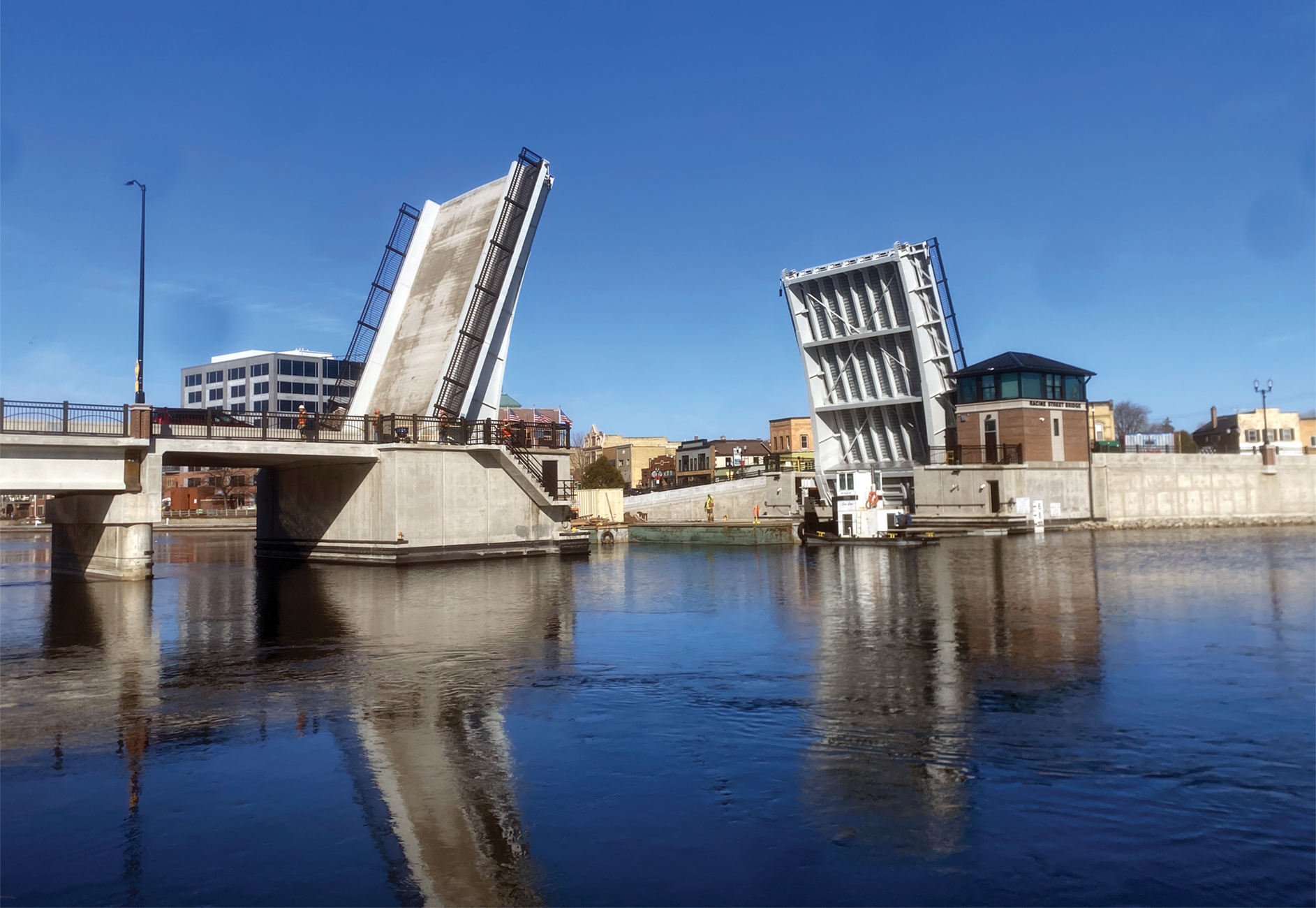
The Walbec Group comprises six companies — Payne and Dolan, Northeast Asphalt, Zenith Tech, Parisi, Premier Concrete and Construction Resources Management. Several of those are particularly affected by the outgrowth of work generated by the BIL, as highway construction is the group’s largest type of work. This includes bridge work, asphalt work and major highway program work — including the I-41 project. Payne and Dolan and Northeast Asphalt have been integrally involved in BIL work, including what Strand describes as some of the best years quantity-wise for the amount of asphalt being laid in the state of Wisconsin, earth-moving with Parisi, and Zenith Tech with regard to bridge projects. While the company is pursuing diversification into other areas, including renewable energies and agriculture, it is seizing the infrastructure project opportunities available.
“Whether it’s asphalt, concrete or bridges, we’re seeing a lot of growth in those areas,” says Strand. “This is a seismic and generational investment.”

Lunda reports it’s building more dams this year than it built over the last 10 years collectively, and Wisconsin Department of Transportation projects generate the “lion’s share of our workload,” says Diener. “We expect a significant increase in projects next year when the I-41 project picks up more steam,” he adds.
Diener points to infrastructure as an important conduit for spurring the economy.
“As that’s built, there will be effects on commercial and residential construction that will happen as the increased capacity [via the roads] creates more opportunity between the Valley and Green Bay,” he says. “It’s just the tip of the spear.”
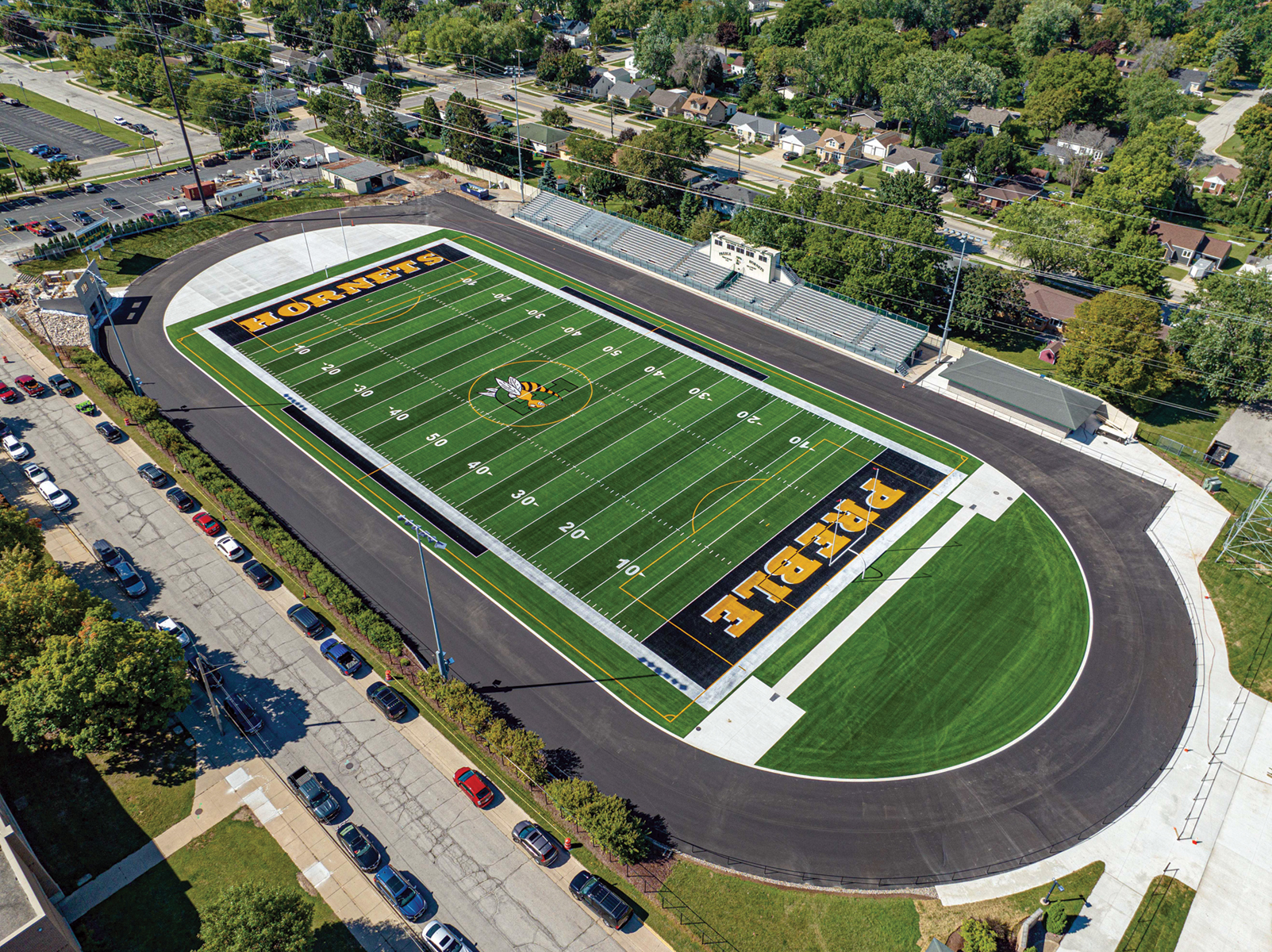
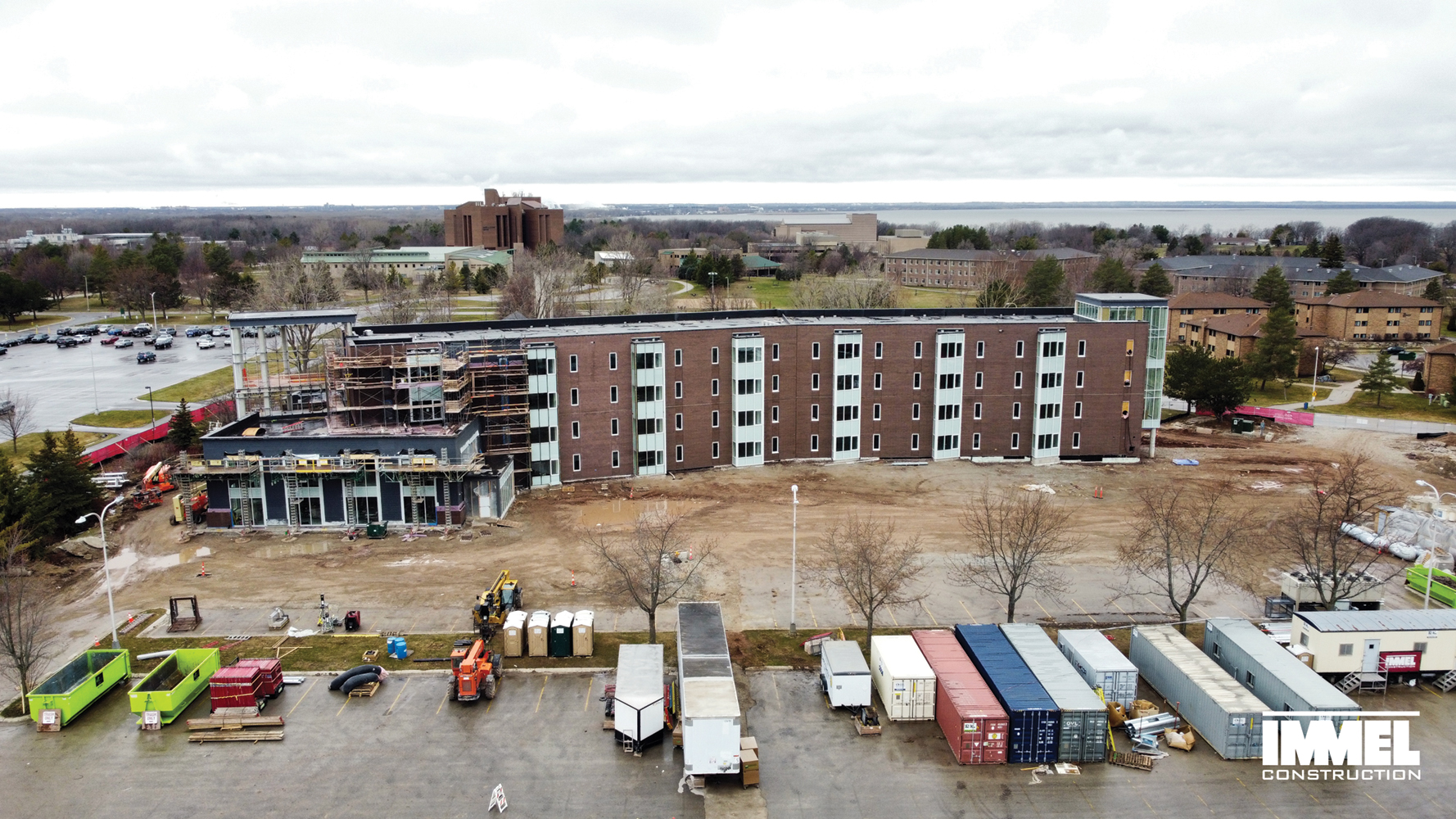
Construction firms such as Immel that don’t work in the infrastructure space are nonetheless reporting favorable growth and strength. Immel had a banner year last year, with 2024 anticipated to be a strong construction year in retail construction, manufacturing construction, health care construction and K-12 spending as referendums approved a year or two ago are now out for bid.
“We had a record year in revenue last year for our company because of an outlier project that catapulted revenues,” Blom says. “We see this year being more about hitting a lot of our smaller projects, and 2025 is going to be a really big year based on what several retail clients have forecasted as well as a result of picking up some prospects doing some major expansion in Wisconsin.”
A ready workforce
Even though 2024 is not attaining quite the revenue numbers generated last year, Immel’s backlog remains consistent with 2023, something that aligns with the contractor backlog remaining very strong nationally as reported in December by the Associated Builders and Contractors.

Immel has added several team members and continues to seek superintendents, project managers, estimators and others — a momentum Blom anticipates will continue. The company recently moved its offices to the former Lakeland University building, retaining its Radisson Street location for field operations.
The industry as a whole is experiencing labor shortages, with a recent survey by the Associated General Contractors of America finding that construction firms predict increased demand for projects alongside a continued struggle to cope with significant labor shortages. Like others, Lunda is experiencing an older median age demographic for its employee base, and the “exodus of boomers has impacted us earlier than some other industries,” Diener says. “We’ve been very proactive in making sure people graduating from high school are aware of the opportunities with construction, promoting apprenticeships and a combination of apprenticeships and [technical college]. We’re doing a lot of outreach we did not do five to 10 years ago. We are much more proactive today.”
Mathwig is hearing about challenges in securing HVAC service technicians, general labor, carpenters, operators, electricians, plumbers, engineers, construction and project managers and more.
Helping school districts adopt the Wisconsin Department of Workforce Development’s architecture & construction career pathway is just one way New North, Inc. and the NEW Construction Alliance are working to pique more interest in those career fields.
“We are shining a light on construction and the trades and opening eyes to the opportunities,” Mathwig says. “More high school students are taking ownership of their futures and participating in showcase tours, construction-related trade fairs and specific classes that [include] building a house. It’s working; last year across the state we had a record number of registered apprentices and youth apprentices and an 8% increase in students enrolled in the architecture and construction career pathway.”
Having such extensive and long-term work as a result of the BIL is allowing companies such as Walbec Group to anticipate and plan for its workforce and other investments.
“That steady stream of transportation funding is allowing companies like ours to properly plan for our capacity, going to the high school job fairs, doing outreach in new areas to attract more workforce, making capital investments in equipment,” Strand says. “That long-term sustainable funding at a state and national level has allowed us to ramp up and be prepared for the workload ahead.”