
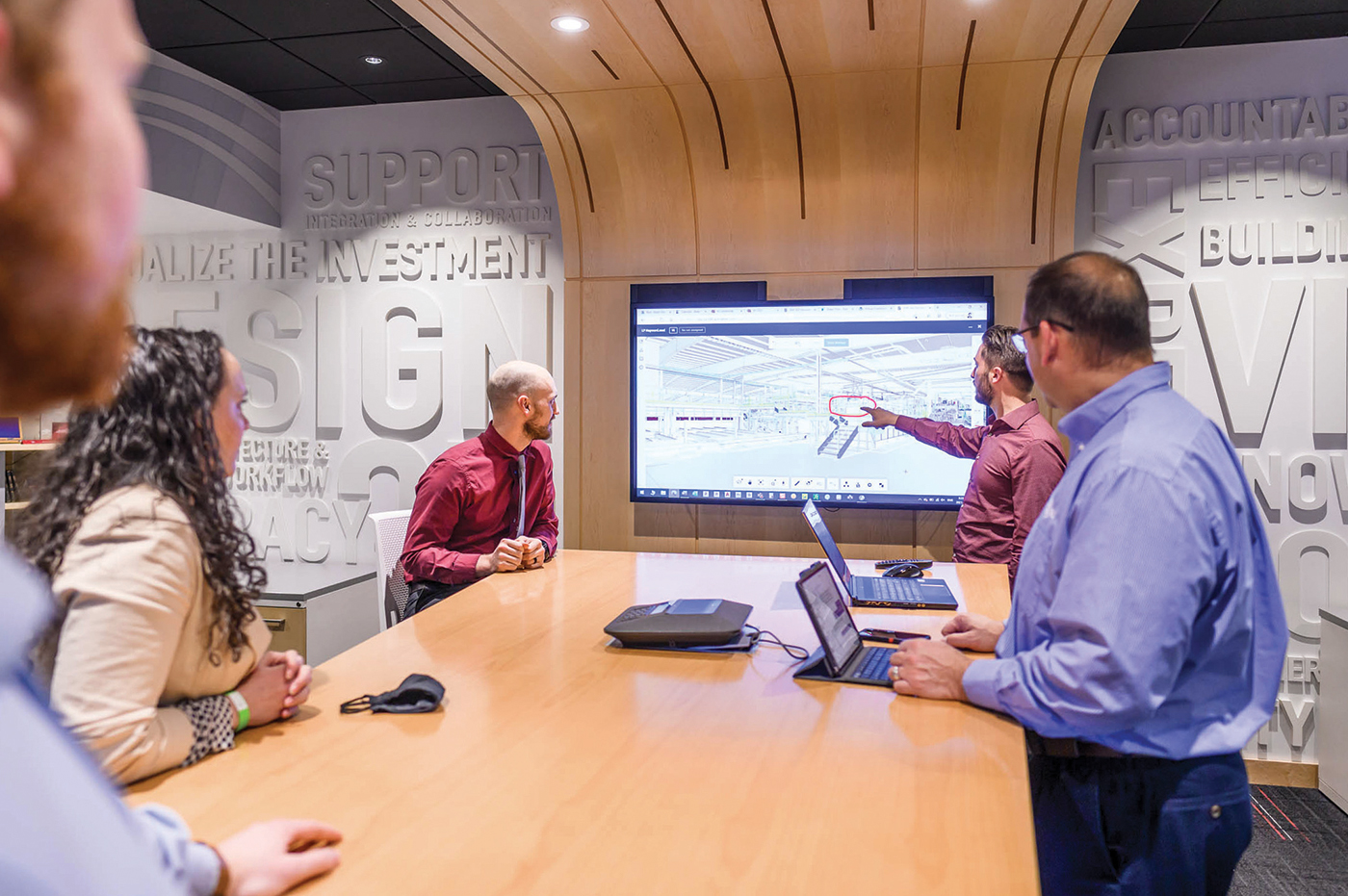
In today’s rapidly changing world, smart devices and artificial intelligence continue to creep into just about every industry. Construction is no exception — gone are the days of carrying clumsy rolls of paper blueprints and plans, when the humble hammer was the go-to tool of choice.
Today, everyone from equipment operators to inspectors can be seen scanning work sites and collecting data on tablets and other mobile machines during client walkthroughs. Emerging technologies within the industry include image recognition and reality capture software, as well as GPS positioning and LiDAR (Light Detection and Ranging) scanning, just to name a few.
But AI-powered tools are showing some of the most potential for big impacts on the industry — a new report by Reports and Data forecasts the construction AI market to reach $4.51 billion by 2026.
Manufacturing is an industry seeing rapid growth in AI adoption. The Northeast Wisconsin Manufacturing Alliance’s 2021 Industry 4.0 study found that 50% of New North region manufacturers believe they will increase investment in AI over the next three years, up from 37% in its 2019 study.
For the construction industry, AI usage is still in its infancy, according to Construction Management Technology Chair Richard Cass of Fox Valley Technical College.
“Is AI solving our problems? No,” he says. “Is it recognizing certain things and helping us make decisions? Yes.”
A new way of learning
Respondents to NEWMA’s 2021 Industry 4.0 study rated AI/machine learning knowledge as a top skill required for manufacturing employees in the future, second only to cybersecurity.
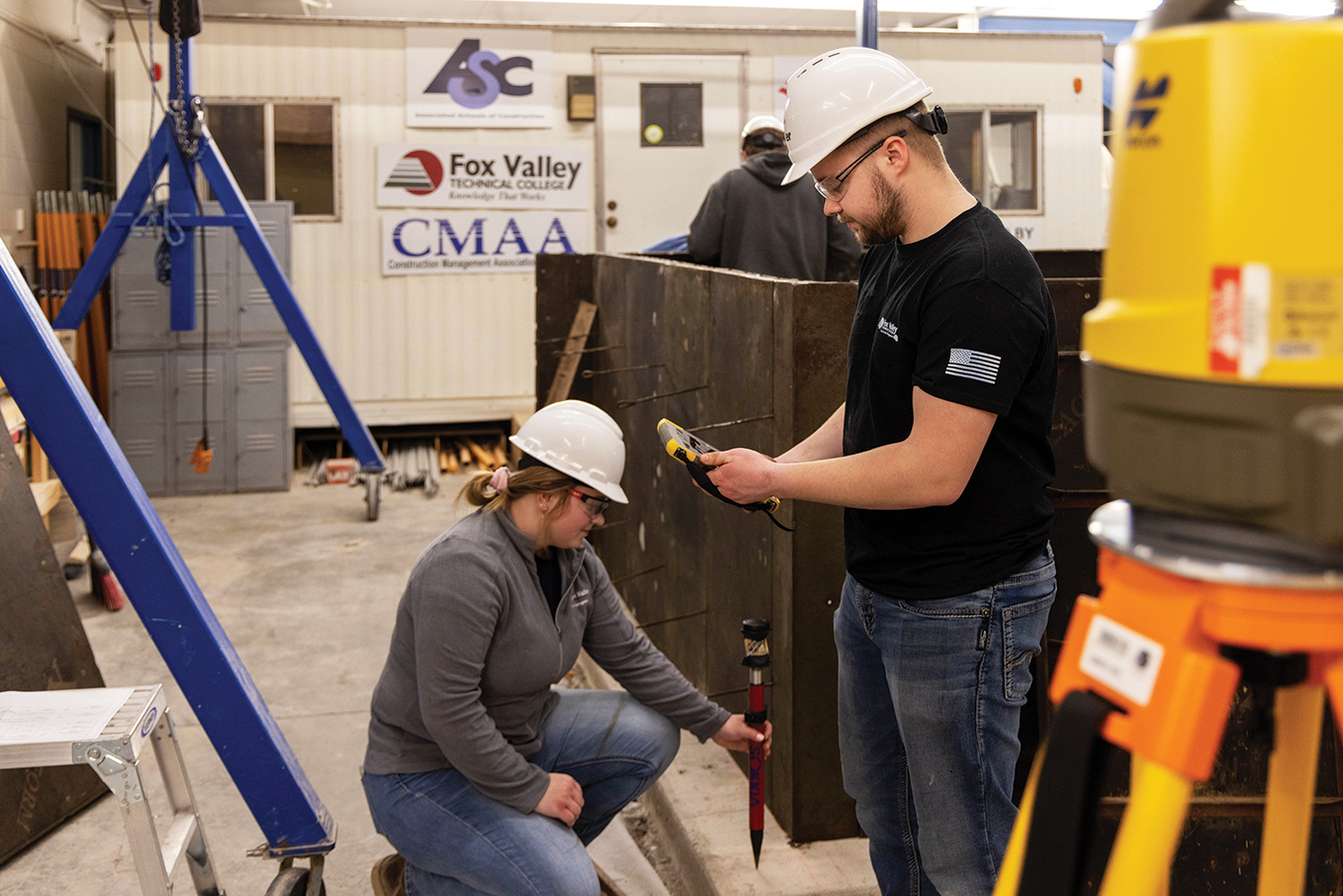
For the past 14 years, Cass has witnessed generations of new graduates enter the state’s construction workforce with a rising interest in this technology.
“While not making any decisions for you, AI technology in production and design provides information to help you make decisions,” Cass explains. “That technology is coming along to where it could — eventually and potentially — make decisions for you. It’s going to continue to grow. It’s a selling point for young people; they naturally gravitate to that. It gets them excited.”
Cass notes that when someone is sitting at the construction booth during an FVTC career fair with a computer, monitor and all sorts of digital devices next to someone with a set of plans or a tool belt, the high schoolers gravitate toward the computer screen.
“That’s what they want to know. They see the tools, but they move toward the technology. It’s part of their DNA, because they’ve grown up with it. Someone who’s 18 years old right now has had technology in their hands their whole life. Carpentry isn’t just swinging a hammer anymore; in this modern age of construction, there is a lot more to it than that.”
Jay Mathes, a virtual construction lead at Miron Construction Co., Inc., has witnessed AI progression firsthand. However, for now, most advancements remain on the horizon.
“We’re actively using very few AI and machine learning technologies, but we understand and are tracking the benefits to our industry and know that they will be a big part of our future,” he says.
A new view for clients
Despite the current (and still somewhat limited) status of AI use across the construction industry, the technology in use to date has already proven beneficial to stakeholders.
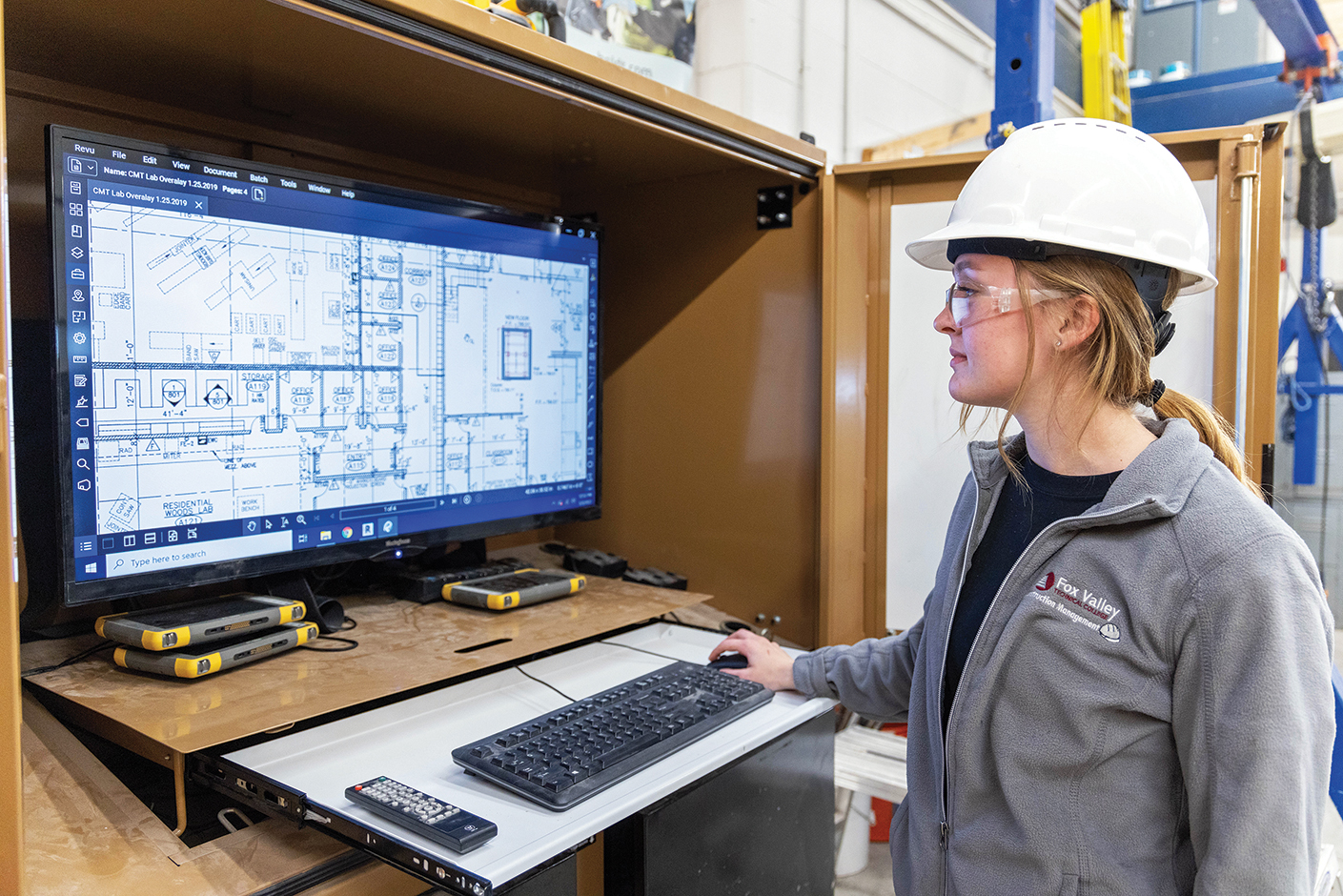
“One of the challenges with clients is spatial recognition and wanting to know what their building is going to look like when it’s done,” Cass says. “I used to teach students that the difference between them and everybody else is that they can look at a 2D set of plans and visualize the final build.”
Not everyone can “see” things from that point of view, but technology such as augmented (or mixed) reality wearable devices allows even the most incomplete projects to come to life in front of the clients’ eyes.
AI tools also have the potential to increase safety and efficiency.
“In the future, AI will help the virtual construction team at Miron code software in programs we previously couldn’t, and remotely identify safety issues and track progress on our project sites,” Mathes says.
For example, at some point it will be possible to snap several photos of a room and compile them with AI software to generate a report identifying what percentage of drywall is complete on the project.
“In the past, generating data like this would be painstaking and manual. In the future, a report like this could be generated weekly with little hassle,” Mathes says.
While it seems as though AI is here to stay, it will be some time before autonomous robots take the wheels of heavy construction equipment and machinery. Despite all the progress to date, Cass says there is still a long way to go.
“Construction is one of the industries we can’t outsource. You can’t ship a whole building; we build it here. We’re continually improving. There’s always something new hitting the market,” Cass says. “Some of it succeeds; some of it fails.”
But it will take more than the mere existence of AI for it to be used in construction — the cost of the technology can be a barrier to its adaptation.
“We are seeing more of the technology with the larger contractors. The larger companies have the ability to absorb those costs internally on large projects to be able to pay for that technology; it pays for itself much quicker,” Cass says. “Your smaller contractors are likely never going to adopt this technology. In some cases, the technology costs more than their entire business.”
Expanding workforce
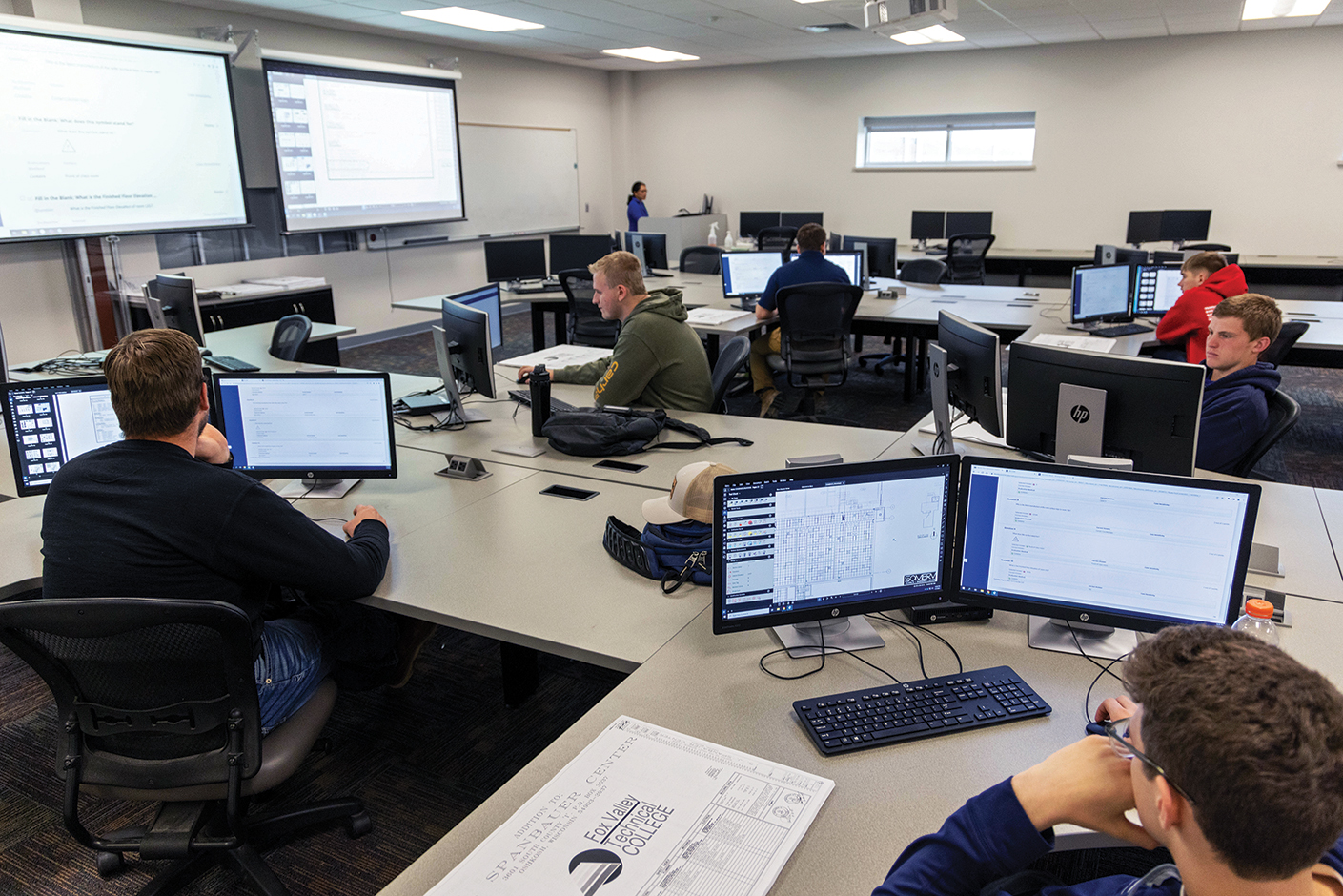
Cass says AI has strong implications for meeting workforce demands.
“AI brings efficiencies,” explains Cass. “We have a lot of work, and not a lot of workers. The industry has to adapt in order to continue to serve the customer base. Using AI is one way of doing that, and as the industry grows that way, it will just become a natural part of our jobs.”
Mathes shares a similar outlook.
“The worry with new technology is typically, ‘Will I lose my job to this?,’ when in reality it’s creating entirely new opportunities that didn’t exist before,” he says. “In general, people will likely start using AI and machine learning without even knowing it, the same way people use cell phones, Wi-Fi and search engines without complete knowledge of how they work. Once it becomes easy to use, people will quickly see the benefits and it will likely permeate our lives. Machine learning will be well-suited to help automate the mundane and low value-added tasks in our lives.”
Mathes says that, in the future, AI could be used for tasks like automatically generating several iterations of a floor plan with minimal input for an architect, helping perform complex structural analysis quickly on a building design, and building elaborate digital 3D models of existing buildings from scans and photos.
“AI will likely not be a singular thing, but rather a technology that can be embedded into an existing process,” he says. “Just about every aspect of construction could be affected by this technology.”