
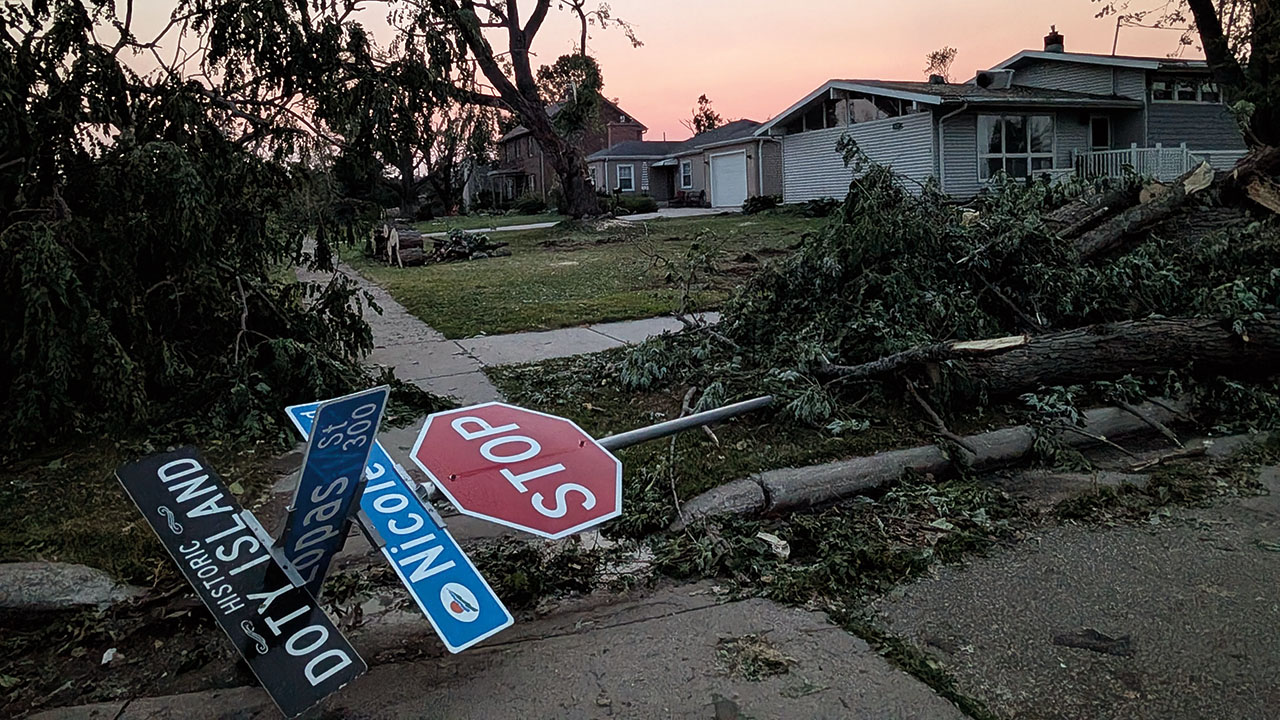

Everybody seems to have their own story about the EF‑3 tornado that rampaged through parts of Appleton, Fox Crossing, Neenah and Menasha on July 27.
Case in point is Tori Anthony, onsite property manager at Store Here Self Storage at 2225 American Drive in Menasha.
“I was driving to an appointment,” Anthony recalls. “My vehicle was shaking. I had to pull over and call my husband. It sounded like a train was coming. Within a few minutes, it was quiet.”
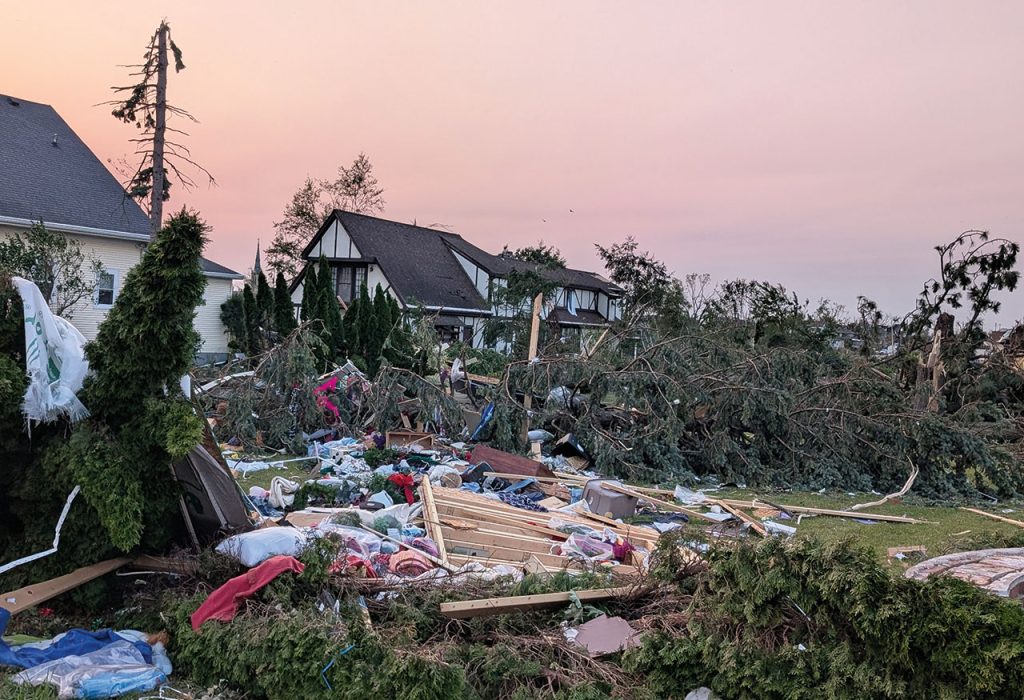
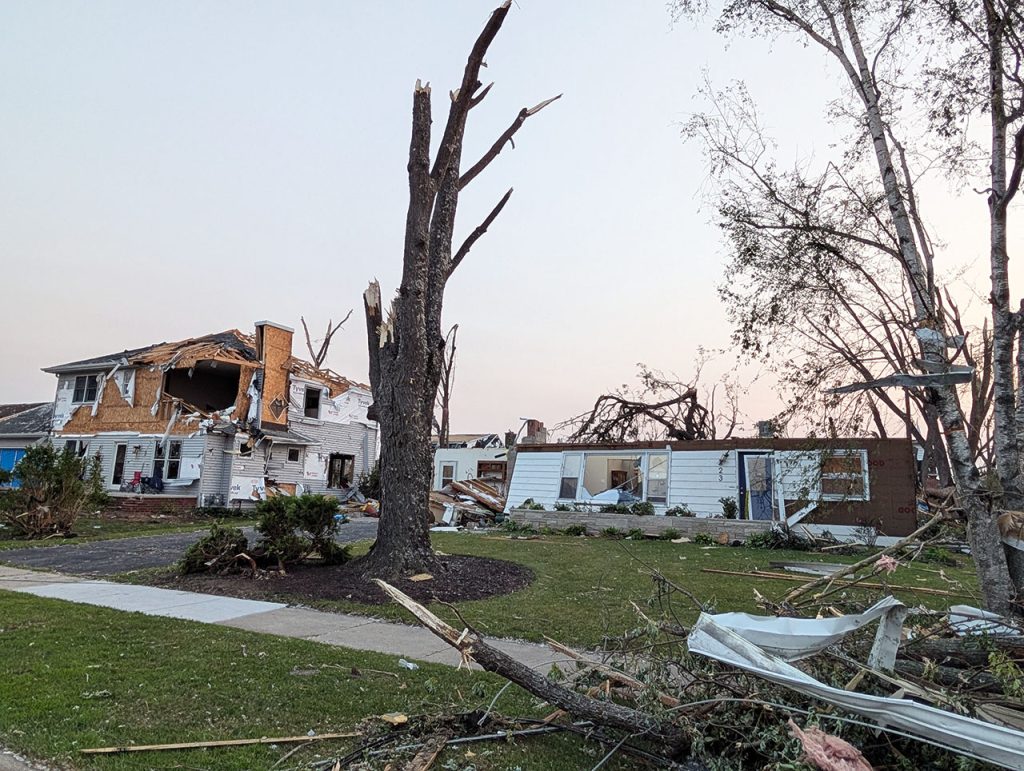
The destruction was vast, with some businesses heavily damaged or destroyed completely.
But if this dark cloud has a silver lining — besides the fact that nobody died — it’s this: Entire communities have stepped up to help, from your average citizens to Anthony’s firm, which offered up to two months of free storage to affected businesses and residents.
“Some businesses have significant damage, so they have to empty their entire spaces,” Anthony says. “Some are taking paperwork and putting it in storage until they can take it back.”
Impact on building codes
It’s been more than two months since the tornado, but its repercussions have been far‑reaching on many fronts: not only the damage, but the implications for things like insurance, building codes and preparation for the next storm — because it’s a good bet this won’t be the last one of this magnitude.
According to Tim Uhlman, National Weather Service meteorologist in Green Bay, the EF‑3 tornado was the second one the area faced this year. The last time that happened was 1984.
“Our weather patterns are changing; I think we can see it all and feel it,” says Luke Fischenich, a village of Fox Crossing building inspector who added that his job post‑storm was not easy.
“Beyond the obvious, there is a lot that can’t be seen,” he says. “There is a lot of fabrication that goes into these buildings — how did those spot welds hold up? We don’t have a ladder that can get us 20 feet in the air. What we’re looking at is visible, and we’re also relying on structural engineers to do a closer inspection to find out if they are a complete loss or can be repaired.”
Dan Brellen, head of the structural engineering team at Neenah‑based McMahon, says that some buildings are better suited to the effects of an EF‑3 tornado.
“Heavy concrete structures are going to be able to handle a larger wind load better than a steel or wood structure,” he says. “The immediate aftermath [of July 27] was, ‘Can we even enter the building? Can we get around anywhere?’ Those were the most pressing issues.”
In other words, if a building is missing its roof or a wall, that’s usually a total loss. But what about the guts of the building? And then, if the building is decades old, there’s usually that much machinery, metal and other potential dangers. Plus, don’t forget insulation that could be dripping wet. That could equate to mold.
Here’s the thing: It’s unlikely that building codes will change in the short term to account for increased storm intensity, because Wisconsin mandates the 2021 version of the International Building Code, which it adopted last year.
That’s the code all municipalities must follow, period. Fischenich says “Any change from IBC would have to come from the state, not a municipality. Nobody can adopt a stricter code.”
Chris Rute is the programs director for AIA Wisconsin, the statewide chapter of the Society of the American Institute of Architects. He concurs that while the code could change, that’s as much a political issue as it is practical.
Keep in mind that the code is a minimum standard; a business could build more stringently, but that translates to increased cost and those potential costs “often scare people away.”
But couldn’t the owner of an existing building retrofit to make it perhaps not tornado proof, but stronger? Structurally, that’s virtually impossible, Rute says.
“So we’re kind of stuck,” he says. “We don’t know what future storms are going to look like. There’s no probable way to retrofit existing buildings to bring it up to a different code.”
Damage cost “staggering”
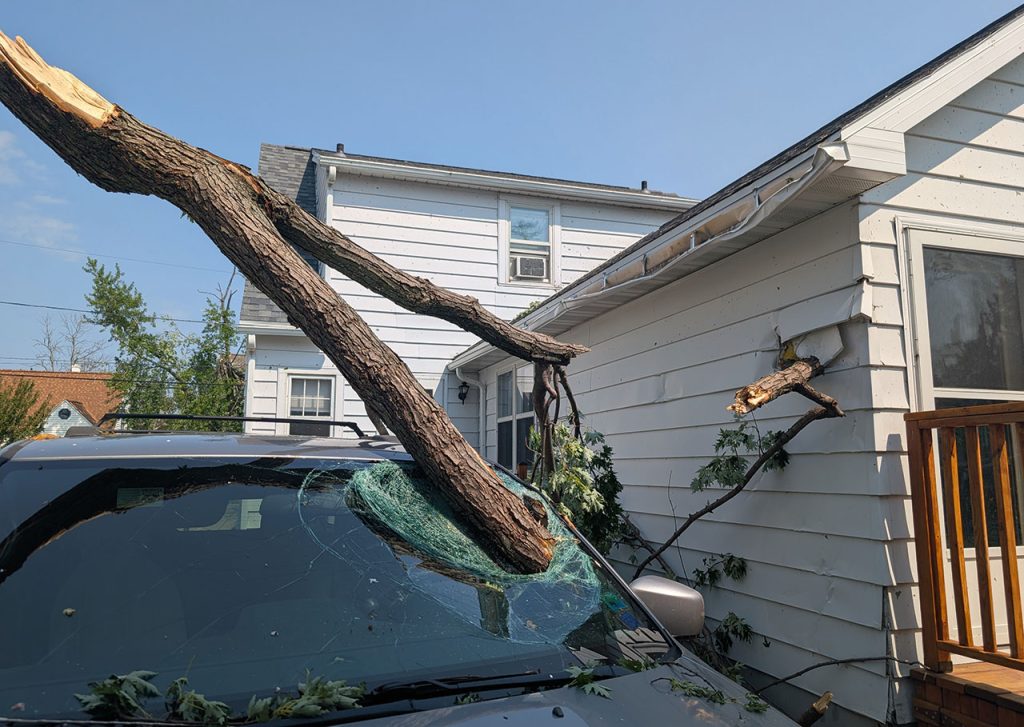
Even two months later, the monetary cost of the storm is still unclear. While others weren’t comfortable providing a regional estimate, Fischenich ventures that, “It’s beyond millions of dollars. The overall loss is staggering. It’s hard to put into words what the financial loss is.
“With building costs the way they are now, a business that was at a million dollars, you can easily add 125 to 150% and still be off.”
But insurance should cover that loss, right? It’s not that simple.
Dillon Holewinski, vice president of sales, business insurance and risk for Menasha insurance broker McClone, says that not all insurance policies are written equally, which is why it’s crucial to work hard with a professional on the front end to design a policy that has a major eye on the future.
“A property policy has limits, and deductibles can vary depending on the coverage. How that policy is structured on the front end will ultimately determine how it responds when there is a loss,” he says, but there are broader impacts as well.
“How long is the business going to be down?” he says. “How are your employees going to be paid? What ramifications does it have to your product? Can you even make product?
“So those are the types of things that we really want to dig into and find out more of how the insurance policy is structured, because that is more of a building of the policy, not just a policy that you would buy off the shelf.”
McClone President and CEO Dustin McClone says the concept of ordinance and law coverage is important to understand. After significant damage, a business may not be able to rebuild exactly what they had before. Remember, building code requirements change over years and decades, so what was applicable building code when the facility was built is likely different today, and maybe a lot different.
“Ordinance and law coverage can and does help address those certain increased costs that would be associated with any type of upgrades that need to be made,” McClone says. “So if you’ve got a 40‑year‑old building and it gets significantly damaged, would the insurance policy cover and upgrade to modern materials?
“Right, wrong or indifferent, insurance policies are not created equal. There’s a lot of nuance to that.”
Potential federal funding
By Aug. 13, Andrew Dane, Menasha’s community development director, presented a memo that provided a proposed update to the city’s disaster recovery plan, which could be adopted in January.
“What I have heard is that the community wants to help homeowners and businesses build back where feasible,” Dane says. “If the community wants to retain its small businesses, then we’ll need to put some programs in place to assist, especially for those that were underinsured.”
Dane says the city is still waiting to hear from the Federal Emergency Management Agency (FEMA) on whether a disaster declaration will be made, which could take time, similar to the months it took after last spring’s flooding.
If FEMA declares a disaster, “the Small Business Administration typically provides loans to businesses to repair or replace disaster‑damaged property owned by the business, including real estate, inventories, supplies, machinery and equipment,” he says.
Right now, the most important thing a business owner can do, he says, is “document and quantify the damages with photos and descriptive logs, keep all receipts and contact your insurance company.”
In terms of local funding, Dane says that is to be determined but part of the purpose of his planning efforts.
Self‑help and customer help
There has been a duality regarding the tornado’s impact for Miron Construction, which is based in Neenah and has yard operation facilities in Menasha. David Voss III, Miron’s vice president and chief construction operations officer, says the storm caused “significant damage to five of our yard operations facilities, which were a total loss with some equipment and tools inside.”
Unfortunate, to be sure, but he says that within 72 hours, Miron restored operations and resumed support for its project sites and clients.
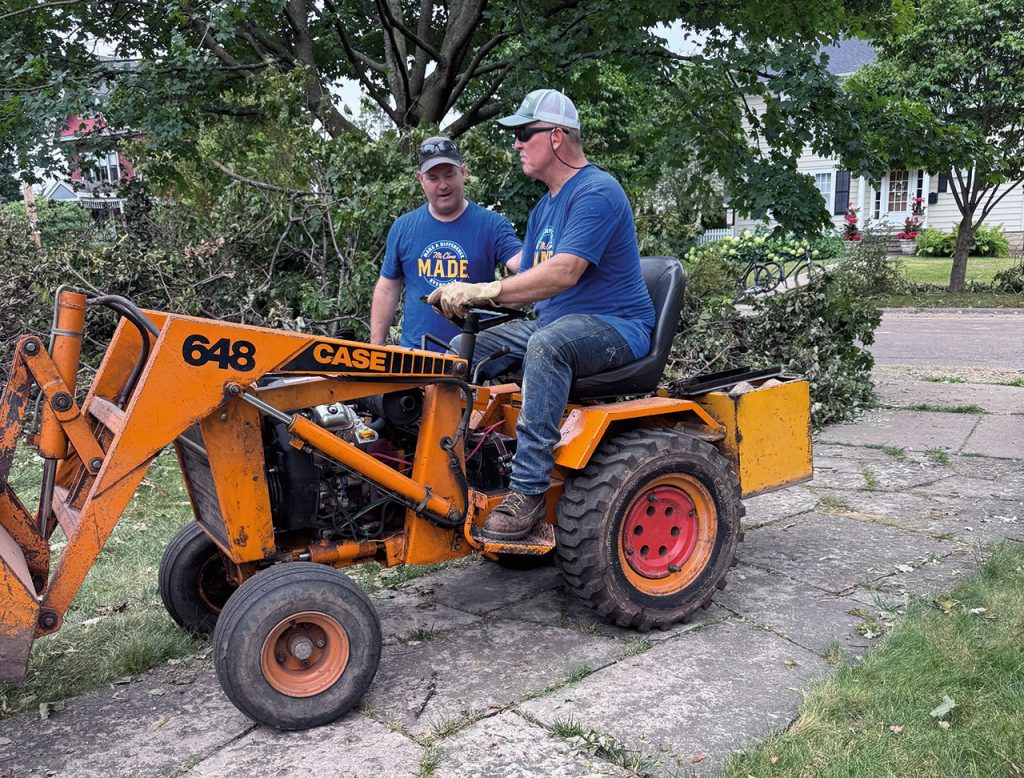
“What stands out most isn’t the damage,” Voss says. “It’s how quickly people came together. Employees, industry partners, subcontractor partners and community members stepped up immediately, helping us regain our footing and focus on serving others impacted by the storm.”
The good news for Miron is that most of its project sites did not have major structural damage; many were able to resume activity relatively quickly after cleanup and safety assessments were completed.
There’s the key word: Safety. It’s always the priority, Voss says.
“We communicate with clients as quickly as possible to provide accurate information about site conditions, potential impacts and next steps,” he says. “While safety assessments and cleanup activities can create short‑term delays, these steps are necessary to ensure work can restart safely and responsibly.”
Like Store Here Self Storage’s Anthony, the key for Miron has been community efforts.
Hear, hear, says Winnebago County executive Gordon Hintz.
“One thing that has been inspiring is the people from the community and around the state to help,” he says. “We’re going to live to fight another day, and we’ll see a lot of support.”
Editor’s note: An earlier version of this story incorrectly attributed comments about Miron Construction’s response to the July tornado. The online story has been corrected.
The tornado’s impact on business
The Fox Cities Chamber of Commerce conducted a member survey mid‑August to learn how the tornado affected businesses and collected 43 responses.
Key data points included:
- More than 20% reported their business closed or was significantly disrupted for one to four weeks
- Nearly 54% reported utility or technology disruption, and about 48% reported lost revenue
- About 34% said they expect little or no insurance or other assistance to aid with a total loss
- More than 12% noted their greatest recovery need is financial assistance, with 8% needing cleanup/repairs and marketing/customer communication
By the numbers
According to the National Weather Service in Green Bay, the EF‑3 tornado that blew through parts of Appleton, Fox Crossing, Neenah and Menasha on July 27 was the second such storm in the area this year.
- Time: 11:56 a.m.‑12:22 p.m.
- Maximum width: 1,800 yards
- Peak winds: 140 mph
- Distance traveled: 12.4 miles