

Soaring energy costs and uncertainty over utility rates can cause hardships for small businesses.
“Not only has the price of energy gone up, but so has the price of fuel,” says Lisa Geason‑Bauer of Evolution Marketing. “I’ve heard from other businesses who have said, we chose not to hire a new employee because we needed the money for that employee’s salary to pay down our utility bill because our utility bill went up as much as a new employee would have cost last winter season.”
Geason‑Bauer says the financial pinch and sustainability concerns are among the reasons she joined the Wisconsin Citizens Utility Board (CUB) as a small business member. As costs rise, she says, so has interest in what CUB can provide for small businesses.
“Education is part of our mission at CUB,” says Executive Director Tom Content. “We’ve been doing business webinars annually for several years, but it’s certainly a heightened time of focus because of all the interest in affordability in the economy and the economic conditions, as well as the whole concern about data centers and whether our energy prices at our own business or our home are going to be impacted by all these data centers.”
Content says something as simple as helping a business owner better understand their energy bill can produce results that drive down costs.
During a business webinar Oct. 1, representatives from CUB, Focus on Energy and Lakefront Brewery shared some of the resources available to small businesses.
“There are a variety of programs out there. We think there should be and will be more in the years ahead,” Content says.
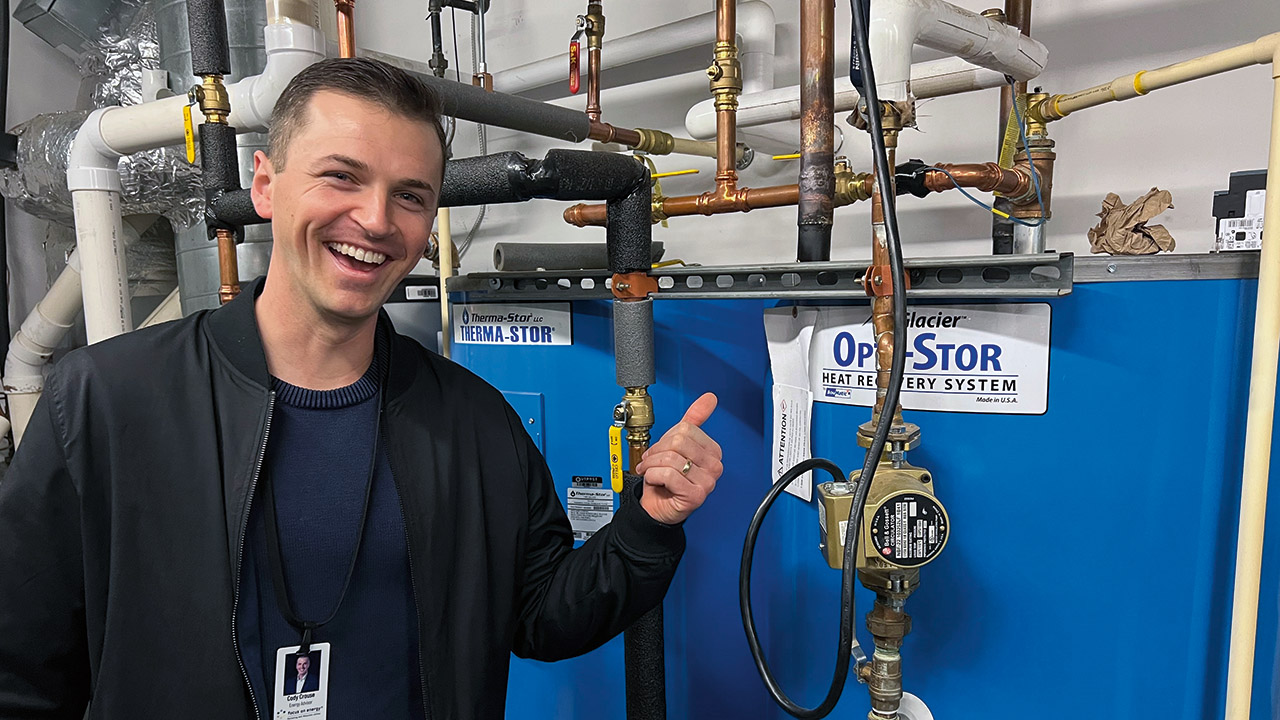
One of the easiest ways for a business to start is to reach out to Focus on Energy. Utility customers pay for Focus on Energy services and, according to Outreach Manager Cody Crouse, the biggest value it offers to businesses is as an energy advisor.
Businesses can access many services for free and benefit from site visits for energy assessments, phone consults, best practices and payback estimates for energy projects. Focus on Energy also has a web portal through which businesses can answer a few basic questions and obtain recommendations for projects and products.
“We can help you identify savings opportunities; we can help you verify proposed products and assist with rebate paperwork,” Crouse says.
Businesses can qualify for rebate funds through design assistance, discounts on energy efficient equipment purchases, custom incentives and rebates for projects such as improved insulation or lighting. Crouse says in addition to reduced energy costs, businesses often find projects provide better comfort and lower maintenance costs.
Kelsey Moses, compliance officer at Lakefront Brewery, says a good place for businesses to start is to connect with the nonprofit resources including Focus on Energy, the Sustainable Business Council and Clean Cities Wisconsin.
“Collect your data; you can’t change what you don’t know,” Moses says.
Geason‑Bauer agrees, saying, “Don’t just go buy something. You need to start benchmarking your data.”
Businesses also should recognize saving energy is a process that requires continual re‑evaluation. Lakefront, which has done everything from painting its roof white to recapturing heat from compressors, tackles new projects each year, Moses says.
“It’s not a one and done,” Geason‑Bauer says. “With how technology has changed so dramatically, we have so many more resources now that are also far more cost effective than they were just a couple of years ago.”
Forum set for Nov. 17
The Citizens Utility Board will host the Consumers Forum on Energy Affordability Nov. 17 from 11 a.m. to 3:30 p.m. at Park Hotel in Madison.
CUB members, policymakers and business leaders, including C‑Suite executives, are encouraged to attend.
The forum will focus on how to advocate for utility affordability and accountability from investor‑owned utilities.