

Soft landing?
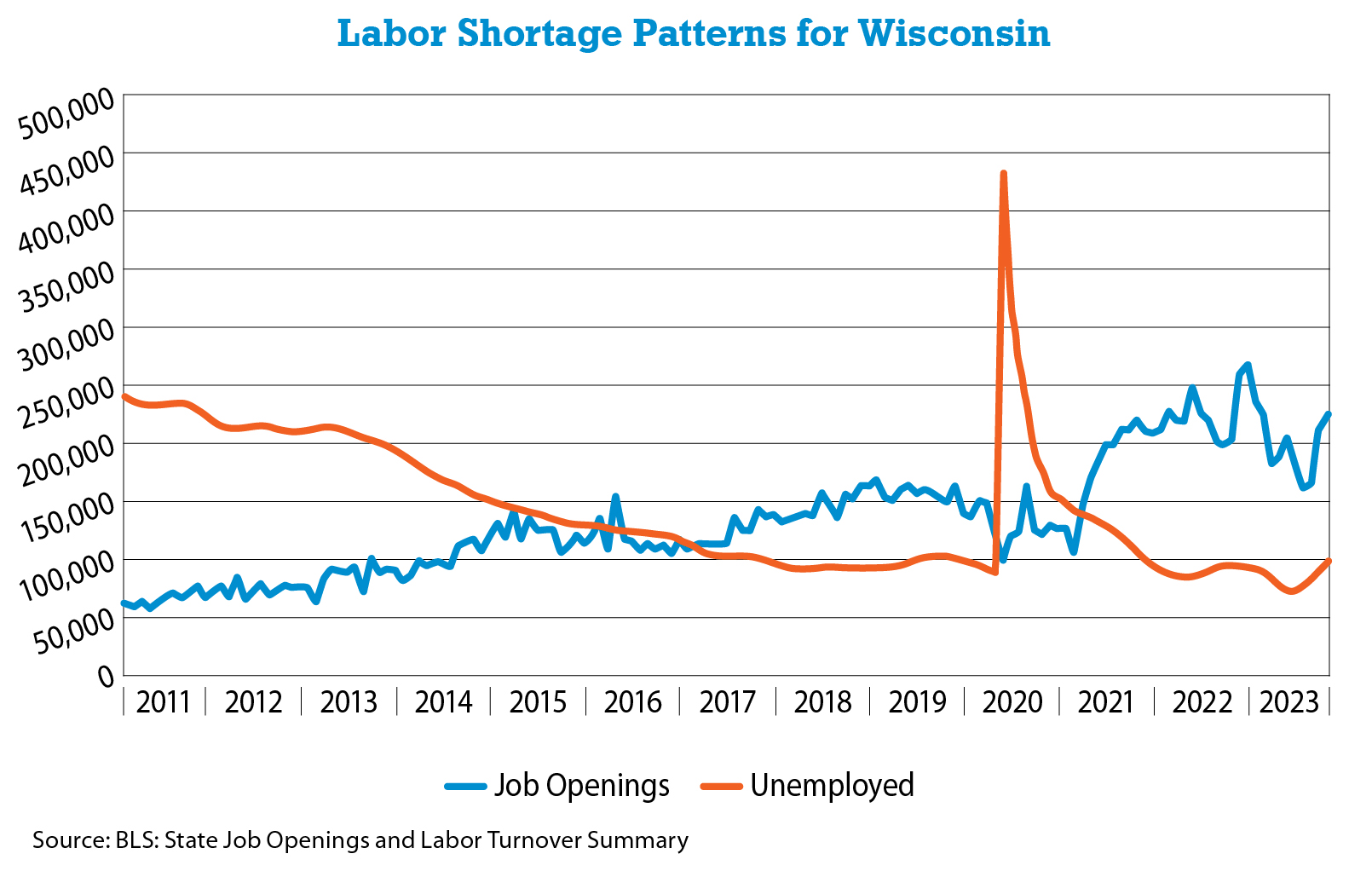
A recent analysis of data from the Bureau of Labor Statistics found that responses to Wisconsin’s chronic labor shortage are likely contributing to what experts seem poised to term a “soft landing” for the state’s economy.
“The shock of the pandemic to unemployment is clear as is the relatively quick recovery,” UW Extension analysts wrote in February. “Notice, however, that the number of job openings throughout the pandemic was relatively stable with a surge of new openings as we moved out of the pandemic shutdown. While the post-pandemic labor shortage appears much larger, it is more likely a reflection of trends in Wisconsin labor shortages that were present since early 2017: The pandemic appears to have simply caused a short-term disruption of longer-term trends.”
Source: UW Extension
Lightning strikes
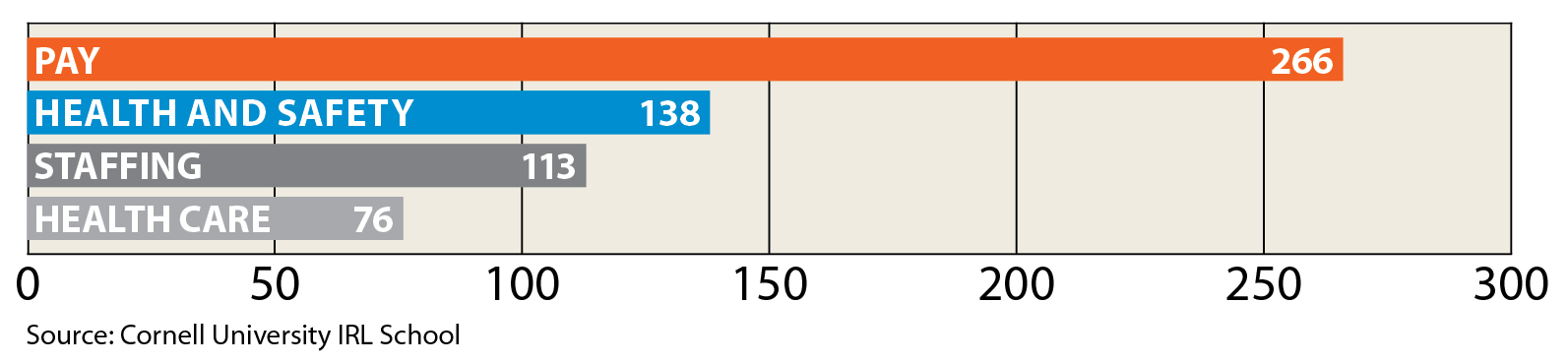
An analysis by the Cornell University IRL School and the University of Illinois School of Employment & Labor Relations tracked Americans walking off the job in 2023. The number of striking workers reached 539,000 last year, representing a 141% surge in U.S. labor strikes, spurred largely by the highly publicized demonstrations from UAW and the Hollywood writers.
Of the 470 work stoppages tracked, 46 were in the manufacturing sector (68,683 workers). Pay was the top reason the study identified for all strikes.
50.3%
The Institute for Supply Management’s March manufacturing index — up 2.5 percentage points from the previous month to surpass the 50% threshold that indicates the sector is in expansionary mode
Source: Institute for Supply Management
3.8 million
The number of U.S. manufacturing workers that will be needed between 2024 and 2033, with current projections indicating as many as 1.9 million of those may go unfilled due to national workforce challenges
Source: The Manufacturing Institute and Deloitte
4.1 million
The number of Americans turning 65 in 2024 — a record number that will continue to be matched annually through 2027
Source: Alliance for Lifetime Income
30%
The proportion of CEOs at large U.S. companies who say they are exploring options to shorten the workweek as a talent attraction and retention strategy