
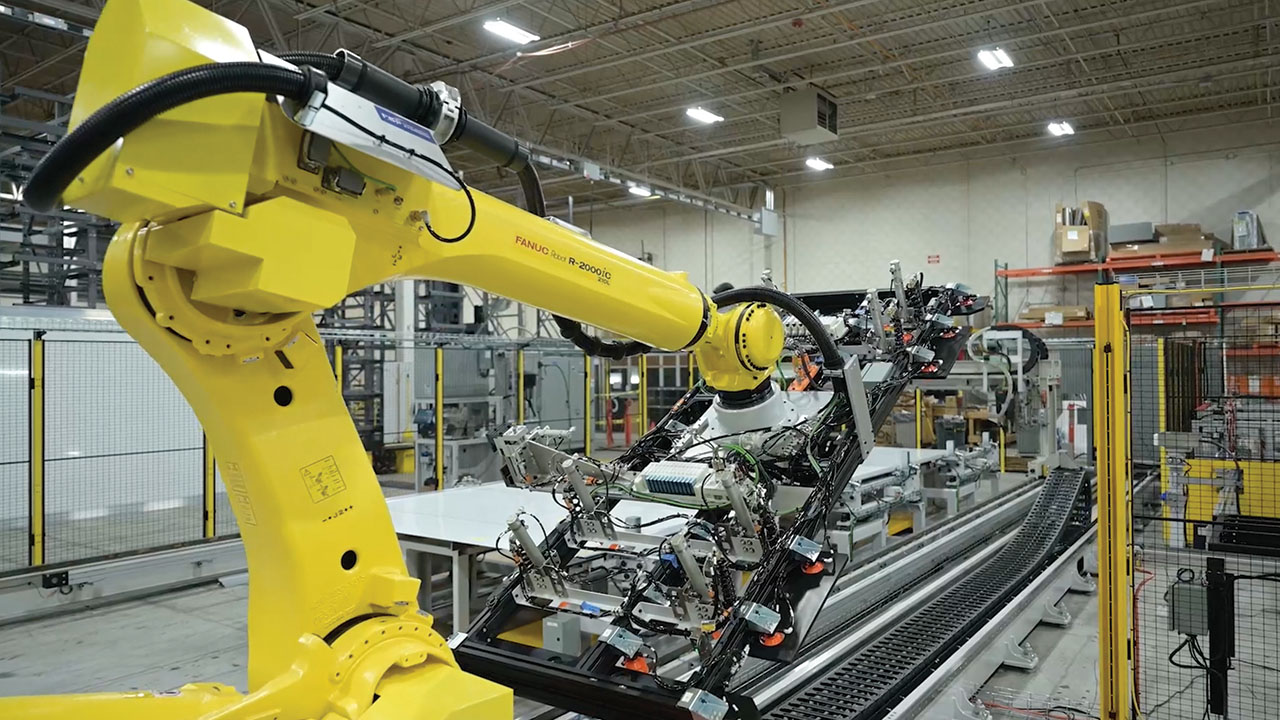

To err is human.
And that’s exactly the issue Marion Body Works set out to address last year when it began pursuing two game‑changing automation projects at its Shawano plant that have improved both product quality and employee morale.
“Humans were prepping the product, and they couldn’t get a consistent product doing that,” says Senior Director of Operations Zach Brockdorf, who joined the commercial truck body maker two‑and‑a‑half years ago to oversee commercial manufacturing.
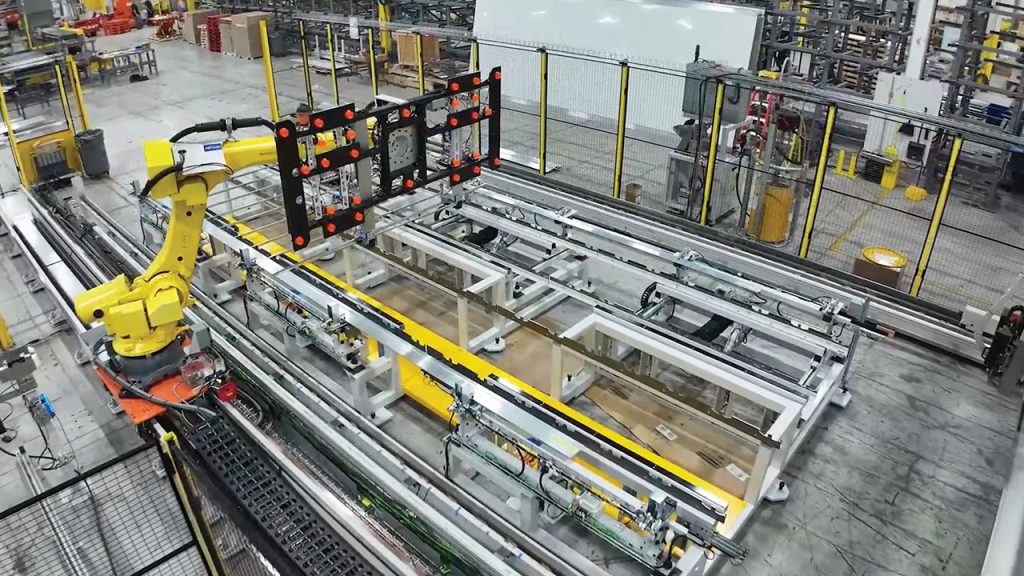
Last year, Brockdorf and his team successfully identified integrators that helped the company automate post wall assembly and create an automated floor assembly gantry system, or “floor drill,” to replace manual drilling and fastening. The floor drill system was installed in November 2025, followed by the wall automation cell, which became operational in April.
The technologies streamline operations while also positioning Marion as an industry‑leading innovator.
Many companies have automated wall assembly stations or cells, Brockdorf says, but Marion’s solution is the first to utilize a bonded automated cell. It also is likely the first automation solution in the truck body space that successfully integrates plasma treatment to improve adhesion and long‑term durability.
“We’ve refined the process of building truck bodies,” says Marion Body Works President Kevin Ignacio. “The fully automated wall assembly and plasma‑treated bonding put us at the forefront of innovation in the commercial truck body market.”
Like any good automation project, it was a direct solution to a pervasive problem.
When Brockdorf first joined the company, he says, “our backlog was extremely large, upwards of 600 units. That was a four to six-month lead time while our industry standard is about 12 weeks. So we weren’t in a good position. We were ultimately scheduling mandatory overtime for all of our employees, week over week, month over month, and people were just getting burned out from it.”
Automation relieved the pressure, but Brockdorf acknowledges the labor issue is a double‑edged sword: “It was received well, but it could go the opposite direction if there’s a lack of work,” he says.
Representatives from one of Marion’s integrators, who were asked not to be named for proprietary reasons, say Marion was ready to take the automation leap primarily because it did indeed have that buy‑in and support from employees in all aspects of the business.
“We have some clients [where] you can tell that the management wants something to happen, but maybe the production people don’t — people are afraid they’re gonna lose their job, stuff like that,” a company representative says. “We really need the production people or people that help us, and we had that with Marion.”
Relieving a burned‑out workforce was just one of the many benefits of Marion’s automation project, Brockdorf says — quality, throughput and safety among the most noteworthy.
“If you looked at our plant, there were really two hot spots where our safety incidents were occurring: the floor cell and the wall cell,” he says.
Since automating the wall cell, there have been zero recorded incidents.
Employees on Marion’s shop floor have embraced the opportunity for their jobs to change in meaningful ways, too. Instead of engaging in repetitive and potentially dangerous tasks, they have been able to take robotics and automation training, including programs with industry partners and technical colleges, to support Marion’s transition to advanced manufacturing. It has also allowed the company to add new skills‑based operator and technical positions.
“I always tell clients, we need people on your side who are willing to learn,” the integrator says. “It’s somewhat intimidating, electronics controls and computer‑based stuff. Not everybody is going to be into that, but we need that because eventually we’re going to take the training wheels off.”
Brockdorf says he has seen Marion’s employees “level up” in impressive ways.
“I think we’ve certainly gained a ton of confidence, and we’ve reorganized our teams to be more successful,” Brockdorf says. “It’s cool to be on the shop floor and have someone stop you and say, ‘Hey, I can’t tell you how much I appreciate this opportunity.’ It kind of sends chills down your spine.”
While Brockdorf says automation wasn’t necessarily part of his marching orders when he was first hired at Marion, he sees it as an ongoing focus moving forward. The projects are part of a broader strategy to modernize operations and support long‑term growth, with additional automation projects planned at other facilities.
And Brockdorf looks forward to the next automation effort, to which he will bring what he learned from this first experience. In addition to prioritizing projects that enhance safety, quality and productivity, one of his biggest pieces of advice to fellow manufacturers is to identify projects that require no manual intervention.
“The less customized, the more success you’re going to see,” he advises.
Brockdorf says Marion’s willingness to innovate will serve it well into the future.
“We had safety incidents piling up, overtime was maxed out,” he says. “So a company that’s willing to step back and say ‘What can we do? How can we make this an employer of choice?’ [is huge]. Maybe it seems a bit odd to go down the automation path to make it an employer of choice, but people truly appreciate it.”