


Brad Cebulski, owner and founder of the Appleton social media marketing agency BConnected, says it’s time for businesses to stop overfunding their organic content efforts and come to terms with the new reality.
“In today’s environment, it is unrealistic to think that you can grow and scale your business substantially by relying solely on organic posting,” Cebulski writes in his Summer 2025 State of the Industry report, which focuses on emerging trends for the last half of the year.
Savvy marketers know that today’s social media success relies on both paid advertising and valuable organic content. Yet, Cebulski says, most businesses overfund their organic content efforts, whether it’s with time, money or both.
“This makes sense; it’s easy,” he writes. “You can tangibly look back and see the content, engagement and vanity metrics around your efforts. But, over time, it becomes increasingly difficult to see growth, conversions, results and return on investment.”
How to allocate social media budget is one of the most common questions Cebulski receives, and his advice is pretty straightforward: “If you want to drive real results, you should start by dedicating at least as much budget toward your paid advertising budget as you do toward your organic social media management efforts.”
Whether it’s Facebook, Instagram, TikTok or YouTube, organic reach on major social platforms continues to decline as the landscape shifts toward a pay-to-play model. For business pages specifically, content that performs well organically typically doesn’t increase follower counts, and having an abundance of followers no longer means your content reaches more people.
Taking a 50/50 split of your social media budget is an approach Cebulski says can help businesses of all sizes reshape their thinking on social media advertising.
Companies with in-house marketing teams should divide their total social media budget in half, with one portion covering creative work, staff hours and external vendors, while the remaining half funds paid advertising efforts.
Small businesses and entrepreneurs handling social media themselves should estimate a weekly time investment, multiply it by a reasonable hourly rate, then match that amount for paid advertising spend.
“What’s most important is that you don’t pick a budget and settle on it because it’s easy,” Cebulski writes. “It’s essential to optimize your advertising spend as you continue to test and grow.”
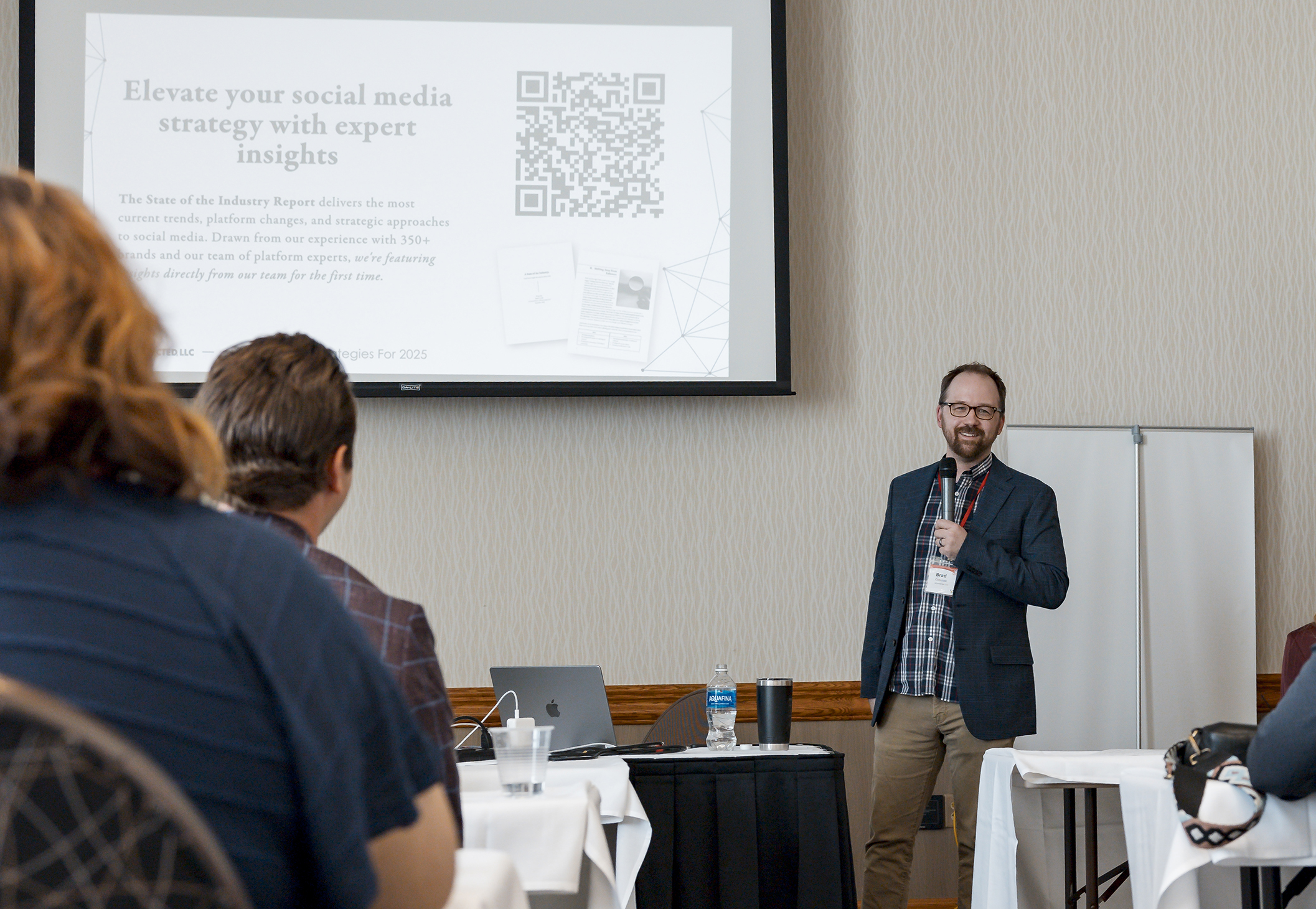
Three more insights from BConnected’s State of the Industry report:
Hashtags are (nearly) dead
Like follower counts, hashtags are becoming increasingly less relevant as sophisticated machine learning is able to analyze content’s topic, tone and wording without cues (aka hashtags) to target audiences.
Use AI strategically
AI to optimize workflows = good. AI to generate bland, inauthentic content = bad. “Use AI to help propel your work forward, but not to replace the individuality that defines you and why people choose to do business with you,” Cebulski writes.
Content is king
Challenge the old belief that frequent posting or specific timing drives success. Consistent content that provides real value to your audience will beat social media “hacks” any day.