


Manufacturing companies in Northeast Wisconsin have known for a while that they need to step things up if they want to compete for skilled talent — and being externally recognized for their company culture is one way to attract notice.
Insight Publications and Workforce Research Group honored Wisconsin’s Best Places to Work in Manufacturing during an event in Green Bay Nov. 13, highlighting companies that scored the highest in this first-ever independent survey. The event, presented by Werner Electric Supply, showcased the ways that regional companies are making their companies places where people look forward to coming to work each day.
So what makes a great manufacturing workplace in 2024? Experts on company culture say it takes a focus on employee wellness and offering the kinds of benefits that today’s young recruits are seeking — but mostly, it’s about being open to change.
This focus on company culture has become more imperative as newer generations of workers are less willing to stay with companies where they don’t feel valued and happy. But workplace wellness is also a practical concern in a time when mental health concerns have grown.
Hartford’s 2023 Future of Benefits Report found that 44% of Gen Z workers report feeling depressed or anxious at least a few times per week. “So we’re seeing that younger generation of people that we’re trying to attract to our workplaces right now struggling,” says Megan Zimmerman, outreach program director for NAMI Fox Valley. “And is that because of COVID? I don’t know, but we’re definitely seeing a shift.”
Why it’s worth investing in culture
Other stats support the idea that companies need to place a greater emphasis on wellness, engagement and communication:
- A Forbes 2024 report shows 50% of workers have lower productivity and higher stress from ineffective communication in the workplace.
- An Upwork report said that 71% of full-time workers were burned out because of higher demands.
- Only about 32% of workers feel engaged at work, according to a 2024 Gallup report.
- Gallup also said 51% of workers are keeping an eye out for a new job — but 42% of turnover is preventable.
When you calculate the cost of replacing these workers — Gallup says for leaders and managers, it’s around 200% of their salary; for professionals in technical roles it’s 80% and for frontline employees it’s 40% — spending time on improving communication and employee engagement starts to look better.
When burnout happens

Employees can get burned out when the right elements aren’t present in a workspace, says Kelly Bubolz of KB Training Connections. “For employers, it’s work overload,” Bubolz says. “It’s not validating through recognition programs, or mismatch of roles — you’re putting people into positions that they’re not prepared for or that their just natural energy is not a good fit for.”
For individuals, she says it’s about what’s in your control: “How are you dealing with healthy conflict, or are you avoiding it? Are you overpacking your days? Are you blaming it on work but you really don’t have a life at home?”
Bubolz says if a company is at the point where it is noticing people who are tired, have excessive weight changes or even hair falling out or skin problems, employees are already deeply disengaged. Companies can help turn it around by having one-on-one check-in meetings — even if that means pulling someone off the floor for a 15-minute conversation.
“What we don’t realize is the expense of having that machine down because someone leaves, because someone is sick and they call in absent,” Bubolz says. “So when you do one-on-ones, it hits all the marks. They know their direction; the communication is there. They’re building trust with their supervisor or manager.”
One local company working with Bubolz started doing one-on-one meetings with its team and went from 40% turnover to turnover in the single digits, she says.
With eight out of 10 employees at risk for burnout, it’s a problem that’s all too prevalent, she says. In manufacturing, it’s tough to think about slowing down — “the only choice in the working class is that you have to go to work. How do you pay your bills without that?”
It’s up to companies to provide the right tools and communication to create agile teams. Yet the National Talent and Development Association says that less than 1% of company revenue is spent on training and development, Bubolz says.
“Isn’t that crazy? Because everything is changing right now,” Bubolz says. “The people you send out to trade shows and conferences or a leadership course, when they come back, they are so jacked up on energy and ideas and creativeness and innovation.”
Bubolz’s own experience demonstrates why the right training is significant: When she moved into a leadership role without much support, the burnout began. “I was a female on a team with a bunch of (age) 50 and up males. I couldn’t talk about my struggles at home. I couldn’t talk about any of the struggles with being a new parent.”
Her health problems began with migraines and quickly worsened, culminating in a dramatic weight loss from digestive failure. “I couldn’t even pick up my newborn baby, my third child,” she says. Finally, a holistic health expert told her she was in burnout and estimated she was months away from a heart attack. “And what I realized then is burnout is a chronic condition,” Bubolz says.
When companies find the right combination of tools and training, getting communication right, building trust and creating smooth workflows, “you’re in the sweet spot, because you just hit the engagement factors, you hit the burnout prevention factors,” Bubolz says. “And again, you’re attracting the best talent, not by money and benefits, which is temporary, but by peer human behavior or motivation.”
Why a focus on mental wellbeing is key
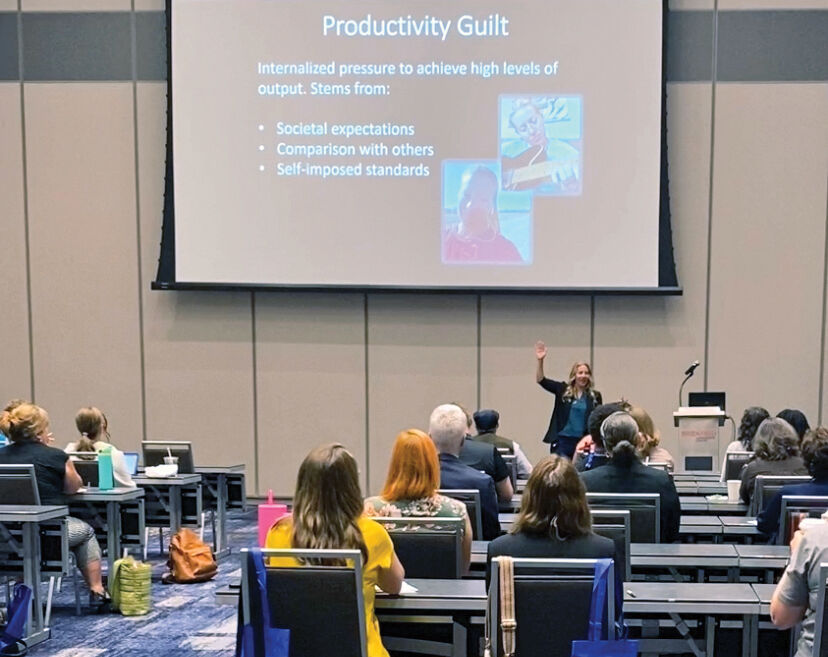
NAMI Fox Valley works with companies on how they can better promote a culture of mental wellness and wellbeing, says Zimmerman.
“Particularly in the manufacturing world … we talk a lot about this idea that taking care of your mental wellbeing doesn’t have to be an at-home thing,” Zimmerman says. “I feel like people think that, ‘oh, my workday is done, now is the time where I enact the coping skills and fill my cup.’ But the fact of the matter is, we’re at work for the majority of our day, right?”
De-stressing at work might mean taking a 10-minute walk outside, listening to music while you’re working or drinking enough water. Companies can help by encouraging these behaviors, as well as offering fulfilling benefits like PTO for volunteerism or flex time to attend children’s events.
Company leaders also can ensure employees take the time off that they were promised when they were hired.
“What we run into is these companies try to attract you by saying that, oh, you get four weeks of vacation,” Zimmerman says. “And then when you’re actually out there doing the work, you’re like, there’s no way I would ever be able to get my four weeks of vacation in.”
Companies also can encourage people to utilize underused EAP resources and to destigmatize seeking mental health resources through efforts such as peer sharing.
Chronic stress can lead to more serious issues like anxiety or depression, and that can lead to absenteeism — or “presenteeism” wherein workers are disengaged and not paying attention. “That’s when accidents happen,” Zimmerman says.
Additionally, promoting a culture of openness and accepting vulnerability can be key, and changing the culture really starts with the C-suite. “Our top dogs at companies, they have to walk the walk too, right?” Zimmerman says. “When I’ve seen companies that I would give a gold star to, in terms of doing a great job promoting a culture of overall wellbeing including mental health in their workplace, I see buy-in from all levels.”
How companies know when they’re getting it right
Retention rates can tell a company a lot about how it’s doing, but surveys can be a great tool as well. Workforce Research Group, which created and manages the Best Places to Work program, now compiles about 45 different lists nationwide and in the U.K. and Canada.
Companies are scored 80% on employee engagement data and 20% on the employer survey of benefits and other offerings.

Companies participate in this program because “having that brand as a Best Place to Work is incredibly valuable for the workforce development and retention,” says Peter Burke, president and owner of Workforce Research Group. Secondly, he says, even if companies don’t make the list, the employee engagement survey helps provide benchmarks that allow companies to figure out “OK, what do we need to know about our workforce and our employees so that we can get better?”
Workforce Research Group regularly reviews its questions and updates as needed — for example, an early question asked whether companies offered direct deposit, which is kind of a given now. Overall, questions are aimed at engagement, or “how emotionally connected are the employees to this organization,” Burke says. Top impacts on employee engagement are believing in the organization’s leadership, liking what you do for your organization and being treated with dignity.
For a company to make the list, that percentage must be at least an average 80% of workers who agree with statements such as “this organization’s culture allows me to do my best work” and other impact areas. For the manufacturing honorees in Wisconsin this year, the average is about 90%.
It can also be helpful to see the difference between who’s offering what — an example is that 78% of this year’s winners have a strategy to recruit and retain Gen Z workers, whereas just 40% of non-winners do. “That, to me, is significant,” Burke says. Another is that 50% of the winning companies have profit-sharing plans, while just 20% of non-winning companies do. But when things like PTO, fun company activities and other benefits are somewhat similar, it shows that a great place to work is about something more.
What some local companies are doing
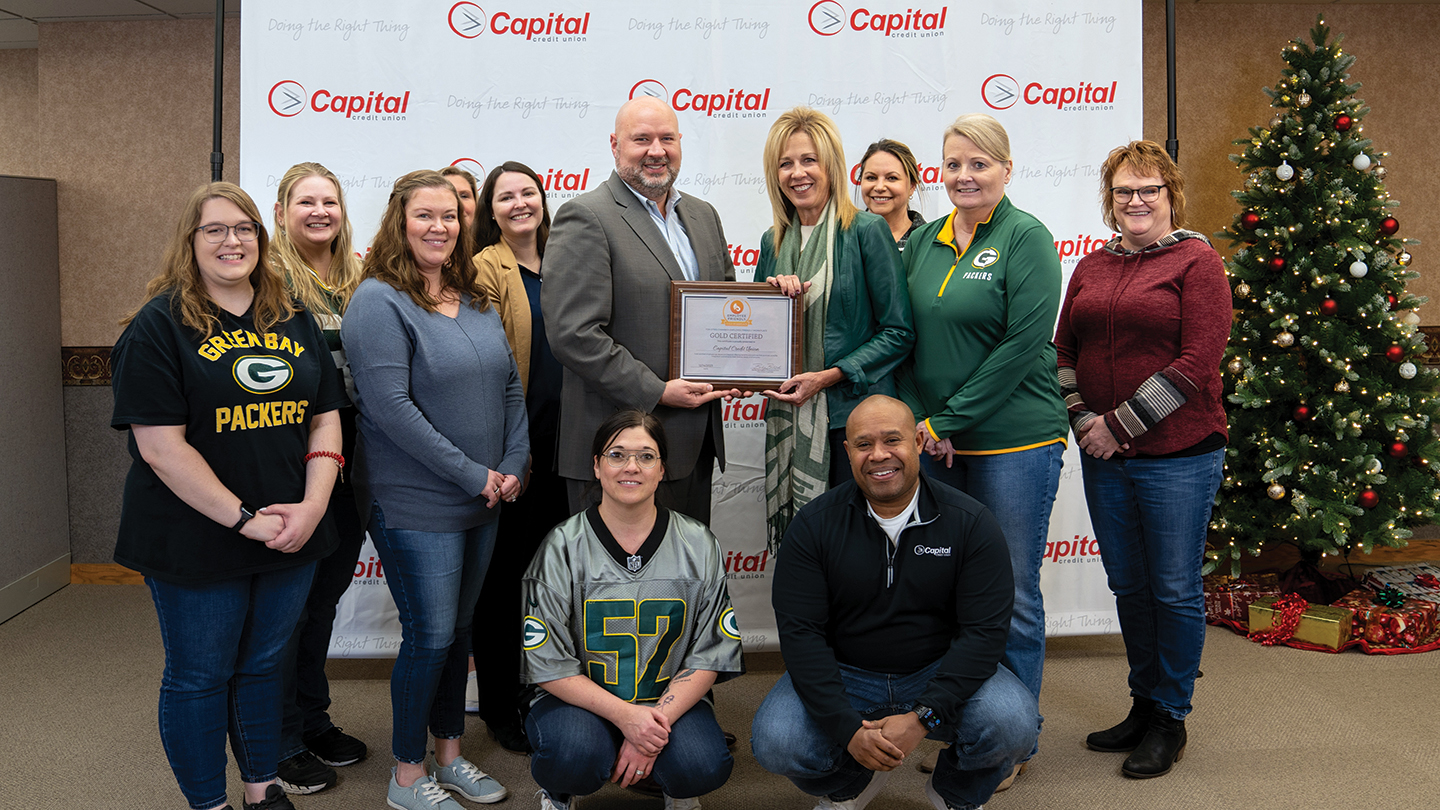
Eric Broten, vice president of business growth and development for the Fox Cities Chamber, administers the chamber’s Employee Friendly Workplace program, which started in 2019.
“We have so many great employers here in the Fox Cities, and we thought, ‘How do we draw attention to our amazing employers and what they’re doing to set themselves apart?’” Broten says.
The chamber worked with HR leaders throughout the Fox Cities to create the certification program and the survey, which includes four main categories of scoring: paid leave, flexible work schedules, health and wellness support, and financial support and perks.
“[What] we want to highlight is, what are the unique things that set your business apart? What are you doing differently than everyone else?” Broten says.

Manufacturing companies in particular have had to stretch their thinking when it comes to offering perks like flexible workplaces for employees. Some companies have created part-time shift options, or a shift that starts after kids get dropped off from school, for example.
Companies that want to apply for the chamber’s certification can start with a call to the chamber, Broten says.
“What I tell people is if you’re the company that’s still doing just standard benefits — like you get two weeks’ vacation, we have a 3% match and six paid holidays — if you’re just kind of doing the standard old-school thing, you won’t qualify for this program,” he says.
The self-scored survey also can help companies to see where they may be lagging and where they may have some opportunity to increase their scores. The chamber verifies benefits through documentation such as employee handbooks.
First and foremost, Broten says, the program focuses on what it’s like to work at your company.
“So, yes, we want to know what your benefits are,” he says, “but a lot of our questions are tied back to culture and what are you doing to help create that good atmosphere [where] people want to come to work?”
Employers need to be willing to take that outside-of-the-box approach and try new things, Broten says. Some of the more unusual benefits he’s seen include scholarships offered to children of employees, on-site massages and an employee “best beard” contest. More traditional and generous ones have included student loan repayment or a free health care clinic for all employees.
“Not everything might end up working. If what you’re doing now isn’t working, you have to be able to look at making a change somewhere,” Broten says. “I’m sure there are things we’re doing today that 10 or 15 years ago would seem completely silly to do, but they work. Every great idea starts somewhere, and I think sometimes people have to take a chance.”
On the web
- Insight’s Best Places to Work in Manufacturing – Wisconsin: insightonbusiness.com/bptw
- NEW Manufacturing Insights podcast: insightonbusiness.com/podcasts
- Fox Cities Chamber’s Employee Friendly Workplace Initiative: foxcitieschamber.com/employee-friendly-workplace
- Kelly Bubolz: kbtrainingconnections.com
- NAMI Fox Valley: namifoxvalley.org