

Two years of strategic planning, which included countless conversations with local businesses, helped the Kewaunee County Economic Development Corporation identify the greatest challenge facing its local business community: a shortage of talent.
“We aren’t unique in that, but all of our local businesses identified [the lack of] talent as a problem,” says Ben Nelson, who serves as KCEDC’s executive director. “We consistently have one of the lowest unemployment rates in the state. Our labor participation rates are the highest they’ve ever been in history. All of our metrics were pointing toward people and talent as our top priorities.”
Nelson says many business leaders identified housing as a potential solution to attract more workforce to the county. These conversations led to the development of Project Homestead, which stands for Housing Opportunities for Multifaceted Economic Sustainability Transformation Enhancement and Affordable Development. This new program will address workforce barriers such as housing.
The project was inspired by Sheboygan County’s Forward Fund — a $10 million public-private development investment by Johnsonville, Kohler Co., Masters Gallery Foods, Sargento Foods and Sheboygan County.
“We wanted to do something similar in our county from a rural standpoint,” Nelson says. “We’re hoping we will create a model that other rural economic development organizations can utilize to advance their efforts.”
Kewaunee County was recently one of 10 rural communities throughout the state to receive a grant under the Wisconsin Economic Development Corp.’s Thrive Rural program to promote community development, increase affordable housing and develop a self-sustaining funding strategy for future growth. KCEDC will receive $25,000 in 2024 and 2025, along with two years of technical assistance in planning and grant writing, as well as other services typically employed by larger communities.
Initial efforts focused on affordable housing will target the county’s three largest communities: Kewaunee, Algoma and Luxemburg. In addition to the Thrive Program grant funding, Nelson hopes to leverage private investment and TIF funds to start identifying locations for housing developments in these communities.
“There’s been a paradigm shift post-COVID where economic development organizations aren’t chasing smoke stacks anymore,” Nelson says. “Historically our county has kind of waited for the white knight on a horse to come develop here. Instead of waiting for other people, we are putting ourselves in the driver’s seat and leading that charge on our own.”
Door County Community Investment Fund
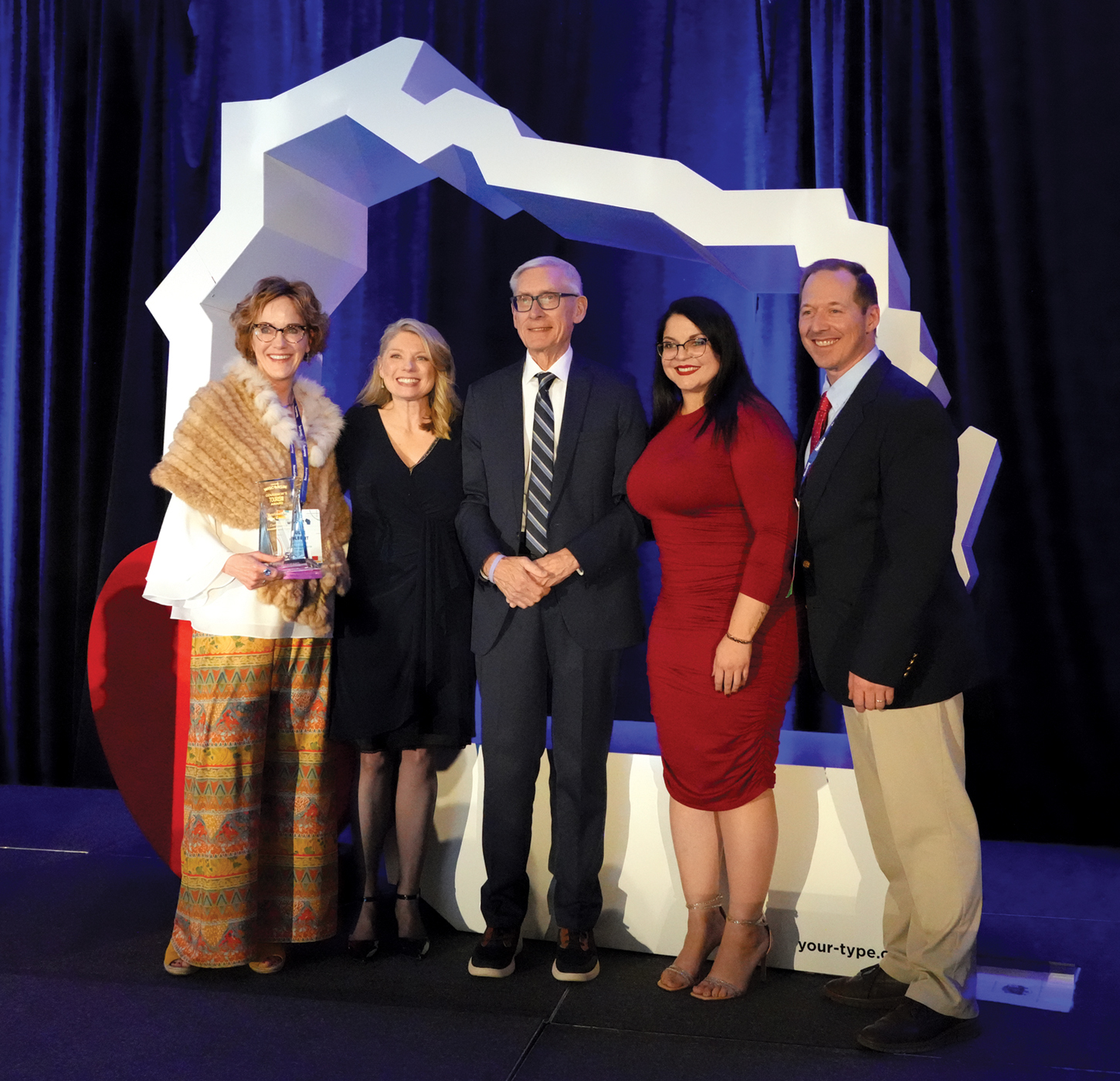
The Wisconsin Department of Tourism honored organizations making strides in the tourism industry during the 2024 Governor’s Tourism Awards in March.
“These hardworking partners help drive the success of Wisconsin’s tourism industry, which is a critical economic engine for our state, generating $23.7 billion in economic impact,” Gov. Tony Evers said during the Wisconsin Governor’s Conference on Tourism in Lake Geneva.
Among the honorees was Destination Door County, the tourism marketing organization for the 19 communities that make up Door County, which earned the Innovation Award for its Community Investment Fund that launched in 2023. The program provides grants to nonprofits and municipal governments for projects that simultaneously improve the quality of life for community members and improve the visitor experience.
In 2022, the Door County lodging tax increased from 5.5% to 8% to generate additional revenue that would support things like parks, streets and emergency services.
“Because of the large increase of visitation to the county, there had been a lot of strain on our tourism infrastructure,” says Julie Gilbert, president and CEO of Destination Door County. “Understanding that our community and residents were concerned about that, we knew it was time to change some of our programming to include investing in tourism infrastructure.”
Last year, Destination Door County awarded $828,917 to 18 projects to do just that. The grant has completed four rounds, the latest of which were awarded in February. “We have reached just over $1.2 million in grant dollars,” Gilbert says.
The funds have helped projects to improve and enhance public parks and expand outdoor recreation assets. For example, Friends of Peninsula State Park was awarded $150,000 to create an 8- to 10-mile mountain bike trail with beginner and intermediate loops as well as an advanced gravity run. The village of Sister Bay was awarded $90,000 for a multijurisdictional trail. Door County Land Trust received $75,000 for a trail bridge at Bayshore Blufflands Nature Preserve. Door County Historical Society received $10,000 for the Eagle Bluff lighthouse restoration.
“The people who live here are really committed to preserving the history, the culture and the opportunity found throughout Door County,” Gilbert says. “It allows us the opportunity to talk about the positive impact of the visitor economy on the county and helps our residents continue to experience the things they live here for.”
Other notable developments in Door and Kewaunee counties include:
- In March, a new child care entity, Children First Development Center, purchased the former Door Community Child Development Center facility in Sturgeon Bay. With an estimated June 3 opening, Children First Development Center will be licensed to care for children 6 weeks to 4 years old, with a capacity of up to 76 full-time spots. “We’ve seen some closures of child care centers in the county, so it’s been a saving grace,” says Devin Vandertie, director of business development for Door County Economic Development Corporation.
- Three of the Wisconsin Department of Transportation’s northeast region road construction projects will take place in Door County. Resurfacing approximately 19 miles of State Highway 42 accounts for two of the planned projects scheduled to take place this spring. The third project, a structure replacement for portions of STH 57, will take place over the next year.
- “Sister Bay and Sturgeon Bay are two places really driving housing developments,” says Vandertie, who cites Sturgeon Bay’s Geneva Ridge subdivision as an example. The subdivision broke ground last fall and will eventually have 24 single‑family homes.
- Renard’s Cheese is undergoing a multistage expansion to increase its production from 3 to 12 million pounds of cheese each year. Construction of a new 50,000‑square‑foot facility will begin this fall and is the third of three expansion phases at its location in the town of Clay Banks.

