
Photographs by Shane Van Boxtel, Image Studios
Styling by Shalene Enz
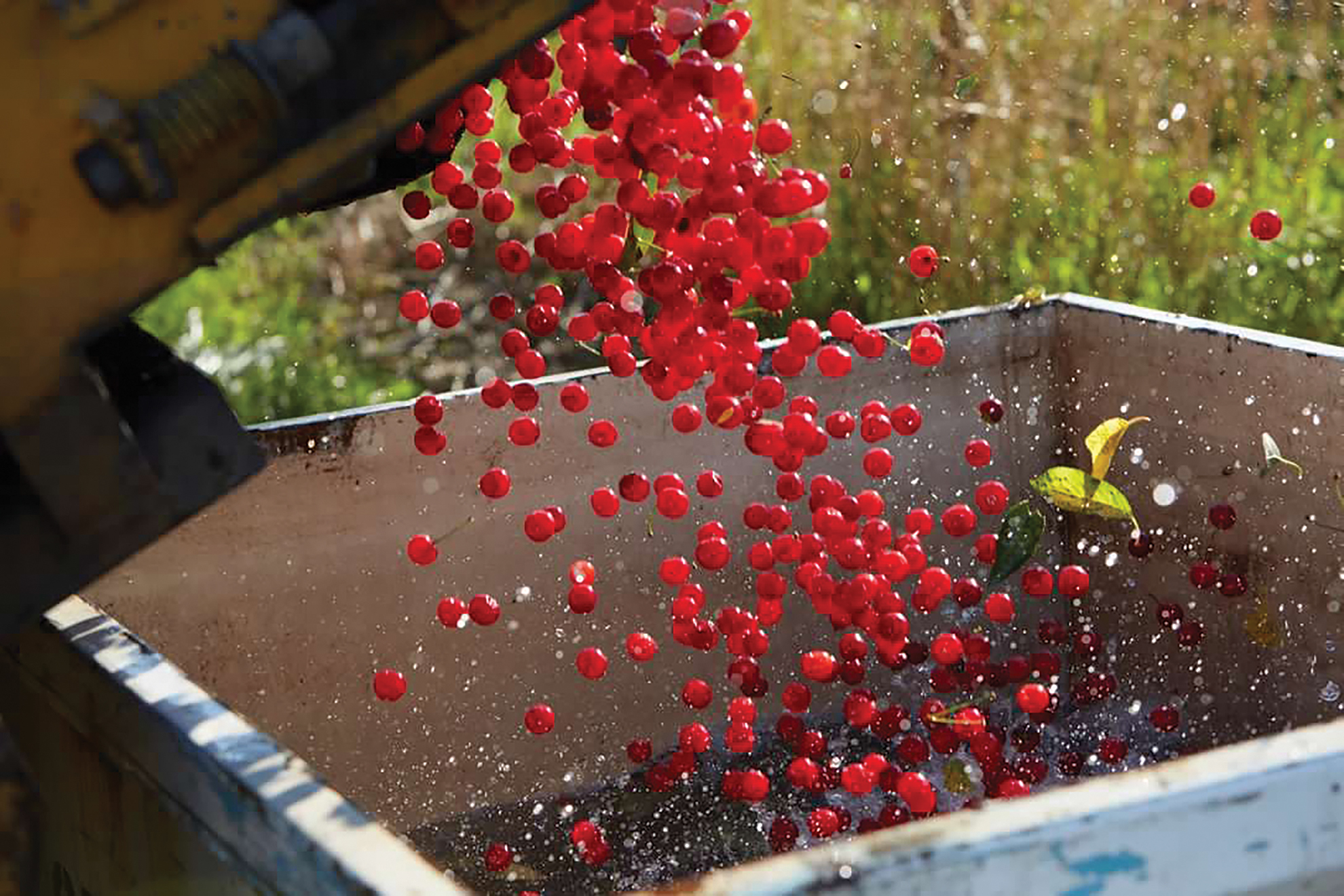
Things are really shaking at Seaquist Orchards — quite literally. If you happen to pass by any of the cherry producer’s 1,300 acres of orchards spanning from Sturgeon Bay to Sister Bay over the next four weeks, you’ll see harvesting machines shaking up to 16 cherry trees per minute, catching the perfect red orbs that fall from the branches.
Last year Seaquist harvested 9 million pounds of cherries, making up roughly 90% of the state’s tart cherry production.
Fifth-generation cherry grower Jim Seaquist has compared the Door County cherry harvest to preparing for the Super Bowl. Harvesting the fruit at peak ripeness is crucial, so time is of the essence.
Historically, harvest has taken place mid-July to mid-August, but this year’s early spring will have that window starting by the Fourth of July, Jim estimates. He and his son, Justin, who is part-owner in the business, move into temporary housing near their Egg Harbor processing plant during these four weeks.
“It’s pretty full-out. You can’t even drive a half hour home when you’re that intensely tired,” he says. “It takes everything you have for that period of time.”
Cherry pioneers
Jim and his wife, Robin, operate not only the largest cherry farm in Door County, but the oldest in operation as well. Jim’s family emigrated from Sweden in the 1860s. His great-great grandfather Anders Sjoquist (which was later changed to Seaquist) settled near Ephraim with his wife, Sophia, and their two sons.
They were among Door County’s early European settlers who quickly realized the land wasn’t suitable for farming many annual crops. Swiss immigrant Joseph Zettel is credited for planting the first successful apple orchard in 1862, proving that fruit growers may stand a chance against the peninsula’s shallow, rocky soil.
Local farmers, encouraged by the success of Zettel’s apple orchards, experimented with growing a variety of fruits, including strawberries, plums and pears. But their triumph would be tart cherries, which thrived in the challenging soil and cooler, late springs.
In addition to the superior drainage offered by the peninsula’s shallow soil, the lake effect from Green Bay and Lake Michigan results in a temperate climate and low risk of the late spring frosts that are detrimental to fruit. All these factors combined have resulted in Door County being nationally recognized as a fruit-producing region.
The Seaquist family’s first commercial orchard was planted in 1911, and cherry orchards in Door County were growing successfully by the turn of the 20th century. This is also when the first Montmorency cherries, a tart variety, were introduced in Door County.
“The history of the cherry industry is so strong here,” Jim says. “In the 1940s, there were 700 people doing this. All the farms were these little back corners of dairy farms where the ground wasn’t good and was too stony to plant annual crops, so they would grow four or five acres of orchard.”
By 1950, the peninsula’s cherry industry was booming with its roughly 700 growers producing up to 50 million pounds of cherries annually, according to the University of Wisconsin’s “Wisconsin 101” history project.
Almost exactly 100 years to the day of his great-great-grandfather settling in the area, Jim was adopted by his parents in
1962 and officially joined the Seaquist family’s cherry legacy. He grew up helping his father and tagging along to industry meetings in Michigan, the epicenter of the U.S. cherry industry.
“I knew about the time I was a sophomore in high school that this is what I wanted to do,” Jim says. “I had the blessing of a dad who could do anything and a mom that told me I could do anything. It was probably a little dangerous.”
After high school, Jim attended Michigan State University. Armed with a degree in horticulture, he returned to the family’s 100-acre orchard in 1982 and the following year formed a partnership with his father, Dale Seaquist, buying a 50% share in the farm business.
Jim describes the 1980s as a quiet period for the family business, although in 1985 he and Robin married. In 1987, Jim and Robin built the iconic Seaquist Orchards Farm Market in Sister Bay.
By the late 1980s, the Door County cherry industry was oversaturated. Jim set out, with guidance from some veteran local farmers, and met with every grower on the peninsula to gauge interest in buyouts to reduce production.
“We aggressively went after a lot of these farms to either buy or lease them over that period from 1990 until 1994. We literally went fivefold in our production in that period of time,” Jim says. “My dad thought we were crazy to run farms that were 20 miles away [from home], but it worked and we’ve grown.”
This included major orchards such as Reynolds Brothers Orchard in Sturgeon Bay, Eames Farm in Egg Harbor, Ellison Bay Orchard Company and Sturgeon Bay-based Martin Orchards, which was the largest tart cherry orchard in the world in the 1940s.
“The majority of that acreage on all of those sites that were farmed then, we’re farming now,” Jim says. “These trees have a 30-year life. I’ve never been one to waste a good orchard that’s got life in it. To me, that is really a cool thing that we’re saving that history.”
Shaking acres
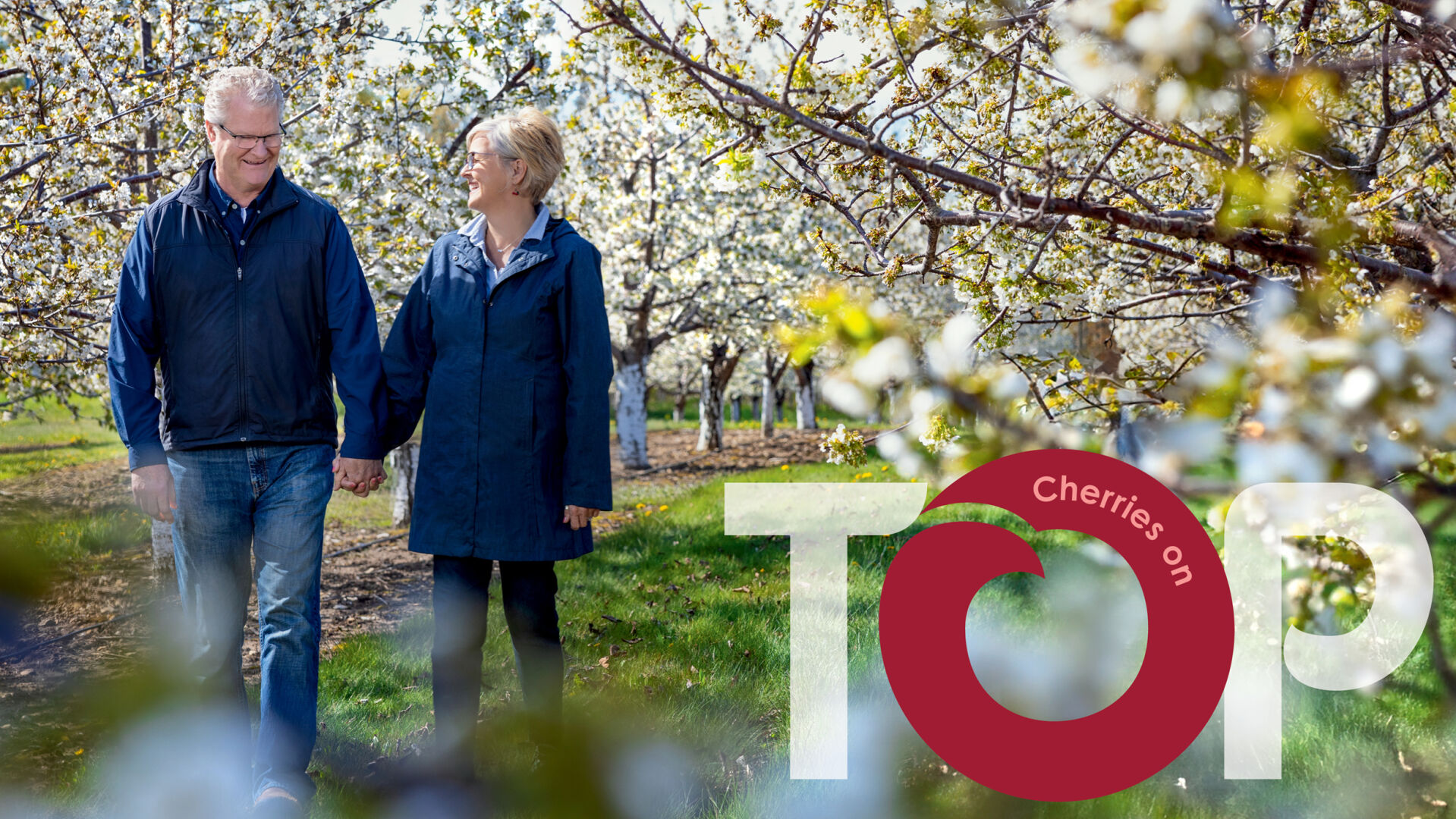
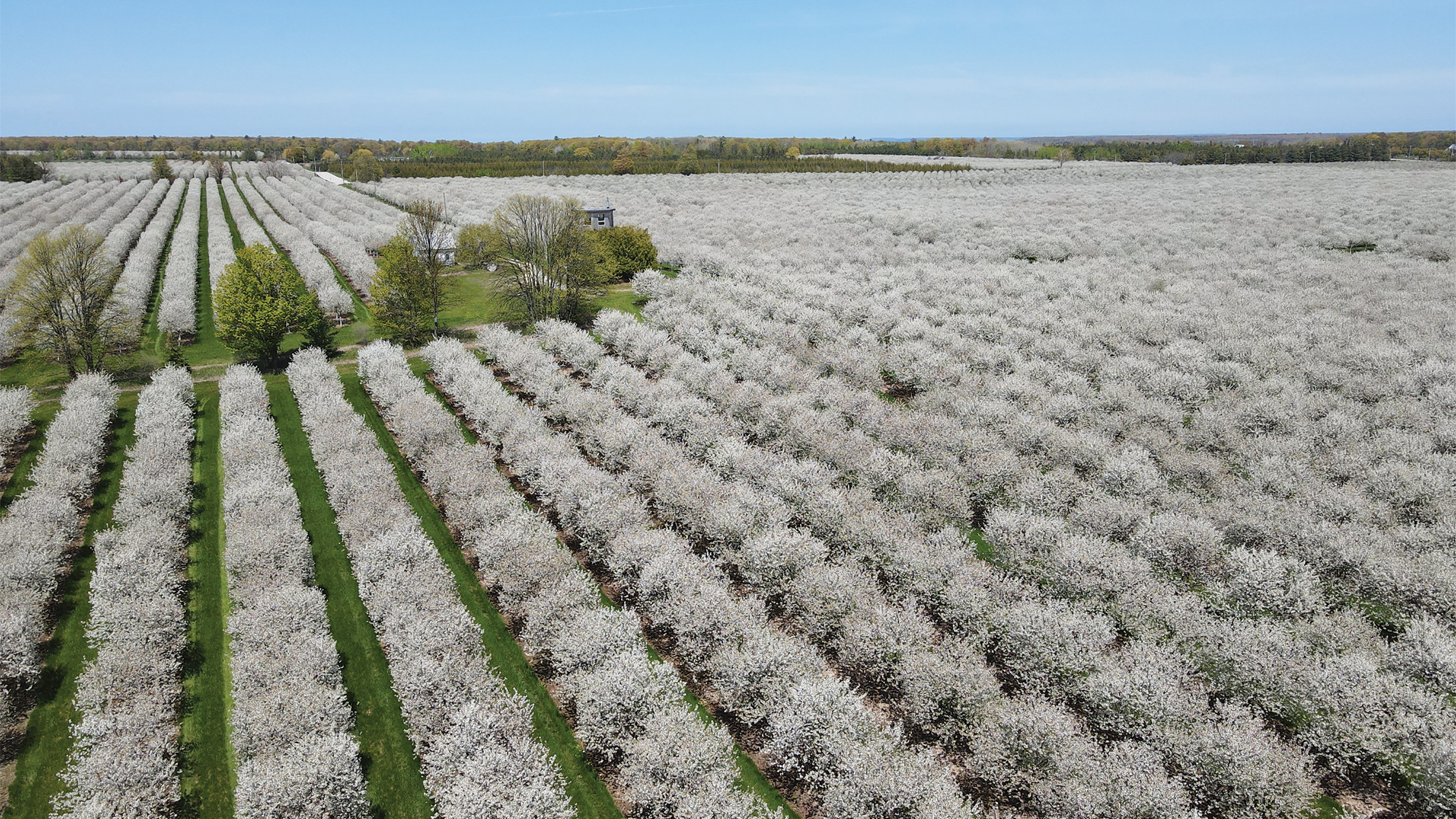
On a crisp morning in mid-May, Robin sits in the dining room of her farmhouse, just up the road from Seaquist Orchards Farm Market, cherry earrings dangling from her earlobes. Out the picture window is a quintessential Door County scene — fluffy, white cherry blossoms as far as the eye can see, intoxicatingly aromatic and fleeting.
But the serenity of the setting feels misleading. From the moment those ephemeral blooms appear, the Seaquists are on the clock.
“We harvest 60 days from blossom,” Robin explains.
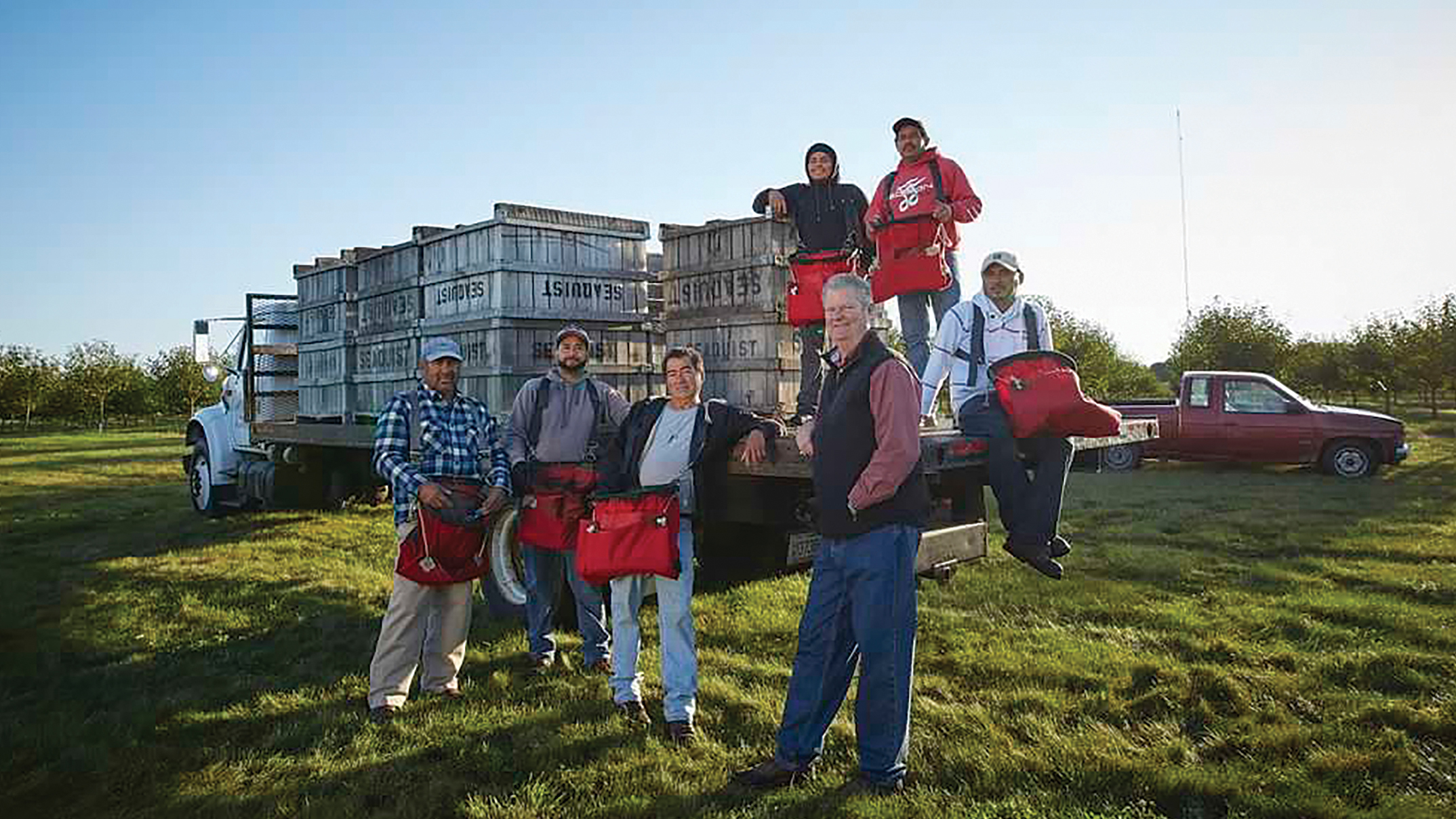
And harvest, the Super Bowl of the cherry season, means go time. It requires a lot of manpower to harvest and process 9 million pounds of fruit in four weeks. During this time, Seaquist’s employee count jumps from 20 to about 130. The processing plant will be running up to 22 hours a day, with breaks only to clean the equipment.
The majority of Seaquist’s 1,300 orchard acres are Montmorency tart cherries. The rest are apples and sweet cherries. Last year, the state of Wisconsin produced 10 million pounds of tart cherries. Seaquist accounted for 9 million of them. Seaquist’s largest harvest on record was 13 million pounds in 2007. But this year Jim expects to match that record and harvest another 13 million pounds in 2024.
Jim says the business processes roughly 95% of the state’s volume. Today, the business has the production capacity for 15 million pounds of fruit.
Luckily, mechanical shakers were introduced in the 1960s and replaced hand harvesting. These two-piece machines can shake the trees in about three seconds a pop. Seaquist uses four of these harvesters, requiring a total of eight employees to operate.
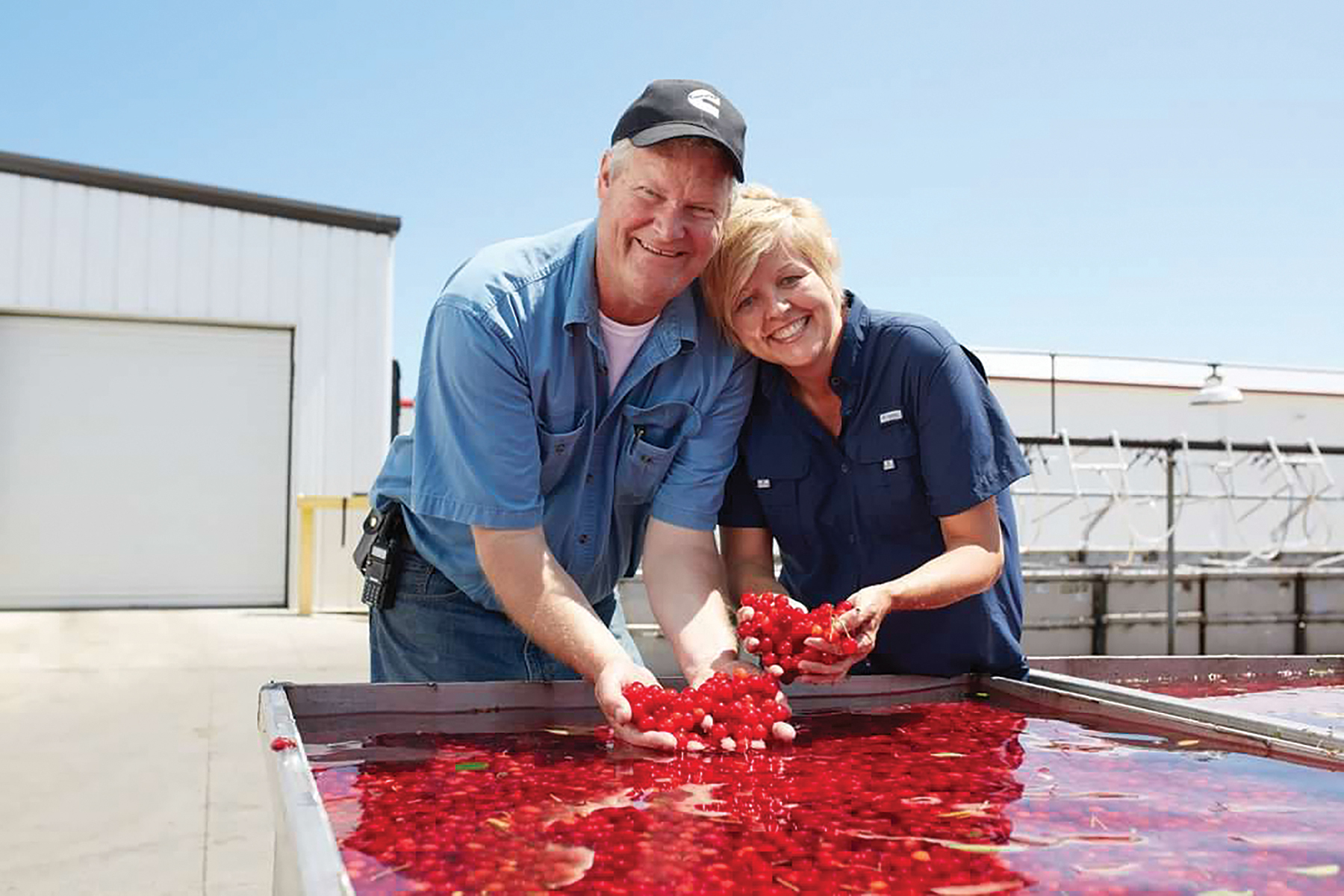
The cherries that fall from the limbs are caught in catching frames and transported in cold water to preserve freshness. Forklift operators run tanks of water to the machines in the field that can each hold about 1,100 pounds of fruit. The fruit is loaded on trucks and hauled to Seaquist’s Egg Harbor processing plant to be cooled, which makes pitting easier. Twelve hours later, the cherries begin processing — this includes a laser sorting process, removing pits, cleaning and destemming — before being frozen.
Robin says many people, including her own longtime friends, are surprised by the level of sophistication and sheer volume of fruit being handled at their processing plant.
“[Our son] Justin has been instrumental in automating our plant technology. It looks like a garage from the outside, but we’re sending out 10-15 semi [truck] loads a day. We have a robot that is stacking pails and we’re scanning everything,” Robin says. “It would be hard for people to imagine what all goes on in that building during those four weeks.”
While some of the fruit is used in Seaquist’s own bakery, cannery and farm market, most is sold wholesale to large baking companies around the country. The company has worked with national customers such as Sara Lee, Hostess, McDonalds and Burger King, as well as local customers such as Country Ovens in Forestville and Cherryland’s Best in Appleton.
Historically, canned cherries, such as those used in pie filling, were in biggest demand. Today, dried cherries and juices have taken over as top products.
“In the mid-80s was the advent of the dried cherry, and we’ve been a supplier to those dehydrators,” Jim says. “It’s not always the highest paying market, but it definitely uses a lot of fruit.”
According to the research firm USD Analytics, the cherry juice market is estimated to continue growing at a rate of 7.1% between 2024 to 2030.
“The juice side is much bigger than it used to be, whether it’s juices that are made to drink or in concentrate or juice that we sell to breweries or wineries,” Jim says. “That’s a big, big market for us.”
Bearing fruit
Jim and Robin, who were named 2023 Master Agriculturists by Wisconsin Agriculturist Magazine, have worked methodically to expand Seaquist Orchards, which is made up of four interconnected businesses. In addition to the orchard farming operation and processing plant, Seaquist operates a canning company and retail store.
Robin describes Seaquist Orchards Farm Market as its public-facing entity. The retail outlet has become a must-stop destination for visitors to stock up on Door County cherry products using orchard-grown fruit as well as homemade baked goods made on site. Jim’s stepmother, Kristin, has run the market for more than three decades.
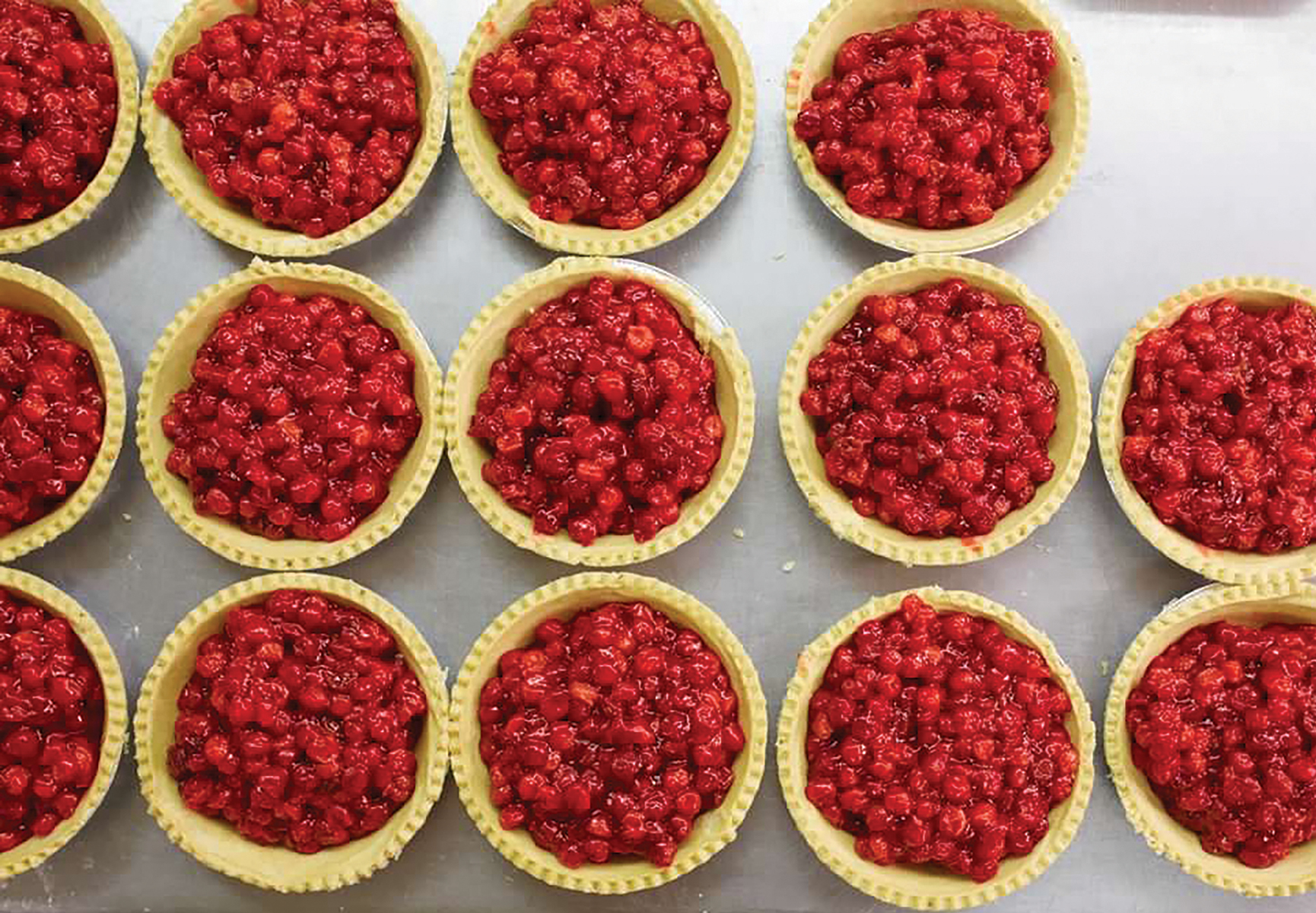
Seaquist Canning Company, which officially launched in 2012, was born out of the purchase of a local cannery, Dixie’s Homestyle Preserves, LLC. Located right next door to the farm market, the canning company provides most of the small batch jams, jellies, fruit butters, pie fillings, syrups, sauces and salsa found at the farm market.
Diversifying the business has resulted in growth, but Robin believes the biggest growth factor has been building connections within the cherry industry.
“A key to our success has been Jim’s willingness to be involved in the industry,” Robin says. “We sell our cherries out to friends in Utah and Michigan. And it’s because of his relationships.”
Jim serves on many industry boards, including the Wisconsin Cherry Board and Cherry Industry Administrative Board. In addition, he served for 20 years as board chairman of the former CherrCo, a federated cooperative serving the tart cherry industry that formed to improve quality, ensure supply and market cherries.
“That was some of the most probing growth for me individually and for the business, because I was deeply connected to everything within the industry,” Jim says. “Independent farmers coming together to work together was a really, really interesting dynamic.”
Marshall Schuyler, a fruit grower in Ontario, Canada, served on the CherrCo board of directors alongside Jim and says the two bonded over their shared experiences of working in family-owned farms as well as sharing similar business philosophies.
Schuyler admired Jim’s ability as CherrCo chairman to manage the interests of individuals as well as the overall industry.
“In my experience, what’s in the industry’s long-term interest is often in the individual’s long-term interest, but people sometimes want to make some short-term decisions that are in their personal interest but damage long-term well-being,” he says. “Jim never had a problem looking at what’s right in the long term. He has tremendous people skills, and he was one of the few people who could do that because he could balance the interests [of all].”
Even though CherrCo disbanded in 2020, the two still talk regularly to share insights on North American market and crop conditions and troubleshoot technical challenges at their farms and processing plants.
As a small industry, collaboration among cherry growers is key. Schuyler most appreciates Jim’s ability to convene and find consensus among industry players.
“Jim can be strong on things, but he’s not abrasive,” he says. “He has the ability to influence people without pissing them off — and that’s a gift.”
Blossoming potential
Since its mid-20th century heyday, the Door County cherry industry has contracted considerably.
“In the 1980s, [Wisconsin] probably had about 100 growers and by the early 2000s, we had maybe 40. Now there’s eight cherry growers that do this,” says Jim, who still believes in the boundless potential the industry has to offer a new generation of growers.
Jim and Robin’s two sons, Cole and Justin, represent the sixth generation of Seaquists to own and operate the family business.
“Seaquist Orchards is highly regarded in the industry,” Schuyler says. “Jim’s sons are starting to take increased roles and becoming recognized as well.”
In 2016, Justin, Cole and their step-uncle Zach Moore bought into the orchard business. Over the last five years, Cole and Justin have also bought into the canning company and processing facility. Cole and his wife, Lisa, manage the canning company.
As Jim and Robin enter their 60s, Robin hopes to scale back her involvement with the business to spend more time with her 82-year-old mother and six grandchildren.
“I will always do cherry season because it’s all hands on deck,” she assures. “Jim probably will keep doing this for a long time because he loves it.”
The Seaquist family has always viewed its role in the cherry industry as one of stewardship rather than ownership. This philosophy is deeply ingrained in their approach to managing Seaquist Orchards, reflecting a profound respect for the land and its legacy.
“We believe that this really isn’t all ours,” says Jim, gesturing to the orchards first planted by his great-great grandfather. “We’re just passing through and there’s better things yet to come.”