

On a rainy Friday afternoon, I walked into the Manitowoc County Jail. I asked tentatively into the metal box at the door: “I’m here to see Randy Curtis?”
I was there to deliver a simple message. What I stumbled into was something much larger, a reality I had not fully understood before.
Randy had missed a few shifts without calling in. His supervisor looked for him where we sometimes do when an employee disappears without a word: The inmate list at the county jail. Sure enough, his name was there.
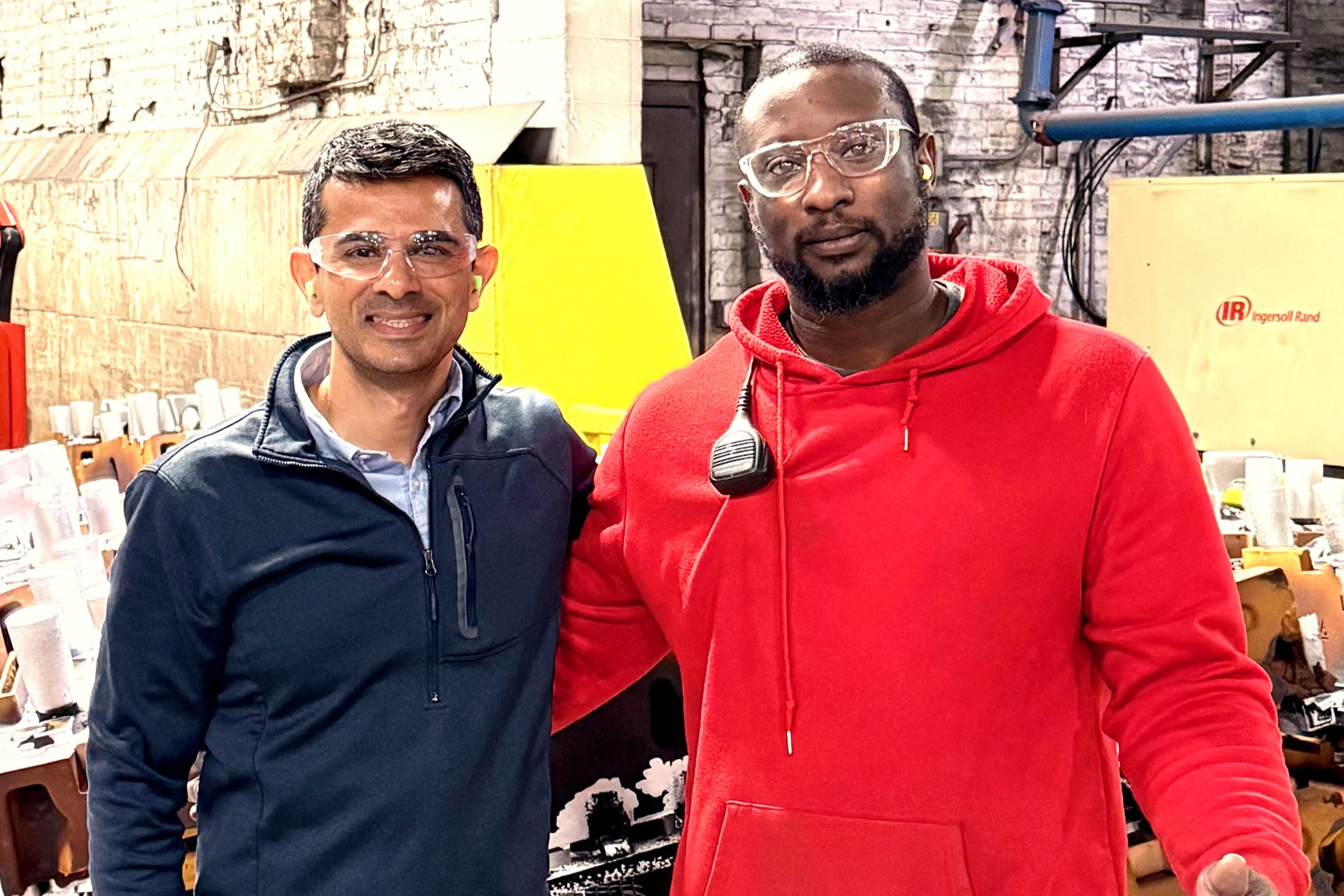
Randy is a knockout pourer at Wisconsin Aluminum Foundry, doing hard physical work for $27.53 an hour — good money, the kind that, if you’re careful and nothing goes wrong, can be the beginning of something. He had spent years rebuilding his life in Manitowoc after a troubled young adulthood in Milwaukee. He had a girlfriend. He was saving for a car. Then an old legal matter surfaced, along with a small claims debt.
It is not uncommon for our employees to find themselves in jail. Often, it’s for driving under the influence, delinquent child support, or drugs. The ones who don’t have money for bail spend weeks or months awaiting resolution. Usually in these situations we let the employment relationship expire.
But Randy’s supervisor called me: we have to keep his job for him. Of course we would. But how would we let him know? I pictured him in that cell, cut off from the outside world, assuming he had lost his job and maybe his apartment and girlfriend too, watching his precarious new life crash down.
I went to tell him myself.
The corrections officer was polite but matter of fact. I could not see the inmate in person. To speak with him, I would need to create an account on a third-party video service, deposit money, schedule a window, and wait.
I am a CEO. I work on computers all day. It still took me the better part of an hour.
The service was called CIDNET, operated by Encartele, a corporation in Nebraska. The site defaulted to a purchase of 150 megabytes at 30 cents per megabyte. That’s $45, before a “Data Security Token” fee and a 5% merchant surcharge on top. I put $10 on the account, enough for a few minutes. On Sunday evening I logged on, saw Randy on a small screen, and quickly told him his job was waiting. He looked relieved.
I want to be fair. Someone has to pay for that infrastructure. The same logic applies to bank overdraft fees and payday loan rates. Even the $2.59 Snickers bar in our plant vending machine, nearly four times what my family pays at Costco, bought by a worker without the time or transportation to shop elsewhere. Each of these charges is, on its own terms, defensible. Together they amount to something else: a compounding tax on not having enough.
Being poor, it turns out, is expensive.
Randy made it through. Another of our employees didn’t fare as well.
I’ll call him Michael. He had spent his entire life in America, brought here as a small child. He was a DACA recipient — a “Dreamer” — tantalizingly close to getting his papers in order for permanent residency, but first he had to navigate old speeding tickets, lawyer fees, court dates, and filing costs. He had a newborn and two toddlers at home. He could not even afford a cell phone. Outside of work, he reached me through Facebook Messenger when he could find Wi-Fi.
The fees accumulated the way fees do: the lawyer, the filings, the court dates that cost him wages he couldn’t replace, the paid leave that drained away appointment by appointment. Everything was a small thing.
But Michael had no margin for small things.
The weight of it followed him onto the shop floor. He grew distracted, made mistakes — costly ones in a manufacturing environment — and we had to let him go. I think about that a lot.
The word I kept coming back to was margin. In business, margin is everything. The difference between a company that survives a bad few years and one that doesn’t is not always the size of the problem. It is the cushion beneath it.
Families have margins too.
A salaried employee who gets a DUI posts bond and goes home. She takes a long lunch for a dental appointment and loses nothing. When life disrupts her, it disrupts her. When life disrupts Randy or Michael, there is no category called disruption. There is functioning, and there is collapse. A car breaks down, the flu strikes, child care closes unexpectedly — attendance points rack up, the job is suddenly in jeopardy, and the carefully assembled structure of a life starts to come apart.
What I find remarkable is not that Randy and Michael sometimes stumble. It’s that they hold everything together as long as they do, maintaining a level of daily discipline against a backdrop of distress that most of us will never be tested to match.
My 8-year-old and I have been reading about black holes. The closer you get, the more energy you need to escape — until escape becomes physically impossible. That is what I witnessed. Not a failure of will. A gravitational pull that compounds with every setback, every fee, every missed day.
There is a threshold, call it escape velocity, below which the system’s small relentless extractions become unsurvivable. My former college professor Lisa Dodson, who spent years embedded with low-income workers across the country, calls this the “house of cards” — the architecture of poverty where there is no redundancy, no reserve, no margin for the ordinary turbulence of a human life.
So, what can we do? At Wisconsin Aluminum Foundry, we’ve introduced daily pay so workers can access wages as they earn them rather than waiting two weeks. We offer $400 per month in child care reimbursement, structured specifically to help newer, younger employees.
Most traditional benefits — vacation time, tenure-based wage levels, pension plans — naturally favor workers already on solid footing. Our most expensive benefit, health care, is the one our youngest and lowest-paid employees use the least. We can design benefit structures with that reality in mind, and we are trying.
These are imperfect responses to a structural problem. They are what one employer can do.
On policy, cash bail reform deserves serious attention. A system that assesses risk rather than bank balances would cost taxpayers nothing, and it might have kept Randy’s life from nearly unraveling.
The full set of public policy answers is beyond my grasp. But what I do know is that the national conversation about affordability — housing, gas, airfares — is largely about the middle class. Randy and Michael aren’t worried about buying a house. They are fighting for the basic foothold that most of us take entirely for granted.
My parents came to this country with very little and found the American Dream to be real. I believe it can still be real. Randy believed in it enough to leave Milwaukee and start over in a city where no one knew him. Michael believed in it enough to show up every single day while his entire future hung on a bureaucratic decision somewhere.
At our holiday party earlier this year, my wife and I spotted Randy across the room — arm around his girlfriend, at a table full of coworkers, dressed in his best, laughing.
Michael messaged me last week. He’s been out of work for two months, getting by on his wife’s income. He said he’s going to reapply at the foundry. When he does, we’ll take him back.
Neither story is finished yet. They haven’t reached escape velocity. But they are defying gravity, every single day.
Sachin Shivaram is CEO of Wisconsin Aluminum Foundry.