

The COVID‑19 pandemic created a disruption in office life, but as companies aim to keep bringing employees back to the cubicle — or entice new people to join their staff — they’re creating spaces that are attractive and offer new benefits to coming in to work, many centered on employee wellness.
“Employers want to make sure that the space that [workers are] going to is something that people want to be at,” says Teresa Knuth, a senior commercial real estate advisor in Pfefferle’s Appleton office who specializes in office and industrial properties. “They’re spending a lot of time there, so [it’s about] making sure that it’s a cool space, or it’s nice space and it’s easy to get to.”
With that in mind, the office market generally has grown in terms of high‑quality, well‑located, newer buildings that are accessible from highways. There’s less demand for older, commodity spaces, Knuth says. But in the last couple of years particularly, demand for quality spaces is growing.
“Companies want to be able to attract good talent, and they want to keep their employees there. And to do that, partially it’s [about] creating a culture. And when all of your employees are remote, it’s really very challenging to create any type of office culture. There’s more confidence coming out of the pandemic than there was a couple of years ago.”
Demand isn’t yet at pre‑pandemic levels, she cautions. “But we also have a much different story to tell in the Northeast Wisconsin area because our downtowns aren’t reliant on the offices, I would say,” Knuth says. “A lot of the larger metro areas were very dependent on downtown office presence and that daytime population.”
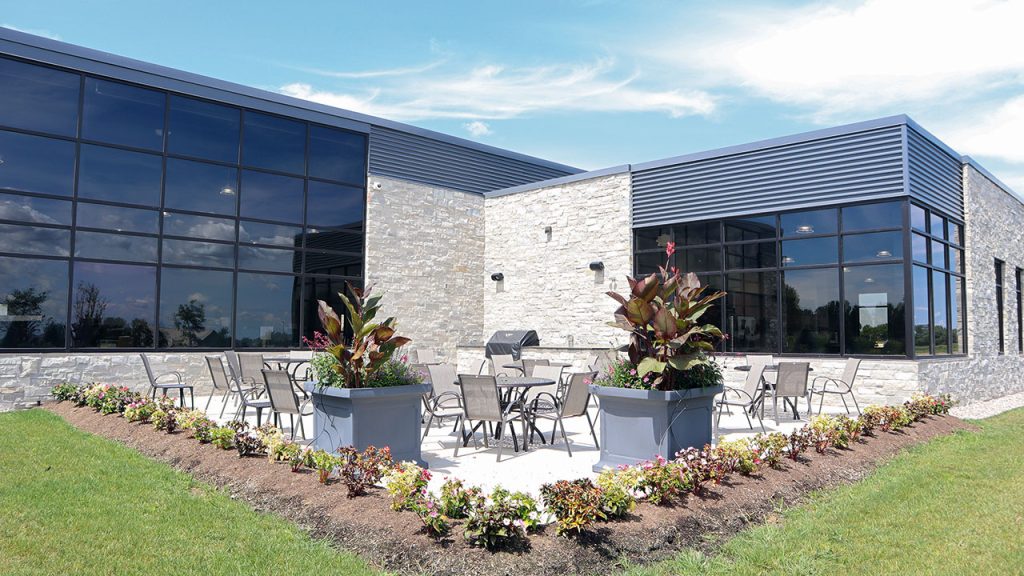
Companies also have been right‑sizing, condensing multiple office spaces into one that is well‑located and easily accessible, she says. And those companies, particularly the larger ones, also are adding amenities to those nice spaces. This includes U.S. Venture, which relocated its corporate headquarters to downtown Appleton’s 222 Building last year. “U.S. Venture, they just did a bar and they’ve got a fitness center,” Knuth says. Class A buildings can most easily incorporate those types of amenities, she says. “And those are all great things to be able to sell to your employees and to future potential employees.”
Health and wellness‑related amenities on site have been popular. Some ideas like golf simulators and nap pods have gotten traction. Bottom line, it’s about making the employees’ lives better, Knuth says. That might include having access to food or the option to pre‑order food to take home to families so they don’t have to spend time meal prepping.
And probably the biggest amenity a company could provide is child care. “The child care issue is something that’s very real, and it’s challenging to find good child care and the availability for that,” Knuth says. “So that would be a challenging one for an employer to implement, but for the right size user, maybe it would be something that could work.”
Belmark Inc. in De Pere is one that’s making it work. The company is building a new Family Center at its De Pere corporate campus, opening in 2027, according to the Wisconsin Economic Development Corporation, which is supporting the project with up to $2.5 million in Business Development Tax Credits. WEDC said the company is the first in the state to qualify for Business Development Tax Credits for investing in a child care facility since the update of the incentive program in 2023.
The Family Center will include a 14,000‑square‑foot child care facility that reserves a portion of the open child care spots for Belmark employees, leaving some open to the public. The center also will include a health and wellness clinic with primary care, mental health service and physical therapy, and a fitness facility for employees and their families.
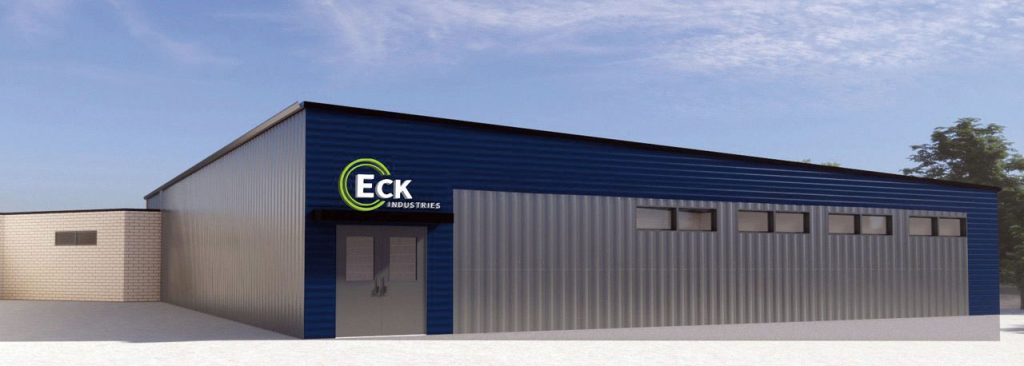
Eck Industries also started a project this summer that’s focused on its workers. The Manitowoc‑based foundry is building a new 6,315‑square‑foot Employee Center addition to its main facility on 8th Street. The new building includes a break room, updated locker rooms, first aid and safety office and a corridor that connects to the existing plant.

Eck Industries President Kiley Eck Hayon says the project will offer a much‑needed update for the space. “We had a fire in 1984, and after that is when we had redone the locker rooms — and that is how they look today,” Eck Hayon says.
The company had been mulling an upgrade for a while but hadn’t settled on the best way to proceed, Eck Hayon says. Then the company needed to expand its office space, so it determined that repurposing the old locker room and building the new Employee Center at the back of the building worked best. The center will be closest to where the employees already park, Eck Hayon says.
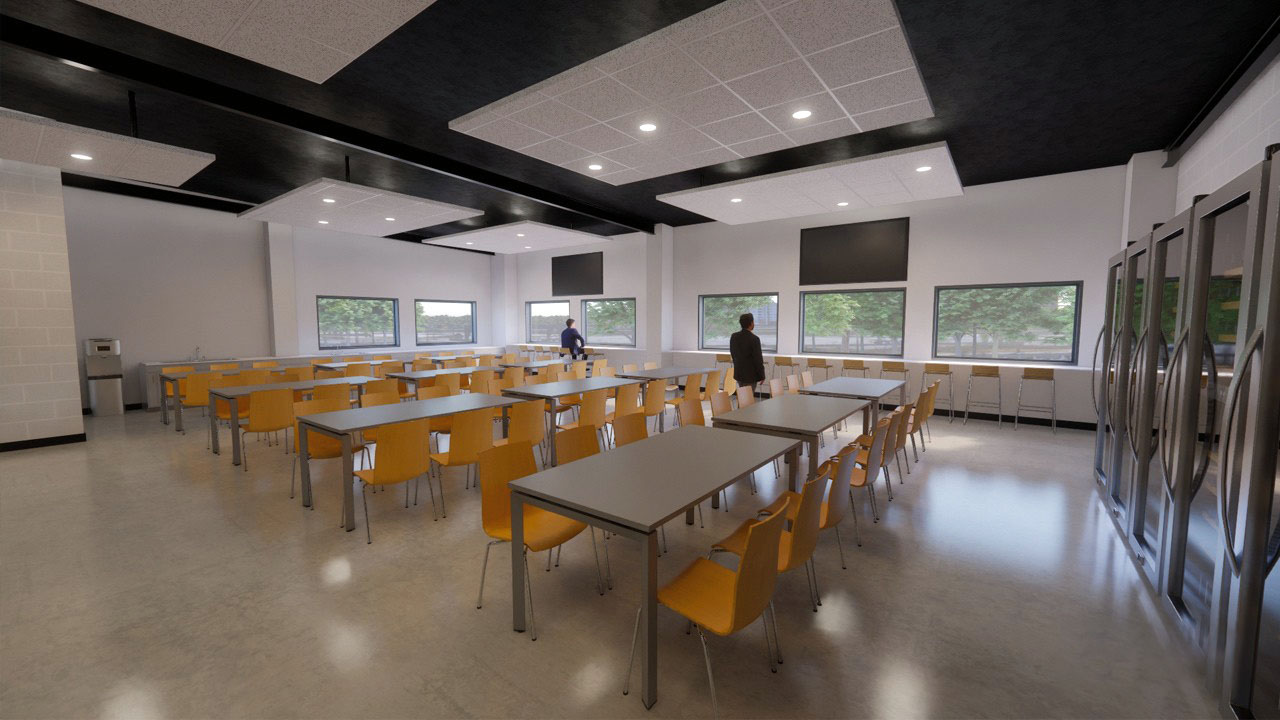
The project will include women’s and men’s locker rooms near a bright new lunchroom that will be double the size it is now, she says. It will make it easier to host its employee communication meetings, and will include a variety of seating, including counter seating along the windows. It also will have a self‑serve canteen with fresh food options and an outdoor space with picnic tables.
The center also will include a training room and a first aid room, providing privacy and all the supplies needed to manage injuries, should they occur. The company has 220 employees, including 170 production workers.
Similar to other New North manufacturing companies, talent attraction and retention is top of mind for Eck Industries.
“We’re always looking for good employees, and they deserve a good space to have their breaks in,” Eck Hayon says. But it’s also about providing a space that can boost mental health. There aren’t really windows inside the shop, she says, so it’s about creating a space where workers can enjoy some sunlight.
Eck Industries hopes to have the project completed by November, or by the time the snow flies.
The project is dedicated to Eck Hayon’s father, Phil Eck, who is retired but is still chairman of the board. “He has a big heart for the employees and always wanted to do right by them, because if we didn’t have them, we wouldn’t be able to make the products that we make,” his daughter says.
Jesse Hall, vice president for the Northeast region for Keller, Inc., says largely the trends he’s seeing related to office and employee space stem from the importance of building that internal culture and talent attraction. Even prior to the pandemic, companies were shifting toward that goal: In 2017, Hall built his first yoga room for an office, for example.
“Not everyone just goes for the paycheck,” Hall says. “They want an overall good experience.”
Keller is seeing companies seeking hospitality‑inspired design, where the upgrades are not simply to offer a good impression to customers, but to give their people a great space, he says. Some recent projects have included coffee bars, outdoor patios, flex and collaboration areas and a strong focus on wellness. “They’re giving people access to daylight,” Hall says. That includes fitness rooms and outdoor walking spaces. Some companies are offering meals on site or transportation.
Recently, Hall has seen more full‑service kitchens and café spaces with booths and high‑top tables to upgrade the traditional lunch room, he says.
Companies across the board are working on upgrades, like manufacturing plants adding air conditioning, he says. “They’re trying to do as much as they can because employee retention and acquiring new employees is probably one of the highest focuses [for] a lot of businesses.”
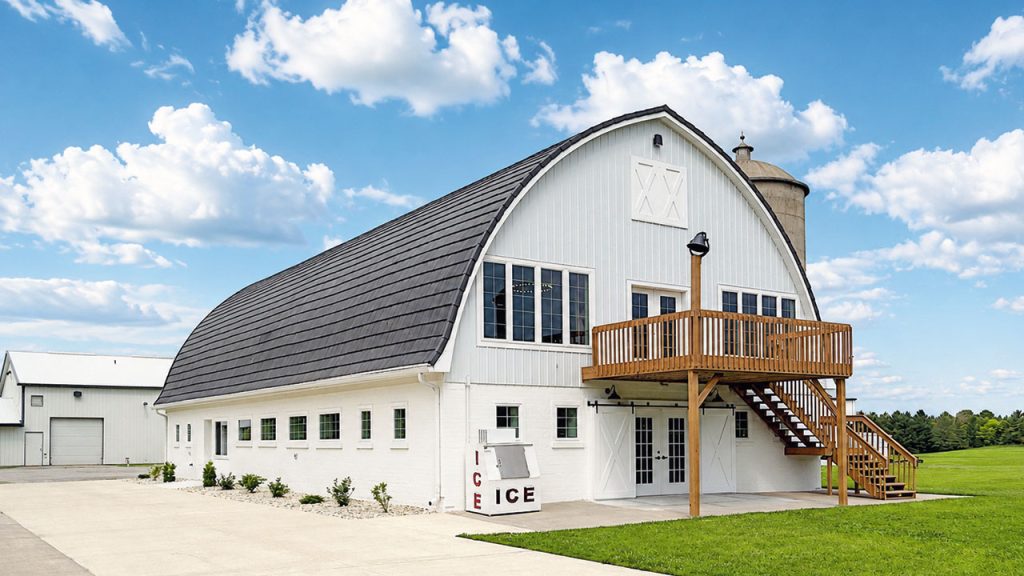
ThermaTronX in Sturgeon Bay, for example, thought outside of the box, converting a nearby barn into a flex space, holding company picnics and offering the barn as a free wedding and event space for employees, Hall says.
Hall says workspaces are “being designed to foster collaboration, support wellness, strengthen culture and provide flexibility for people at work. There were early adopters to this, and it’s paid off for them,” he says.
That doesn’t mean these upgrades are always an easy “yes” for businesses.
“The challenge on the business owner’s end is to see an ROI,” Hall says. “I think it is increasing in popularity because people are focused on culture and employee retention. Those all go together. We’re seeing clients invest in employee experiences rather than just square footage.”
These types of investments ultimately can be worth it for the companies putting in the effort.
“Your employees are your biggest asset,” Knuth says. “So if you’re keeping your employees, and you’re keeping them happy, that’s the most important thing.”

