

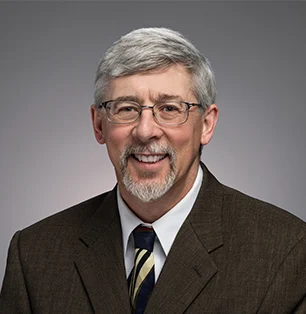


Consumers and CFOs have rising confidence in the state of the economy, but there are significant uncertainties that could undermine that confidence, according to Marc Schaffer, director of the Center for Business & Economic Analysis at St. Norbert College.
Schaffer and three student fellows (Maille Cannon, Evan Paque and Jaden Propson) presented data as part of the 10th annual state of the economy event at St. Norbert College Feb. 12. The title, “Navigating the known unknowns,” reflected the uncertainty about the direction and impacts of federal policy.
Data presented by Cannon showing a rise in durable goods spending at the end of 2024 reflected a rise in consumer confidence. Overall, consumer confidence has been rising since 2022 when it had dipped significantly due to inflation, Cannon said.
Similarly, a survey of chief financial officers by Duke University showed rising confidence among that group.
Later in the presentation, Schaffer pointed to data that showed consumer confidence depends almost directly on political affiliation. Republican voters’ confidence has surged with the election of Donald Trump, while the confidence of democrats and independents has slid.
Unemployment rates, especially in Wisconsin and Northeast Wisconsin, have remained low. While the labor shortage remains, it is less severe than in 2022 when there were two openings for every unemployed person in the United States.
Food inflation and housing costs continue to be a challenge, but data shows housing inflation is close to historical norms even as the market remains tight.
The “known unknowns” Schaffer said are fiscal, trade and immigration policies. The fiscal policies up in the air include whether soon to expire tax cuts will be extended and how or if the federal government can rein in spending and reduce the federal budget deficit.
Schaffer was pessimistic about the deficit, pointing out 30 years of growing national debt. He also cautioned that closing the gap would require either ending all discretionary spending at the federal level or raising revenue.
The trade policies are in flux, especially when it comes to tariffs, but Schaffer said past case studies show that typically tariffs raise prices and cut into profits as businesses pass some costs on to consumers and accept a smaller margin.
Immigration policies could directly impact the labor market as the U.S. population is projected to flatten and even decline in coming years and, as it does, people will age out of the labor force. Industries like construction and agriculture could face rising labor pressure and higher wages could fuel inflation.
Schaffer said overall the data shows an economy that is in pretty good shape. When the Federal Reserve announced in January it would keep interest rates steady, it signaled a “wait and see” approach reflecting the unknown impacts of policy changes.