
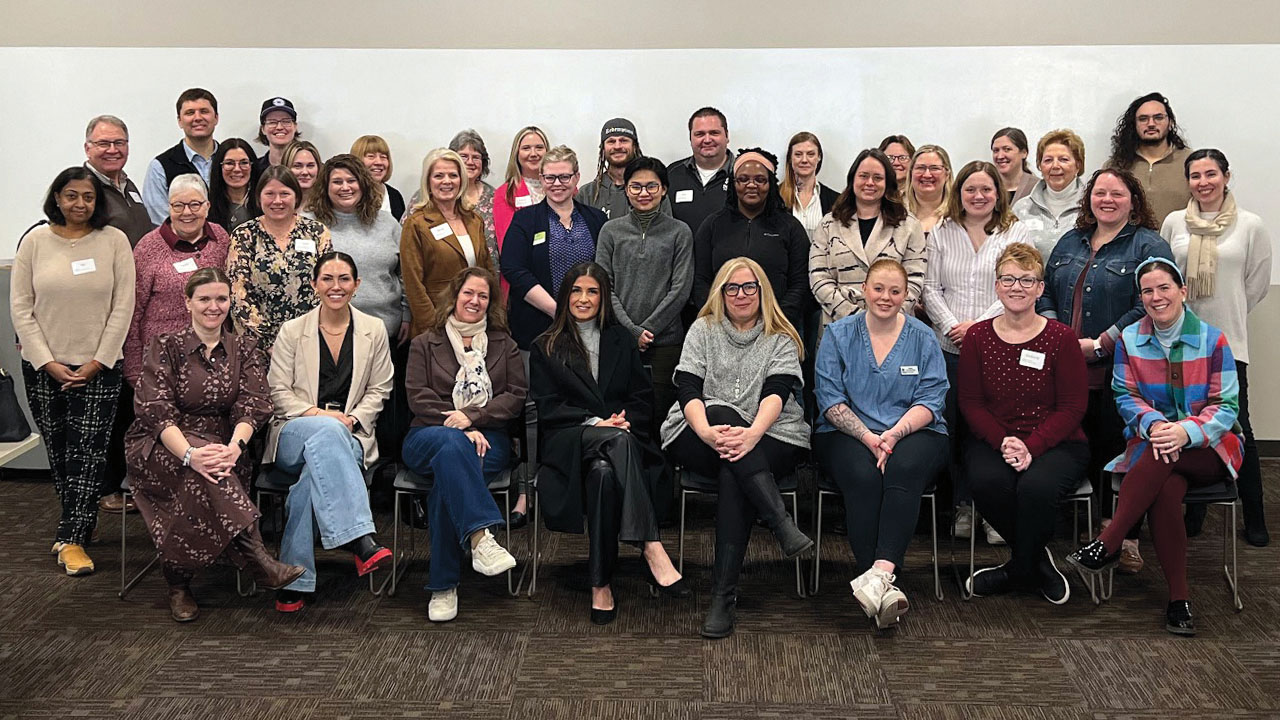

Last fall when the Fox Valley-based Nonprofit Leadership Initiative (NPLI) facilitated listening sessions with more than 200 area nonprofit organizations to identify their most important areas for support “beyond grant funding,” Executive Director Hope Schaefer says it ultimately identified six throughlines: workforce constraints, outdated infrastructure, limited ability to engage in advocacy work, lack of infrastructure to collaborate, the need to normalize and shift harmful narratives about overhead, and the revelation that “boards are a limiting factor.”
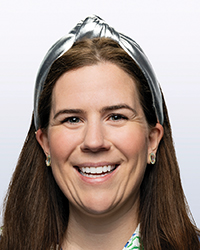
“Boards are operational instead of strategic, which makes appropriate and effective governance challenging and accountability minimal,” the listening session summary report states. “Many are undertrained and unclear on their role.”
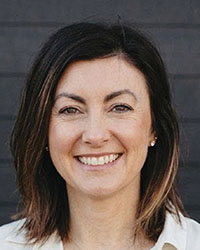
Trina Doxtator is the owner of the Appleton-based consulting firm Dox Advisory, which works with many nonprofit board clients. She says the word “undertrained” is doing some heavy lifting in this assessment. People join nonprofit boards because they care and want to contribute. Equipping those board members to do so is essential, even if that looks different for every individual.
As a basketball player, Doxtator says she likes to use the “team sport” analogy when she talks about fundraising and the distribution of responsibility among nonprofit staff and boards.
“I’m a post player,” she says. “If you put me on a diversified team of basketball players, where every role is filled, I can be a contributor. If you put five of me on one team, we’re in trouble.”
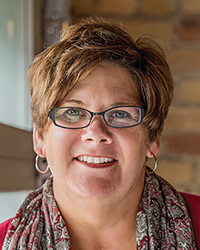
O’Connor Connective Executive Vice President Michelle Dejno, who regularly leads board advocacy training sessions, agrees. Fundraising can be an intimidating objective on its face. She says many board volunteers come into their roles with the mantra “I will do anything for you, but don’t make me ask for money.”
Indeed, fundraising is perhaps the biggest sticking point Schaefer says she encounters when working with boards at NPLI. According to the latest edition of “Leading with Intent,” a report on board leadership trends issued by the U.S. organization BoardSource, more than half of surveyed chief executives say their board is not spending enough time to understand the organization’s programs and building relationships within the community, and nearly half assessed their board’s performance in fundraising as “below average” or “failing.”
Some nonprofit organizations establish giving minimums or expectations for board service, while others simply ask board members to individually give what they are able. Meanwhile, some organizations are unclear or even silent about philanthropic expectations for their boards. And in some organizations, there is a perception that fundraising is entirely the responsibility of the executive director or development director, or a particular segment of the paid professional staff.
And in those cases where that perception is a functional reality, Doxtator adds, the high turnover rate in nonprofit and fundraising jobs can make a disengaged or untrained board a further liability. As a consultant, she specializes in helping organizations ensure continuity in donor relationships and aligning all staff and volunteers through relationships, standards and systems — tasks that are essential but can fall by the wayside in organizations that are already understaffed and overwhelmed.
There are many ways for board members to contribute to fundraising efforts that don’t include sitting across from a donor and asking for a $25,000 check, Doxtator says. These include the important roles of thanking donors, advocating, and bringing their own trusted relationships into the organization with confidence.
Staff members may come and go, but your board can be a powerful bridge if they are empowered, trained and leveraged properly, Dejno says. Simply talking about the organization you serve with friends, family and colleagues goes a long way.
“Your board members,” she says, “should be your core advocates.”
Board service for all
NPLI, which as of this year is formally integrated with the Community Foundation for the Fox Valley Region, was founded a decade ago around two major missions: to equip both executive directors and boards with the skills they need to support their organizations, and to help organizations create board pipelines, Schaefer says. Its free roundtable events, its NPLI Board Academy and its Board Bound program for aspiring board members are among NPLI’s core programs to this day.
“That’s how we continue to see organizations making a tremendous impact in our community: because of new individuals seeing themselves in a board role,” Schaefer says. “It’s just [having] the confidence to say, ‘Yes, I can be a board member.’”
The academy, Schaefer says, was designed to mirror NPLI’s existing leadership training for executive directors after receiving feedback from those leaders that their boards would benefit greatly from the same messages. And in 2027, the Board Academy will evolve to also include on-demand virtual training with the goal of reaching more volunteers.
Board Bound is a new program that provides training on what it takes to be an effective board member, assesses capacity and helps participants explore personal passions. If Board Bound participants decide board service is indeed for them, NPLI will go the extra step to match them with a leadership opportunity at the end of the program.
And filling the board pipeline is an issue worth watching. According to “Leading with Intent,” only 17% of board members today are under the age of 40.
The NPLI listening sessions also identified a need for boards to better reflect the communities they serve and engage people with “lived experience.” Schaefer also says she has seen a trend of engaging youth on boards, particularly in youth-focused organizations.
Programs like Board Bound are working to reach new, younger and more diverse audiences, and committee service is also widely recognized as a key gateway to board membership.
Anyone who is curious or passionate about boards should absolutely take steps forward to pursue leadership, Schaefer says.
“The biggest misconception is that you need to be a vice president or a high-level leader at a corporation and that you need to pay a really large donation,” she says. “That is not true. As long as you’re passionate about the mission [and] have a willingness to be an ambassador for that organization, you’re going to make a tremendous impact.”
Oh, I can do that!
A board member who is really hitting it out of the park is spending the time it takes to understand the organization they are serving, Schaefer says. Read the documents. Attend events and programs. Be prepared. Ask questions. Be focused. Be intentional. Introduce people who share your values to the organization’s executive director.
“It’s about every step in a relational process where someone feels good about the investment that they made, or someone’s effectively thanked, or someone finds a new way to connect and align and make a difference,” she says. “I find that the more boards and teams are able to have those conversations and say, ‘No, this is what success looks like,’ the more people are like, ‘Oh, I can do that!”
Emily Ponkratz, senior manager of development at the Fox Cities Performing Arts Center, says nonprofit events are often an overlooked opportunity to be an ambassador for the cause.
“If you buy a table, bring employees who will care about the hosting organization,” Ponkratz says. “Nonprofit events are fundraisers and friend-raisers. Your advocacy in our importance will cultivate donors from within your business.”
Dejno, who recently presented her “Building Board Advocacy & Communications” training at an NPLI roundtable, works to make board advocacy attainable with a simple message: “Advocacy isn’t asking for money all the time — it’s telling our story in rooms we’re not in.”
As such, her trainings work to help participants hone abilities in storytelling, relationship building, credibility lending, visibility and awareness. She concludes by asking participants to identify one action they can take in the next 30 days.
“It’s about giving people the opportunity to support stuff they’re passionate about,” Dejno says.
A two-way street
When pursuing an opportunity for board membership, make sure the interview goes both ways, advises NPLI Executive Director Hope Schaefer. The organization may have done a board assessment that identifies certain skill sets or demographics it is seeking, she says, but prospective members should nevertheless work to discover if the board is a fit for them. Gather information about board expectations. Is it a working board or more of a policymaking entity? What is the time commitment? How do the staff and board interact? And, most importantly: What is my own why?
“Ideally, you’re interviewing them as much as they’re interviewing you,” Schaefer says.