


While a recent poll by Marquette Law School shows 70% of Wisconsin residents think the costs of large data centers outweigh the benefits, industry experts say much of the concern is fueled by both misinformation and a lack of information.
That has been costly, according to Dale Lewis, director of data centers for The Boldt Company. He points out that Wisconsin has lost more than $22 billion in data center investment from five scuttled projects in the past year.
Lewis, who has 40 years of experience in the construction industry, says the size of some of the projects and a handful of “bad actors” outside of Wisconsin increased scrutiny of the industry.
The industry has responded with investors like Microsoft pledging to be more open, taking on costs without taxpayer incentives and investing more broadly in communities and regions as they build data centers and the infrastructure needed to support them.
It’s not about water
Lewis says one of the largest misunderstandings is that access to the Great Lakes water supply is driving growth in Wisconsin. The industry has become more efficient with cooling and water usage, he says.
A study from the Wisconsin Data Center Coalition (WDCC) points out that all manufacturers — including Wisconsin’s cheese and paper industries — have reduced water usage, and many municipalities have the capacity to meet demand. The study did say there could be additional consumer costs unless the data center developers agree to pay for infrastructure upgrades.
According to the WDCC, Racine Water Works, the utility that supplies the village of Mount Pleasant, saw a drop of more than 2.1 billion gallons in annual water sales between 1997 and 2022, which is more than 250 times the 8.4 million gallons per year that the new Microsoft data center is expected to use when fully operational.
In Beaver Dam, where Facebook and Instagram parent company Meta is building a large data center, city officials said it has the existing capacity to supply water for the center. Meta is using closed loop cooling technology at the center, has pledged to be water neutral at the site by 2030 and is restoring degraded wetlands working with local conservation groups.
Wisconsin’s advantage
Lewis said while there are advantages to Wisconsin’s cooler climate, data center growth in Wisconsin, the nation and across the globe is being driven not by natural resources but by consumer demand for data resources and capabilities.
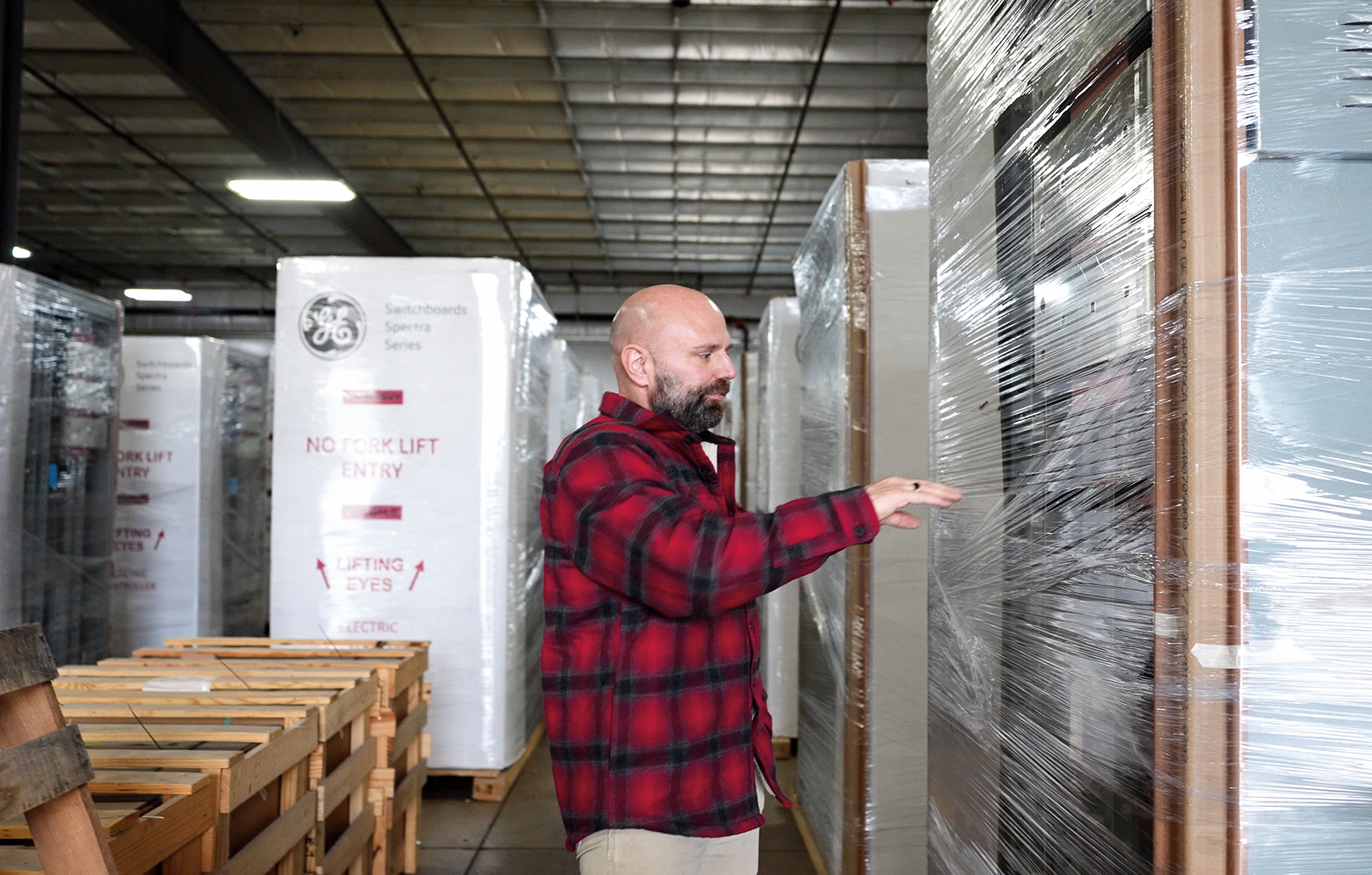
“One of the things that makes Wisconsin attractive is we have an established manufacturing base,” Lewis says. That includes companies that manufacture equipment needed to operate data centers.
According to Wisconsin Watch, Wisconsin companies have amassed more than
$1 billion in data center‑related business:
- Regal Rexnord, a Milwaukee maker of motors, announced in February it had received $735 million in orders from data centers.
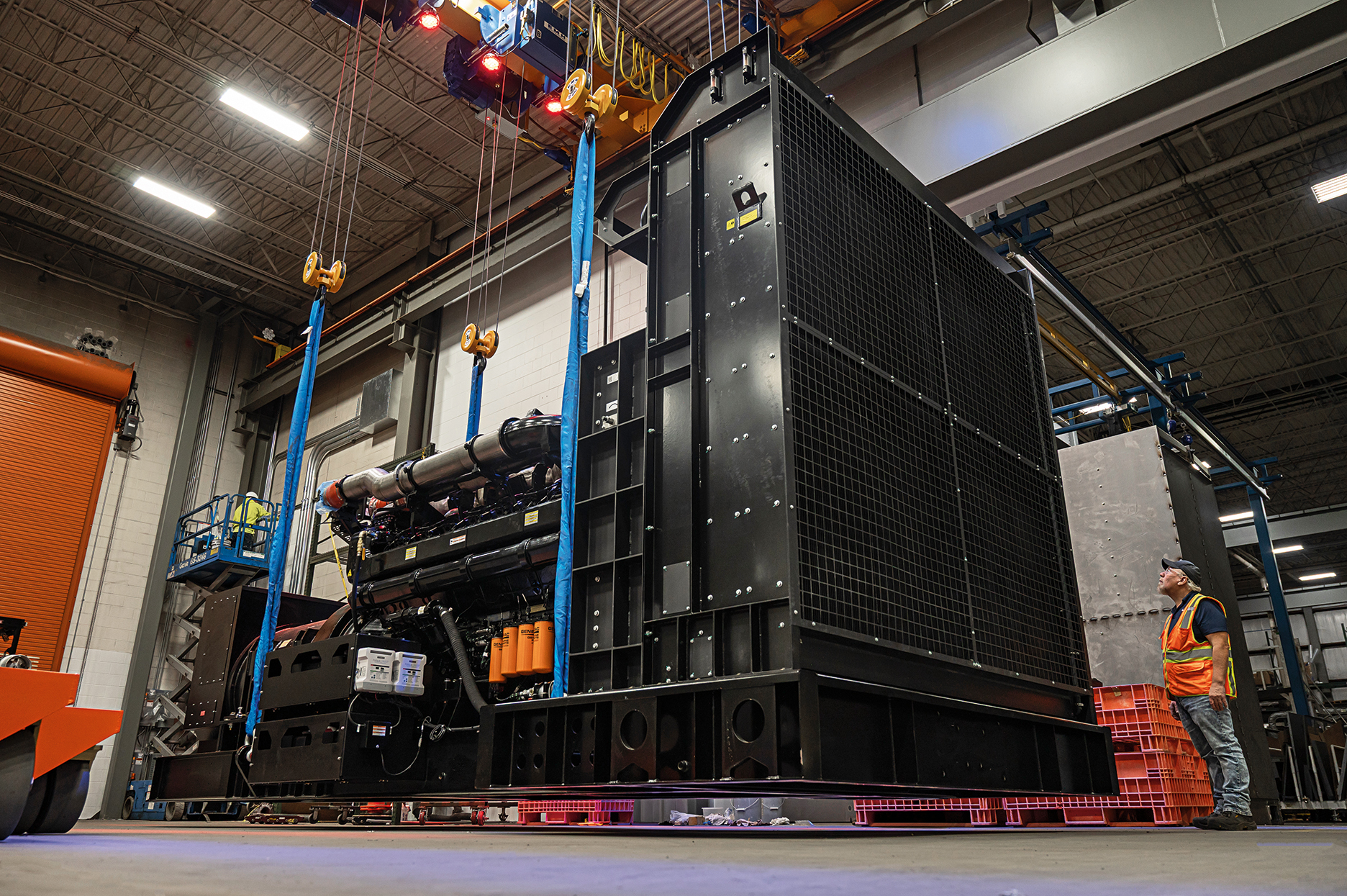
- Generac, a Waukesha‑based manufacturer, told Wisconsin Watch it has a backlog of $400 million in orders for backup generators for data centers. Generac announced Feb. 19 it is acquiring a 120‑employee Illinois engineering company to help meet data center demand.
- Racine‑based Modine announced in February 2025 it received $180 million in orders from a new customer for data center cooling systems to be manufactured in Virginia and Mississippi. In addition, the company in November opened a 155,000‑square‑foot plant in suburban Milwaukee to manufacture the systems.
- Mayville Engineering Co. said during the fourth quarter of fiscal 2025 it secured $15 million in new project awards from data center and critical power customers.
Wisconsin Watch also reports that data centers are driving expansions:
- Trane Technologies, which manufactures cooling systems for data centers in
- La Crosse, launched a sustainability project in 2025 that will continue through 2030, adding advanced manufacturing, renewable energy and reduced water usage.
- Excellerate opened a 385,000‑square‑foot plant in Little Chute, primarily to manufacture “modular electrical buildings” for data centers.
- Maysteel, a Washington County manufacturer, opened a data center hub in November 2024 and announced in February it is expanding the operation.
- Robinson Inc. of De Pere was one of Insight’s 2025 Fastest Growing Companies, and leaders said enclosures for energy storage systems related to data centers fueled the growth that required a $60 million expansion.
In addition, the volume of data center demand is benefiting smaller manufacturers supplying those businesses and supplying data centers directly. Maggie Brickerman, president of the Wisconsin Technology Council, says, “As these technologies develop, we also have the industrial base to build things here.”
Building a workforce
Wisconsin also offers other strategic benefits, Lewis says.
“Our labor base is stronger than most other markets. And we have quite a few tech colleges in the market that are focused on future developments in the tech industry, and they are graduating students to fill those roles,” he says.
Microsoft partnered with Gateway Community College to create a Data Center Academy that trains staff for the 2,000 jobs a spokesperson says it will create when the data center is completed in Mount Pleasant.
Brickerman says data center jobs are often higher paying and that has additional economic benefits. The employees will need additional housing and will frequent retailers.
It also creates a workforce with tech skills that are transferable to other positions.
Lewis says there is a similar impact in the construction industry, where Boldt and others are hiring and training more workers for mechanical and electrical trades due to data center construction and growing the workforce in a field that has experienced shortages for years.
More than 10,000 workers have helped build the first phase of Microsoft’s Mount Pleasant data center, according to a company spokesperson, who adds that a high level of construction employment will continue as phases 2 and 3 are built. From start to finish, that could be 10 years of construction work.
The elephant in the room
Brickerman says it should not be a question of whether data centers should be built, but rather how they can be built to minimize concerns and maximize benefits.
“The questions people are asking about energy I would not dismiss,” Brickerman says. But she adds data centers offer an opportunity.
“I’m excited as an innovator to have the largest companies in the world suddenly extremely focused on energy innovation,” Brickerman says, pointing to investments in fusion energy research.
Policies continue to develop related to data center energy usage and how energy infrastructure costs will be covered. A WE Energies proposal before the Public Service Commission would create a new class for so‑called “Very Large Customers” with a power load of 500 megawatts or more.
The outcome of that rate case could set a precedent.
Much of Wisconsin’s energy infrastructure was built in the 1940s and 1950s. Utility companies are phasing out coal‑fired plants and moving toward renewable energy sources as they replace that aging infrastructure.
“Luckily, we have the [data center industry] coming to the market and willing to invest in the infrastructure. There is no other industry right now that is willing to make those kind of investments in infrastructure upgrades and generation capability,” Lewis says.
“I find us very fortunate to have them to sign those checks, to build that infrastructure and improve it for future generations to come.”
It’s all about the base
In some cases, data center developments have been welcomed by local officials, often over opposition from the people who elected them, because they hope to reap increased tax revenue.
Microsoft has provided data from eastern Washington State that demonstrates how data centers can provide revenue for local government that impacts municipalities, schools and even health care systems.
It says the $26.4 million it paid in property taxes for Grant and Douglas counties in Washington made up 14.8% of the total collected in 2024. The company says it provided $132 million in labor income and $4.6 million in sales taxes.
Opponents have argued that incentives such as sales and use tax agreements and use of tax incremental financing offset the expected gains in the property tax base.
Appleton native Rima Alaily, who is corporate vice president and general counsel of infrastructure legal affairs for Microsoft, addressed concerns during a panel discussion in Madison, according to In Business Madison.
“At the end of the day, it’s our belief that our ability to build out and deliver AI infrastructure really depends on communities coming to the conclusion that the benefits outweigh the costs,” Alaily said.
There currently are 51 data centers in Wisconsin with 31 operators, according to Data Center Map. That includes five data centers in Northeast Wisconsin.
Data centers range in size from micro to hyperscale. The hyperscale data centers are drawing the most attention because of the sheer size of projects and their energy needs.
The data centers in Northeast Wisconsin offer co‑location, connectivity and cloud services to businesses.