
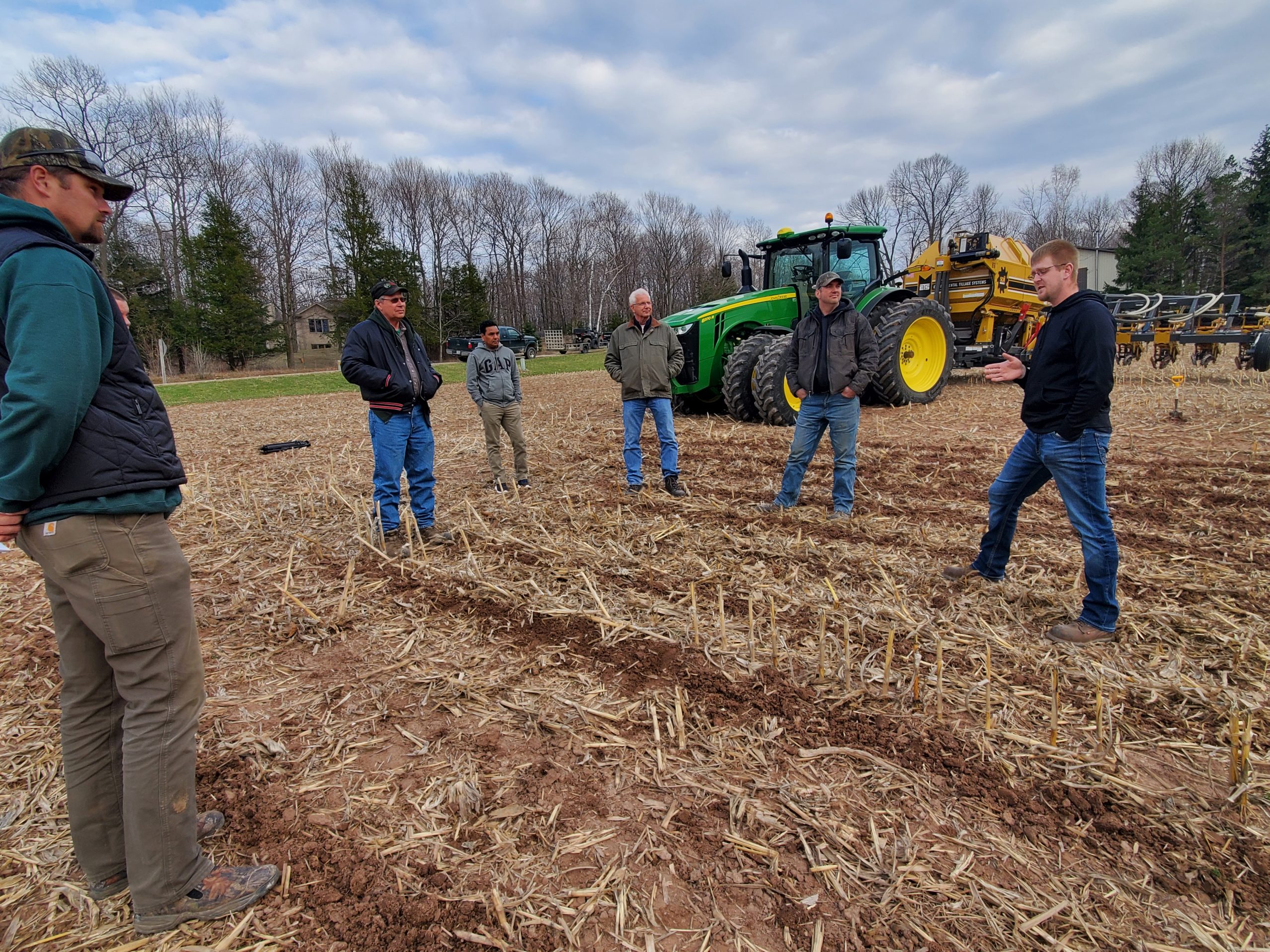

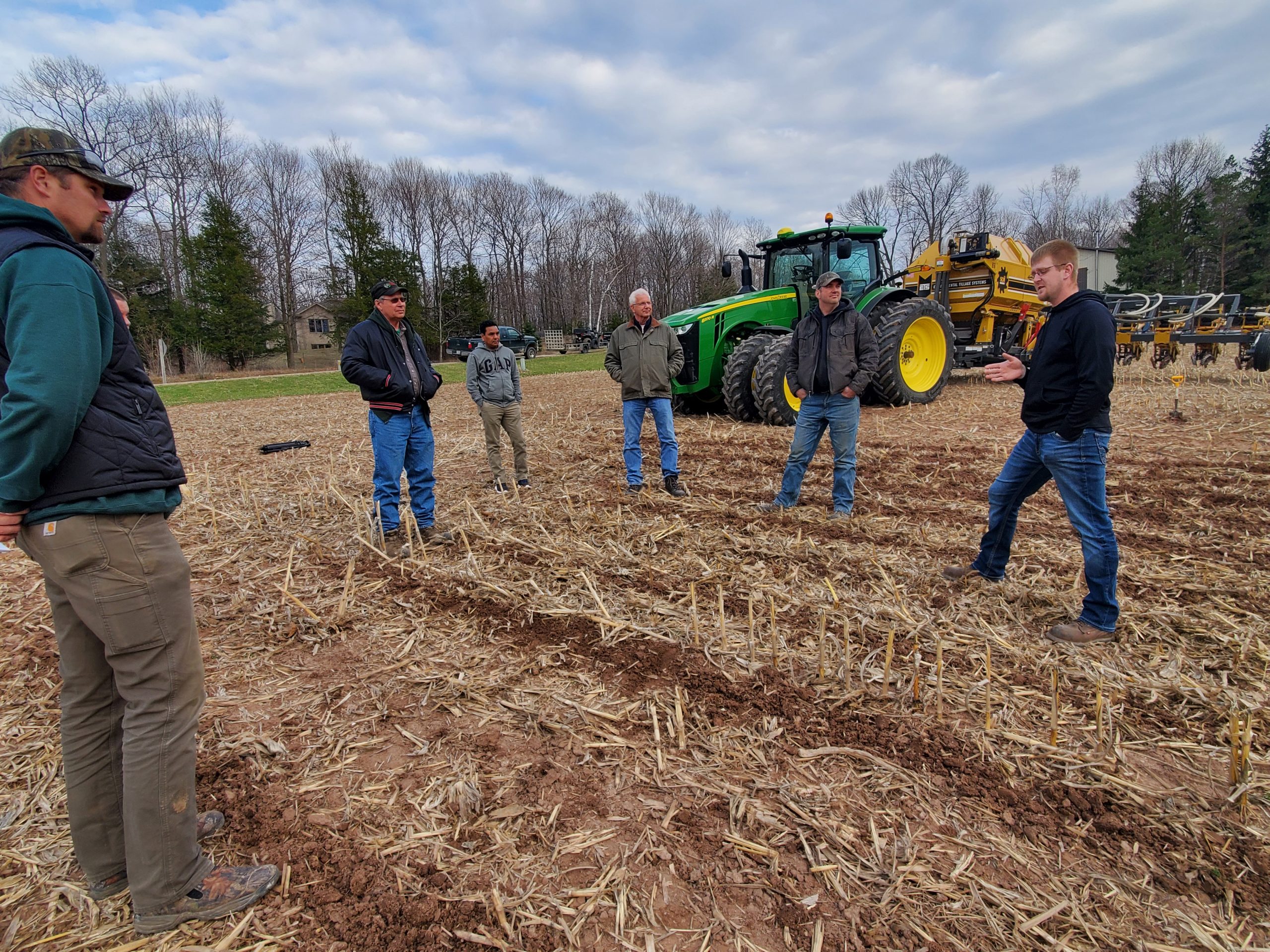
Eleven farmers in Peninsula Pride Farms are evaluating on-farm sustainability metrics for three years to better understand the impact of conservation practices on their cropland as well as the local watersheds.
“As a farmer, we’ve made a lot of changes over the years, and you don’t always know how broad of an impact you’re making with those changes,” said Paul Cornette, co-owner of Cornette Dairy, LLC, and a project participant. “From this project, we will know what’s working well, what kind of impact it’s having on the environment and where to go in the future as we continuously improve.”
The project’s farms, located in Kewaunee and southern Door counties, manage more than 27,500 acres and over 41,000 animals.
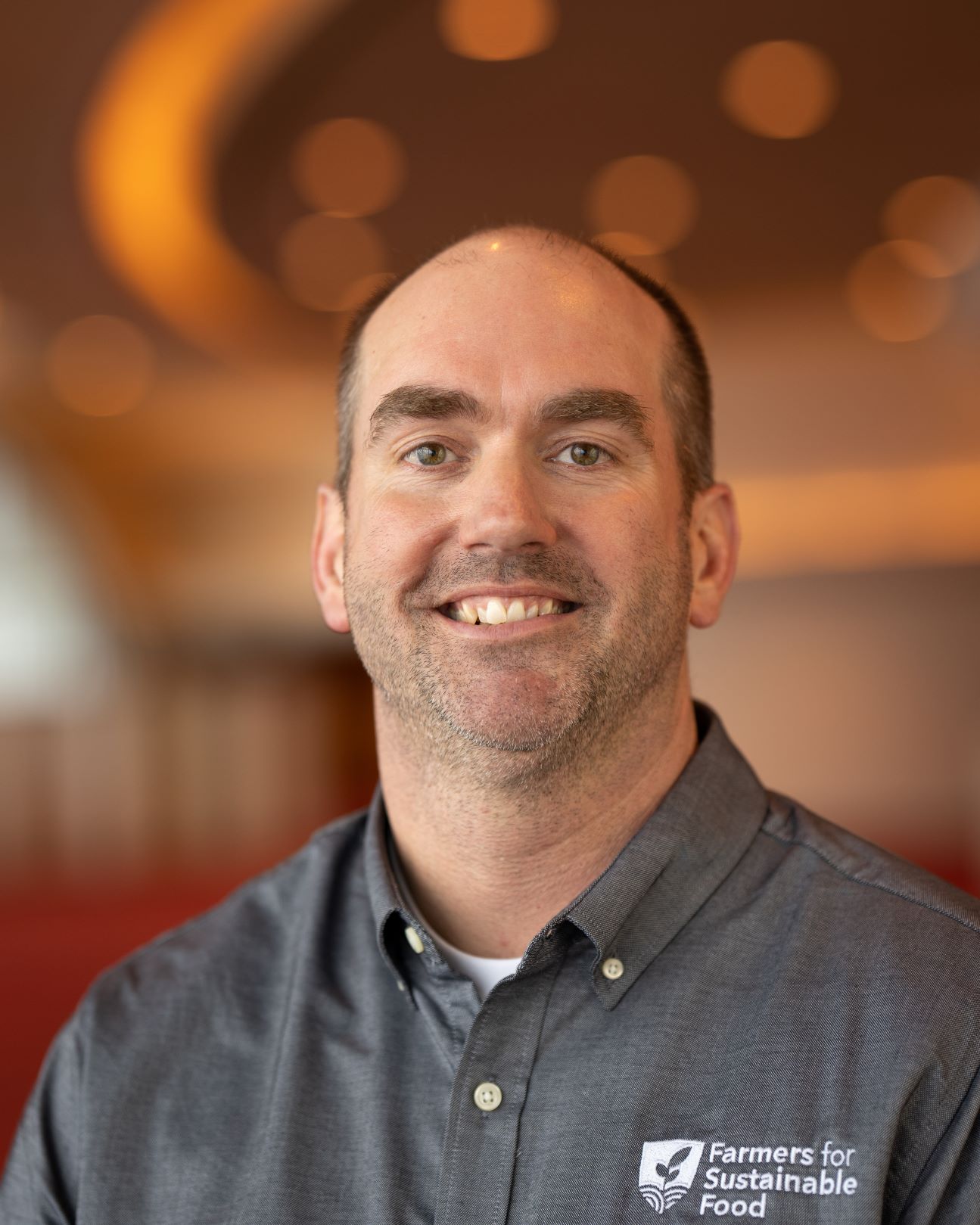
Cornette and his brother, Tom, are fourth-generation dairy farmers in Luxemburg. What started as a 30-cow tie-stall dairy in the 1970s is now a 360-cow herd using Lely robots and crop farming about 1,000 acres. Paul is a founding member of PPF and a board member of both PPF and Farmers for Sustainable Food, a project partner assisting with management with Houston Engineering Inc.
Cornette Dairy has a goal to achieve 100% no-till. Over the past eight to 10 years, the number of acres plowed has decreased by half. The farm also plants cover crops, uses nutrient management planning with split nitrogen applications and low-disturbance manure, plants green into cover crops and tried zone-tillage with nutrient banding last year.
“It is important that Peninsula Pride Farms participates in a project like this to give us a total perspective on what sustainability looks like using these metrics,” said dairy farmer Duane Ducat, another participant in the project and the president of PPF. “We use these results to see where we need improvement or where we are doing very well and make changes accordingly. This shows our commitment to continuous improvement of the environment.”
The assessment uses nationally accepted metrics from Field to Market: The Alliance for Sustainable Agriculture to address on-farm sustainability indicators, such as greenhouse gas emissions and energy use. The project uses a tool called Prioritize, Target and Measure Application for measuring the impact on local waterways.