

Photograph By Shane Van Boxtel/Image Studios
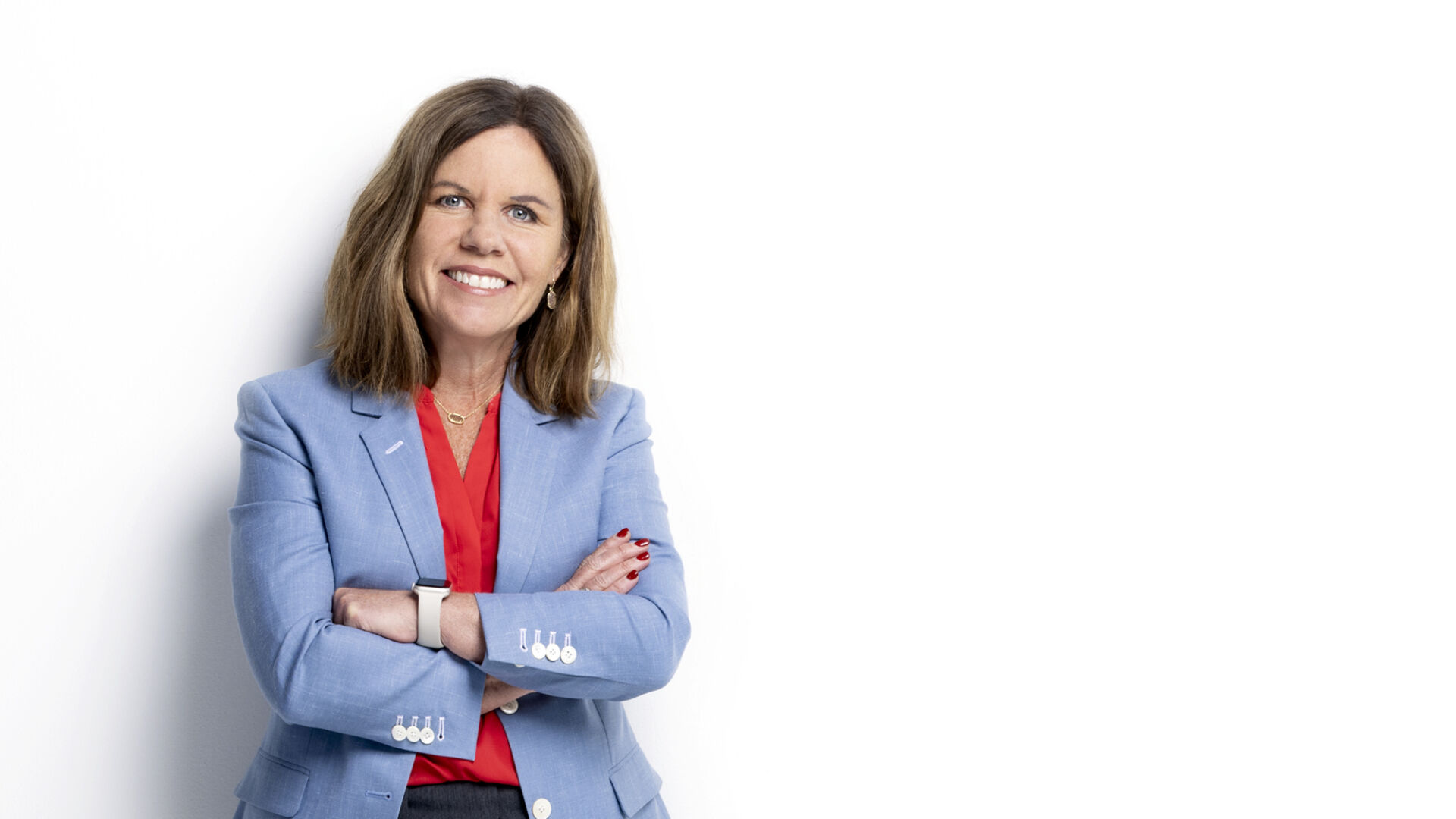
Growing up in her family’s art business, Erin Van Zeeland was dead-set against a future career in sales. (“I sold from the time I was 12 until I graduated college,” she says.) So the irony of her current role isn’t lost on Van Zeeland, who is now Schneider National’s chief commercial officer, responsible for all things sales and marketing at one of the largest transportation companies in North America. She also leads the strategy and execution of the company’s fastest growing segment: logistics.
Insight caught up with Van Zeeland to learn more about her journey from reluctant salesperson to CCO, the impact of mentorship on her career and the innovation driving Schneider forward.
Insight: You’ve been with Schneider for 31 years. What’s been your trajectory that led to your role as CCO, group senior vice president and general manager of logistics?
Van Zeeland: I started with Schneider directly out of college. Schneider came to Penn State looking for business management majors. I interviewed with the company, but I didn’t know anything about Big Orange or transportation logistics. I decided to take a role with Schneider leading 40 drivers out of the Harrisburg terminal. And that’s really where I got a strong appreciation of all the work that professional drivers do in getting products that we love on shelves. About a year and a half into my career, I moved to Green Bay. It was supposed to be a part-time gig to understand more of the organization, but I just really loved the fast pace, the tech, the people — one person in particular, I met my husband at Schneider — so I really immersed and called Green Bay my home.
You were a bit of a reluctant leader early in your career. What changed?
When I was pursuing my degree in college, I wanted to make sure that it wasn’t in sales because I had done that my whole life. I told myself I didn’t want to lead an organization and I didn’t want to sell. When I came to Schnieder, I was in operations and I loved it. Then I got a call from the leader at the time saying he wanted our fourth largest account to be our first largest account and he wanted me to be the salesperson. I felt all of the blood leave my face because I was trying to stay away from sales. But my amazing mentor recognized that I had the confining belief that sales had to push something on someone and he said to me, “Erin, you’re never going to be a good enough salesperson to get Walmart to decide to move a load that they don’t have to move. Everything that we are moving has a need. You need to think of it as a business partnership and create a win-win for both organizations.” When he gave me that lens of what selling is — creating solutions — that changed everything. I found that I absolutely loved and thrived working with companies, understanding what their current state is, what they think they want or what they don’t even realize is possible, and then matching that with what we can do. Thank goodness I had somebody who saw that in me and opened that door, because it has been nothing but a blessing for me ever since.
And now you are that mentor for so many people, particularly women who are part of the Schneider Women’s Network you co-lead as a steering committee member.
The Schneider Women’s Network has been in existence as a business resource group for 16 years, and we have almost all of our women leaders engaged in this network to be able to talk about common issues and learn and grow together. Some of the most critical events have been when other women leaders get in front of the group and we just get to hear the trials, the benefits, the triumphs, what helped them along the way. I mean, those are the stories that really stick for our women. We want to ensure that more women know that they’re ready for future leadership [opportunities]. And so we’re coaching and developing and helping them have the picture of what is possible. It matters when new people coming in from outside of Schneider or from college look around the organization and see all kinds of places where women are leading and where women are making a difference. When they see that broad picture of all the things that they could possibly do, they get a lot more confidence and create a much stronger picture of what their career could be about.
You were recognized as the 2023 Distinguished Woman in Logistics by the Women in Trucking Association. Can you talk about some of the recent growth in the logistics segment?
Maybe 30 years ago we launched the logistics segment because we understood that customers had much bigger needs than what we could do on our own assets. So we started to bring in other carriers and capabilities so we can meet more of the customers’ needs, and then blend in the assets but do it on a broader scale. The logistics segment is by far the fastest-growing segment within Schneider. We have a $2.5 to $3 billion spend that we hire third parties to execute freight on our behalf for our customers. So it’s a very, very large part of our business. We work with over 50,000 carriers to really understand what the customer is looking for and to bring the right carrier capacity for that need across all kinds of modes. We think of logistics as a huge incubator of talent, because we hire a lot of college grads into these roles that represent Schneider in frontline discussions with customers, but it’s also the tech incubator. We’ve done a lot of work on the tech front that really has spearheaded a lot of the growth within logistics.
Can you give an example of that technological innovation?
One of the things that has changed pretty dramatically in recent years is the expectation of price transparency. When you need, let’s say, a certain kind of jack for your TV, you go online and get options with prices delivered straight to our door. That whole idea of price transparency has gone from our personal lives to what people expect in business. We have made substantial investments in data science and “freight power,” which are tools that shippers have either on their desktop or on their phone so that they can instantly see their options to execute a shipment. Those tools are critically important. That investment in freight power has been huge and wildly successful. We do over 20,000 quotes a day from thousands of shippers. Four years ago, that would have required somebody calling and manually figuring it out, working in multiple areas across modes. Now that happens within a second. We’re really excited about how technology has moved us forward in that space.