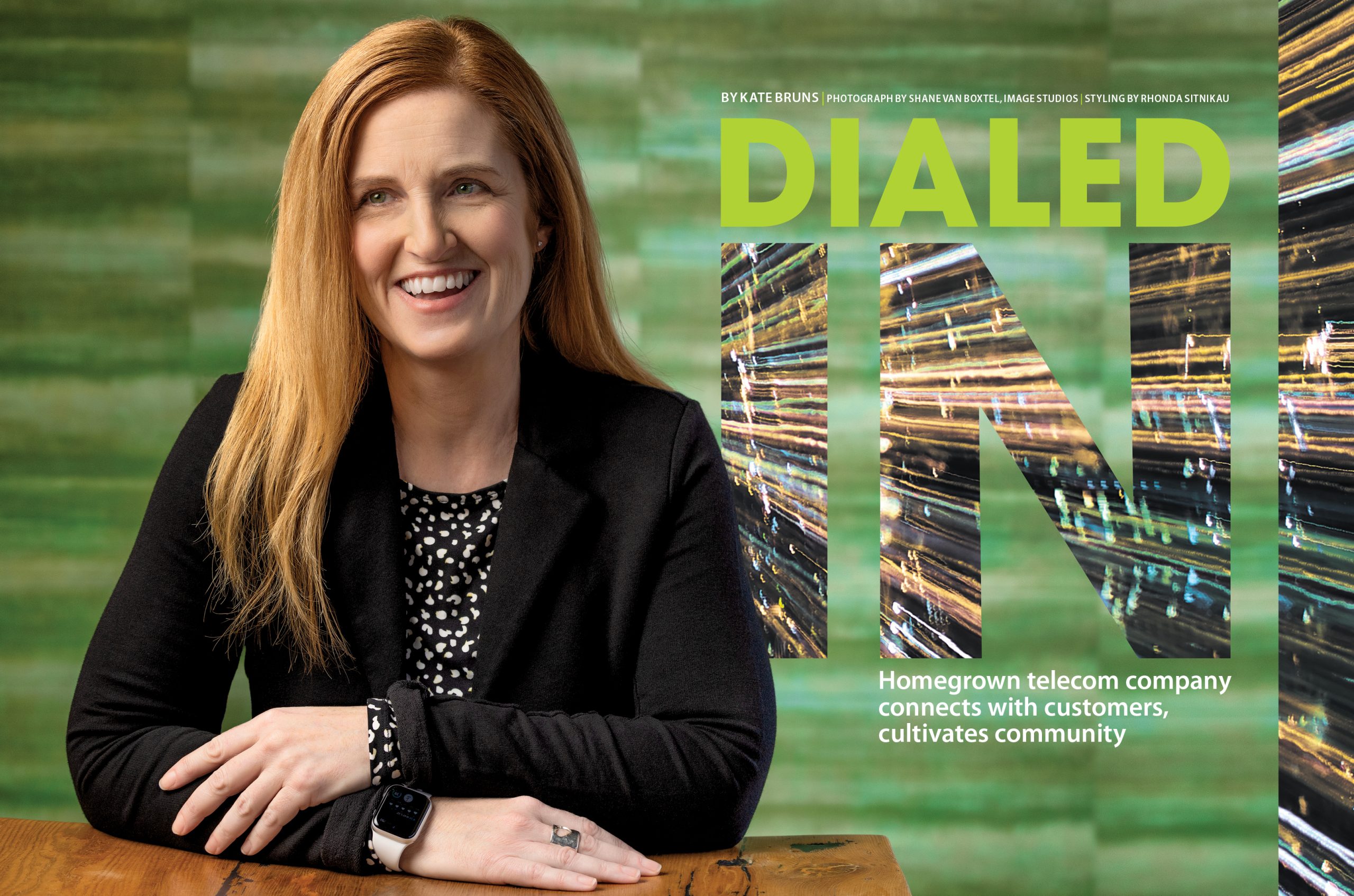

One of Brighid Riordan’s childhood memories is the Sunday the phones went out in Pulaski. During a bridge construction project, crews accidentally severed a massive piece of fiber running under a nearby creek. The crew of the local telephone company, which was owned by her family, assembled for what Riordan remembers as something of a “re-splicing party” — a spirited team effort made even more festive by laughter and her mother’s home cooking.
Today, Riordan’s family still owns the local phone company. The services it offers today are different, but little else has changed.
“I know we’re special,” says Riordan, who recently became the company’s fifth CEO. “There are very few companies like us. Period.”
Locally grown
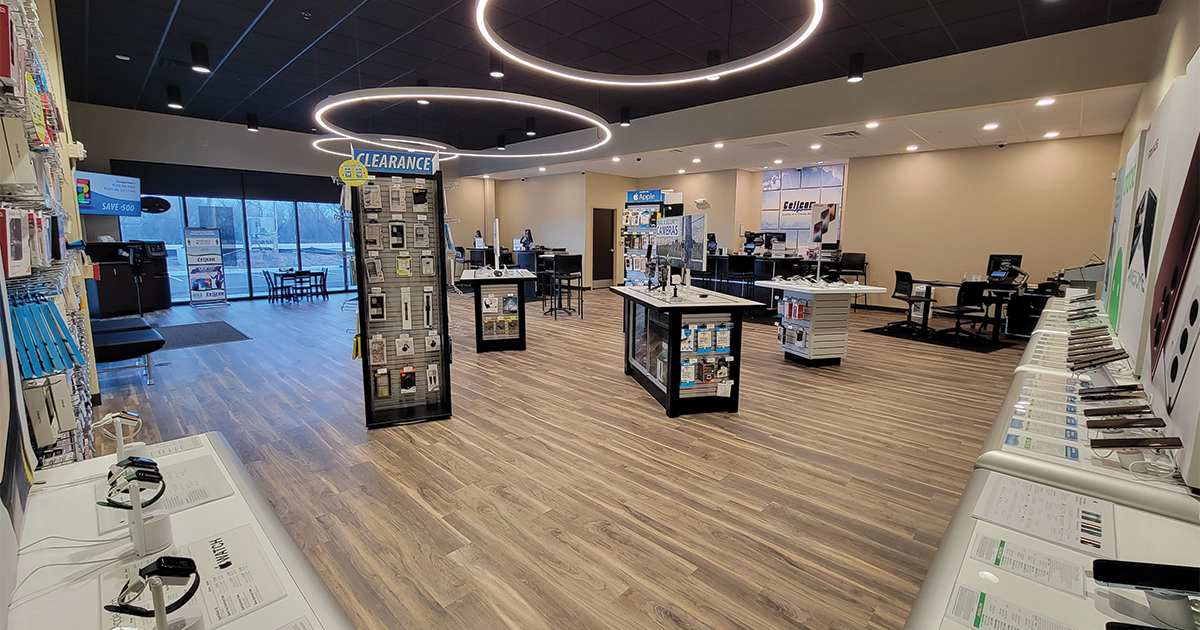
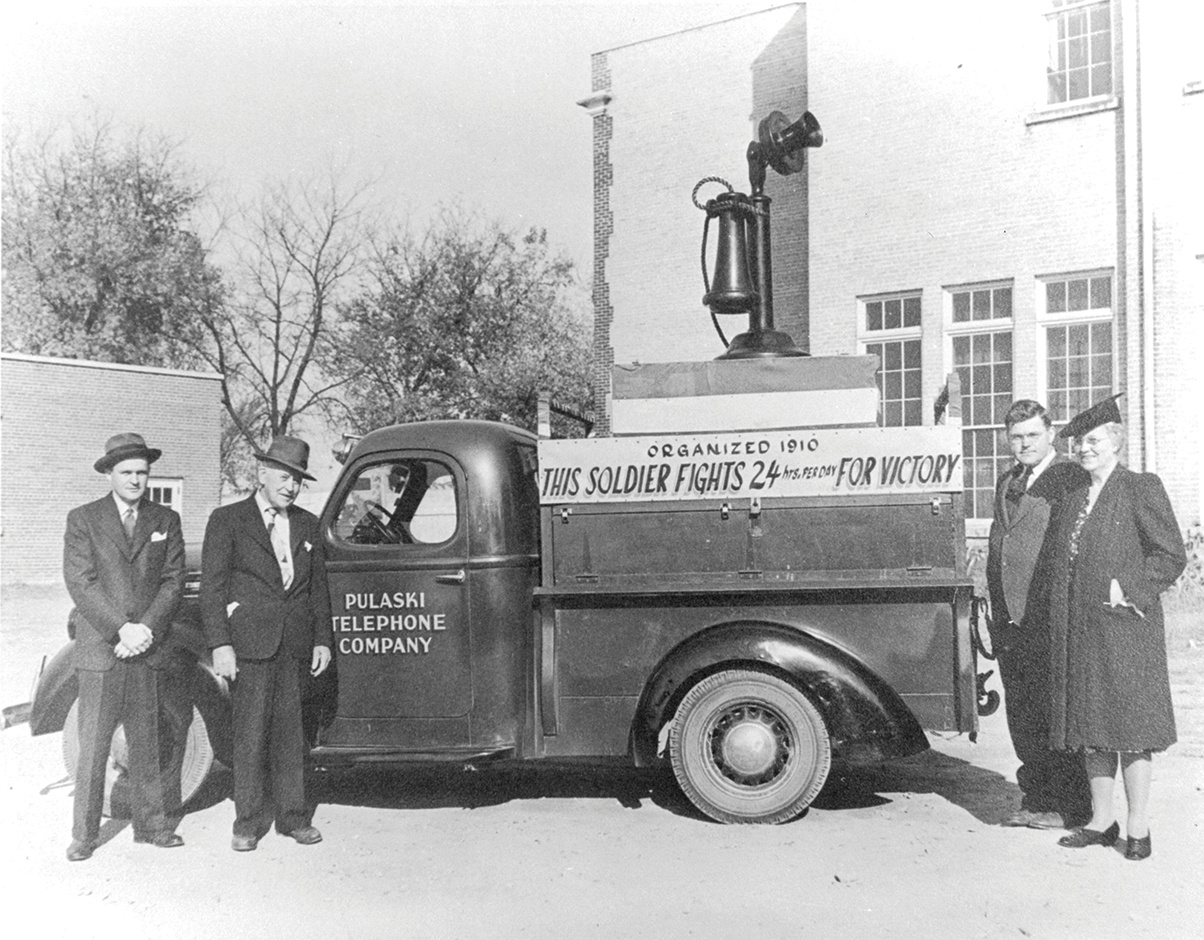
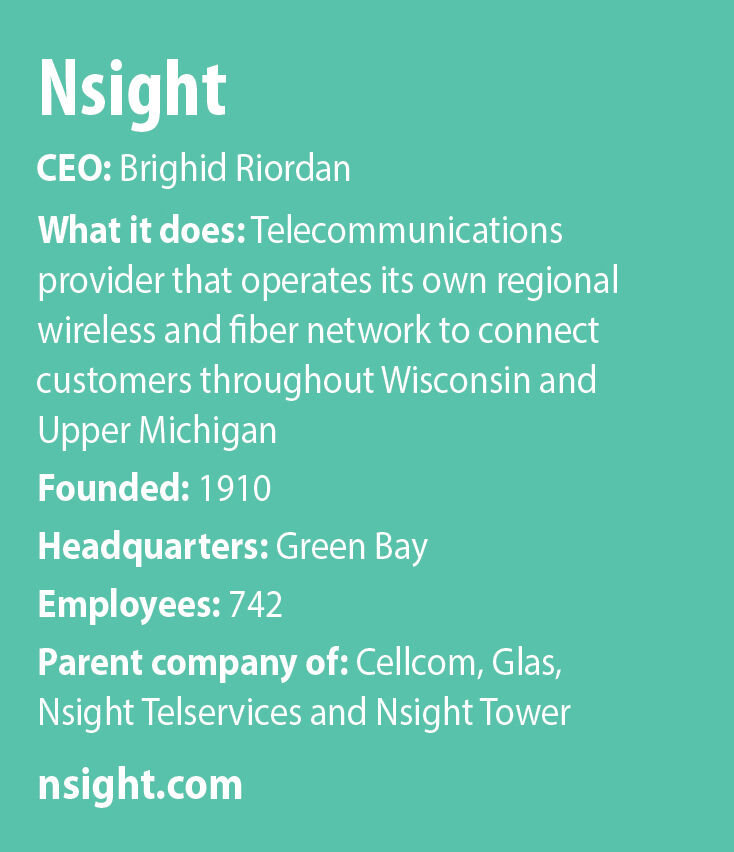
What started in 1910 as Pulaski Merchants & Farmers Telephone Co. today is known as Nsight. It’s the parent company of Cellcom, which is the nation’s sixth-largest wireless carrier, as well as Nsight Telservices and Nsight Tower. Nsight operates a homegrown network, its employees live and work in Northeast Wisconsin and Upper Michigan, and its philanthropy is local. But it’s still a global player on the telecom stage.
“One of the urban myths we have to get over is that the Cellcom network only works in the footprint that we built,” Riordan says with a frustrated laugh. “We would never be here! The other one we have to get over is that we’re an MVNO (mobile virtual network operator) using someone else’s network. We have built this network from below the ground up.”
Riordan says the company prides itself on its local roots, responsiveness to community needs, exceptional customer service and constant innovation. Since entering the family business in 1999, she has held a variety of positions — including public relations, enterprise sales and marketing. She most recently served as Nsight’s chief innovation officer. When Mark Nazé resigned last year to spend more time with family, the board tabbed Riordan as the candidate best positioned to take over. In November, she was named as the fourth generation of the Riordan family to be Nsight’s CEO.
“I found my passion here,” says Riordan, a former journalist and nonprofit executive who credits her success to never being afraid or unwilling to learn. “It was never my dream to be CEO, but my goal has always been to add value to the company however I’m asked, so I knew it was certainly possible. The harder part for me was just owning it. My father is a legend in this business. He is in the national wireless hall of fame with the guy who pioneered 4G. The shoes he wore were just massive.”
Riordan officially took over as CEO Jan. 1. On April 10, Nsight held its first all-company meeting in six years. Riordan says her message to employees was focused on Nsight’s unique opportunities to serve customers and continue to slay giants like Verizon, T-Mobile and U.S. Cellular.
“We are in a very dynamically changing industry,” she says. “And we are unusual even compared to our large provider competitors because of the breadth of what we do. Now everybody in the U.S. has to have broadband and they’re fighting about whether they should get it by fiber or fixed wireless, and we’re out here saying, ‘We can do anything you want; which one makes sense in this area?’
“I’m not sure anyone else can do that as a company.”
The rural broadband promise
Kurt Kiefer can speak to Nsight’s ability to offer customized broadband solutions. A longtime state education official who served on Wisconsin’s Governor’s Task Force on Broadband and recently retired to Baileys Harbor, Kiefer has studied the broadband issue from many angles. He has seen how it affected schools across Wisconsin, especially during the pandemic.
Today he volunteers as a member of the Door County Economic Development Corp.’s broadband committee and chair of the Baileys Harbor Broadband Ad Hoc Committee. In both roles, he is hard at work helping fulfill the promise of equal access to broadband in rural areas like the peninsula.
Kiefer likens the challenge of rural broadband to the Rural Electrification Act of the 1930s. The project isn’t sexy or even very financially lucrative, so when it came to choosing a provider to work with Baileys Harbor, the community knew it needed someone honest, fair and community-minded. Nsight stood out. Kiefer says his team received customer references that described the company with words like “quality,” “professional,” “integrity” and “family.”
“When we solved this problem many moons ago, we called it rural electrification and we solved it with the kinds of companies like Brighid’s,” Kiefer says. “They’re the ones who are solving the problems.”
Kiefer says geographic and geological challenges make Door County an especially difficult place to install fiber, but the biggest struggle is the market.
“The ROI is just too low; it’s a capital problem where the demand is not going to be sufficient to meet the supply,” he says. “Well, does that mean rural America doesn’t get this stuff?”
“Our niche is rural,” says Riordan, whose company also received a grant in 2018 to install underwater fiber with service to Door County’s Washington Island. “There’s no business case to bore through rock. A lot of our competitors nowadays have decided they only want to serve the dense portions [of our population] and not anyone else. We’re here to serve our whole area.”
In Baileys Harbor, Nsight is working closely with community officials to help write grant proposals and requests for proposal, as well as manage the project of installing what is estimated to be as many as 200 route miles of fiber. Kiefer says Nsight also will help train the community on how to get connected — even providing education on new technologies that will become available, such as streaming video.
“Right now if you want to stream in Baileys Harbor, you’ll get the spinning circle of death,” he says.
Riordan points to Baileys Harbor as a prime example of why communities need and should support locally grown companies like Nsight.
“I’m no longer shy about saying, ‘So, are you a Cellcom customer?’” she says. “Anyone else they might choose has headquarters somewhere else. If you want to choose the wireless company that impacts your local economy the most, there’s no question it’s us.”
Woman-Led Business
Riordan is quick to point out that her great-grandmother Florence essentially ran Pulaski Merchants & Farmers Telephone Co. in the 1920s, ’30s and part of the ’40s. With that caveat, Riordan says she is proud to officially be the first woman at the helm of Nsight. After seeing a long series of male CEOs in the family business, Riordan said that — although it was never actually said — she grew up just assuming her brother Dan would someday take on the role.
“I remember thinking, ‘Oh my gosh, I don’t think that’s what you’re supposed to do,’” Riordan says of the day her brother announced he was switching his major from business to education. Since that time, Riordan says she has spent a lot of time thinking about gender roles and researching issues for women in business, including self-esteem.
“Sometimes women decide they’re not qualified and count themselves out,” she says. “Why do we do that? That’s ridiculous. A man would go, ‘Sure, I can do that.’ And I’m not saying they’re not right; I’m just saying why don’t [women] do that, too?”
Riordan says one of her priorities as Nsight’s CEO is creating a space where women feel confident, valued, empowered and included. Being a single mother herself, she also says she hopes the pandemic helped companies everywhere understand the value of working moms.
“We can’t [say] we aren’t going to offer any flexibility and just lose them,” she says. “We can’t have women feeling like they have to hide their children. For me, ‘working on the business’ means empowering these brilliant individuals to bring their talent to work. My job is to make Nsight worthy of their time and talent.”
Her other job was getting to the bottom of a can of paint.
“There’s never been pink in this office anywhere, and now it has a lot of pink,” she says. “It makes a statement. I never liked pink before, but there’s just something about it. It makes females feel empowered.”
Being Green
While Riordan has just learned to embrace pink, green is a color that’s been part of her identity much longer.
An outdoors enthusiast who loves hiking and describes herself as constantly “in awe of the Great Lakes,” Riordan says clean air and water are critical to maintaining the value of our region — and Nsight’s business practices reflect that. Cellcom was one of the first companies to promote cellphone recycling, and the proceeds from the collection are donated to local environmental causes.

The company was responsible for putting the first green cell site into commercial use in the Upper Midwest. It also recently forged partnerships with the University of Wisconsin-Green Bay to facilitate high-tech research for the forthcoming National Estruarine Research Reserve on Green Bay.
Michael Zorn, associate dean of UWGB’s College of Science, Engineering and Technology, says Cellcom reached out to the university after it installed LoRaWAN technology around Green Bay. The company wanted to know how the Internet of Things hardware might be useful in conservation research.
“There were several of us who saw definite potential,” Zorn says. “The technology is really perfect for the type of measurements we’re trying to take.”
Zorn says that, while this isn’t the first time a company has reached out with the idea to support research, Nsight’s foresight is uncommon. His chemical research team is now collaborating with Cellcom and UW-Milwaukee to study summer water quality in the bay. Thanks in part to a grant from the Great Lakes Observing System, researchers this spring installed two buoys with low-power environmental sensors that will track dissolved oxygen, chlorophyll and harmful algal blooms in the water.
Meanwhile, a second UWGB project will leverage the LoRaWAN gateways to help track the migration of pelicans and cormorants. Jian Zhang’s senior design students are helping create and fit high-tech harnesses for the birds. Zhang, an assistant professor in mechanical engineering, says his students consider the opportunity to interact with the technology and partners at Cellcom invaluable. “This is really important to the students, and [Cellcom] helps us solve all our technical problems,” he says.
“As long as we’re here, we want to support [our region] being the best it can be,” Riordan says. “I think this research is going to be groundbreaking; it’s because of these partnerships we can create with people who are doing exciting research that we can be the best in the world. They have this world-class technology connectivity company they can trust right here.”
Caffeinating community culture
And then there’s coffee.
Glas, which means green in Irish and is as much a nod to the Riordan family’s Irish heritage as to sustainability, has been an Nsight brand since 2009. It’s a coffeehouse and coffee roasting business with locations in Sturgeon Bay, Shawano and Green Bay. Riordan says the business operates with the goal of a zero or less-than-zero carbon footprint.
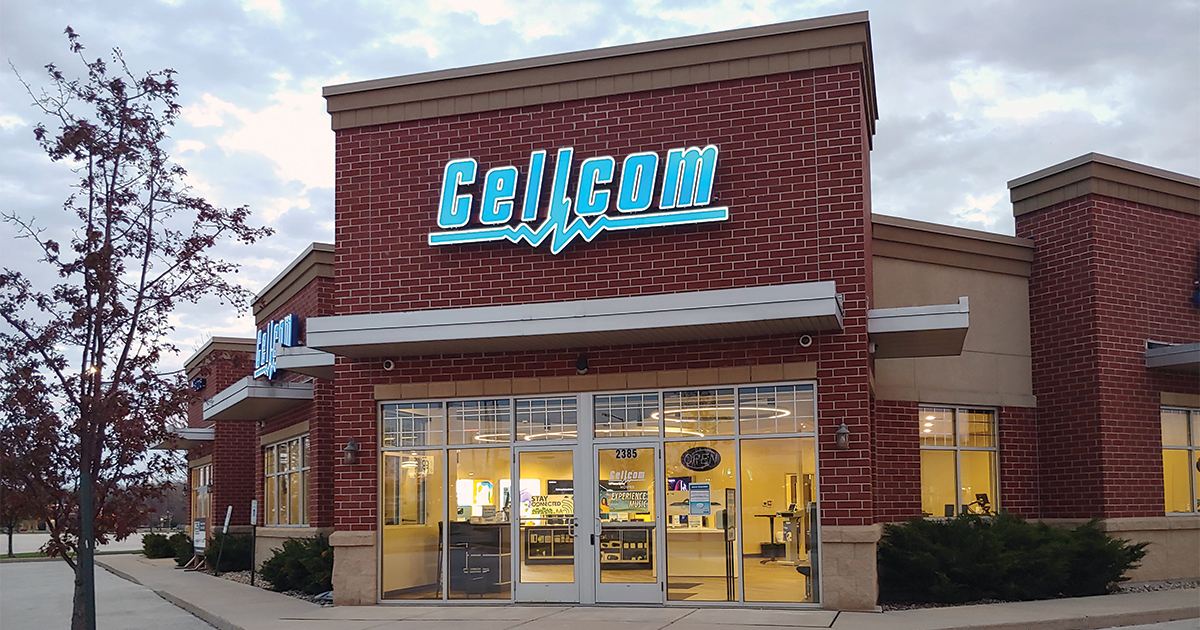
Glas’ first location was in Sturgeon Bay, created when Nsight purchased land to construct a new Cellcom retail store and wanted to share the space with a complementary tenant.
“We decided on coffee,” Riordan recalls. “We wanted a place where people could go while they were waiting for their phone or to try something out, and we didn’t want it to be a Starbucks because Door County is so unusually local.”
So, her father and then-CEO, Pat Riordan, said, “let’s just do it ourselves.”
More than a decade later, Glas is still going strong. Riordan’s brother Tim serves as Nsight’s chief coffee roaster. The Sturgeon Bay coffeehouse, which has a green roof, and Shawano coffeehouse, with a beautiful riverfront view, are attached to Cellcom stores. Each also has a conference room that nonprofits can rent free of charge.
The Green Bay location is different, occupying a small, old-fashioned storefront along Adams Street filled with upcycled wood furniture and a few high-tech nods to its parent company. Since Nsight is the 25th-largest employer in Brown County, Riordan says she thought it was important to have a presence in downtown Green Bay, and the downtown Glas has been fruitful for facilitating community connections without wires. Riordan stops every morning for her caffeine fix and frequently runs into community movers and shakers, including the mayor.
“Glas has been a great coffeehouse; it’s got great clientele from all walks of life, and there’s a lot of organic conversations that happen there,” Riordan says.
Continuing conversations
Riordan still gets the company’s social media alerts on her phone. It’s a blessing and a curse, she says, but it ultimately underscores the commitment to customer satisfaction that has been a hallmark of the family business for decades.
“I want to hear from customers,” she says. “I want to be personally accountable for their experience. In light of the pandemic, we were seeing so many people hurting. We can be a healing company. We can remind people about the good, about respect and [getting answers] from a human being. Let’s have a conversation.”
For Riordan, the conversation starts with customers at home and ends with future growth.
“I think with how technology has changed, we have a new opportunity to expand,” she says, pointing to Nsight’s engineering core as one of the best in the world as well as the future opportunities that exist through network virtualization.
“We love doing this, and we think we can do it better than anyone else,” Riordan says. “It’s incredible to watch, and it just fills me with purpose.”