
State legislators are seeking to bring some rules and regulations to the fast-growing world of cryptocurrency and other digital assets.
Cryptocurrency is a digital currency that uses secure technology called blockchains to record and verify transactions, instead of relying on a financial institution. An estimated 21% of Americans own crypto.
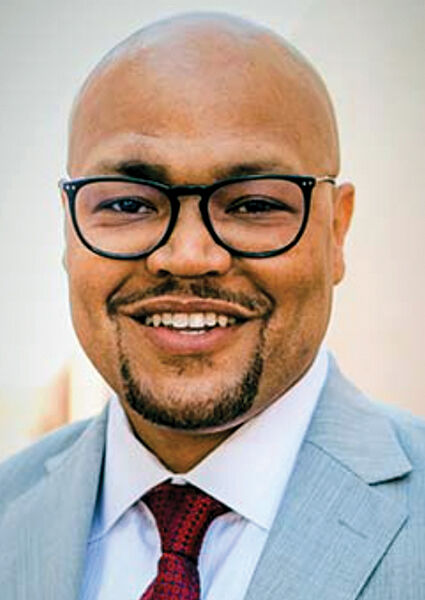
Preston Cherry, an assistant professor of finance and personal financial planning at the University of Wisconsin-Green Bay, says consumers fit into a couple of categories when it comes to crypto. Some people are very involved and want to use it as currency and an investment vehicle, while others are not sure what it is and how it could fit into their personal finances.
“It is becoming more common as a way to store value and use it as a medium of exchange,” says Cherry, who is also a financial planner. “There are more custody platforms, such as PayPal or Venmo, that can be used to hold crypto, and debit cards that pull from crypto assets.”

Rep. Adam Neylon, R-Pewaukee, introduced Assembly Bill 471 in September to put some regulations in place around crypto and blockchains. The bill would allow “staking,” which is the process of locking up a certain amount of cryptocurrency to operate a secure blockchain network and, in return, earn rewards, which is similar to earning interest.
“We’re one of three states that does not allow staking. This regulation will bring certainty to businesses, entrepreneurs and others who rely on blockchains,” Neylon says.
Some businesses or people using blockchains have opted to leave Wisconsin because there are no regulations around staking, he says.
“Crypto and blockchain are here. We’re fixing a problem that already exists,” Neylon says.
‘Desperate for clarity’
Ian McCullough, who goes by Cullah, recently testified in front of the Committee on Financial Institutions in support of AB 471. As president of the Stand with Crypto chapter in Wisconsin and a member of Wisconsin Blockchain Business Council, Cullah says some rules are necessary to bring clarity to the industry.
“We need some kind of legislation in place. Right now, attorneys are contacting the Wisconsin Blockchain Business Council that they have cases where people have crypto and blockchain — digital assets that are worth a lot of money — and there is some disagreement of ownership, such as going through a divorce, and they don’t have any idea of how to handle it,” says Cullah, who became involved in crypto through his career as an open-source musician.
He says accounting firms are also “desperate for clarity of how to use” digital assets.
AB 471 includes language that says agencies or governments can’t prohibit the use of blockchains, Neylon says. While this is not an issue now, he says it’s included to prevent something from happening in the future.
The bill also seeks to exempt individuals and businesses engaged in mining, staking, developing blockchain software or transferring digital assets from having to obtain a money transmitter license from the Department of Financial Institutions.
“It’s important to have rules in place so Wisconsin residents know how to use this transformative technology,” Cullah says. “The rules will empower Wisconsin to have an economy to compete in the 21st century.”
The state could also benefit financially if AB 471 goes through since the rewards earned by those who hold crypto would be taxable.
Neylon is working on an amendment to the bill that would include more stringent rules around crypto kiosks since they can be a source of fraud. For example, there may be a transaction cap or posted mandatory fraud warnings on kiosks.
“Some people get scammed using the kiosks by sending money to bad actors — people who aren’t who they say they are,” he says.
On the federal level, the GENIUS Act (Guiding and Establishing National Innovation for U.S. Stablecoins Act) was signed into law in July. The law’s key provisions include mandating cryptocurrencies pegged to a fiat or other low-risk assets are backed 1.1 by U.S. dollars and regulate stablecoins, creating a licensing framework for issuers and setting rules for their custody, reserves and redemption.
The U.S. House also introduced the Digital Asset Market Clarity Act of 2025, which would establish clear regulatory definitions and jurisdiction for digital assets, determining if a crypto asset is a security, which would be overseen by the Securities and Exchange Commission, or a digital commodity, which would be overseen by the Commodity Futures Trading Commission.
Cullah says the Clarity Act is a big step forward in answering key questions people may have around crypto, including who should regulate it.
“Without rules in place, fraud happens, and it can damage the reputation of the underlying technologies,” he says.
Raising crypto awareness
Rep. Amaad Rivera-Wagner, D-Green Bay, held a gathering in Green Bay in August to help raise awareness about crypto by bringing people together to share what they know.
Rivera-Wagner would like to see state rules in place to make it easier for small businesses to use crypto, including the creation of an Office of Financial Technology and Innovation.
“It would be great if we could provide education and training to see if businesses want to use crypto as a payment, for example. It may not be a fit for every business, but at least they can explore it,” he says. “This will help create a culture of innovation.”

There is a lot of interest in crypto and the state “shouldn’t put its head in the sand” when it comes to crypto legislation, Rivera-Wagner says. “Unregulated markets can be dangerous,” he says.
Cherry says interest in crypto continues to grow, especially with a stablecoin tied to the U.S. dollar.
“There are several reasons why people are attracted to using crypto, including how it does not rely on financial institutions and is a good way to store value,” Cherry says. “Large institutions and the government are now involved so it has become a very real asset, and more people are holding it.”
While some see crypto as a way to pay for different items or services, there’s a growing group of people looking to crypto as an investment opportunity, Cherry says.
When deciding whether to get involved with crypto, Cherry says consumers need to consider their investment horizon. If they have a long way to go until retirement, such as members of Gen Z, then crypto could be a tempting option. For those who are older and have a shorter timeline to retirement, such as Gen X, the potential of market volatility makes it a less attractive option.
“You have to ask yourself if you can handle that uncertainty of volatility. There’s a risk of its value cratering on itself. Bitcoin is the most mature form of crypto, so it’s a bit more stable. You run into risks with some new, smaller coins,” Cherry says. “Think about your risk tolerance and don’t just get involved just because you have FOMO.”
Increased legislation around crypto can help users and investors since there will be better reporting and more transparency involved with the transactions, he adds.
“I advise people to think carefully before getting involved in crypto,” Cherry says. “It’s definitely not as safe as some other investments.”