


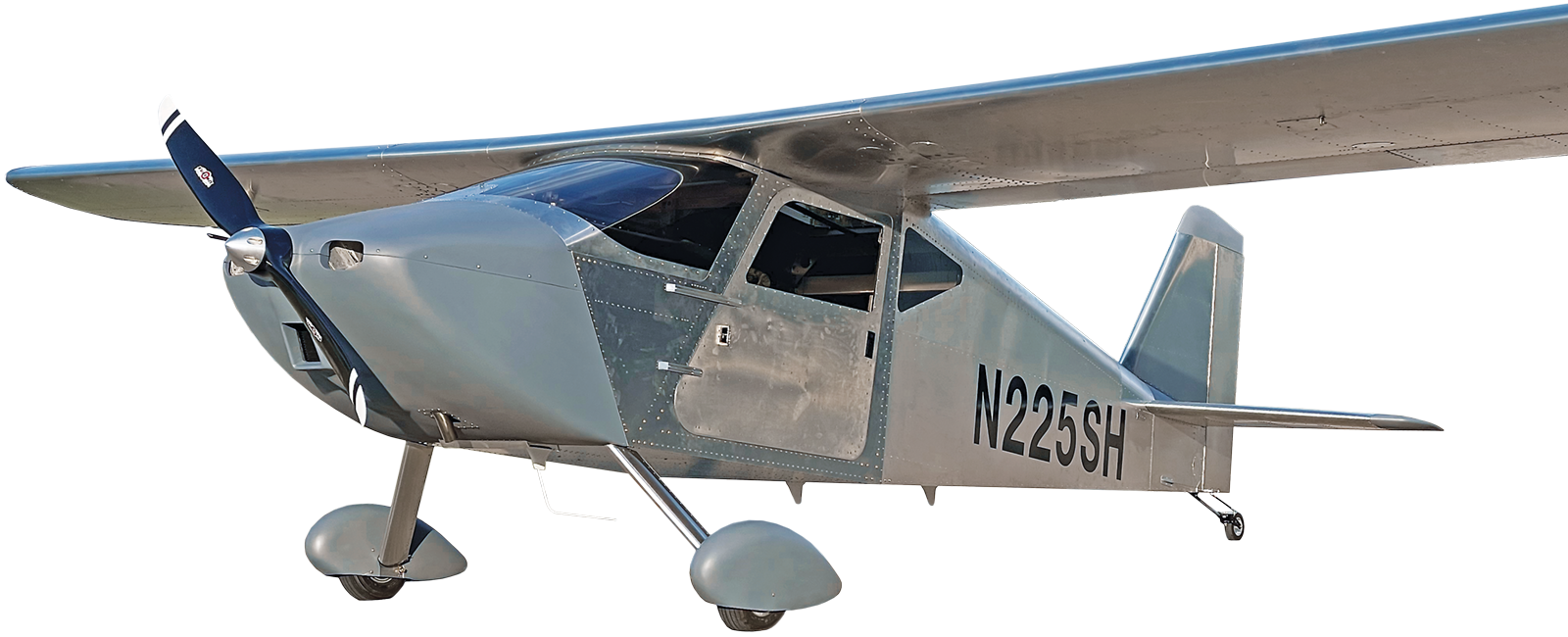
Mark Schaible says his company, Sonex, LLC, couldn’t hope for a better location.
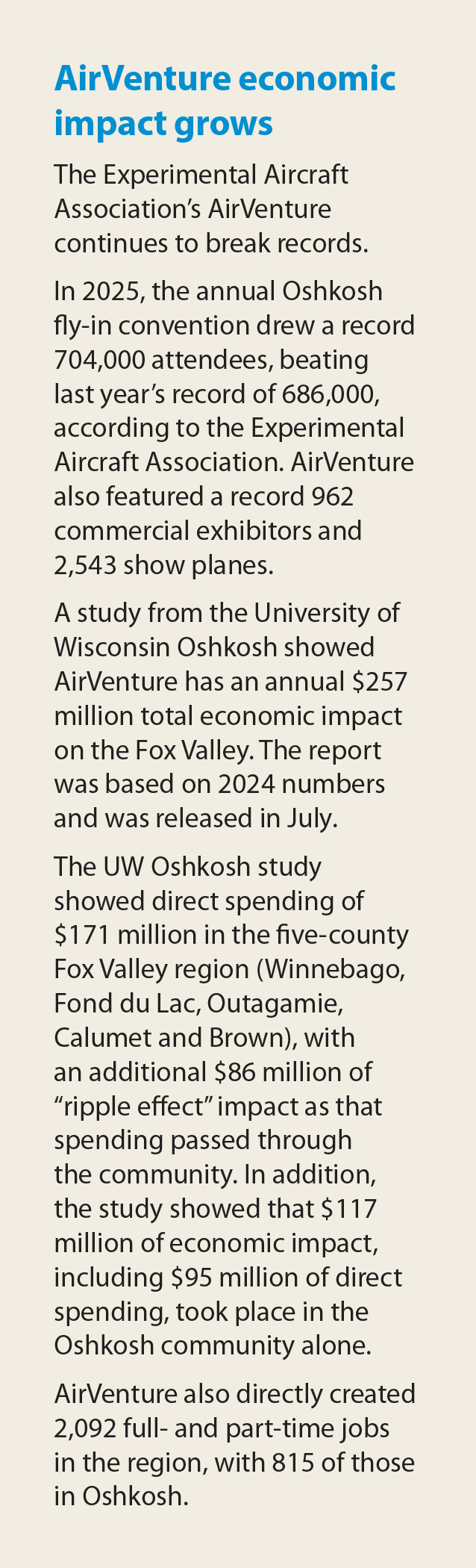
Headquartered at Wittman Airport in Oshkosh, the plane kit manufacturer has a front-row seat at the annual Experimental Aircraft Association’s AirVenture, the world’s largest air show.
“It’s a tremendous marketing advantage for us since it’s the world’s largest trade show in our industry,” says Schaible, who adds Sonex has a semi-permanent hangar on the EAA grounds for AirVenture. “Our location also allows us to be more involved with what’s happening at EAA throughout the rest of the year.”
Being located at Wittman with its long main runway is another benefit, he adds, since it is “perfect for test flights. It’s a huge advantage for us to be located where we are.”

Sonex is one of more than a dozen businesses that call Wittman Airport in Oshkosh home, along with EAA, Basler Flight Service, two private flight schools, Fox Valley Technical College, Hilton Garden Inn and more. Three large area businesses — Oshkosh Corp., CR Meyer and Alliance Laundry — also house their flight departments at Wittman.
The home airport to EAA, Wittman becomes the world’s busiest airport for a week each July.
“We have a lot of business and activity here throughout the year,” says Airport Director Jim Schell. “We’re the busiest general aviation airport in the state. We have great infrastructure here and can handle any aircraft.”
Basler Flight Service, the airport’s fixed-based operator (FBO), handles ground services and provides fuel, hangar space, catering, rental cars and more to aircrafts.
“We’re a strong general aviation airport that can support the needs of any planes coming through,” Schell says.
FVTC offers aviation-focused programs at its S.J. Spanbauer Aviation & Industrial Center campus in Oshkosh. In addition to pilot training, the college offers an associate’s degree in aircraft electronics and a technical diploma in airframe and power plant mechanics. FVTC also offers an online associate’s degree in aviation management for students looking to get into the business side of aviation.
Jordan Tews, department chair of aeronautics and chief flight instructor, says the programs address different pathways in aviation industry.
“Demand is high across all the programs. There’s a pilot shortage, and the need is growing in aviation careers,” Tews says. “Having the world’s biggest aviation event in our backyard helps spark interest in aviation careers.”
Wittman Airport also developed an 80‑acre aviation business park at its southern edge. The park, co-owned by Winnebago County and the City of Oshkosh, is a shovel-ready site, Schell says.
“It’s designed for aviation and aerospace businesses and there’s also space where the former commercial airline building used to be that’s ready for redevelopment,” he says. “EAA provides us with a great opportunity to share the area with companies.”
A major economic impact
The Appleton International Airport has a nearly $2 billion economic impact on the region, according to a report released in August in conjunction with the airport’s 60th anniversary. That’s a major increase from 2015 — the last time a study was conducted — when it was $676 million.
“It’s amazing to see how much we’ve grown in the past 10 years. When people think of the airport, they think about commercial flights, which makes sense, but we are so much more with the businesses located here,” says Airport Director Abe Weber. “We work hand‑in‑hand with our tenants, and we’ll continue to grow as they grow.”
Appleton International Airport completed its own expansion this year with its terminal project, which doubled the size of the airport’s concourse to handle the increase in flights and passengers using the airport.
The airport is home to multiple businesses, including Gulfstream, FVTC’s Public Training Center — including its specialized Aircraft Rescue and Fire Fighting training program, Appleton Flight Center (its FBO), Allegiant Air and more. In 2025, the airport supports 7,626 jobs, up from 3,267 in 2015.
Gulfstream is the largest Appleton tenant and home to a modernized maintenance repair and overhaul facility, sales and design center, large cabin completions facility and a new paint hangar. With a footprint of more than 624,000 square feet, the company employs nearly 1,400.
Gulfstream has called the Appleton International Airport home for more than 25 years and has steadily grown its operations during that time, says Ron Aldrich, vice president and general manager of Gulfstream’s Appleton facility.
“We’re seeing continued demand from customers around the world, and with that comes the need to expand our facilities to support this fleet group,” he says. “The region has proven to be a successful business environment for Gulfstream and our customers, in large part thanks to the local workforce and partnerships that have contributed to Gulfstream’s continued investment and growth in the area.”
Allegiant Air, which runs 16 nonstop flights from Appleton to destinations across the country each week, made the decision in 2022 to base jets and their crews at the airport to help with the airline’s continued growth, says Kristen Schilling-Gonzales, vice president of network planning.
“We started with 66 employees in Appleton and now we’re up to 158,” she says. “The community has been supportive of the flights we have, and by having planes and crews in Appleton it’s easier for us to add more flights and destinations for travelers.”
Weber says the airport will continue to grow thanks to a grant that will open an additional 100 acres for development. The funds will help pay for a roadway, utility installation and some apron construction.

General aviation services have helped drive overall growth at Austin Straubel International Airport in Green Bay. The airport’s two FBOs — AvFlight and Jet Air Group — provide numerous services to private planes that fly into the airport, including fuel, hangar space, ramp space, ground handling, lounges for passengers and pilots, maintenance and more.
“Seventy-five percent of jets at the airport are tied to general aviation, whether it’s a pilot with his own small plane to large charter jets, like we see when the Packers are playing,” says Airport Director Marty Piette.
Pilotsmith, Inc. has its headquarters and flight school based at Austin Straubel. Piette says half of the airport’s take offs and landings can be tied to the flight school.
Austin Straubel is also home to a customs facility, which sees about 400 private flights annually. Piette says pilots find it easier (and cheaper — it’s free) to land in Green Bay, go through the customs process and then take off to their final destination.
Away from the runway
While many aviation-related businesses are based at airports in the region, some are not. Take Airport One, for example. The Neenah-based marketing technology business works with 43 airports across the country, including Appleton International Airport.
Co-founder Steve Roome says work to help increase passenger counts — and flights — at the airport led to the creation of FlyMyAirport platform.
“The business started from a place of frustration and a passion for local communities. As a marketing expert, I was asked to help the Appleton airport reduce ‘leakage’ — where travelers choose to fly from a different airport — and gain more nonstop routes,” he says.
Launched in 2023, the product guides consumers to airport websites, where they share where they want to go and are connected to flights from the airport.

“People usually go to third-party sites like Expedia or airline sites when they start planning a trip, and that can bypass flights that are available from a local airport,” Roome says. “I wanted to help airports take control of the passenger journey and create an ‘ownable path to purchase’ for their local travelers.”
In addition to FlyMyAirport, Airport One launched RouteBuilder, a marketing companion that creates, places and optimizes destination-focused advertising.
“What started as a local effort to help Appleton quickly grew into a powerful concept that could help airports of all sizes, all over the world. We’re proud of our Wisconsin roots, and it’s a testament to the fact that this region has immense talent and that great ideas can start small and have a powerful impact far beyond where they began,” Roome says.