When Grant Fisk, co-founder of Volatus Infrastructure, invoked “The Jetsons” in introducing an electric Vehicle Takeoff and Landing (eVTOL) vertiport that’s slated to come to Wittman Regional Airport in Oshkosh, Hanna-Barbera cartoon fans of a certain age must have been filled with giddiness.
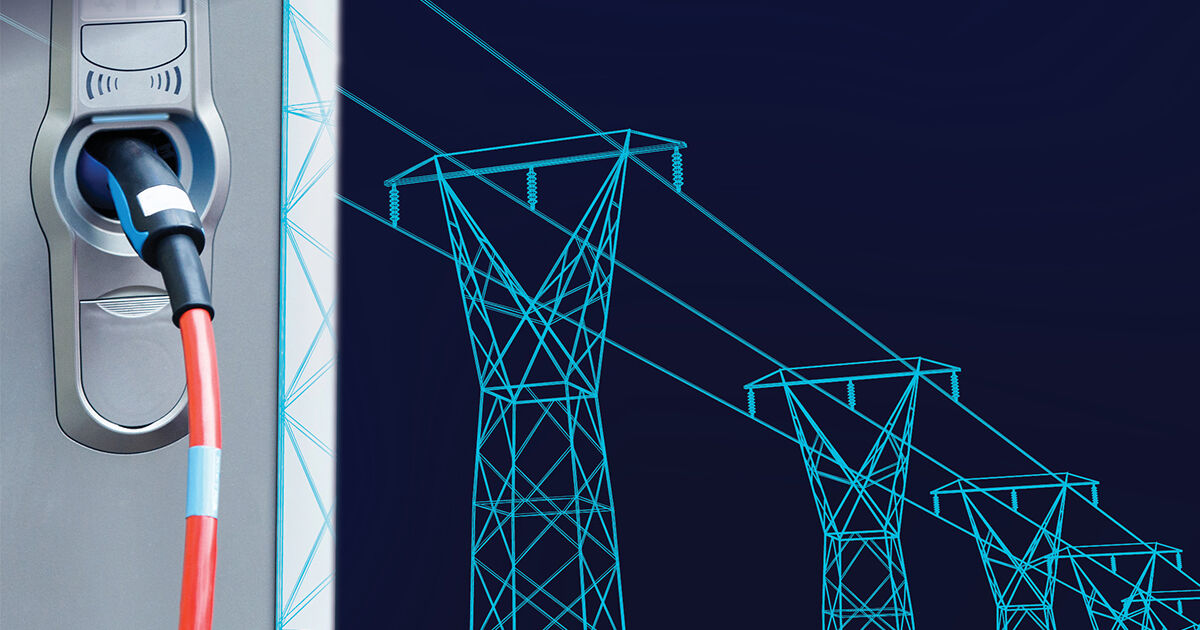
Vertiports are locations designed to support eVTOL aircraft, and the one at Wittman will become “the first in the Americas,” Fisk said at an April press conference announcing the investment. It will include a terminal with amenities, a landing pad and a “vehicle-agnostic” charging station, meaning it can charge any eVTOL aircraft.
Volatus is using modular construction techniques to finish the project on an expedited timeline. When the vertiport comes online later this year, it will “provide an infrastructure solution at a price point that will bring greater access to the eVTOL industry and bring the technology ‘The Jetsons’ promised us to life,” Fisk said.
Winnebago County Executive Jon Doemel said vertiports “lay the infrastructure for the Uber of the airways.” Indeed, Fisk said technology is getting to a point where eVTOL aircraft can fly 200 to 300 miles carrying two to four passengers and cargo.
Vertiports offer a scalable solution that doesn’t take up a lot of land, and innovations continue. Ford is developing a cable for the eVTOL industry that would allow for charging in as little as five minutes, Fisk said.

“Right now, the eVTOL technology is really a chicken-and-egg situation. The product won’t be there unless they know there are charging stations and facilities, and the facilities won’t be there unless they know there are customers flying these types of aircraft,” Dick Knapinski, director of communications for the Experimental Aircraft Association, said at the press conference.
Electric incursion
Flying cars capture the imagination, but they are just one piece of an electric revolution that’s already well underway.
Manufacturers know they must prepare for the disruption of the trend toward electrification. In fact, many have already had efforts underway for a long time.
Oshkosh Corp. boasts a rich history in electric vehicle innovation, says Nader Nasr, the company’s vice president of engineering. “If you look at all our segments, we’ve been engaged in electrification projects since the early ’90s.”
The work began with launching electric projects in the manufacturer’s JLG Industries division, which makes access equipment. Early electric products included scissor and boom lifts and aerial work platforms. In the early aughts, it started working with military customers to develop hybrid electric and diesel electric military trucks.
Throughout the years, the company has continued to develop pilot vehicles and gained experience along the way, Nasr says. In the past four to five years in particular, Oshkosh has made great gains. Factors including a steep decline in lithium-ion battery pricing, an increasing drive toward sustainability and a desire among customers to reduce their carbon footprints have driven the push.
That has all led the company to where it is today, with offerings that include a fully electric front discharge concrete placement prototype vehicle, its Pierce Volterra electric fire truck, eJLTV hybrid electric military vehicles and next-generation delivery vehicles for the U.S. Postal Service.
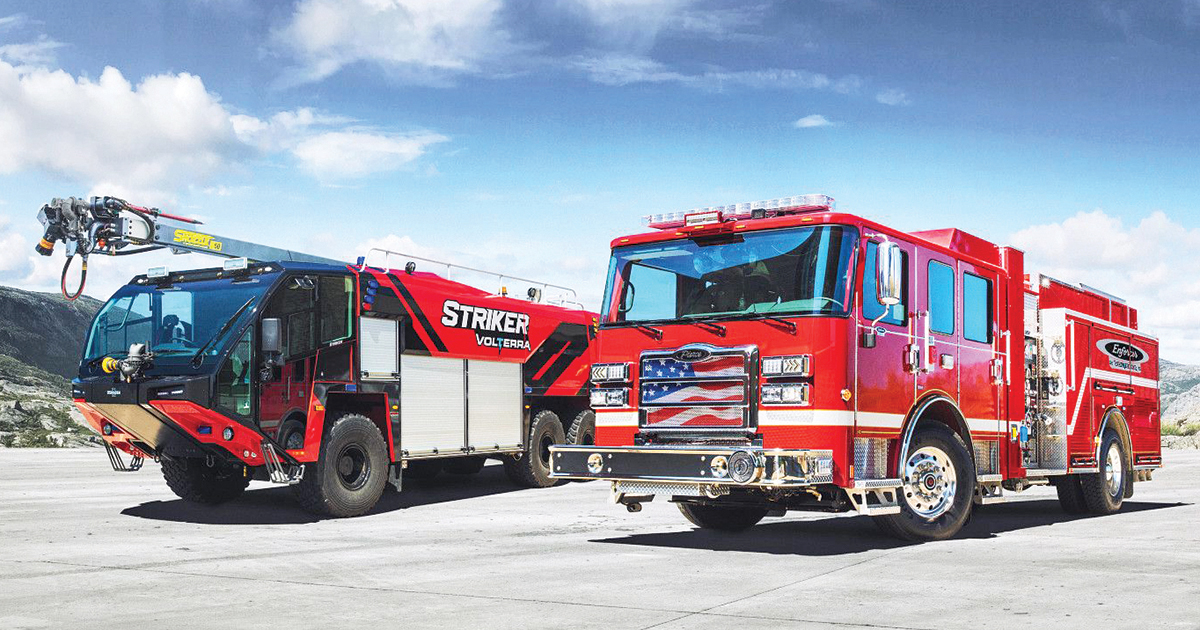
The first Pierce Volterra was put into service in Madison about a year ago and has already completed 1,200 to 1,400 emergency response calls. The eJLTV offers the U.S. Army and U.S. Marine Corps the same level of performance and protection as the base JLTV with the addition of features including silent drive, extended silent watch and enhanced fuel economy.
As for the mail trucks, the USPS placed its first order of NGDVs with Oshkosh in March. The initial order is for 50,000 vehicles and is valued at $2.98 billion.
“We have a lot of activity in every one of our segments on electrification today. We’re always looking to provide our customers with a safe and sustainable product, but most important is the total cost of ownership,” Nasr says, adding that right now, that TCO includes the toll of rising fuel prices.
With talk of electrification comes concerns about the infrastructure necessary to support it. Nasr says grants as well as funding from the government are becoming available to aid infrastructure efforts. The manufacturer also works with hardware, infrastructure and energy management software providers to devise solutions.
“At Oshkosh, our strategy is not only to sell the electric vehicle. We work with our customers to provide an end-to-end solution. Some of our small customers don’t know where to start in that area, and we want to support them to make sure the launch of these electric products is successful,” Nasr says.
Beyond cars and trucks
A lot of the talk around electrification has centered on cars and trucks. Last summer, transportation and logistics provider Schneider announced it was adding 50 Freightliner eCascadia 100% battery-electric trucks to its fleet. And in April, Masters Gallery Foods became the first manufacturer in Wisconsin to deploy the 100% electric Class-8 truck from maker Orange EV. The trucks are designed to replace diesel-powered vehicles.
The electrification trend doesn’t stop at wheeled vehicles, however. Fond du Lac-based Mercury Marine, a leader in sustainability efforts, debuted its Avator electric outboard concept at the Miami International Boat Show in February.
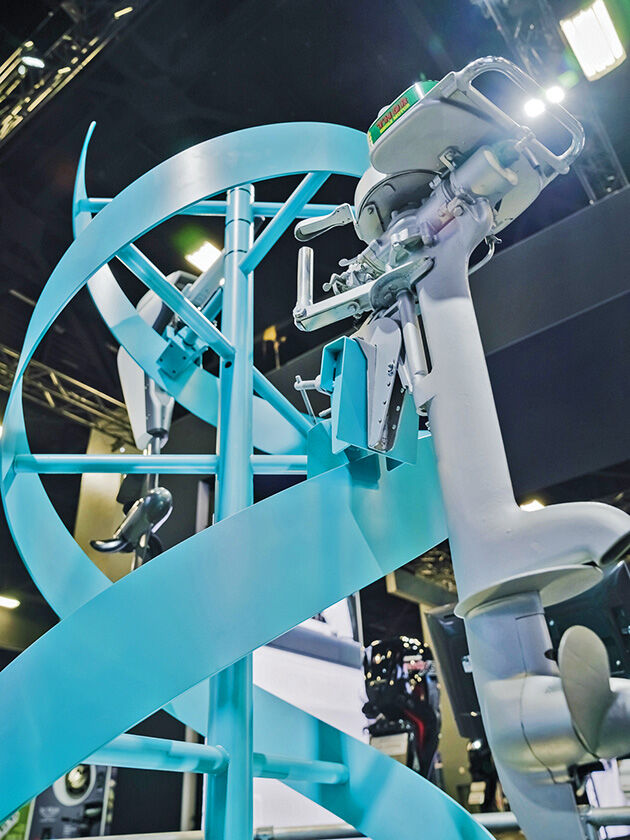
“We intend to deliver another way for people to enjoy the best experience on the water while also building on Mercury’s commitment to sustainability. Protecting the environment and the waters we enjoy is critical to our company,” Mercury Marine President Chris Drees said in a video announcing the outboard.
The product is part of a drive toward the possibility of zero-emissions boating. The company is on track to reach its goal of an 80% reduction in outboard emissions by 2025, Drees said.
Andrew Przybyl, Avator technical manager for Mercury Marine, said the company is positioned well to innovate in this space. It’s addressing all the major aspects that are important to boaters: durability, corrosion resistance, fit and finish, and even the way the tiller feels in one’s hand.
“We view electrification as an opportunity for anyone to enjoy the water, whether for fishing or sailing or just to enjoy nature, even where traditional fuel sources aren’t available or allowed,” he said.
Brillion-based AriensCo also is using its industry-leading expertise to create electric offerings in its lawn care segment. Grant Wilson, director of product management for AriensCo, says the company strives to be a good steward for both the environment and the community it serves, and offering electric products that reduce emissions is part of that.
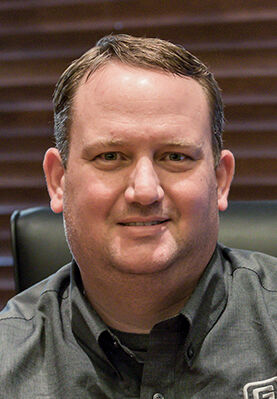
“That’s why we’re leading and are on the forefront of developing these technologies for our industry,” he says. “We’ve been building commercial lawnmowers for over 100 years. We know what it takes to make a piece of equipment that’s going to meet the needs of our customers.”
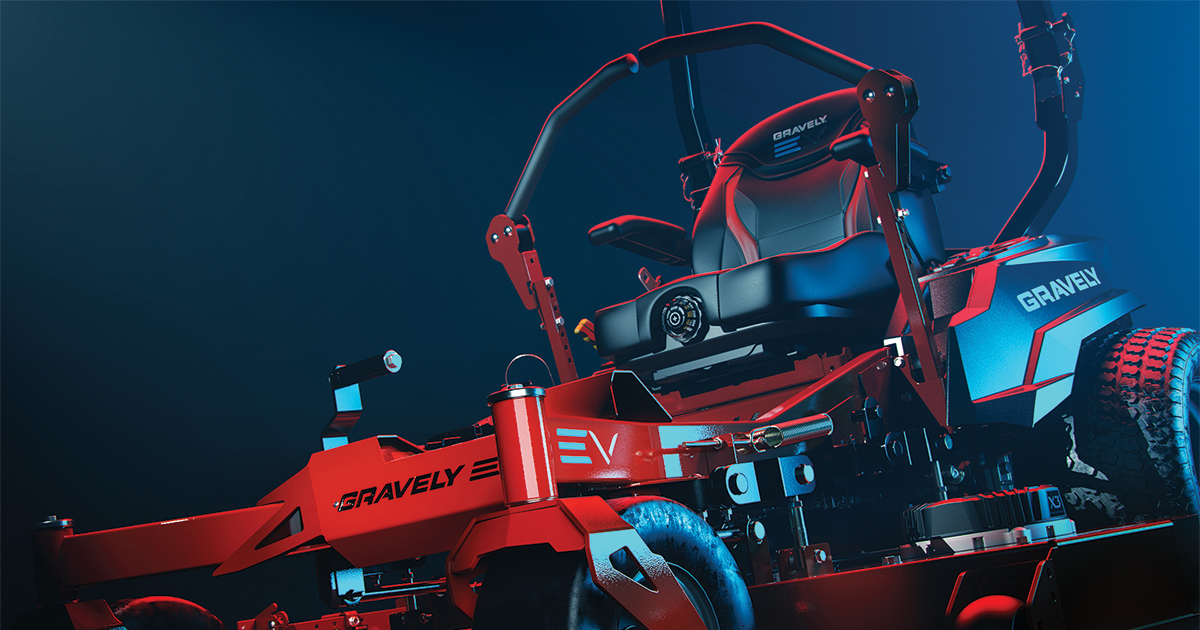
About five years ago, the manufacturer decided it wanted to be the first company to offer an electric zero-turn lawnmower. It set out to create a product that would deliver the promise of its Gravely commercial mower while also meeting sustainability goals.
That extended beyond limiting emissions, Wilson says. Noise, vibration and exhaust also affect operators of lawn equipment.
AriensCo’s Gravely Pro-Turn EV model is a high-end offering that costs more than traditional gas-powered mowers, but demand for the product has remained high. There’s a payback period of about 1,000 to 1,200 hours for electric mowers when compared to gas machines, thanks to reduced maintenance and wearable item costs and not having to buy fuel, Wilson says.
When he attended a recent green expo in California focused on power lawn care equipment, Wilson saw a lot of interest from people across sectors, from government to schools to big contractors. Some municipalities and states will face regulations on what kinds of equipment professionals can use, while other early adopters are turning to electric options because they think it’s the right thing to do.
“If you look at handheld equipment, that reached 50-50 parity gas versus electric about three years ago,” Wilson says.
The future will include more electrification, he says. It’s more difficult to create electric products for AriensCo’s snow removal division because of the need to operate in low temperatures. It also remains costly to invest in electric commercial lawn equipment. Wilson expects that to improve as government incentives and subsidies come out to encourage the move toward electric.
Charging ahead
Electrification also changes talent and education needs. Jian Zhang, assistant professor in mechanical engineering at UW-Green Bay, is preparing students for that future. It’s not just about electrification but also automation and digitalization. Students must learn about data, AI technologies, machine learning, data science and analytics, he says.
The move toward electrification affects engineers of all kinds. Mechanical engineers, for example, work with thermal analysis, which looks at the heat transfer and thermal management of an object. Engineers are finding ways to improve the thermal management of batteries, which can prevent battery temperatures from rising to dangerous levels.
“The transition from a traditional internal combustion engine to electric vehicles changes a lot. We’re sure that in the future, electric vehicles will overwhelm the traditional vehicles,” he says.
Heather McCombs works with students in other ways and is an advocate for the environment. A faculty member in the UW Sustainable Management graduate program, she keeps her house temperature low to conserve energy, owns a hybrid-electric vehicle and pays a premium to take part in WE Energies’ Energy for Tomorrow Renewable Energy Program, which increases the use of renewable energy and reduces greenhouse gas emissions produced by fossil fuels.

At the same time, McCombs says she believes everyone should have the right to buy and own what they want, and she doesn’t nag other people about their environmental choices because that doesn’t work to change behavior. Manufacturers, however, can influence products on the market in positive ways and offer consumers more choices.
“Companies are integrating sustainability into their products,” she says. “Manufacturers are … embedding that clean energy, that clean power concept into vehicles, so that every vehicle in five years that will be purchased will run on clean energy.”
McCombs predicts that in five to six years, gas stations will offer few gas pumps and many electric chargers and says gas stations should prepare now for the disruption.
“They’re just missing the wave of the future. That’s their beach, and the wave of the future is coming in on their beach, and they’re not riding that wave,” she says.
There’s a lot of talk around public charging infrastructure, but McCombs says that piece might not be as important as it’s made out to be. Electric vehicle owners will become accustomed to charging their cars at home, and simple steps can make a difference. Level 1 chargers that come with EVs provide a full charge in eight to 12 hours, but upgrading to a Level 2 charger can take that range down to between three and eight hours, she says.
Public infrastructure will catch up, McCombs says, and in the meantime, people can encourage their employers to add charging stations at the workplace.
The march toward electric vehicles will continue. As it does, prices will come down, more options will come online, and drive ranges will increase. For example, Honda and GM are teaming up to build more affordable electric cars. They’re anticipated to offer a 250-mile range at a price point of less than $30,000, but they won’t be available for some time yet.
As she does her part to spur change, McCombs is also educating the next generation of college and graduate students as well as, eventually, high school students with a curriculum she has created. “There’s an enormous capacity and potential of green jobs, and we need to train students to fill those jobs,” she says.