

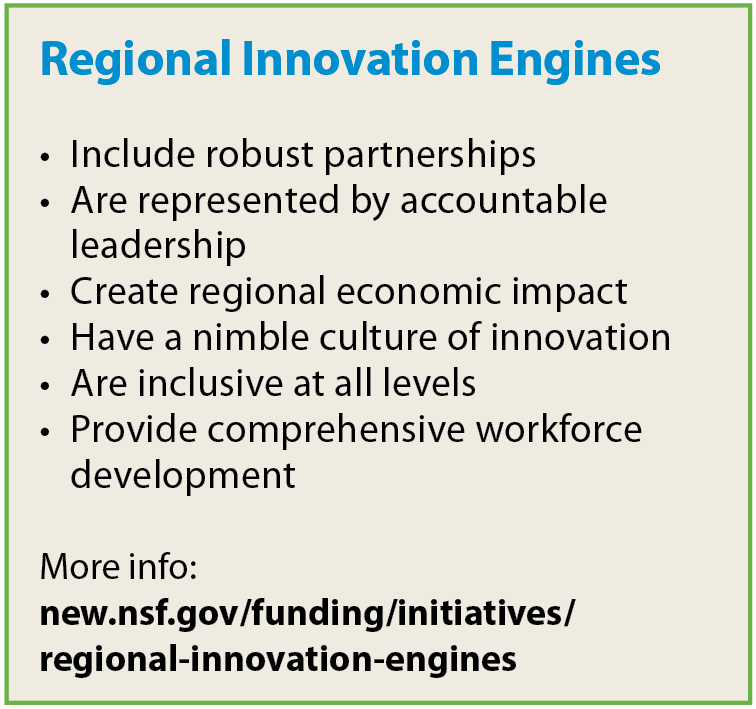
In conjunction with the National CHIPS and Science Act, the National Science Foundation last year created its new Regional Innovation Engines program to catalyze critical technology ecosystems across the U.S. that are stimulating economic growth and creating jobs.
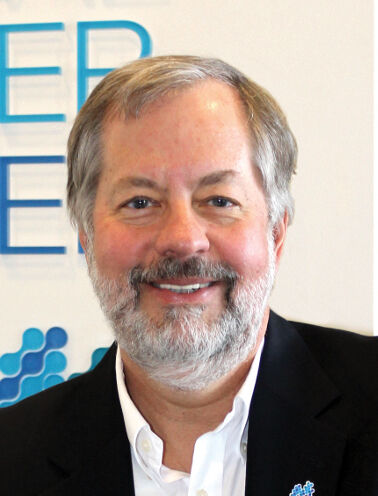
That’s exactly what Milwaukee-based The Water Council is trying to do every day, and CEO Dean Amhaus was inspired to apply.
Eastern Wisconsin, as well as a portion of northern Illinois, he said, has one of the largest concentrations of water technology companies in the world — there are about 240 in Wisconsin alone. Furthermore, the industry cluster exists alongside innovative water utilities and research-focused higher education institutions — the organizations leading change when it comes to issues of water quality and quantity, not only in drinking water but in wastewater and storm water as well. The Wisconsin Economic Development Corp. estimates water technology to be a $15.7 billion industry to which roughly 23,000 Wisconsin workers are connected. The University of Wisconsin-Milwaukee School of Freshwater Sciences is the only graduate-level school of its kind. The region clearly meets the definition of a hub.
The NSF has long been associated primarily with “fundamental basic research” in the world of academia, Amhaus acknowledged, which can sometimes mean it funds research projects that move slowly, get published in journals and are never put to practical use. The new program is a shift to what is called “inspired research” and away from business as usual for NSF in two major ways, Amhaus said: It is intentional about stimulating activity off the coasts, and it is focused on bringing industry partners into the mix.
“NSF said, ‘Listen, we want to do something different. We need to kick the engine into gear and do things much, much faster,’” he said. “It is a very, very different program because it’s able to support economic development, workforce development, technology development and commercialization.”
In May, The Water Council and its ever-growing list of more than 20 partners, which includes New North, Inc., were among 44 groups to receive a development, or “Type 1,” award from the NSF Regional Innovation Engines (RIE) program. Through that award, a total of $995,943 will be available over two years to further develop the region as an innovation engine around water and energy. RIE applicants may also choose to pursue “Type 2” awards, which provide up to $160 million over 10 years. At the end of the two-year Type 1 award period, Amhaus said, The Water Council may choose to pursue a Type 2 award — he sees the lane for this vital technology as mostly clear.
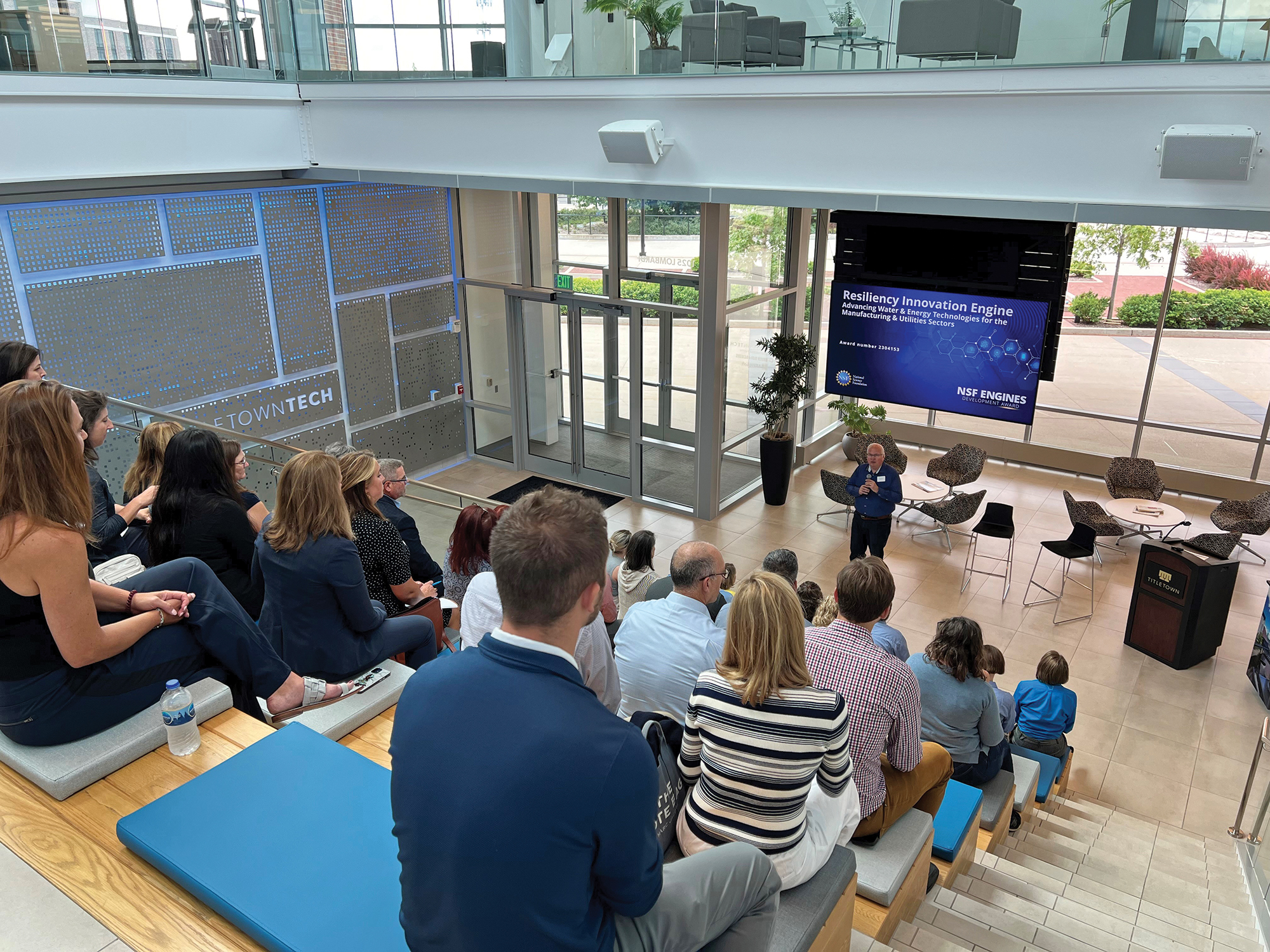
“I will say that, out of all the applications, there was no one else that did anything on water and energy,” Amhaus told attendees at the RIE’s first-ever “road show” this summer at TitletownTech in Green Bay. “Here in Wisconsin, we own the water and energy space.”
Manufacturing for resiliency
Work has begun to create what Amhaus is calling a “resiliency roadmap” with a unified plan that leverages the region’s water and energy industry solution leaders to enable testing, commercialization, scale and deployment of solutions for manufacturers and utilities; develops new research strategies; promotes an entrepreneurial ecosystem; and addresses skills gaps in the workforce, among other things.
“When we look at resiliency, it’s not just short-term solutions to help companies and utilities and communities,” Amhaus said. “It’s a long-term sustainability. We want to bring in more investors, not just from Wisconsin; we should be attracting business or investors from across the country and around the world.”
The Water Council has assembled a “core lead team” that includes the Milwaukee Tech Hub Coalition, Wisconsin Technology Council, Madison Region Economic Partnership, UW-Milwaukee, Marquette University and the Wisconsin Center for Manufacturing & Productivity.
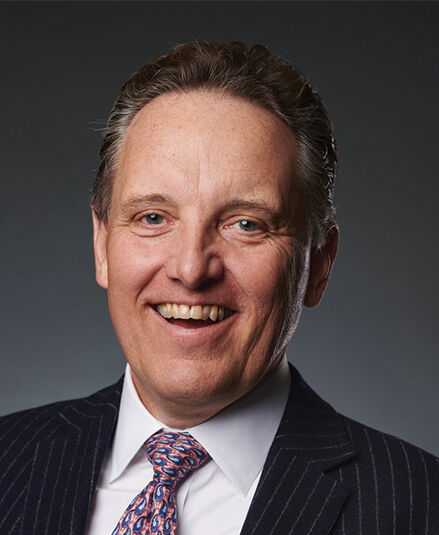
Buckley Brinkman, WCMP executive director and CEO, said the nexus of water and energy is where Wisconsin manufacturers can really benefit from the development of the innovation engine. WCMP is supporting the effort by helping engage and bring awareness to manufacturing companies, even those not focused directly on water technology. It’s an issue that constantly affects the industry, he said.
“For Wisconsin manufacturers, water is probably less of an issue than in other parts of the country; but the energy part, we’re more at risk there because we don’t have [as many] resources inside the state,” he said. “Our part in this is going to be finding places where there are problems around water or energy that perhaps these companies can help resolve, or that the coalition can. This is about setting up supply chains for the future.”
A state that is rich with water resources — 86% of Wisconsin’s borders are water and 21% of the world’s fresh water is along those borders, Wisconsin also has another vital resource that helps position it as an innovation hub, Brinkman said.
“We have one of the biggest manufacturing bases in the country; we’re able to make the things that people create,” he said. “That tightens up the engineering circle. The closer your engineers and your product developers are to the manufacturing floor, the faster innovation tends to be.”
“We want to bring in more investors, not just from Wisconsin; we should be attracting business or investors from across the country and around the world.”
— Dean Amhaus, CEO, The Water Council
In prime position
Ultimately, Wisconsin is an ideal place to solve the world’s biggest water technology challenges not only because of the preponderance of fresh water and innovative minds, but for another key reason: climate.
TitletownTech CEO Craig Dickman, whose company hosted the Green Bay road show this summer, said The Water Council’s vision aligns perfectly with the “AWE” — agriculture, water and environment — segment of TitletownTech’s portfolio.
“From natural resources to climate change, we [in Wisconsin] are in a position to solve the most important problems in the world. I think the work that can be done here can be transformative,” Dickman said.
Road show guest speaker Khalid Alam, founder and CEO of Illinois-based cluster company Stemloop — a biosensor manufacturer that specializes in water quality monitoring, added that it’s important to recognize the region as a future climate refuge.
“If you fast forward 50 years, you’re gonna see that the most important thing societally is access to clean drinking water,” he said. “It will become too hot in places like Arizona to live, and we’re going to see more people coming to our region.”
Amhaus said record heat in the American Southwest, floods in New England and hurricanes along the U.S. coasts are devastating because they cause residents to lose homes as well as jobs — and they also take key manufacturers and utilities offline when they are needed most. Wisconsin is in prime position to lead. Therefore, working on bolstering an industry cluster that’s solving the world’s most pressing problems isn’t just a matter of winning an award, he said:
“It’s what’s right for Wisconsin.”