

UWO
This fall, 2019 Kimberly High School graduate Chase Robinson is returning to the hallways of his alma mater.
But this time, rather than as a student, Robinson will return as a welding and electricity instructor in the school’s technology and engineering department.
“I just love doing hands-on stuff,” he says. “Growing up, I enjoyed working on projects with my grandpa. And in high school I remember wondering if I would like to be a teacher.”
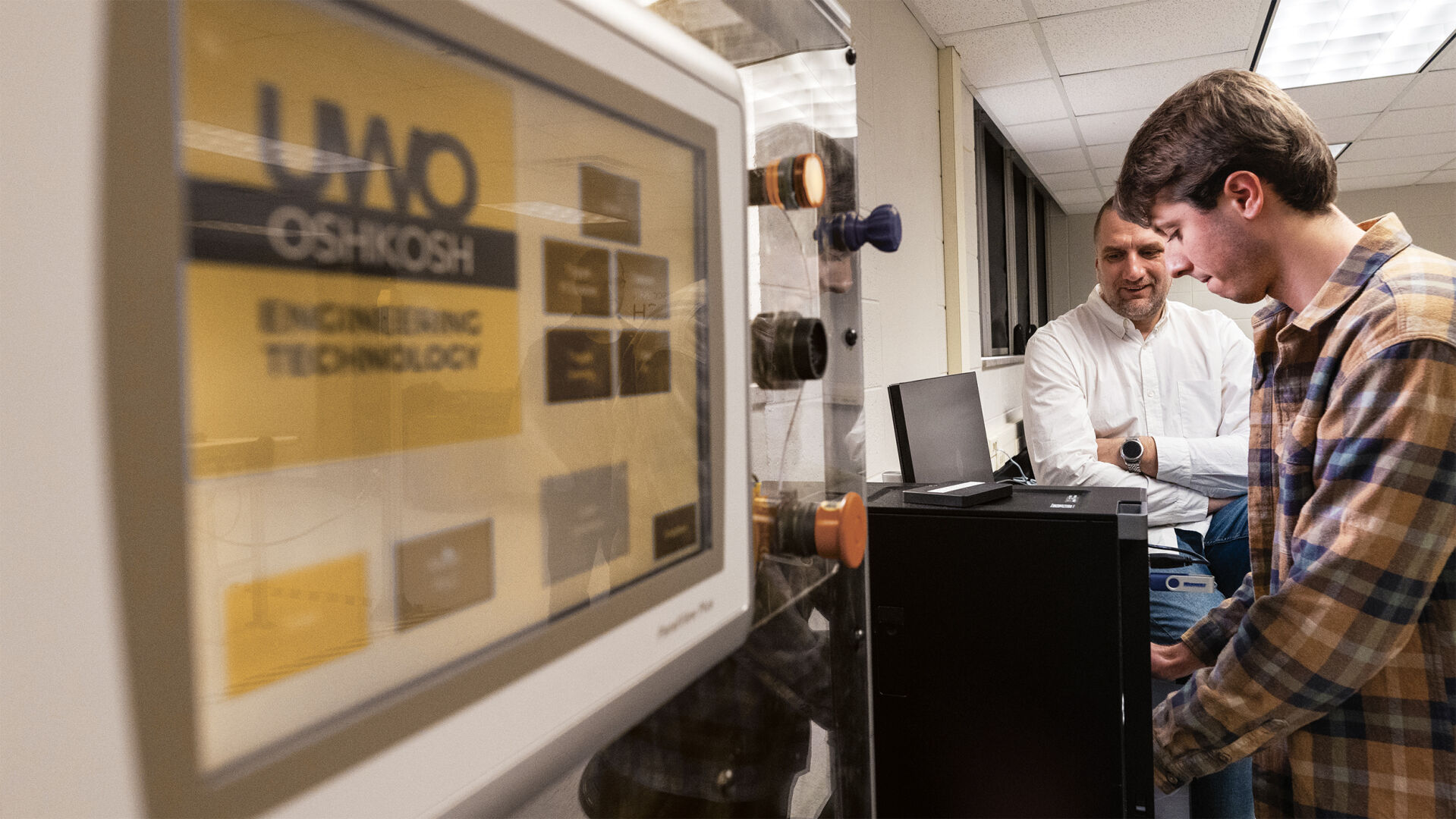
After a year at the University of Jamestown in North Dakota, Robinson transferred to the collaborative technology and engineering education program offered by the University of Wisconsin Oshkosh and Fox Valley Technical College. The program launched in 2020 to help meet the growing demand for technical education teachers in Wisconsin K-12 schools.
“I realized that [Jamestown] didn’t have anything hands-on, and I for sure wanted to do something hands-on for my future job,” Robinson says. “I contacted one of my old tech ed teachers in Kimberly and he told me about a new program with UW Oshkosh and Fox Valley Tech. I looked into it and it really fit what I wanted to do.”
As a first-year technical education teacher, Robinson is a bit of an anomaly — he is one of just two graduates of the program’s inaugural class.
Technical education classrooms have been working in a deficit for years. In the 2020-2021 school year, the Wisconsin Department of Public Instruction reported there were 2,682 full-time career and technical education (CTE) teachers in Wisconsin. This represents 5% of all teachers statewide.
Steve Meyer, past president and current board member of the Wisconsin Technology Education Association, says the low graduation rate is one of many factors contributing to a concerning shortage of tech ed teachers across the state — the impacts of which are creating a ripple effect on local industry and widening the workforce skills gap.
“It is more important now than ever that we provide support for technology and engineering teachers, schools, and business and industry,” Meyer says. “We are at a pivotal point with the technological advancements in our world that we must provide the best education for our youth to be successful in the future. It is a matter of economic development and success for Northeast Wisconsin and beyond.”
‘Workforce in crisis’
Providing the best education for the next generation of tech ed teachers has been at the core of Meyer’s work for more than two decades. He recently left his former position as STEM education manager at FVTC and this fall returned to classroom teaching for the tech ed department at Seymour School District.
In his career recruiting and mentoring tech ed teachers and as a frontline educator, Meyer sees a complex set of factors that have led to the current teacher shortage.
“If there were one reason, it’d be pretty easy to come up with some solution for that, but there’s a lot,” he says. “There’s been a lot of initiatives to try to help with this over the years because this isn’t a recent [problem]. We’ve known this is coming, but the tough thing is that we haven’t got as much traction as we need.”
Overall low teacher retention is one major contributing factor. According to the DPI’s 2022 Educator Preparation Program and Workforce Analysis Report, Wisconsin educators continue to leave the state’s workforce at an alarming rate. About 40% of first-year teachers either leave the state or the profession altogether after just six years. Only 68% of students who completed an education preparation program were employed in a Wisconsin public school.
“This report shows what we’ve known for some time now: Our education workforce is in crisis,” State Superintendent Jill Underly said.
The DPI report broke down the teacher shortage by subject area. It identified career and technical education as one of the shortage areas of greatest concern — it was the third (40%) most-cited subject area shortage behind special education and math.
Resolving the shortage starts with educating the educators, but few universities offer technology and engineering education programs — currently UW-Stout, UW-Platteville and UW Oshkosh are the only four-year universities that offer such programs in Wisconsin.
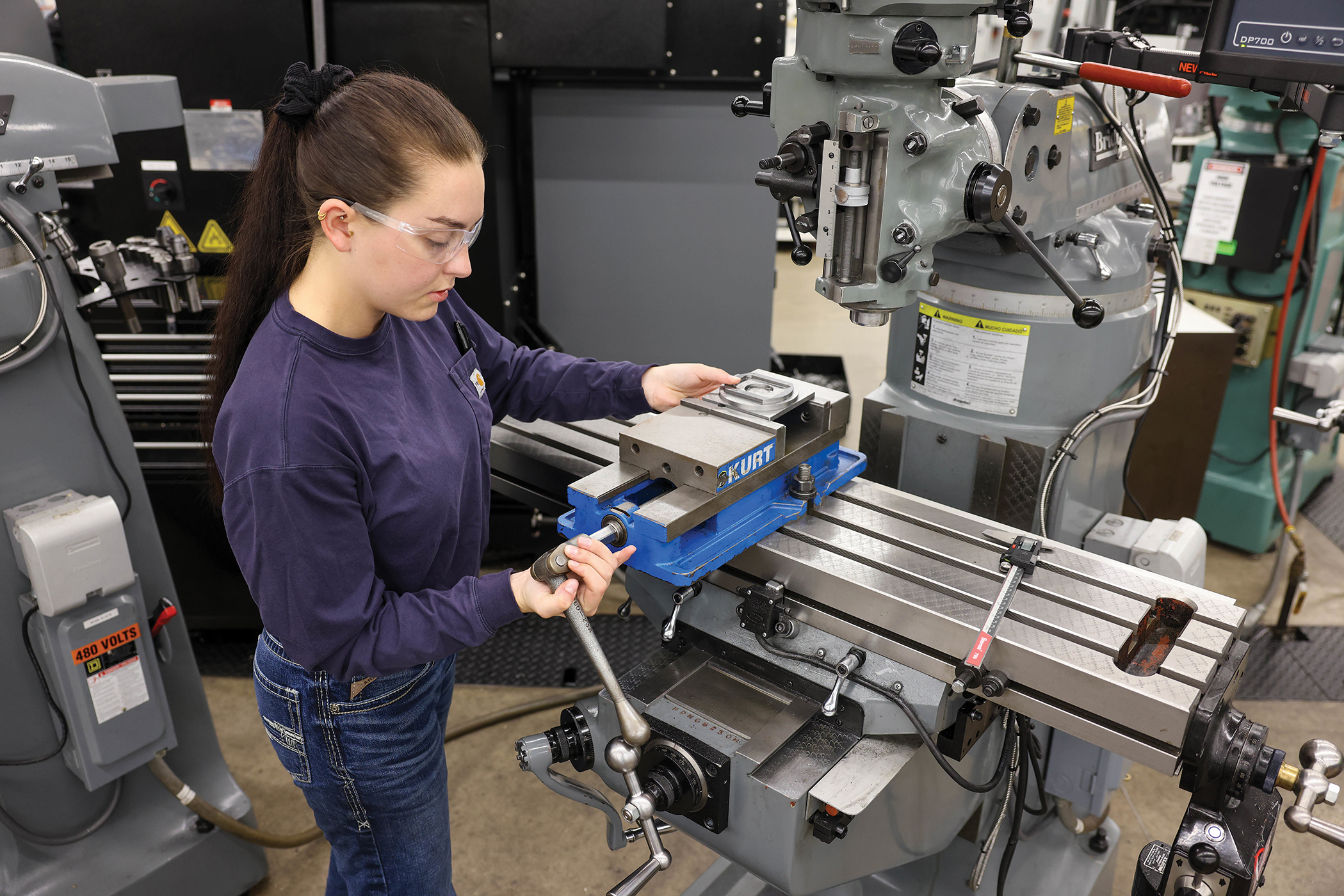
The diversity of the tech ed field makes it a challenging one to teach, Meyer says, which can be a deterrent to prospective teachers. Tech ed teachers spend a lot of time maintaining equipment, ordering materials, managing clubs and cleaning labs in order to best guide students. Also at play is the rapid rate of technological change that makes providing relevant curriculum a moving target.
“If you were to go to different schools that teach tech ed, it would look completely different at every school you went to,” Meyer says. “In one semester, I’ve taught engineering, electronics, CAD, machining and interior design. That’s not often easy, because you have to know a little bit about a lot of things.”
Furthering the shortage, Meyer says, is the fact that technical people have the ability to work in a variety of lucrative fields, from manufacturing to construction, with low unemployment rates and ample opportunities.
The impacts of the tech ed teacher shortage are not just detrimental to educators and schools. The lack of consistency created by high staff turnover and the narrowing of curriculum puts local industry at risk.
“When things get hard and teachers have a lot to do and become stressed, it’s easy to resort to what is easier to teach,” Meyer says. “Programs can lose the rigor that is necessary for what young people need to know in our world.”
Fewer teachers means that fewer schools can offer comprehensive technology and engineering programs, limiting students’ exposure to the critical STEM subjects that are essential for developing skills needed in the modern workforce.
Staci Sievert, a tech ed teacher at Seymour High School, knows firsthand the challenges of a struggling tech ed department and what is at stake.
In 2017, Sievert transitioned from teaching social studies to tech ed as the district struggled to hire qualified full-time instructors and had been relying on long-term substitutes. Sievert knew the dwindling tech ed program would have negative effects on local industries that rely on skilled workers.
“Kids won’t be exposed to things that they might be interested in, and they won’t understand both the opportunities and the expectations — where can you go with this, what can you do and where do you need to be as an employee,” she says. “All of those things are at risk if we don’t do better.”
Licensing and funding initiatives
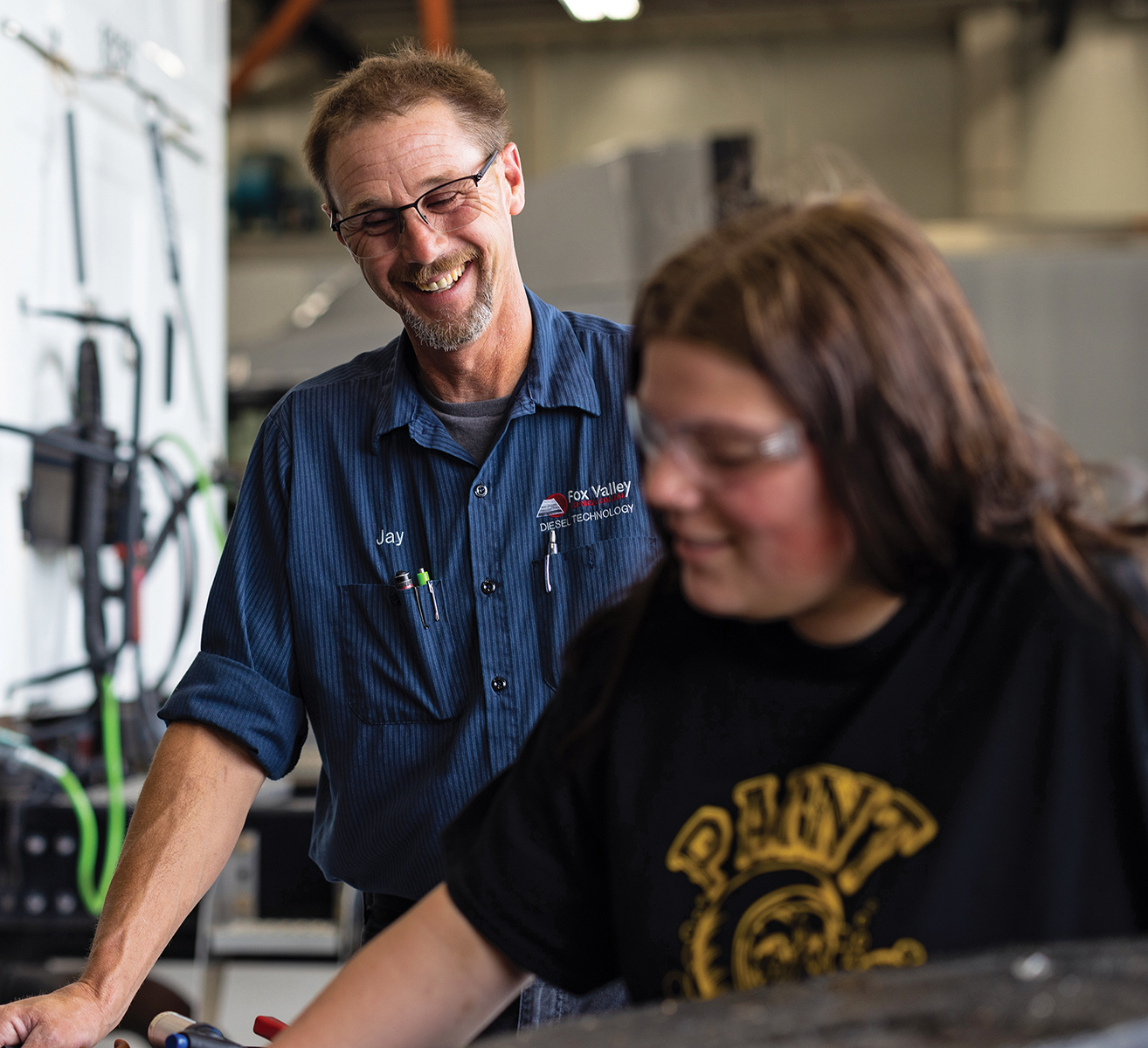
After 22 years as a social studies teacher, Sievert began taking classes after school and at night through FVTC’s wood manufacturing program, as well as welding and metalworking classes. She visited area manufacturers and other school districts to gather input on the curriculum.
Since Sievert went full time teaching tech ed in 2018, the department has grown tremendously. In 2021, voters approved a $6.5 million referendum that went toward the expansion of Seymour School District’s tech ed department.
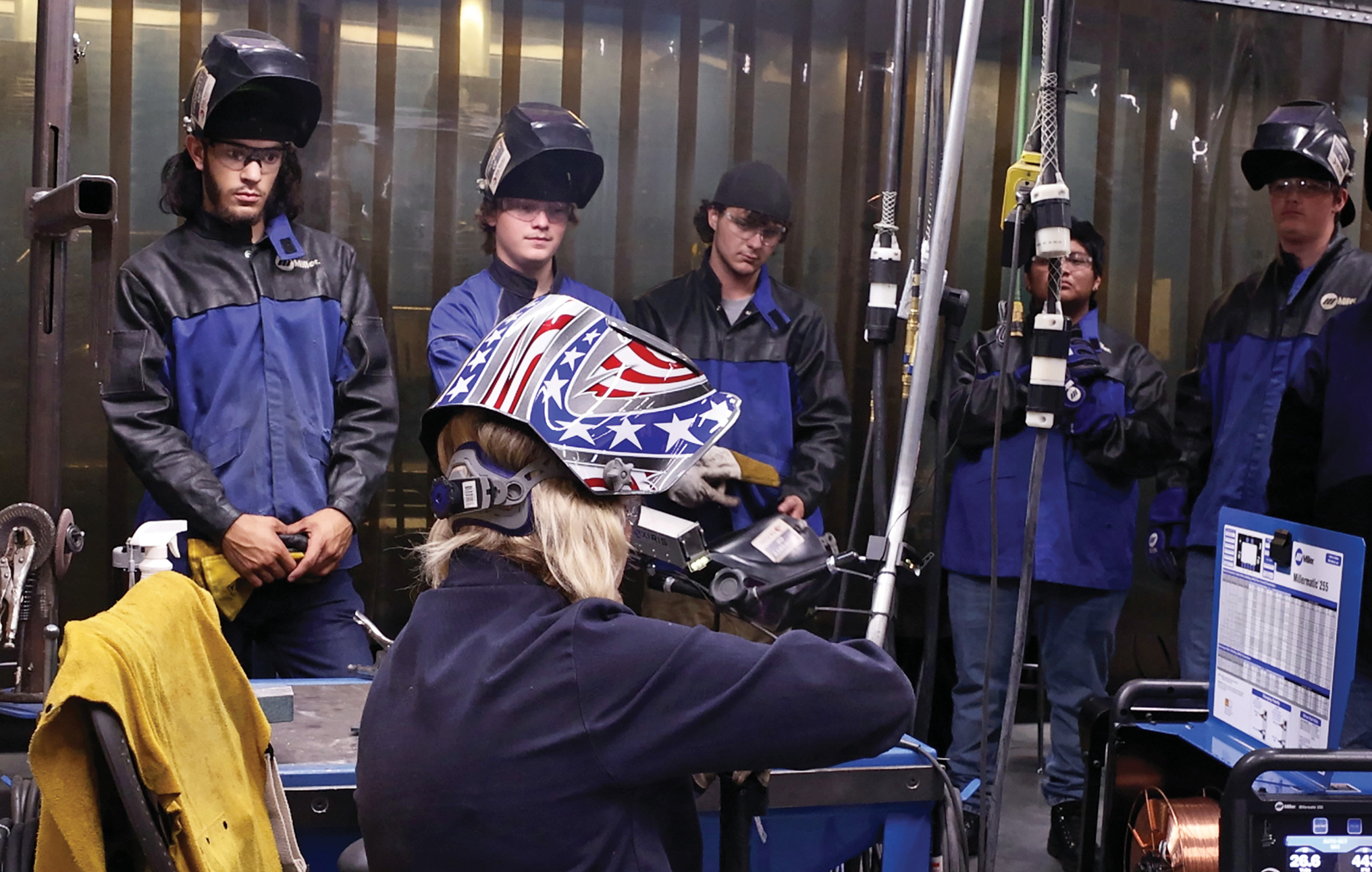
“We had five broken welding booths in 2017, and now we have 13 [fully functional] booths,” Sievert says. “We had one full-time tech ed teacher and one substitute, and now we have four full-time teachers. We are at double the enrollment because we have more teachers.”
Solving the tech ed teacher shortage requires a combination of both long-term and short-term strategies. While not every district has a Sievert willing to undertake the monumental task of transferring subject areas, Wisconsin does offer multiple pathways to meet the requirements to become a licensed tech ed teacher. This includes options for recent graduates, working adults seeking to change careers and educators seeking additional licensure, among others. One particular option, the trade specialist permit pathway, enables experienced tradespeople to teach upper-level courses.
In addition to alternative licensing that helps in the near term, funding also plays a key role. Earlier this year, the DPI was awarded a $1.475 million grant through the first-ever Perkins Innovation and Modernization, Career Connected High Schools Grant Program to aid public schools in improving and modernizing career and technical education. The federal grant will be funded for three years with the potential for two additional years.
In addition to helping high schools develop programs, funding will also support partnerships between schools and business and industry.
“We must break down barriers so that every kid can access meaningful learning, relevant to their interests and goals in life. That’s an essential function of public education, and to ensuring the future success of our state,” Underly said. “That’s why I am so excited to see this investment in Wisconsin, and so looking forward to seeing the innovation career and technical education continues to drive.”
Making headway
Partnerships — whether between educational institutions or between schools and industry — have been at the forefront of many initiatives in Northeast Wisconsin.
Eric Brunsell, department chair and professor of science education at UWO, oversees the technology and engineering education program offered in partnership with FVTC. Brunsell says the program allows students to first complete associate of applied studies degrees at Fox Valley Technical College and then transfer to UWO to finish their bachelors of science in education.
“It’s a perfect partnership with Fox Valley Technical College, where students take auto, welding, manufacturing and construction courses to get a broad base of understanding of what they would be teaching,” Brunsell says.

Trent Sorensen, associate dean of service at FVTC, agrees that the program leverages the strengths and expertise of both institutions while providing students a better understanding of their future career.

“Students are getting this experience, this insight, before they even get over to UWO, which is really helping to solidify that this is what they want to do,” he says. “They get that hands-on experience faster and then get out into the schools faster as well.”
The Northeast Wisconsin Manufacturing Alliance, which works collaboratively with educators through a task force specifically to promote tech ed careers, offers two $1,000 scholarships for the technology and engineering education program at UWO and FVTC.
While graduation rates are still low, Brunsell believes as awareness grows, the program will eventually increase the state’s ability to license more tech ed teachers. The university is actively trying to build partnerships with other technical colleges to increase capacity and is looking at offering more online courses to enable students to work while they’re enrolled, especially as they finish their teaching requirements during the last two years of the program.
“Our next step is doing outreach directly to high schools in the area to make sure that technology education teachers and counselors are aware of the program so they can identify students that might be interested and successful in it,” says Brunsell, who believes current tech ed teachers play a crucial role in the future of the profession.
“Tech ed programs in particular have always been really strong in career development and partnerships that let students explore different career options, but quite often it doesn’t include teaching,” he says. “High school teachers are the best advocates for the profession and for getting their students interested in becoming teachers.”
Robinson is a living proof of that. As he heads into his first tech ed teaching position this month, he hopes to impact his students the same way he was by his teachers.
“All the tech ed teachers I had were a big influence on me,” he says. “They inspired me to be one of the teachers they were to me in high school.”

