

Forest products economic impact in Wisconsin
- 1,250 forestry businesses
- 125,000 jobs tied to the forest products industry
- $27 billion value of production
- $3.3 billion in total tax contribution
- $1.4 billion of forestry commodities exported
Source: Wisconsin Department of Natural Resources, 2023
When Verso closed its Wisconsin Rapids paper mill in 2020, the economic impact rippled outward across the state and beyond.
“When Rapids closed, that affected everyone in Michigan and Wisconsin,” says Dennis Schoeneck, owner of Enterprise Forest Products and Forest Products Transit out of Pelican Lake in Oneida County.
According to one study, as many as 18,000 jobs were impacted beyond the 1,000 papermill employees who were out of work.
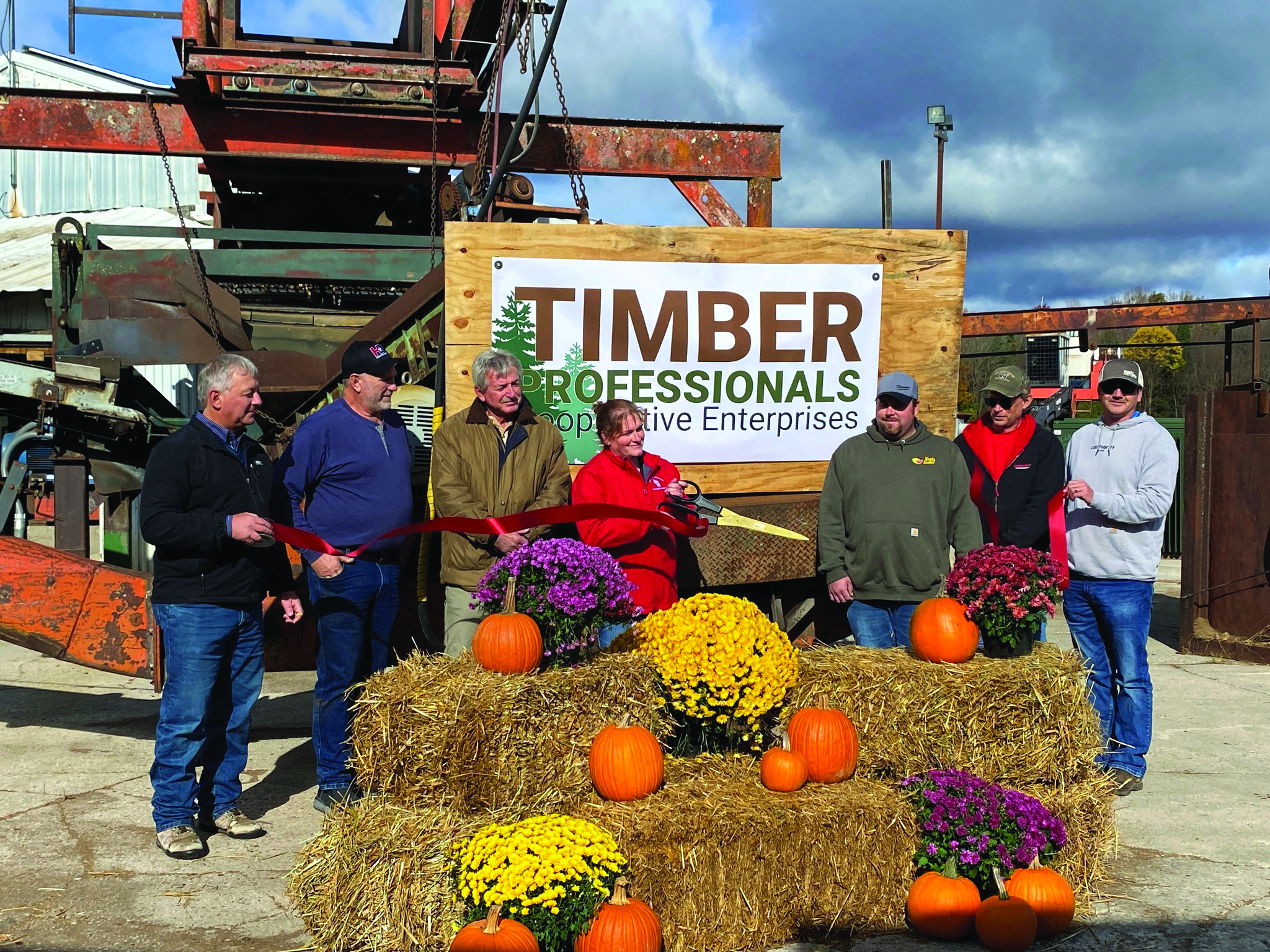
The closure destabilized the pulpwood market in the region and left timber businesses and trucking firms looking for answers. That led to the creation of the Timber Professionals Cooperative Enterprises, the first co-op of its kind in the United States.
The cooperative came up with a novel idea — it would purchase and operate a closed timber processing mill to fill the gap in the market. After a false start involving a mill in Northwest Wisconsin, the cooperative took another swing and purchased a chipping mill in the Shawano County community of Tilleda.
“We had a bugger of time getting anyone to lend us money because we were such a new organization — we had no collateral,” says Schoeneck, who is board president for TPCE.
He credits co-op liaison Laura Delaney for helping raise $420,000 from its 56 members and says grants, support and loan guarantees made it viable for Abby Bank to finance the TPCE purchase of the former Hoffman Wood Fiber mill in Tilleda.
In November the TPCE obtained $800,000 through the Timber Production Expansion Guaranteed Loan Program.
“This project is a win for Wisconsin’s economy, consumers who want American-made products, and for forest management, which will help keep Wisconsin forests safe and reduce wildfire risk,” said Andrew Iverson, USDA Rural Development Wisconsin state director.
“The USDA absolutely went to bat for us.” Schoeneck says. “They like what we are trying to do. We have the same goals in mind — to put people to work, to keep our industry going and to give us a shot. They like the co-op concept.”
So do others. Schoeneck says he has talked to organizations in Maine and Louisiana who are interested in creating their own cooperatives to operate timber product mills.
TPCE purchased the 49-acre property, installed new equipment including a scale and in December, began producing chips that are being supplied to the Ahlstrom papermill in Kaukauna.
“To restart something after its shutdown is always harder than if it would have been just rolling,” Schoeneck says.
Besides installing equipment, the co-op had to spread the word that they were ready to accept timber. The plant is now running with six employees with opportunities to add more as the plant expands from 2,500 to 4,000 tons per month.
“You’ve got to have vision to be successful. So we are always thinking 10 years out, 15 years out … how can we set ourselves up for success,” Schoeneck says of TPCE and its members.
That vision includes understanding that the industry has a “fantastic story.” Schoeneck explains that a highly-skilled workforce is sustainably harvesting “earth’s most renewable resource.”
“Every time we cut a tree we’ve got a plan behind that cut. It’s a plan that is sustaining our forests forever,” he says. “I want my grandchildren’s grandchild to enjoy the forest that I’ve enjoyed.”

