
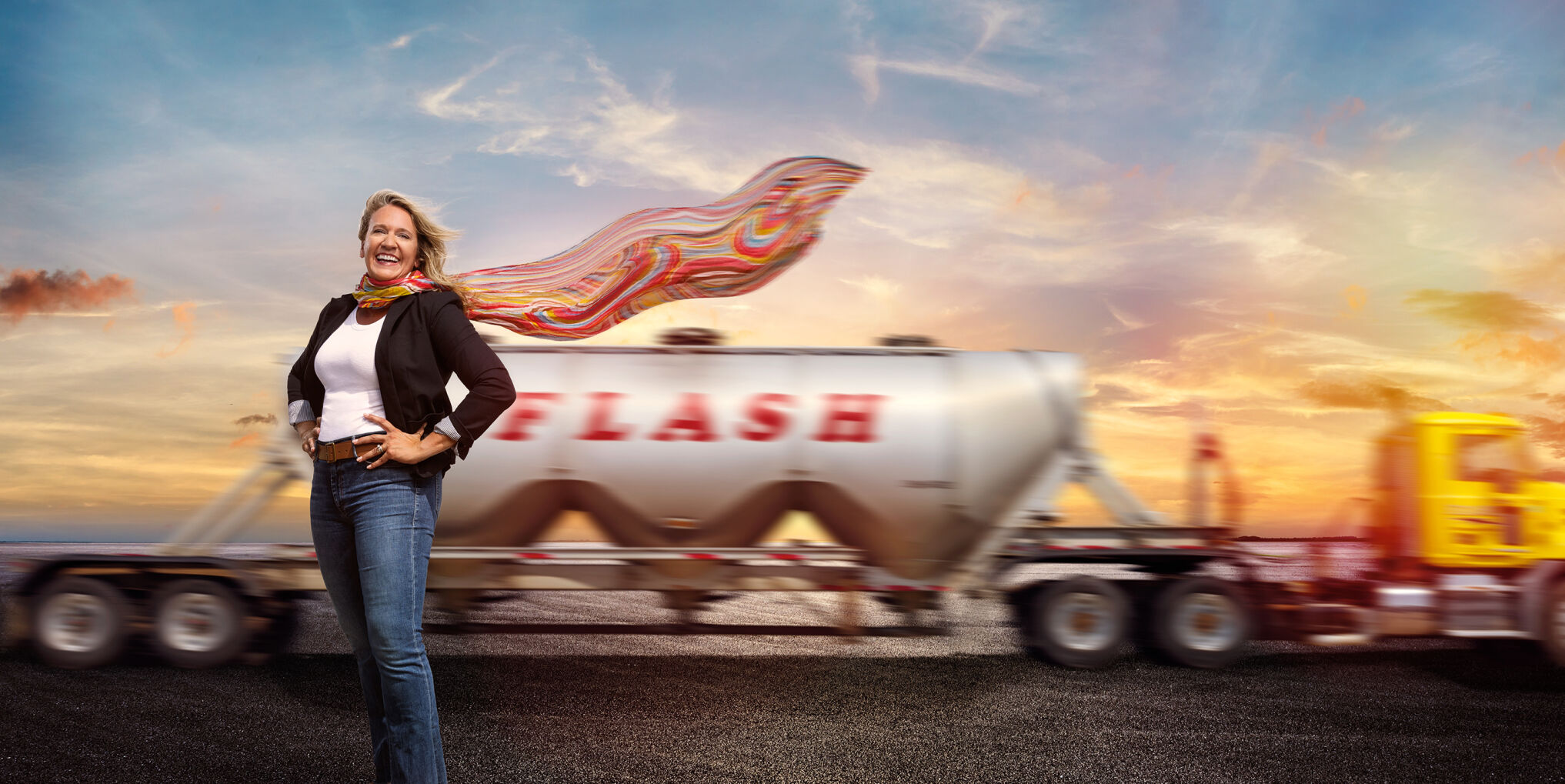

Photographs by Shane Van Boxtel, Image Studios
Styling by Shalene Enz
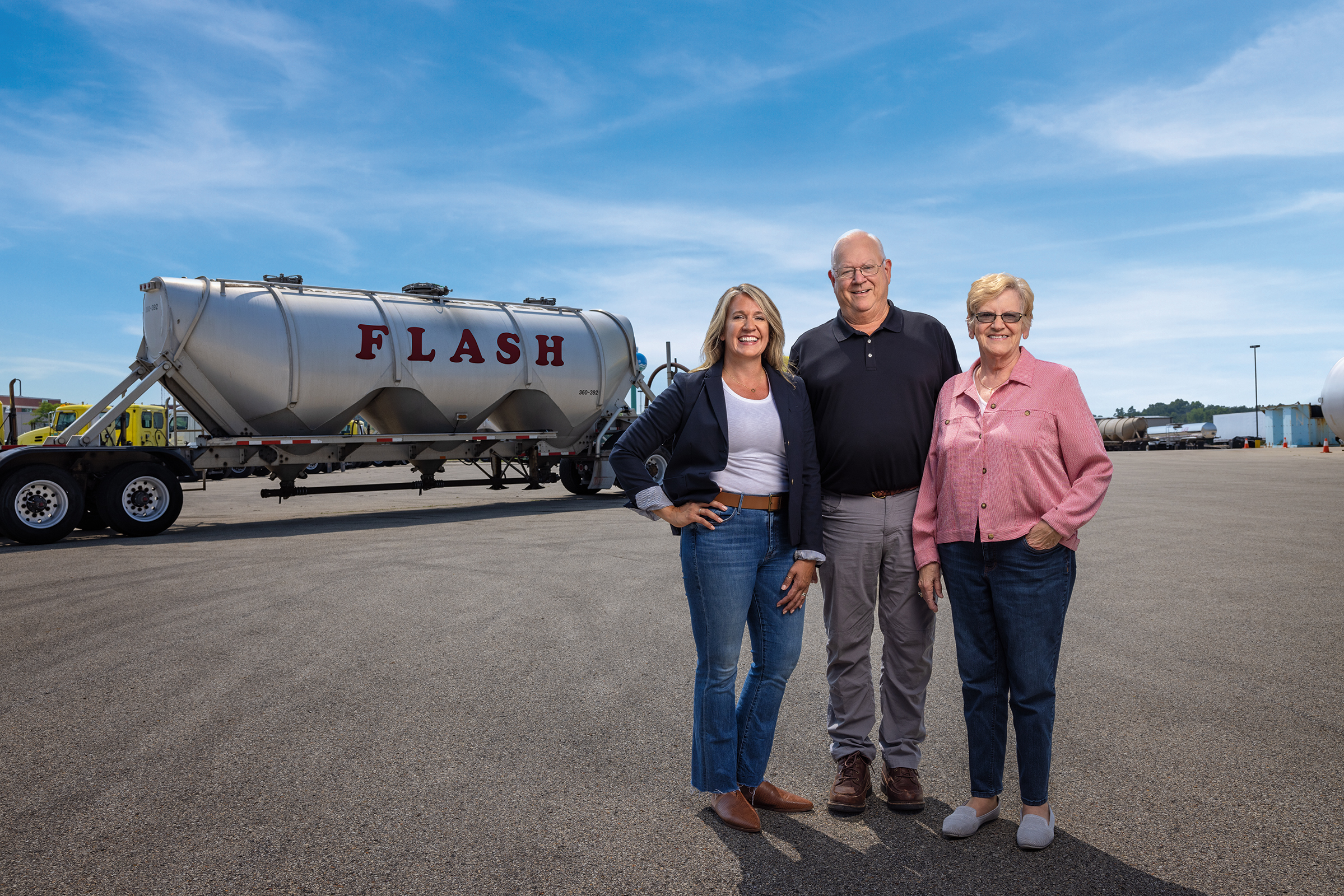
It’s a blue-skied Thursday morning at FLASH Family of Companies in Green Lake when there’s a knock at President Mandi Hinrichs’ door. An employee pops his head inside her office, which formerly belonged to Hinrichs’ father and company founder Pat McConnell. Hinrichs has been occupying the space since 2020.
“Let me know when you have a second. I need to talk,” the employee says, a look of amusement laced with annoyance on his face.
“Is this work or personal?” Hinrichs asks, genuine concern in her voice.
The question reveals a core truth about FLASH that can be seen repeated over and over throughout the company’s six divisions: that its employees are as good as family, and it’s just as expected and accepted that they come to Hinrichs with both work and life challenges.
“We’ve made a family business more about who feels like family than actual bloodline,” says Hinrichs, the youngest of five and the company’s only second-generation employee in a leadership role. “We’re so successful because we’ve always worked really hard, but our people don’t work for us. They work with us.”
Today, FLASH has 250 employees with operations across six states. It covers 8 million miles annually, operating about 100 tractors and 150 trailers while hauling 1,200 loads per week through the U.S. and Canada. Having grown from a three-truck operation in Berlin to one of Green Lake County’s largest employers, FLASH is a testament to the power of vision, adaptability and, above all, family.
‘Quiet, humble, scrappy’
In 1984, Hinrichs’ parents Pat and Lynn McConnell started a trucking company called Fairwater Sand Transit that operated out of their home in Berlin. It was an offshoot of Badger Mining Corporation, owned by Hinrichs’ grandfather, where Pat had been working as transportation manager.
“[Pat] wanted to do more on the trucking side, but Badger Mining was a sand plant, not a trucking company. So he and my mom took this leap of faith,” Hinrichs says.
With five employees and three trucks, the company focused on intrastate sand hauling for Wisconsin foundries. Pat drove one of the trucks and handled the maintenance, and Lynn did all the dispatching.
Hinrichs grew up with the family business almost like another sibling in her home.
“It started in the family living room,” she says. “I remember my mom and dad going out to dinner and saying, ‘Joe’s going to call and tell him he needs to go to plant three.’ I did not know that I could leave the desk, so I literally sat at my mom’s desk for hours waiting for this call.”
Three years in, the company transitioned to an interstate trucking company. It was then that the company was renamed Freight Lime and Sand Hauling and began operating under the acronym FLASH.
The late ’80s marked a pivotal era of diversification for FLASH. After initially venturing into lime transport for paper mills in 1987, it quickly added food-grade products to its repertoire by 1989. A year later, the company expanded yet again — this time launching a waste hauling division.
The company’s growth demanded a larger, more sophisticated base of operations, so in 1989, it invested in a new maintenance facility and office space in Green Lake, where it boasted a fleet of seven trucks and trailers.
By 1999, having again outgrown its headquarters, FLASH built a new corporate headquarters in Green Lake that included 5,000 square feet of office space and a 20,000-square-foot maintenance facility. A state-of-the-art, 5,000-square-foot tank wash facility was added to guarantee contamination-free deliveries.
The family business was reinforced when Hinrichs joined in 2008. She became president in 2014 and today oversees FLASH divisions and Crossroads Market, while Pat handles the transloading and sand plant divisions. This includes Transload Solutions, a company dedicated to providing rail-to-truck transloading services, and Texas Frac, the second sand plant operation in FLASH’s portfolio.
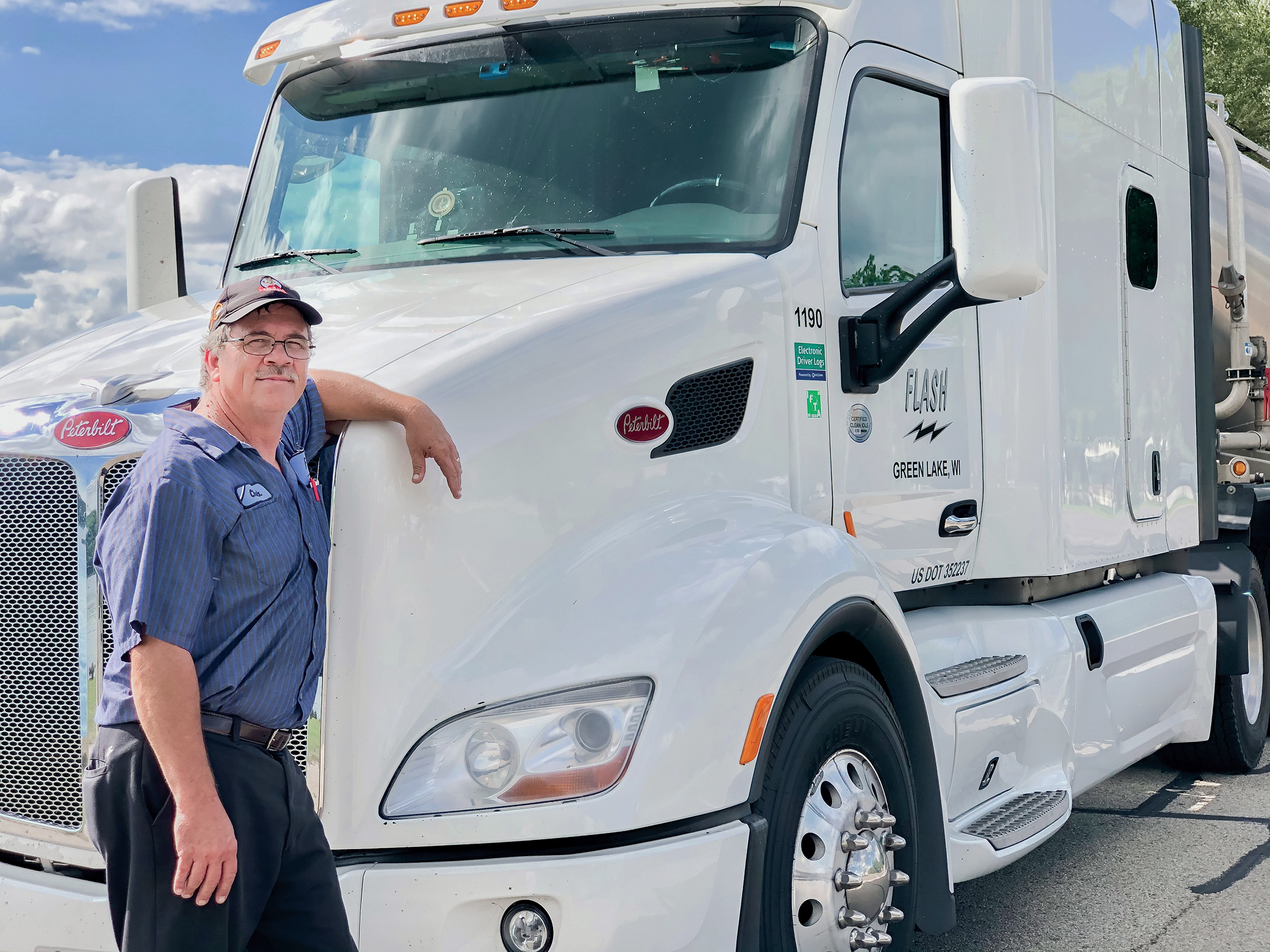
FLASH has long championed an approach that prioritizes function over flashiness (no pun intended) when it comes to truck equipment, Hinrichs says. The company operates on a simple principle: The lighter the truck, the more it can carry, given the 80,000-pound road weight limit. By forgoing unnecessary lights, oversized cabs and extravagant chrome, FLASH ensures that every pound is put to work most effectively.
FLASH’s fleet of trucks and trailers is spec’d to the company’s standards, such as super single tires and other proprietary weight reductions, to reduce tare weights and improve fuel efficiency — areas in which the company has led the industry for decades.
“We are very quiet; we are very humble. We are very scrappy,” Hinrichs says. “There was a time when rates had gotten super competitive and we went as far as taking the passenger seat out of the trucks because it saves you 300 pounds.”
By prioritizing cost-effectiveness over aesthetics, FLASH has built a reputation for efficiency and customer-centricity. “We are not sexy; we are not glamorous; we are not big and shiny. And all of that is very intentional,” Hinrichs says. “Not because we’re boring — but because it’s all about keeping rates down for customers.”
Partnerships pave the way
In many ways, trucking drives the economy. This is true nationally, but especially in the state of Wisconsin, says Neal Kedzie, president of the Wisconsin Motor Carriers Association.
“The entire economy runs on trucks,” he says. “Over 72% of everything is moved by truck, whether it’s raw product or finished products. In Wisconsin, over 90% of all manufactured goods are moved by a truck. Anyone who’s in the business is key to making our economy run.”
But out of nearly 60,000 registered trucking companies in the state, FLASH stands out, says Kedzie, who has worked with both Pat McConnell and Hinrichs as WMCA board members.
“The vast majority of these companies are very small owner operators with a single tractor trailer or, at most, five power units. FLASH started out the same way with a very small operation years ago, but they built it to over 100 power units today located in multiple states,” he says. “They’re kind of unique, too, because they are in the dry bulk industry — which is a niche market.”
The logistics of this type of transportation requires well-planned routes, expert timing for loading and unloading, and specialized knowledge in handling materials. This is why FLASH runs equipment dedicated to each commodity to prevent contaminating material.
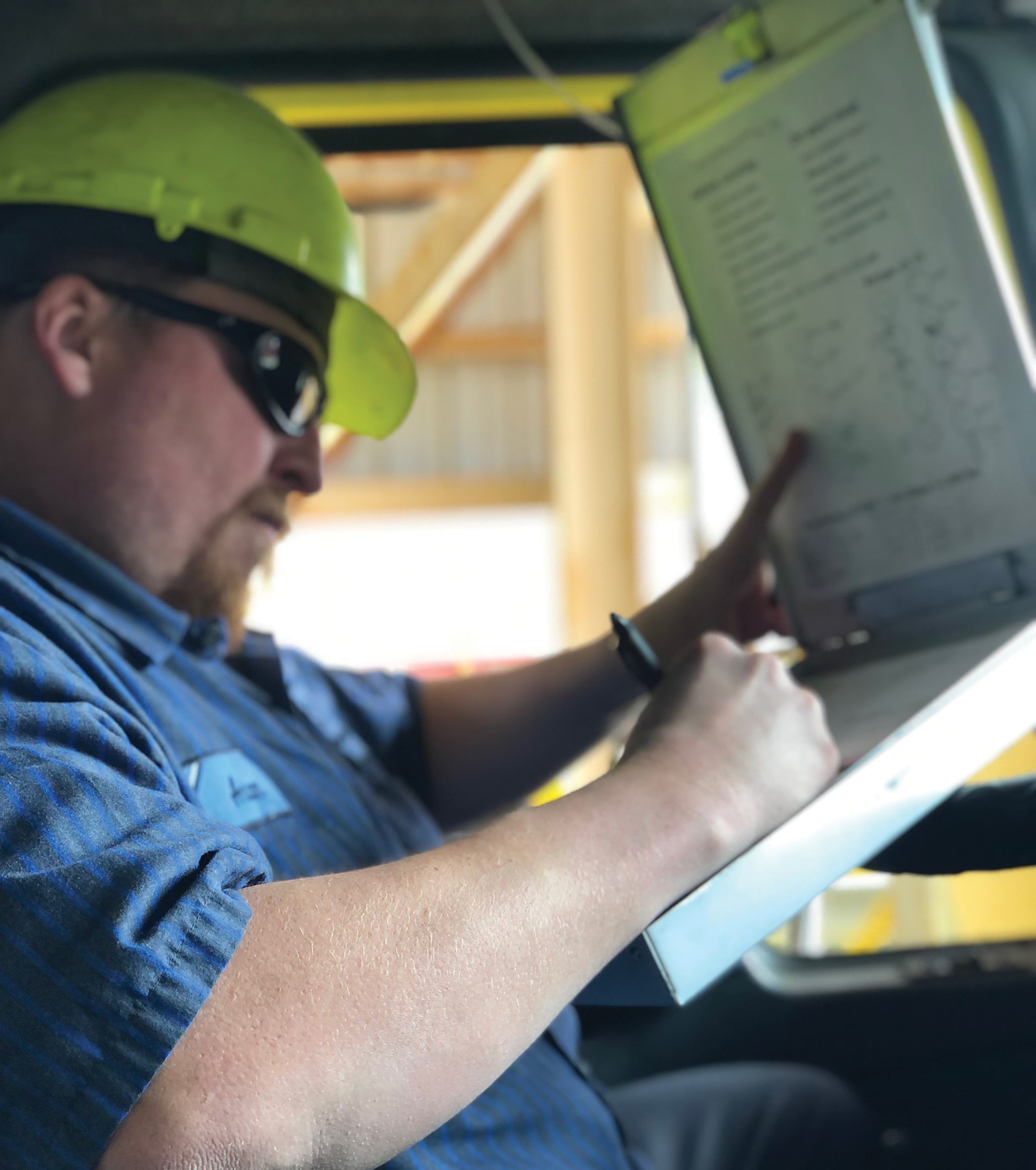
As a specialized carrier, FLASH deals with pressurized tanks and highly-sensitive commodities that cannot risk contamination.
“Sand is relatively inexpensive until you put something else in it,” Hinrichs says. “Then you’ve contaminated an entire foundry and they’ve shut down and have people standing around and they have to clean out tanks and they’ve made castings that are falling apart. It gets real ugly, real fast and really expensive.”
As a logistics company, FLASH serves many aspects of the supply chain, including inventory management, railcar management, local and regional trucking, and last mile delivery. FLASH has regional terminals in Green Bay; Tell City/Troy, Indiana; Escanaba/Rapid River, Michigan; and La Salle, Illinois.
“Trucking is not the only thing we do,” Hinrichs says. “It’s just the most visible thing we do.”
Inventory management is one of those unseen but crucial services to which John Wiesbrock, executive vice president of Waupaca Foundry, can attest.
Waupaca Foundry — North America’s largest iron foundry with iron casting production, machining and finishing plants located in Wisconsin, Michigan and Indiana — also happens to be FLASH’s largest foundry customer. The two have worked closely together since FLASH was founded.
“Our relationship with FLASH has been unique because of their level of service and commitment to a truly collaborative partnership,” says Wiesbrock, who has been with the foundry for 23 years. “They are predominantly a trucking company, but they do way more than that; they manage our critical materials. It’s a 24/7 job. The faith we put in them to do their job defines the partnership.”
Every day, 4,000 Waupaca Foundry team members melt 9,500 tons of castings that are used by construction, agriculture, oil and gas, industrial and rail markets worldwide. Without FLASH’s management of the foundry’s sand and bentonite (bond), critical manufacturing processes would not happen.
“I always say, ‘no sand, no bond, no casting,’” Wiesbrock says. “Because of our scale, we have to be supply chain pros through collaboration with our partner suppliers. They monitor the levels [of materials] in our silos. They know how many tons we have and what is required to run. They really manage that and it’s unique.”
Wiesbrock says the partnership’s success is exemplified in the mutual growth of both companies.
“In 1997 we moved to Indiana, and when we did that we asked FLASH to consider having a local operation there to support us,” Wiesbrock says. “They’ve grown as we’ve grown, and we’ve [had] mutual and combined success as we’ve done it.”
But Hinrichs says the key to FLASH’s longevity lies in its willingness to adapt — be it expansion or contraction. Success to Hinrichs is not simply a matter of growing larger, but evolving in whatever direction best serves the business.
“We are never afraid of growth, but we are also never afraid of shrinking,” she says. “I think if you stay at the same size, that’s when things go wrong. You should always be going one direction or the other. That’s kind of been our motto — you don’t want to become stagnant and settle.”
Community crossroads
Stagnancy doesn’t seem to be an issue at FLASH Family of Companies, which currently operates FLASH (trucking), Transload Solutions, Texas Frac, FLASH Integrated (maintenance) and FLASH Shared Services (construction division).
A sixth division — Crossroads Market — is the one that seems like the outlier. And in many ways, it is. But a closer look reveals that the grocery store fits well into the company’s community-minded business philosophy.
Crossroads Market had been a cornerstone of the Green Lake community since 2006, built by local physician Tom Willett to fill the gap left when Green Lake’s downtown grocery store closed. Recognizing the market’s vital role as not only a retail hub but also a significant local employer, Pat McConnell took ownership in early 2016 when Willett decided to sell the business.
Kedzie recalls his conversation with McConnell prior to the purchase of Crossroads, which employs about 60 people.
“Pat said the community needs a [grocery store]. I remember asking what he knows about grocery stores and he said ‘I don’t know anything,’ but he felt that he was in a position where he could help,” Kedzie says. “And that’s how he is and that’s how the company is — where there’s a will, there’s a way and when there’s a need, they step up to the plate.”
Within months, FLASH rolled out an ambitious $2 million expansion that nearly doubled the store’s size to 27,000 square feet and introduced new services including a full-service deli, an in-house bakery, a smokehouse and expanded catering options. This upgrade didn’t just enlarge the store; it expanded its role in the community from a quick-stop grocery to a comprehensive shopping experience. The new additions caused the daily guest count to double.
Despite facing challenges such as labor shortages, escalating costs and supply chain disruptions, Kedzie says he sees Crossroads, and the entire FLASH enterprise, succeeding with Hinrichs at the helm.
“Mandi is no different than her dad,” he says. “The company will flourish with her in the years to come.”
Driving toward the future
While FLASH has seen its fair share of change over the last 40 years, the company is currently in a season of growth, especially in its transloading business. This fall, FLASH will open a 10,000-square-foot facility in the Ripon industrial park to further expand its transloading capabilities and diversify its portfolio to include liquid and product manufacturing.
The company first got into transloading — moving a commodity from one mode of transportation to another, such as from rail to truck — when it was operating heavily in the food industry during the ’90s. FLASH currently has transload locations in Green Bay; Ripon; New Ulm, Minnesota; Troy, Indiana; Fort Worth, Texas; and Benwood, West Virgina.
Transloading opportunities are becoming more plentiful, Hinrichs says, in part due to supply chain issues. A shortage of trucks and drivers is causing more businesses to move things in bulk by rail.
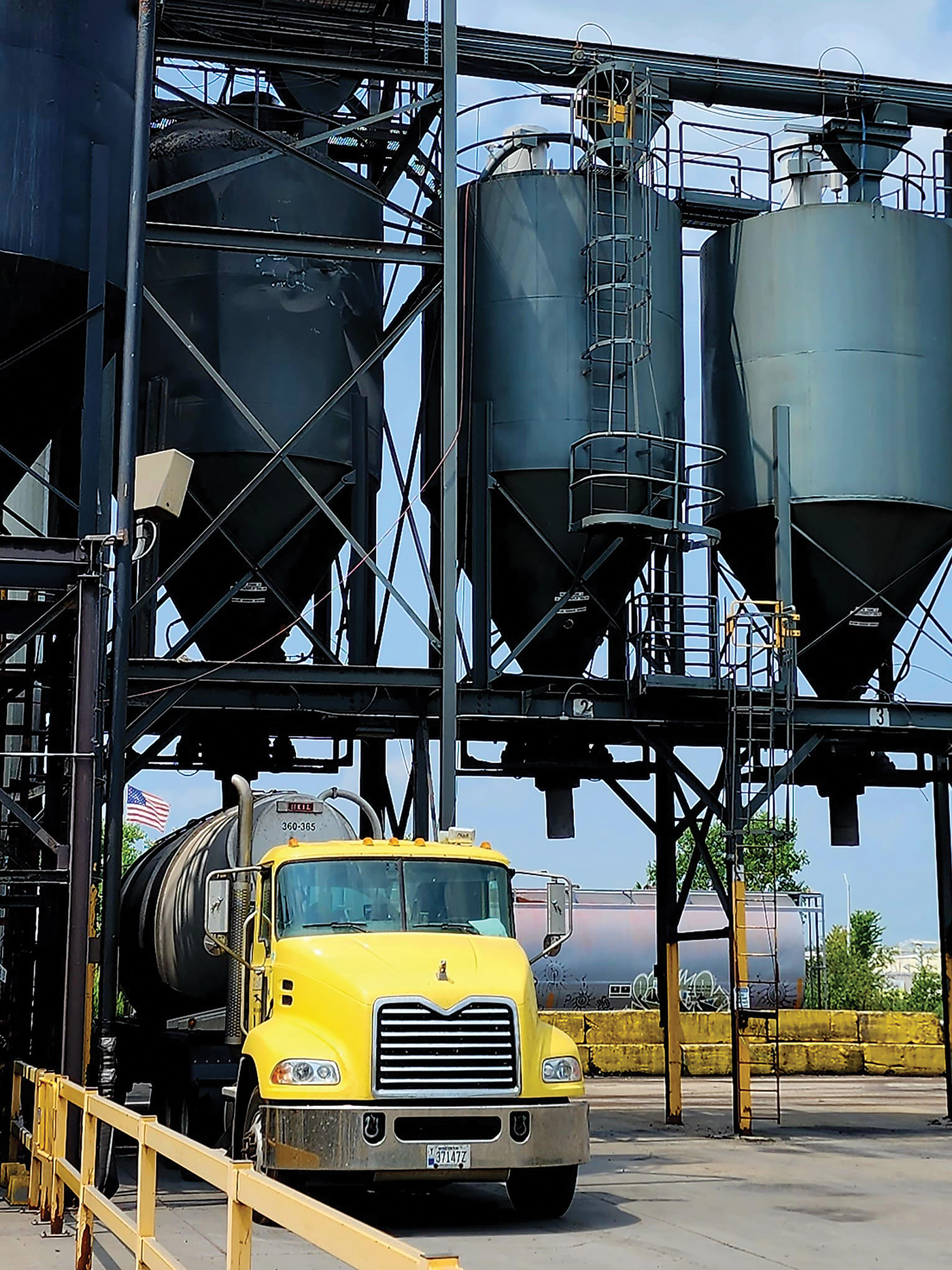
“You can move in essence four truckloads in a rail car. You can send rail cars to a location and then you can do trucks for what is called ‘last mile’ versus trucking it all the way across the country,” Hinrichs says. “Transloading is a huge area of growth for us because it helps solve the supply chain issues that everybody’s seeing and feeling.”
The Ripon expansion was a bit serendipitous, Hinrichs says. Last year FLASH was looking to increase its rail access in the community, which is less than 10 miles from FLASH’s Green Lake headquarters. At the same time, a magnesium hydroxide producer in Spokane, Washington was looking for facility space, on rail, to receive product in powder form and blend the final product.
The two companies connected through the economic development organization Envision Greater Fond du Lac and decided a partnership made sense. In addition to transloading, the $2.5 million facility will provide production, packaging and warehousing to service both existing and new customers.
Whether expanding services, exploring new industries, transporting new commodities or returning to old ones, Hinrichs says FLASH keeps trucking forward by remaining adaptable and curious.
“A lot of our success comes from the fact that when we see an opportunity, we are not afraid to take a risk,” Hinrichs says. “We jump on things.”